Dog Lunging on Leash - Leash Reactivity and How to Work Through It
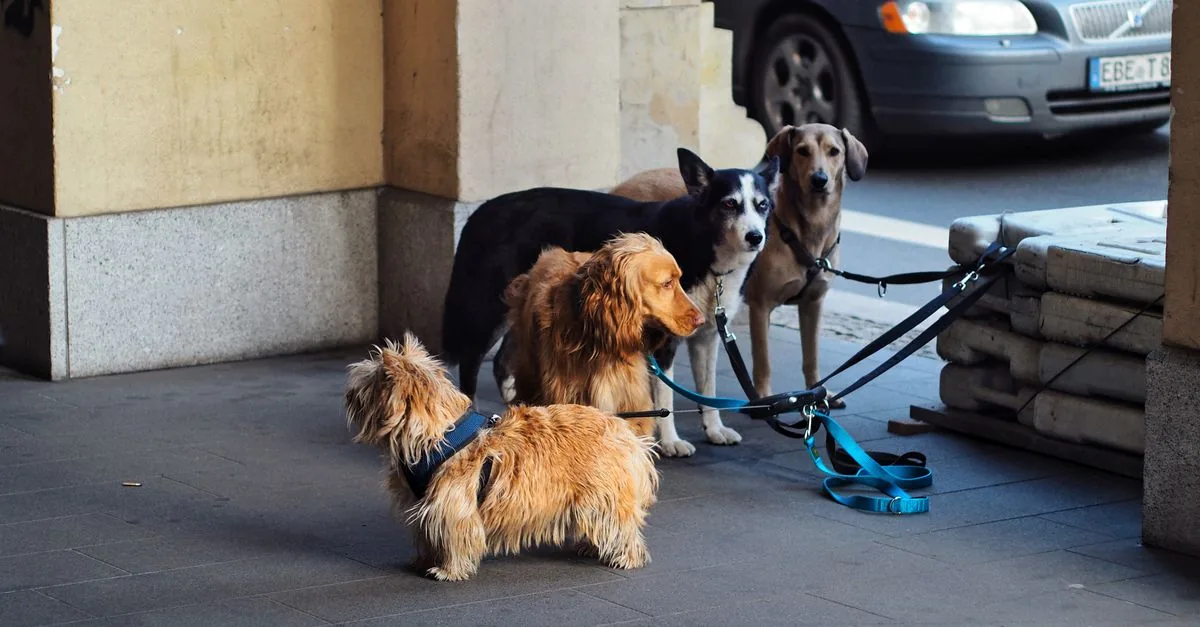
A dog that lunges on leash towards other dogs is reacting either out of frustration (wants to approach but is blocked by the lead) or fear (wants distance). Both forms respond to threshold-based work and positive conditioning - never punishment. For strong reactivity, a certified behaviourist is essential.
Everything is calm, the walk is going well - then another dog appears on the horizon. Your dog instantly locks on, strains, barks furiously, and pulls so hard you can barely keep your footing. Other people stare. You feel embarrassed or helpless. This scene is familiar to a huge number of dog owners. The good news: leash reactivity is one of the most studied and most effectively treated behavioural problems in dogs.
Frustration or Fear? This Distinction Matters
Before you begin working on the behaviour, it helps to understand what is driving your dog. Leash reactivity usually has one of two roots:
Frustration reactivity
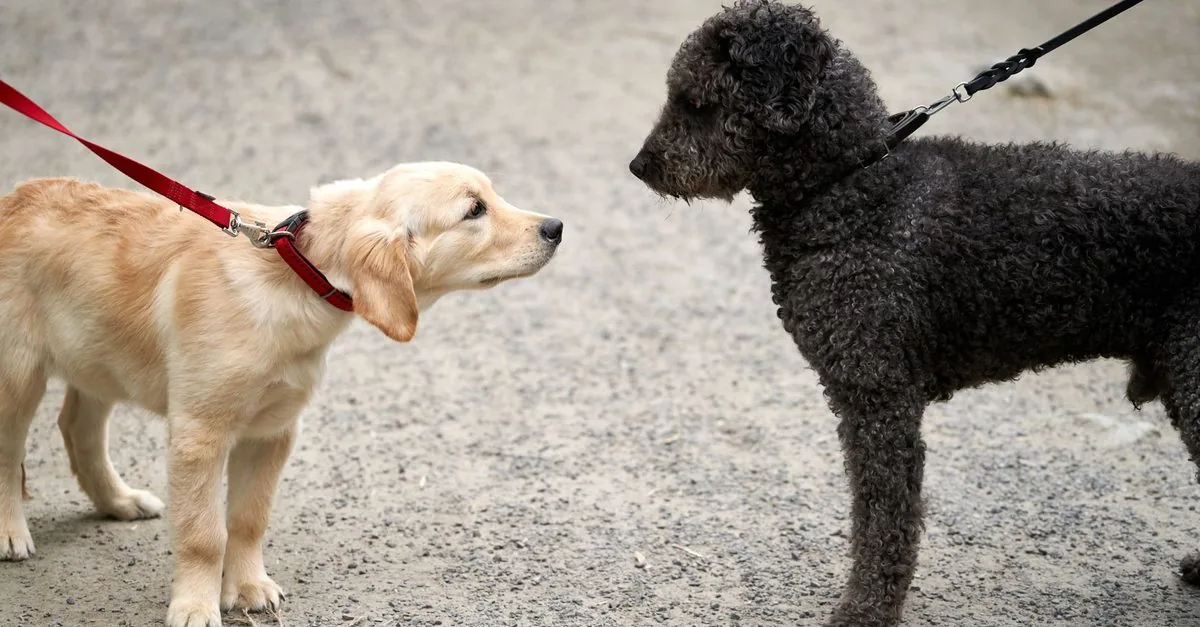
The dog is highly social and wants to play - off lead it runs up to other dogs without any difficulty. On lead the leash blocks that impulse and the frustration escalates: pulling, barking, lunging. Think of a child who cannot reach a toy and cries louder. These dogs often show "soft" body language beneath the barking: weight forward, tail vibrating, no overall stiffness.
Fear reactivity
The dog wants distance from the other dog and uses barking and lunging as a deterrent strategy. "Look scary and maybe it will go away." These dogs often show body stiffening, tail tucked or still, and withdrawal once the trigger has passed. More on dogs that are frightened of other dogs in our article on dogs scared of other dogs.
Both forms can coexist, and the line between them is sometimes blurred. What matters is that both respond to positive conditioning - neither requires punishment.
The Reaction Threshold - Why It Is the Key
The reaction threshold is the distance (or stimulus intensity) at which a dog notices another dog but has not yet shifted into reactive behaviour. For one dog that might be 50 metres; for another, 5 metres.
All behaviour work happens below this threshold - when the dog is calm and capable of learning. Once the threshold is crossed and the dog begins reacting, learning stops - the brain is flooded with stress hormones. The answer is always to increase distance.
How to find it: approach another dog slowly and watch for the first signs of tension (ears forward, leash tightening, change in breathing rhythm). That moment - or just before it - is your threshold.
Engage-Disengage - the Technique That Works
Engage-disengage is a simple technique developed by positive trainers and well-documented in leash reactivity work. It works like this:
| Stage | What happens | What you do |
|---|---|---|
| Engage | Dog looks at the other dog (calmly, below threshold) | Say "yes!" or click, deliver a treat |
| Disengage | Dog turns its head away from the other dog and looks at you | Say "yes!" and deliver a better treat |
Over time the dog builds an automatic association: another dog in range = turn to handler = something great happens. The sight of another dog shifts from threat or frustration trigger to a positive cue.
Key rules:
- Work below threshold only - if the dog starts barking, you are too close
- Use high-value rewards - not dry kibble, but real meat: chicken, cheese, frankfurter
- Keep sessions short - 5-10 minutes maximum
- Consistency: daily short sessions outperform rare long ones
Redirection and Situation Management
While your dog is learning new associations, manage the environment to prevent escalation:
- Change your route when you see another dog too close - step back, turn aside
- Stop at a safe distance and let the other dog pass
- Stay relaxed yourself - dogs read tension in the leash and your body immediately
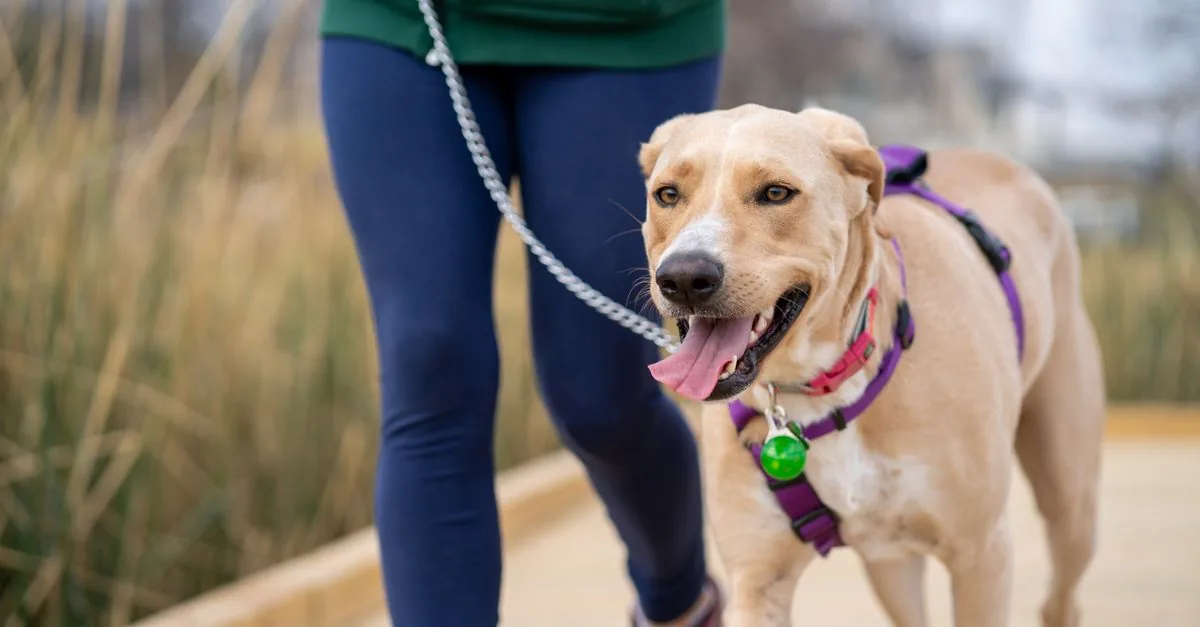
- Use a harness and flat lead rather than a slip collar or prong - pain on seeing other dogs reinforces the negative association
As your dog makes progress you can gradually decrease distance. Do not rush it.
When You Need a Specialist
Working on leash reactivity is manageable alone for mild cases. Contact a certified behaviourist when:
- The dog pulls so hard it cannot be safely held
- Reactivity has persisted for a long time with no improvement despite consistent work
- The dog has ever bitten another dog or a person
- Reactivity appears off lead as well, or is escalating
Strong reactivity requires individual assessment - what is frustration-based for one dog is a behavioural crisis for another. Working without understanding the mechanisms can inadvertently reinforce the problem.
For more on the foundation of calm walks, see our article on loose leash walking.
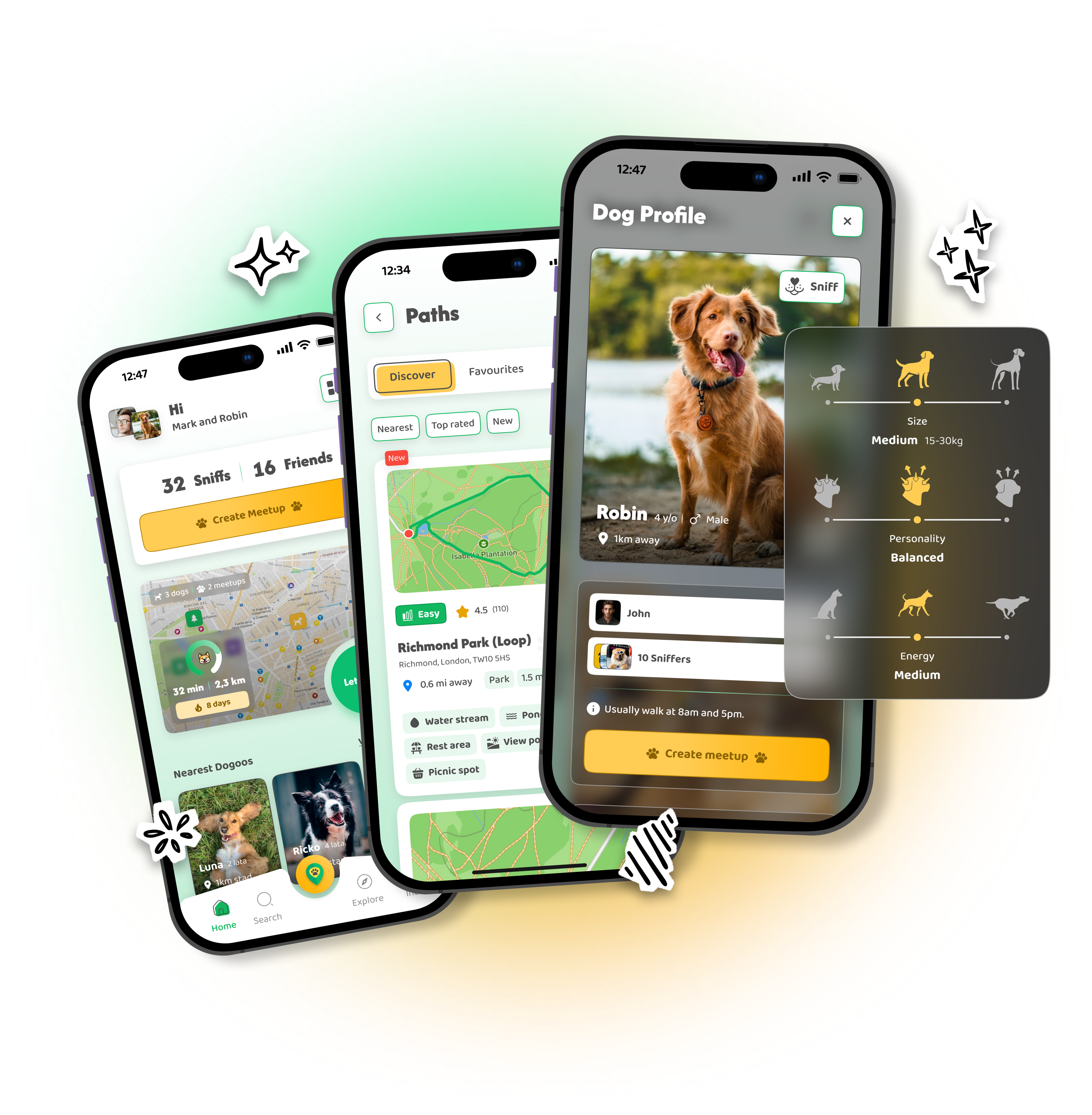
Leash reactivity does not have to mean every walk is a battleground. With consistent work, good technique, and patience, most dogs make clear progress. And when your dog can calmly pass another dog on the street, a whole new world opens up. Use the DOGOUT map to find quieter routes and spots recommended by other owners of reactive dogs - less crowded, better paced, ideal for building confidence one calm encounter at a time.
Frequently asked questions
- What is the difference between frustration reactivity and fear reactivity?
- A frustrated dog wants to approach - it is very social off lead but the leash blocks it and causes escalation. A fearful dog wants distance - it uses barking and lunging to drive the other dog away. Both look similar from the outside but the underlying motivation matters for training.
- What is a reaction threshold?
- The threshold is the distance at which a dog notices the trigger (another dog) but has not yet escalated to reactive behaviour. Behaviour work happens below this threshold, when the dog is calm and capable of learning. For one dog it may be 30 metres; for another, 3 metres - it is individual.
- What is the engage-disengage game?
- The dog sees another dog and looks at it (engage) - you mark and reward. When the dog turns its head away from the trigger and looks back at you (disengage) - you mark and reward even more generously. Over time the dog learns: another dog in view = turn to handler = something great.
- Does pulling the leash or using a prong collar help?
- No - and it can worsen the situation. Pain or discomfort at the moment the dog sees another dog strengthens the negative association. Instead of learning to react calmly, the dog learns that other dogs predict pain.
- How long does it take to work through leash reactivity?
- It depends on the dog, its history, and the severity of reactivity. Clear progress is often visible after several weeks of regular work. Serious reactivity may require months of work with a behaviourist. There is no single answer.
- When should I see a behaviourist?
- When reactivity is intense (dog pulls so hard you cannot hold it), when it has persisted for a long time without improvement, or when the dog has ever bitten another dog or a person - those are clear signals that professional help is needed.