

New Year's Eve With a Dog - A Week-by-Week Fireworks Plan
New Year's Eve with a dog is won by preparation, not by improvising at midnight. Four weeks out, book a vet appointment if your dog panicked in previous years, because noise-aversion medication needs a prescription and a trial dose. A week out, check what your local rules actually allow, set up a den, and plan a long daytime walk. On the night: last proper walk before dusk, always on a lead, windows shut, curtains drawn, background sound on, doors and gates checked twice. New Year's Day is the worst day of the year for shelters, because panicked dogs bolt.
New Year's Eve is the one difficult night of the year you can see coming. That is good news, because everything that genuinely helps a dog through it takes time to arrange: a vet appointment, a trial dose, getting the dog used to a den. Improvising at half past eleven will not work.
This piece does not explain why dogs fear loud noise. There is a separate article on fear of fireworks for that. This is the plan: what to do in which week, so that on 1 January you wake up with your dog at home rather than searching the neighbourhood.
Four weeks out: the vet, if your dog has panicked before
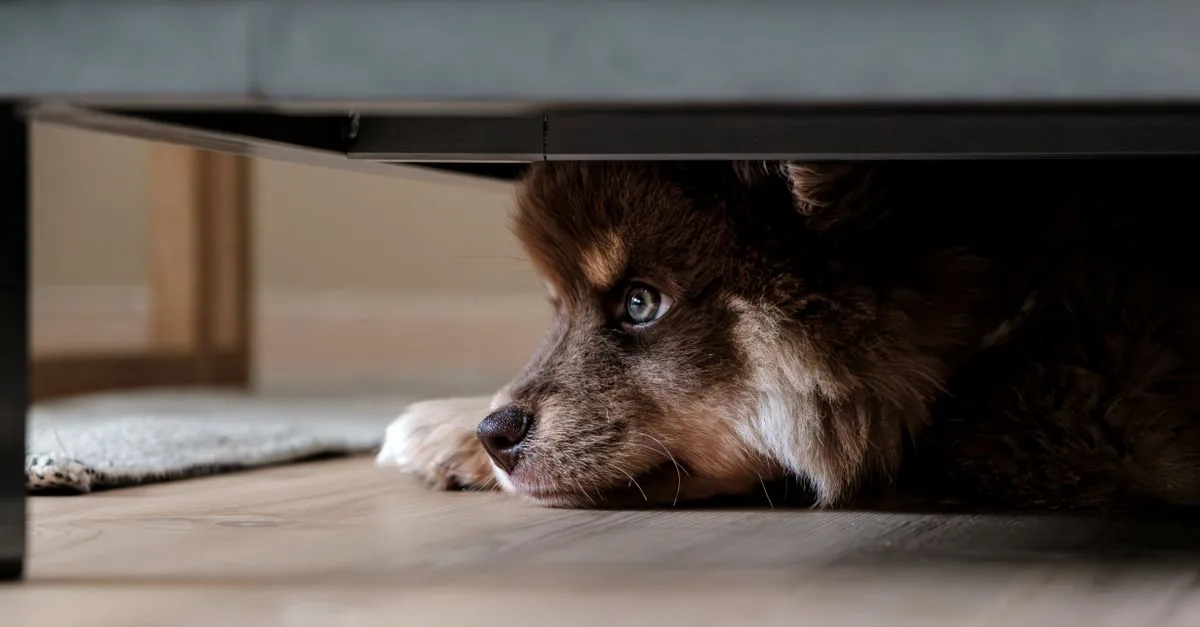
This is the only item on the list with a hard deadline. If your dog shook, drooled, hid under the bed or tried to escape in previous years, that conversation needs to happen a month ahead, not in the final week.
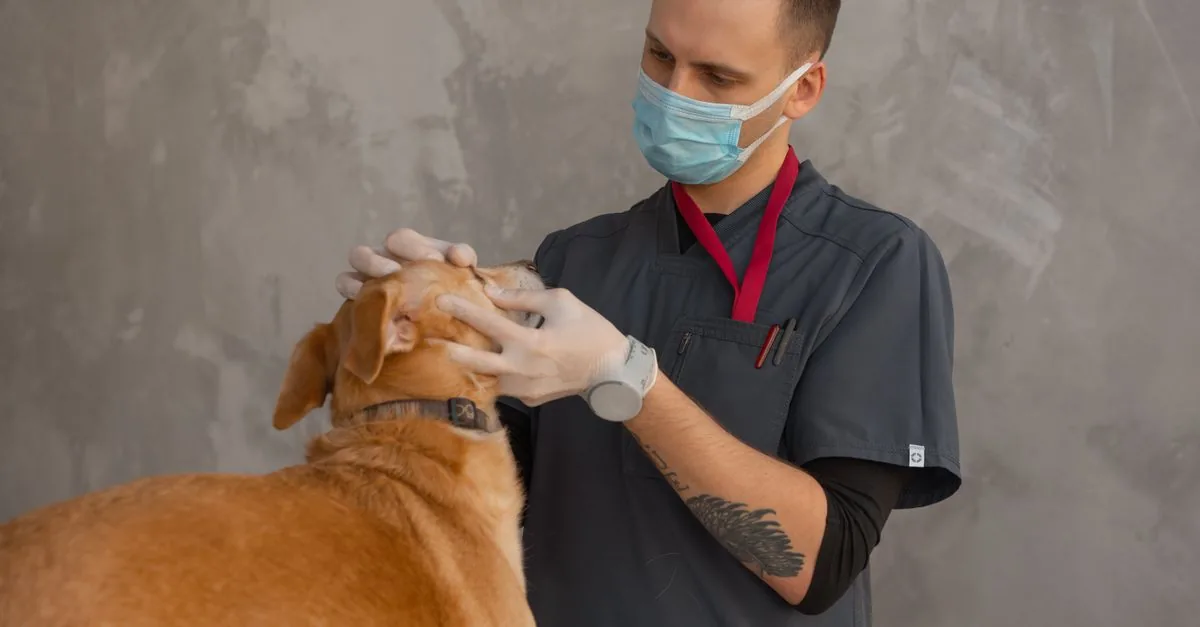
The reason is practical. Noise-aversion medication is prescription-only, some of it has to be ordered in, each drug behaves differently, and every one of them should be trialled on a quiet evening first to see how your particular dog responds. Dexmedetomidine oromucosal gel is the only product licensed specifically for noise aversion in dogs and is given 30 to 60 minutes before the noise starts. Trazodone acts more slowly and is typically given one to two hours ahead. Which one suits your dog is a decision for your vet, not the internet.
What not to do: do not give your dog human medication, or leftovers prescribed for another dog. Do not reach for over-the-counter calming products just because they are available without a prescription. And do not give anything for the first time on the night itself.
If your dog is only mildly bothered, medication may not be needed at all, but the consultation is still worth having. A vet or behaviourist can judge how severe the fear actually is and whether it is worth starting desensitisation work before next year.
Three weeks out: microchip, ID tag, phone number
New Year's Day is the worst day of the year for shelters, and not because people abandon dogs. It is because frightened dogs escape: they break off leads, clear fences, slip through a door left ajar. A dog that never wanders will run blindly when panicking.
Three things to check, each a few minutes' work:
- Is the microchip number registered, and are the details current? The chip alone achieves nothing if the number attached to it is from two house moves ago. We cover mandatory microchipping separately, but New Year's Eve is a good prompt to simply verify it.
- Does the dog wear an ID tag with a working number? Whoever finds your dog at two in the morning does not own a chip scanner. They do own a phone.
- Will the harness hold? A panicking dog backs out of a collar with a movement it has never made before. A three-point escape-proof harness is safer for this one night than a collar.
Take a current photo too. Not an artistic profile shot, but a clear, full-body picture showing the dog's markings. That is the photo you will paste into a post if you need to.
Two weeks out: a den the dog already knows
A den built at eight in the evening on 31 December is, to a dog, a strange new object. A den it has been sleeping in for a fortnight is its own place.
Pick the room furthest from street-facing windows, ideally one with no window or a window onto a courtyard. A bathroom, a walk-in cupboard, a hallway. Put a bed or an open crate there with a blanket over the top, and add something that smells of you. For the next two weeks, feed the dog there, hand out chews there, let it rest there. The aim is that on the night it goes there by itself, because it is a good place, not because you put it there.
One rule holds all night: the dog must be free to go into the den and free to come out. Do not shut it in. An animal that cannot escape what frightens it panics harder.
One week out: find out how long the noise will actually last
Poland has no nationwide ban on fireworks; successive bills have stalled in parliament. Local rules do apply and they differ from city to city. Many municipalities, and some regional governors, have limited pyrotechnics to 31 December and 1 January, and a few have gone further by restricting their use on private land too where the noise carries beyond the property line. Disturbing the peace carries a fine.
For you this has one practical consequence: check your own municipality's rules, because they determine whether the noise lasts one night or spreads across a week. If people in your area start letting off fireworks around Christmas, the plan has to stretch beyond a single evening.
In the same week: stock up on food and water so you do not have to go out on the morning of 1 January, and buy something long-lasting to chew for the night itself.
31 December, hour by hour
Morning and early afternoon - a long walk. A tired dog copes with the evening better than one carrying a full day's energy. This is the only slot for a proper outing, so use it: a longer route, plenty of sniffing, an unhurried pace. If you want somewhere away from the built-up streets, it is worth checking the DOGOUT map for green space within reach.
Before dusk - the last real walk. Stray bangs start long before midnight, often from mid-afternoon. After dark you go out briefly and only for toilet breaks.
Always on a lead. This is the one absolute rule of the day. Even a dog that walks off lead all year and recalls reliably stays on a lead on 31 December. The flight reflex beats obedience training every time.
Evening - feed earlier than usual. A stressed dog often refuses food, and a full stomach an hour before the noise is not ideal. Feed at the normal time or slightly earlier.
Before eight - switch the house to night mode. Windows closed, blinds down, curtains drawn. Curtains muffle sound more than you would expect and, more importantly, they block the flashes. Put background sound on: television, radio, music, white noise. The point is not to drown out the bangs, which is impossible, but to stop the silence between them from making each new one more dramatic.
Doors and gate - checked twice. Most escapes happen through a door opened to guests.
The night itself
Things that help:
- Be at home. If your dog fears noise, this is the worst night of the year to leave it alone. If you genuinely cannot stay, arrange in advance who will, because nobody is free at the last minute.
- Behave normally. Do not change the rhythm of the evening, do not tiptoe, do not stare at the dog after every bang. Your dog reads your tension.
- Comfort your dog if it asks for it. The idea that stroking reinforces fear is a myth. Fear is not a behaviour learned for a reward. If the dog comes to you, hold it calmly.
- Offer something to chew. Sustained chewing lowers arousal, provided the dog is calm enough to want it at all.
Things that make it worse:
- Pulling the dog out of its den to reassure it.
- Taking the dog to watch fireworks so it gets used to them. That is not how it works and never was.
- Telling the dog off for whining, scratching or urinating out of fear. It is not being difficult and it has no control over it.
- Alcohol, a noisy houseful and a door opening every few minutes, if your dog is frightened.
The morning of 1 January
The first morning of the year is its own problem, for two reasons. First, in many places the banging continues into the day. Second, pavements and grass are littered with spent pyrotechnics, and a dog that swallows a used firework or a piece of packaging is heading to the vet.
Practically: go out briefly, on a lead, watch the ground, and stay away from wherever was loudest the night before. Save the long walk for later, when it is quieter and cleaned up.
When a one-night plan is not enough
If your dog goes through this in a state of panic every year, firefighting once a year stops being adequate. Noise phobia generally deepens rather than fading on its own, and it often spreads from fireworks to thunderstorms, power drills and slamming doors.
The work that actually changes the picture is desensitisation and counter-conditioning run by a behaviourist, spread over months and done out of season. January is a better month for that than December: you have eleven months in hand.
Signs it is time to book a specialist rather than improvise: the dog injures itself trying to escape, destroys doors or windows, refuses food and water for many hours, stays panicked long after the last bang, or reacts worse each year.
Plan a calm walk before the season starts
The best thing you can do for your dog in December is plenty of daytime exercise and a predictable evening. On the DOGOUT map you can see where in your area you can walk away from the built-up streets, and who else heads out at a similar time. A walk someone is expecting you at is much harder to skip than one you only planned in your head, and those longer, calmer outings are exactly what builds the reserve your dog will draw on come New Year's Eve.
Sources
Frequently asked questions
- When should I start preparing a dog for New Year's Eve?
- If your dog panicked in previous years, start four weeks ahead. That is roughly how long it takes to get a vet appointment, fill a prescription and trial the medication on a quiet evening to see how your particular dog responds. Giving a drug for the first time on the night itself is a bad idea: you do not know how it will work, and if it works badly you have no plan B.
- What time should I walk my dog on 31 December?
- Take the last proper walk before dusk, early afternoon at the latest, because stray bangs start long before midnight. After dark, go out briefly and only for toilet breaks, always on a lead and in a harness the dog cannot slip. Never let a dog off lead on 31 December or 1 January, even one that is normally reliable off lead.
- Does comforting a frightened dog reinforce the fear?
- No, that is a myth. Fear is an emotion, not a behaviour learned for a reward, so it cannot be reinforced by stroking. If your dog seeks contact, give it calmly. What genuinely does not help is faking excitement at every bang, or dragging the dog out of its hiding place.
- What should I do if my dog bolts during fireworks?
- New Year's Day is the worst day of the year for shelters precisely because panicked dogs break off leads and clear fences. So before the night, check that the phone number attached to your dog's microchip is current in the registry, and that the dog wears an ID tag. If your dog does bolt: post in local groups immediately, call the shelter and the municipal police, and go back to where you lost the dog, because many circle the area.
- Can I leave my dog alone on New Year's Eve?
- If your dog is afraid of noise, it is the worst night of the year to leave it alone. Panic plus isolation is the combination that leads dogs to destroy doors and injure themselves trying to escape. If you truly cannot stay, arrange someone trusted well in advance, because nobody is available at the last minute on New Year's Eve.
- Are fireworks restricted in Poland?
- There is no nationwide ban; successive bills have stalled in parliament. Local rules do apply, though: many municipalities and some regional governors have limited pyrotechnics to 31 December and 1 January, and some cities have gone further. Check your own municipality's resolution, because it determines how long the noise will realistically last where you live.