

Pug Temperament - the Full Picture Before You Adopt
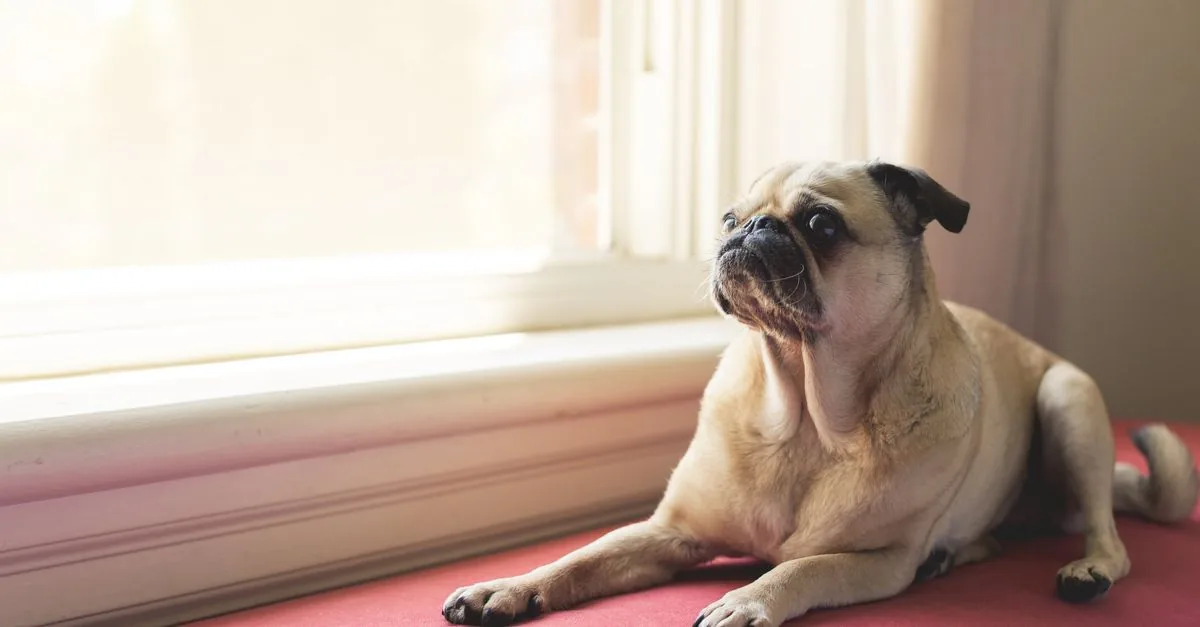
Pugs are among the most sociable and people-focused dogs you can own - cheerful, affectionate, and well-suited to apartment life. They get on well with children, other dogs, and cats, but have a clear stubborn streak and do not cope well when left alone for long periods. Their flat-faced (brachycephalic) anatomy limits exercise intensity - two short, calm walks a day is what they need, not long runs.
Pugs have spent thousands of years keeping company with emperors, kings, and ordinary people - and they have always known exactly how to make whoever they are with feel like the most important person in the room. Behind the wrinkled face and curled tail is a dog built entirely for human companionship: stubborn in the best possible way, genuinely funny, and completely devoted. Before you adopt one, here is what the temperament actually looks like.
The pug personality at a glance
Pugs were bred as companion dogs - exclusively - for thousands of years, and every trait they have reflects that purpose. This is not a dog that wants to go off and do its own thing. It wants to be near you. On the sofa, in the kitchen, in the bedroom, wherever you happen to be.
Core character traits:
- People-focus - few breeds are as consistently oriented toward their human
- Cheerfulness - naturally upbeat, with a clown-like personality that regularly makes owners laugh
- Stubborn streak - smart enough to understand what you want, independent enough to decide it can wait
- Emotional sensitivity - picks up on household moods and does not thrive in tense environments
- Playfulness - pugs have a genuine sense of humour and a theatrical flair for drama
Is a pug right for you?
Pugs have specific strengths and specific limits. An honest look at your lifestyle before adopting will save a lot of difficulty later.
Lifestyle fit at a glance
| Lifestyle | Good fit? |
|---|---|
| Apartment living | Yes - small, reasonably quiet, no garden needed |
| Family with children | Yes - patient, gentle, thrives on company |
| Remote work or frequently home | Yes - loves being close to its person |
| Older or less active owner | Yes - low exercise demand |
| Running, cycling, or active sport | No - brachycephaly rules out intense exertion |
| Long hours away from home daily | No - prone to separation anxiety |
| Hot climate without air conditioning | With caution - overheats very quickly |
Where the pug comes from
The pug is one of the world's oldest companion breeds. Its roots trace back to ancient China, where as early as around 400 BC a short-legged, flat-faced dog called the Lo-Sze was kept as a court companion for Chinese emperors - living in luxury and guarded by soldiers.
Dutch traders brought the breed to Europe in the sixteenth century, where it quickly became fashionable at royal courts. The pug reportedly became the official dog of the House of Orange in 1572, after one named Pompey allegedly saved the life of the Prince of Orange. In nineteenth-century Britain, Queen Victoria was a devoted enthusiast. For centuries the pug was a symbol of status and companionship - a tradition that has not faded.
Affection and the separation anxiety risk
The pug's devotion to its owner is one of its most appealing traits - and one of its most demanding ones. Separation anxiety is common in the breed. A pug left alone for too long may bark, destroy belongings, or simply sit and suffer in silence.
If your lifestyle involves long daily absences, plan ahead: a dog walker, a pet sitter, or doggy day care. Or choose a breed that handles solitude more easily. A pug is a companion dog in the fullest sense - it is not designed to spend the day waiting for you to come home.
How pugs get on with children, dogs, and cats
Pugs are typically excellent with children - they have real patience and do not overreact to noise or sudden movement. As always, interactions between small children and any dog should be supervised by an adult.
With other dogs they tend to do well, though - like every breed - they benefit from proper socialization from puppyhood. Cats and small household pets? Generally no problem, especially when the dog grows up alongside them.
Stubbornness versus intelligence - what it looks like in practice
Pugs are clever - genuinely so. They are also stubborn - equally genuinely. The combination means your pug almost certainly understands what you are asking of it. It has simply weighed up whether now is the right moment.
Training works best with positive reinforcement: treats (pugs are highly food-motivated, which is a genuine training advantage), praise, and short sessions of around 10-15 minutes. Coercive or harsh methods tend to produce a pug that simply shuts down. Consistency across everyone in the household is essential - a rule one person enforces and another ignores is not a rule as far as a pug is concerned.
One small illustration: show a pug its lead and it will look at you, look at the lead, look back at you - and then slowly get up. It is coming for the walk. Just on its own schedule.
Exercise needs - less than you might think
This is where pugs differ noticeably from most other breeds. Brachycephaly - the shortened skull structure that gives pugs their distinctive flat face - means narrowed airways, reduced heat tolerance, and limited aerobic capacity. Many pugs also benefit from wearing a harness rather than a collar, which avoids pressure on the trachea.
That does not mean pugs need no exercise. It means they need the right kind:
- Two short walks per day, around 15-20 minutes each, at a relaxed pace
- In summer: early morning or evening only - never midday walks in heat or high humidity
- No long runs, no cycling, no intense fetch sessions in warm weather
Mental stimulation matters just as much as physical exercise. Nose work - hiding treats around the home, a sniff mat, simple scent games - tires a pug as effectively as a walk, with far less strain on its respiratory system. A few minutes of sniffing work can have a meaningfully calming effect on a pug that needs to burn off energy.
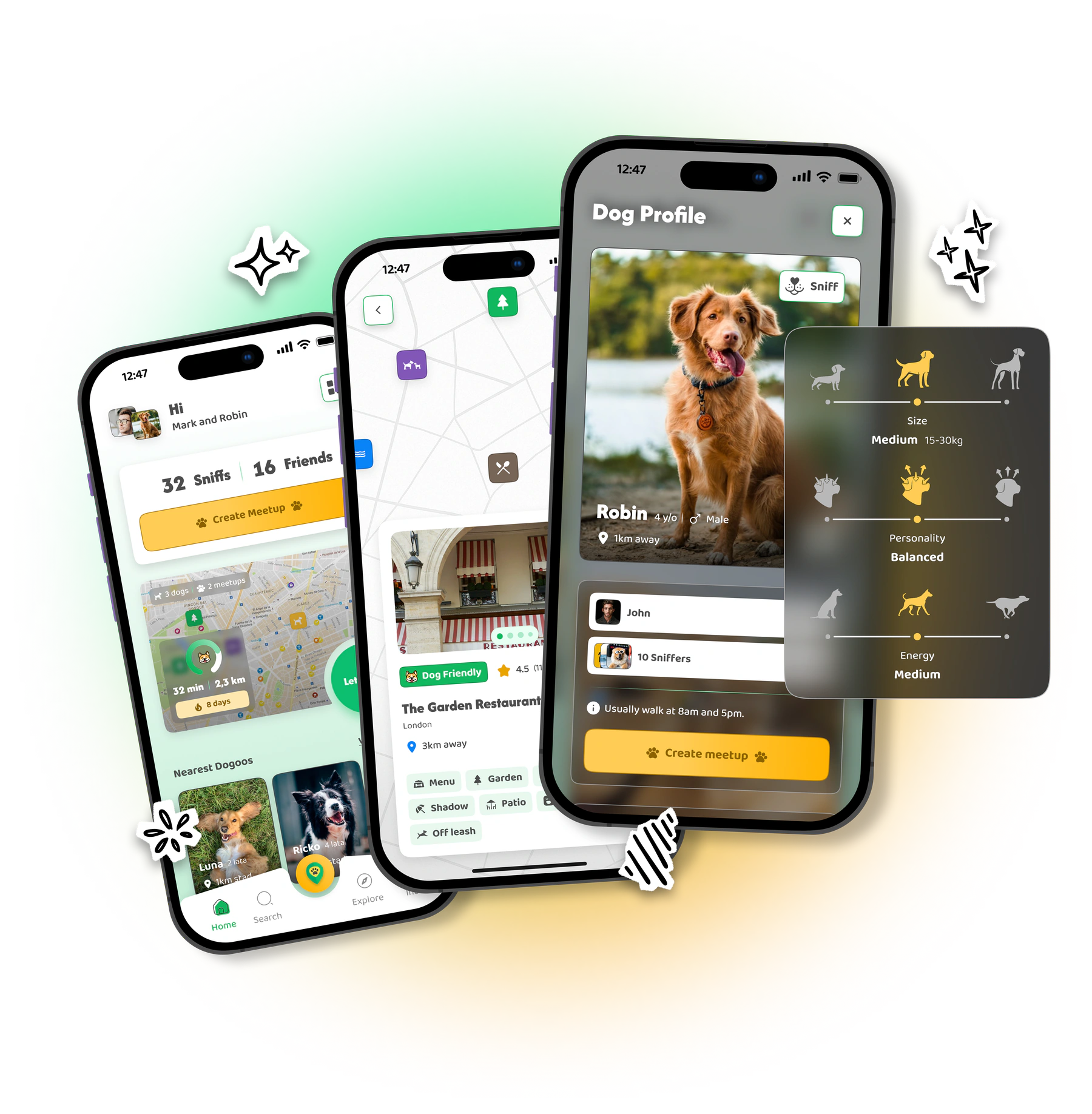
For walks that suit a pug's pace, the DOGOUT map is worth checking - other owners mark dog-friendly parks, off-lead areas, and quieter routes nearby. You can also find owners of dogs suited to calmer, shorter walks and arrange to go out together - a shared stroll is a pug's idea of a perfect morning.
A pug gives back everything you put in - and then some. Give it your presence, a calm home, and a daily dose of fresh air, and it will reward you with unconditional companionship every single day.
Frequently asked questions
- Are pugs aggressive?
- No - pugs are one of the gentlest and most good-natured breeds. Aggression is extremely rare. They are naturally sociable, even-tempered, and friendly toward both people and other animals.
- Are pugs good apartment dogs?
- Yes - they are among the best breeds for apartment living. Pugs are small, reasonably quiet, and do not need a garden or intense exercise. Their main weakness is solitude - they do not cope well with long hours alone.
- Are pugs good with children and cats?
- Generally yes. Pugs are patient, gentle, and sociable. They do well with children and typically have no trouble with cats or other small pets, especially when raised alongside them.
- Are pugs hard to train?
- Pugs are intelligent but have a stubborn streak. They respond best to positive reinforcement - treats and praise. Short, consistent sessions work better than long drills. Methods based on force or punishment tend to backfire.
- How much exercise does a pug need?
- Two calm walks of about 15-20 minutes per day is typically enough. Because of their brachycephalic anatomy, pugs overheat easily and have limited aerobic capacity. In summer, schedule walks in the early morning or evening - never at midday.
- Can a pug be left alone?
- For short periods - up to around 3-4 hours. Pugs bond closely to their owners and are prone to separation anxiety. Regularly leaving a pug alone for a full working day is likely to cause stress and problem behaviours.