

Crate Training a Dog the Right Way
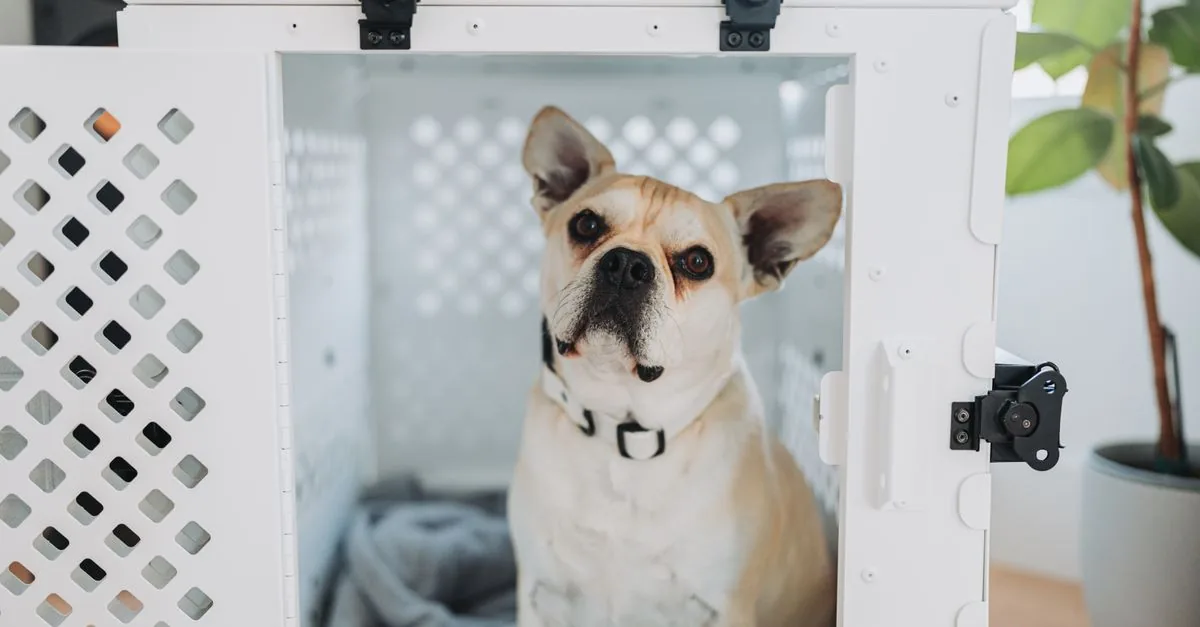
A crate is a safe den your dog chooses to rest in - never a punishment and never a place to lock a dog all day. Introduce it slowly: feed your dog inside, close the door for short intervals, then build up the time gradually. Done well, it helps with house-training and with calm time alone. A puppy should not stay crated longer than 2-3 hours, and an adult dog no longer than 3-4 hours during the day.
Few things split dog owners like the crate. Some see a cage; others see the calmest spot in the house. A crate is exactly what you make it. Done right, it is a den: a snug, secure hideaway your dog walks into on its own when it wants peace and quiet. Done wrong, it is a punishment and a source of stress. This guide is about the first version.
What a crate is, and what it isn't
Dogs are den animals. A small, enclosed space sheltered on three sides is not a restriction to them - it is a refuge. A properly introduced crate works like a private room: a place to nap, escape the noise, and switch off away from kids or guests.
But there are two iron rules you never break:
- A crate is never a punishment. You do not shut your dog in it because it chewed something or made a mess. A single episode like that can undo weeks of work.
- A crate is not all-day confinement. It is a resting place, not a storage box for the hours you are at work. Your dog still needs walks, exercise, company and stimulation.
If you treat the crate as a shortcut to "dog disappears for nine hours," you are doing it wrong - and the dog pays for it.
What size crate should you choose?
Size matters more than people think. Your dog should be able to stand up, turn around and lie down with its legs stretched out. And that is it - you are not giving it a room, you are giving it a cozy den.
A crate that is too big sabotages house-training: if the dog has space to sleep in one corner and toilet in another, that is exactly what it will do. So for a puppy you buy the final adult-size crate and shrink it with a divider panel, moving it back as the dog grows.
| Element | Right | Wrong |
|---|---|---|
| Height | Dog stands without ducking | Dog hunches under the roof |
| Floor space | Turns and lies down comfortably | So much room it toilets in a corner |
| Bedding | Soft, easy to wash | Bare tray, no padding |
| Location | Quiet corner near the family | Draughty, full sun, isolation |
How to introduce the crate step by step
The most common mistake is rushing. Dropping the dog into the crate, shutting the door and walking off is the fastest way to make it hate the place. You go slowly, at the dog's pace, not yours.
- Set up the open crate in the room where you live. Door propped open permanently, soft bedding inside. Let the crate simply exist, with no pressure.
- Toss treats inside. The dog walks in, takes the reward, walks out. No shutting the door. Repeat until going in is a non-event.
- Feed your dog in the crate. Put the bowl inside. Food builds the strongest positive association there is.
- Close the door briefly. While the dog eats or chews, shut the door for a few seconds, then open it. Build up gradually - seconds, then minutes.
- Leave the room for a moment. Close the door, step away for a minute, come back calmly. Build the time slowly, without making a ceremony out of leaving and returning.
- Extend the time gradually. Only once the dog is relaxed at every stage do you move to longer periods and leaving the dog alone in the house.
Do not let the dog out the moment it whines - or you teach it that whining opens the door. Wait for a quiet moment and only then open up. The exception: if you suspect a puppy genuinely needs the toilet, take it out, but calmly and without play.
How long can a dog stay in a crate?
This is where most people slip up. The limits are real and come from physiology, not preference:
| Dog age | Maximum daytime crate time |
|---|---|
| Puppy 8-10 weeks | About 30-60 minutes |
| Puppy 3-4 months | 2-3 hours |
| Puppy 4-6 months | 3-4 hours |
| Adult dog | 3-4 hours |
A handy rule for puppies: months of age plus one = roughly the number of hours the dog can hold on without a toilet break. A two-month-old puppy is about three hours, tops. The 2-to-1 rule helps too: for every two hours in the crate, at least one hour of activity outside it.
These are not cautious estimates - a young dog physically cannot hold its bladder longer. Pushing past the limits ends in accidents in the crate and sets back house-training.
The crate and house-training
This is where the crate proves its real value. Dogs naturally avoid soiling where they sleep. A correctly sized (not too big) crate teaches a puppy to hold on until it gets outside. It is a natural mechanism you can put to work.
But the crate does not do the job for you. The key is frequent, regular trips outside: right after leaving the crate, after meals, after play, before bed. For how to build that routine without the usual mistakes, read puppy house-training.
The crate and time alone
A crate can help a dog settle calmly at home - but only as part of a bigger plan. The crate alone does not cure separation anxiety. If a dog left alone panics, drools, howls and tries to wreck the crate, that is not a crate-training problem but a sign of something deeper - read dog separation anxiety and consider seeing a behaviorist.
If your dog is mainly bored and trashes the place out of boredom, a crate plus a solid dose of exercise and stimulation before you leave usually does the trick - more in destructive dog when home alone.
The most common mistakes
- Throwing the dog into the crate cold on day one and leaving for hours.
- Using the crate as punishment.
- Leaving the dog crated for too long.
- A crate that is too big - it sabotages house-training.
- Letting the dog out in response to whining.
- Treating the crate as an all-day work solution instead of a resting place.
A well-introduced crate gives your dog a sense of security and gives you peace of mind. But no den replaces a walk. Once your dog has rested, get out there with it - check the DOGOUT map for places to let your dog run nearby, and set up a walk with someone from your neighborhood.
Frequently asked questions
- Is crate training cruel?
- Not if you do it properly. Dogs are den animals, so a small enclosed space gives them a sense of security. A crate only becomes cruel when it is used as punishment or when a dog is shut in for far too long. Done well, your dog walks in on its own to rest.
- How long can a dog stay in a crate?
- A puppy should not be crated for more than 2-3 hours without a toilet break, because it cannot hold its bladder yet. An adult dog should not stay crated longer than 3-4 hours during the day. The crate does not replace walks, exercise and company - it is a place to rest, not all-day confinement.
- What size crate does my dog need?
- Your dog should be able to stand up, turn around and lie down with legs stretched out - and no more. A crate that is too big undermines house-training, because the dog sleeps in one corner and toilets in another. For a puppy, buy the adult-size crate and shrink it with a divider as the dog grows.
- Can I use the crate when I tell my dog off?
- Never. The crate must only ever mean good things: food, calm, sleep. Shutting a dog in it as punishment destroys those associations and teaches the dog to fear it. That ruins the whole training.
- Does a crate help with house-training?
- Yes. Dogs naturally avoid soiling where they sleep, so a correctly sized crate teaches a puppy to hold on until it gets outside. The key is frequent, regular toilet breaks - the crate supports the training but does not replace taking the dog out.
- My dog whines in the crate at night - what should I do?
- First make sure it is not a genuine need to go out - puppies often do. If it is not, do not let the dog out in response to whining, or you teach it that whining works. Step back to a shorter, earlier stage and build up the time more slowly. If the dog panics, drools and tries to destroy the crate, talk to a behaviorist.