Dandruff in Dogs - Ordinary Flaking or Something More
A small amount of dandruff in a dog - fine, white flakes visible when you part the coat - is usually mild dry skin that responds to grooming changes. But if the flakes are large, numerous, concentrated on the back, and seem to move on the skin, it could be so-called walking dandruff - an infestation of Cheyletiella mites, which is highly contagious to other animals and people. Heavy, persistent or moving dandruff needs a vet visit.
You're brushing your dog's coat and spot small white flakes - the first thought is ordinary dandruff, just like a person might get. And often that's exactly what it is: mild dry skin that's easy to fix. But sometimes those flakes have a different explanation, and it's worth knowing what to look for.
Ordinary dandruff - the most common cause
In most cases, dandruff in dogs is simply dead skin cells shedding faster than usual. The most common causes are the same as for dry skin generally:
- low indoor humidity, especially during heating season,
- bathing too often or using the wrong shampoo,
- a lack of fatty acids in the diet,
- mild skin irritation.
This kind of dandruff shows up as single, small flakes scattered through the coat, usually without intense itching alongside it. Read more about causes and grooming in our article on dry skin in dogs.
Walking dandruff - when the flakes seem to move
There's a rarer, but worth-knowing, variant: cheyletiellosis, commonly called "walking dandruff." It's an infestation of Cheyletiella mites, which live on the surface of the skin rather than inside it. The name comes from the fact that, on close inspection, the large dandruff flakes appear to move - that's the mites shifting underneath them.
Characteristic features of walking dandruff:
- large, numerous skin flakes, clearly visible to the naked eye,
- concentrated mainly on the back and upper body,
- sometimes visible movement under the flakes on closer inspection,
- variable, sometimes moderate itching (not always intense).
Unlike sarcoptic mange, Cheyletiella mites don't burrow deep into the skin, but they're highly contagious - spreading easily to other dogs, cats, and even temporarily to people (causing itchy bumps that clear up once the source animal is treated).
How to check what you're dealing with
Part the coat where you see the most dandruff, ideally in good light. If the flakes are small, single and stationary, it's probably just dry skin. If they're large, numerous, concentrated on the back and look like they're shifting, that's a signal to book a vet visit. A reliable diagnosis only comes from a skin scrape examined under a microscope, because the visual picture can be misleading even for an experienced owner.
What to do in the meantime
Until your appointment (if you suspect mites), it's worth:
- limiting close contact between your dog and other pets at home, to avoid spreading a possible parasite,
- not trying to treat it yourself with guesswork products - mites need specific antiparasitic treatment prescribed by a vet,
- washing bedding and fabrics your dog touches on a hot cycle.
If it's ordinary dandruff related to dry skin, less frequent bathing with a gentle shampoo, a humidifier and a good diet are usually enough - improvement shows within a few weeks.
Preventing dandruff day to day
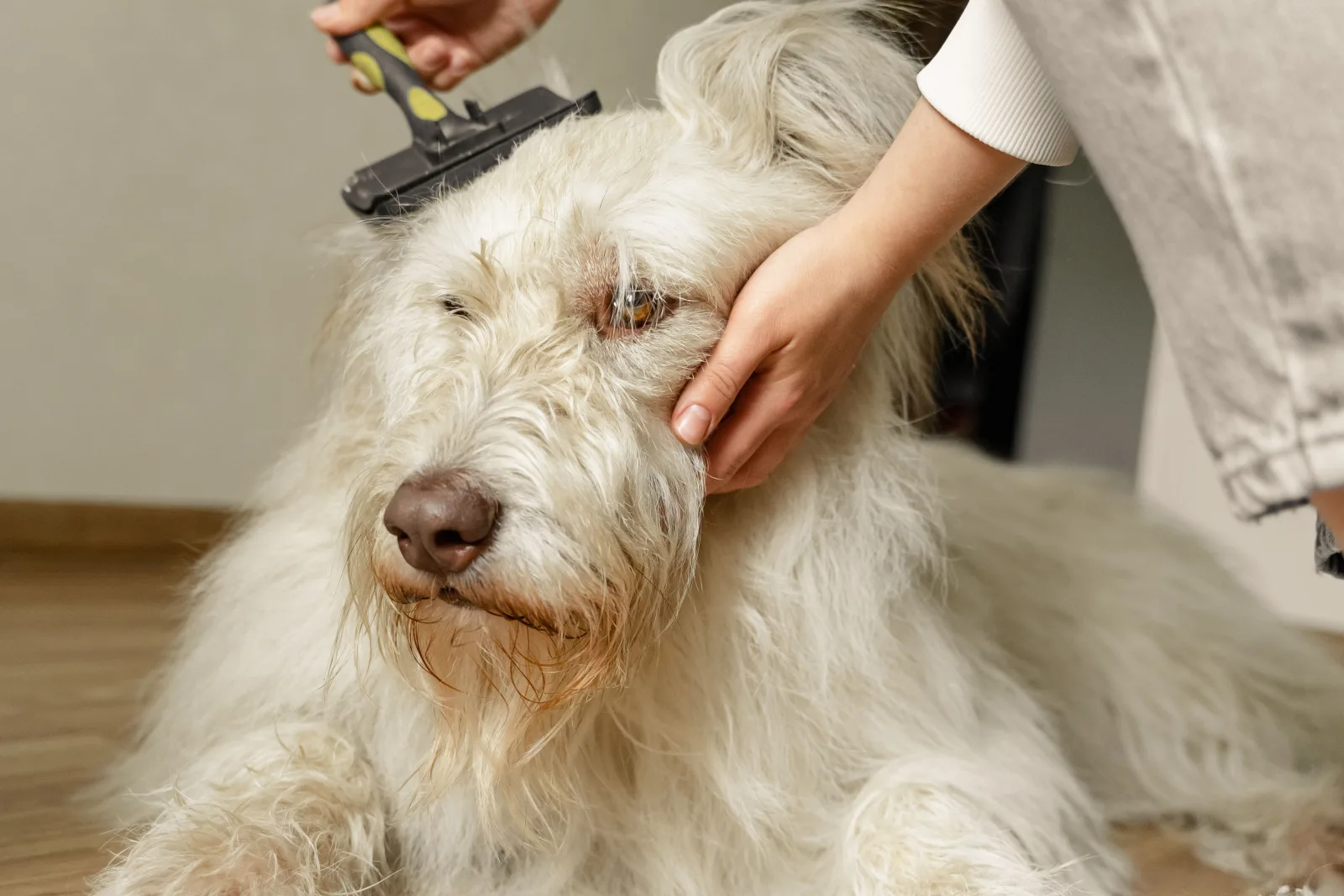
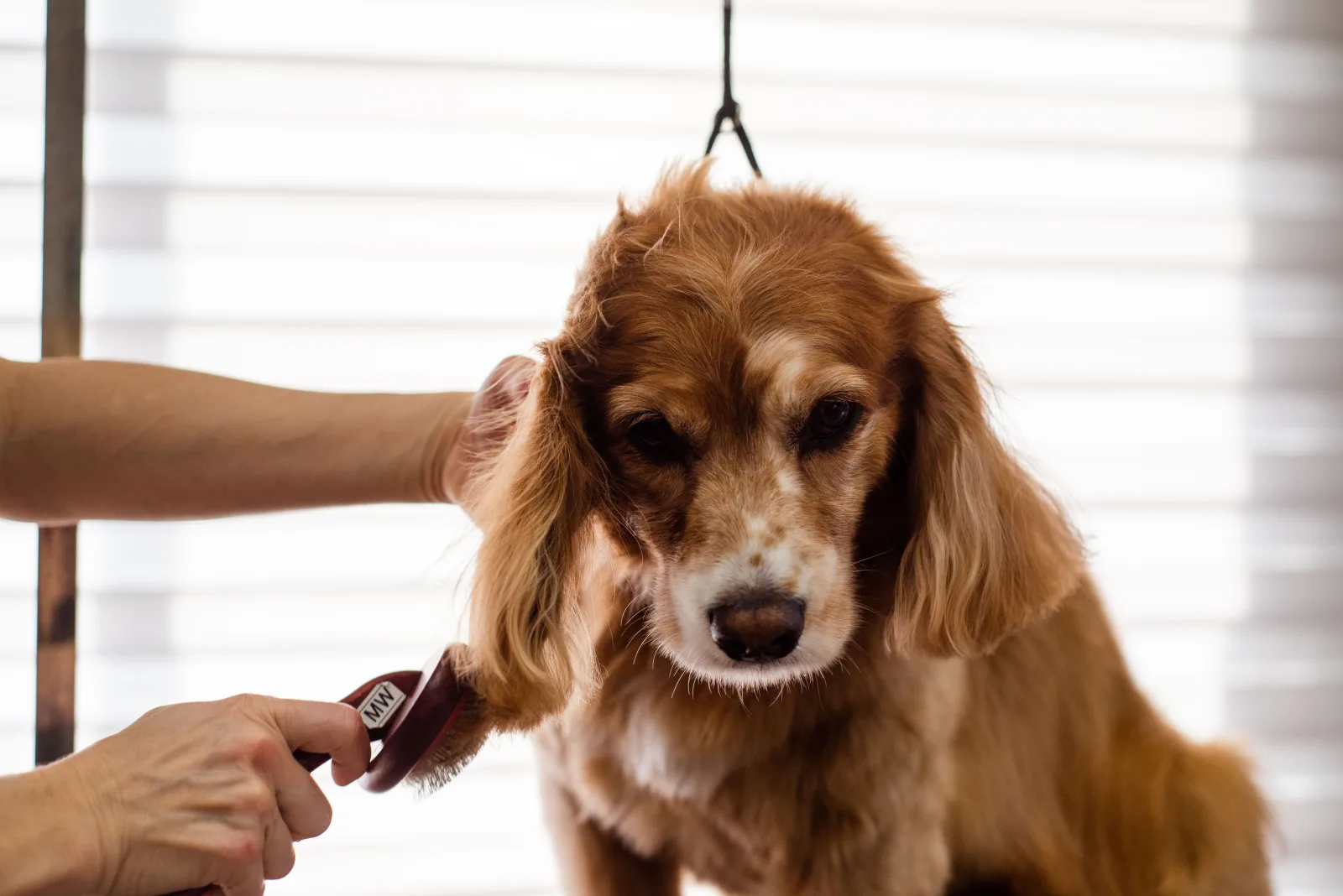
Regular brushing - ideally a few times a week, more often for thick-coated breeds - is the simplest way to catch unusual dandruff early, before it gets worse. Brushing spreads the skin's natural oils and removes dead skin cells before they build up into visible flakes. It's also worth keeping year-round parasite prevention up to date, not just in summer - it lowers the risk of both fleas and mites like Cheyletiella.
When to see a vet
Book a visit when: the flakes are numerous and large, appear to move, come with noticeable itching or reddened skin, there are other pets at home (mites spread easily between them), or ordinary grooming improvements don't help after a few weeks.
A well-groomed coat means a dog ready for any terrain - forest, beach, muddy trail. Find where other owners are walking near you on the DOGOUT map, and get out there together once your dog's skin is back in shape.
Sources
Frequently asked questions
- What's the difference between ordinary dandruff and walking dandruff in dogs?
- Ordinary dandruff is a scattering of small, single white flakes, the result of mild dry skin - it doesn't move and usually doesn't come with intense itching. Walking dandruff (cheyletiellosis) means large, numerous flakes concentrated mainly on the back and neck that, on close inspection, appear to move - that's the mites hiding underneath them.
- Is walking dandruff contagious to people?
- Yes, Cheyletiella mites can temporarily transfer to human skin and cause itchy, red bumps, though they can't reproduce there, so symptoms in people usually clear up on their own once the animal is treated. The mite also spreads easily to other dogs and cats in the home, so if you suspect it, it's worth checking every pet.
- How can I check myself whether it's ordinary dandruff or mites?
- Part the coat where you see the most flaking and look closely, ideally in good light or with a magnifying glass. If any of the flakes appear to move, it's likely mites. If in doubt, your vet can take a skin scrape and examine it under a microscope - that's the only reliable way to diagnose it.
- Can ordinary dog dandruff be fixed with grooming alone?
- Often, yes - gentler shampoos, less frequent bathing, a humidifier during heating season and a good diet usually improve things within a few weeks. If the dandruff doesn't clear up despite these changes, it's worth checking with your vet to rule out other causes.
- When does dog dandruff need a vet visit?
- When the flakes are numerous, large, concentrated on the back, appear to move, come with noticeable itching or skin irritation, or the problem doesn't improve despite better grooming. Mites need prescription antiparasitic treatment from a vet - they won't clear up on their own.