Dry Skin in Dogs - Where It Comes From and What to Do
Dry skin in dogs is most often caused by low indoor humidity (winter heating), bathing too often, a lack of fatty acids in the diet, or allergies. Bathing less frequently, a gentle shampoo and attention to diet usually help. See a vet if the flaking persists despite these changes, or comes with hair loss, open sores, an unpleasant smell or intense itching - that can point to an allergy, infection or hormonal condition, not just seasonal dryness.
Visible white flakes in the coat, skin that feels rough to the touch, maybe a dusting of dandruff on the bed - dry skin in dogs is one of the most common, and most commonly dismissed, skin issues. Most of the time a simple grooming change fixes it. Sometimes it's a sign of something bigger.
How to spot dry skin in a dog
Beyond visible flakes in the coat, dry skin feels rough to the touch, sometimes slightly tight, without the natural smoothness of healthy skin. The coat in those spots often looks dull and feels brittle. Some dogs develop small cracks on the paw pads, especially in winter, when salt and cold add extra strain on the skin. This helps tell plain dryness apart from the greasy, intensely itchy skin typical of an infection or allergy.
Common causes
Low indoor humidity. Winter heating can drop indoor humidity below 30 percent, which dries out skin - a dog's just as much as a person's. This is the most common cause of seasonal dryness, most visible in the colder months.
Bathing too often. Bathing strips away the natural oils that protect the skin. If you're bathing your dog more often than every 4-6 weeks without a medical reason, or using a shampoo not made for dogs, that's a frequent culprit.
Dietary gaps. Not enough omega-3 and omega-6 fatty acids in the food shows up in coat and skin condition - it turns dull, flaky, sometimes itchy.
Allergies. Environmental or food allergies can show up as dry, irritated skin, usually with more itching than plain seasonal dryness.
Age and breed. Older dogs tend to have thinner, less elastic skin that's more prone to drying out. Some breeds - Schnauzers, Cocker Spaniels and West Highland White Terriers among them - are statistically more prone to skin issues, though that doesn't mean every dog of that breed will develop dry skin.
Parasites. Fleas, ticks and mites (including the ones behind dandruff in dogs) can irritate skin in a way that looks a lot like ordinary dryness.
What you can check and change yourself
Before booking an appointment, run through this short checklist - it's often enough:
- Check your home's humidity. If the heating is running full blast, consider a humidifier - aim for 30-50 percent.
- Cut back on bathing. Bathe your dog only when truly necessary, always with a gentle, dog-specific shampoo.
- Check the food quality. A good complete diet should cover fatty acid needs. If the coat has looked dull for a while, ask your vet about omega-3 supplementation.
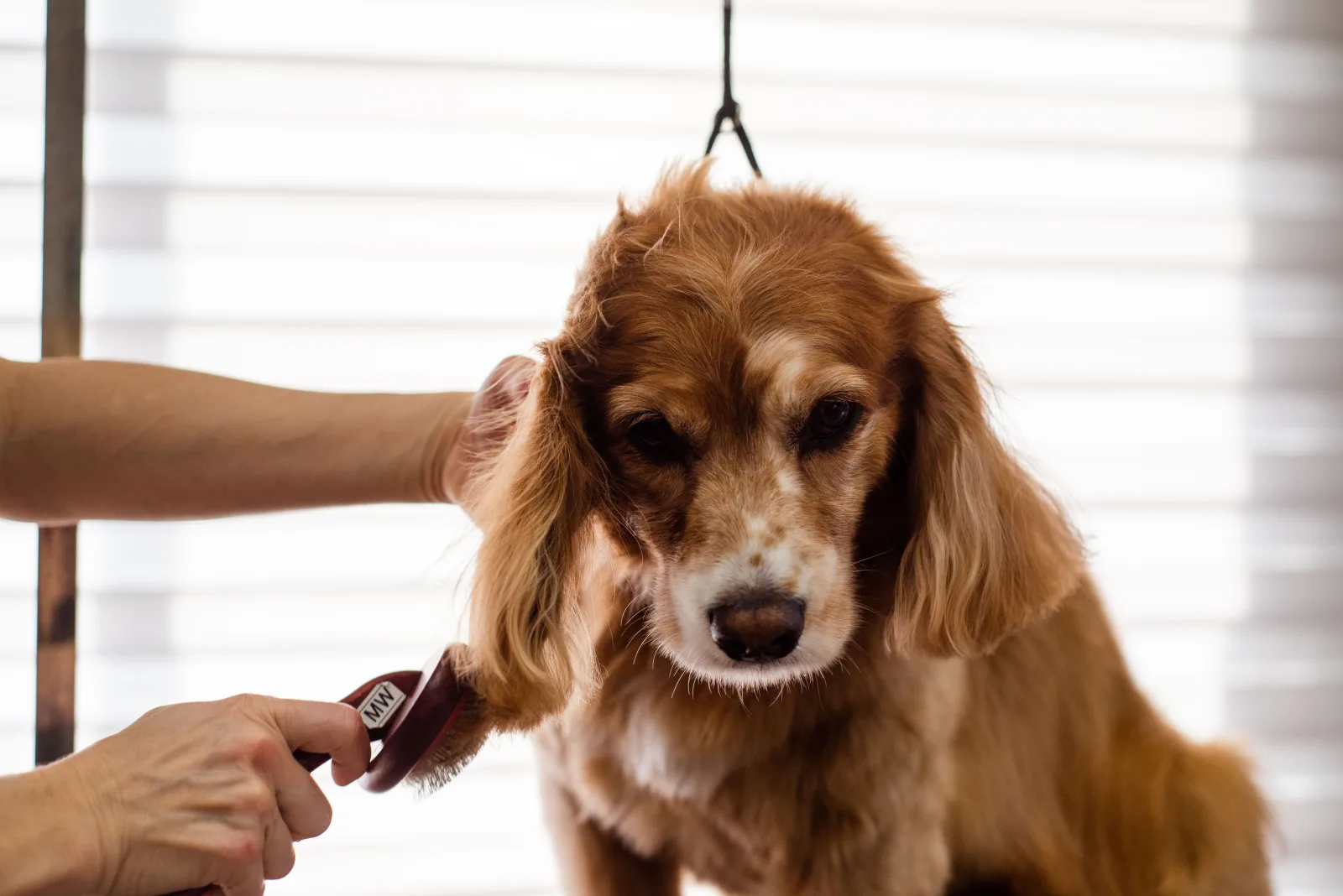
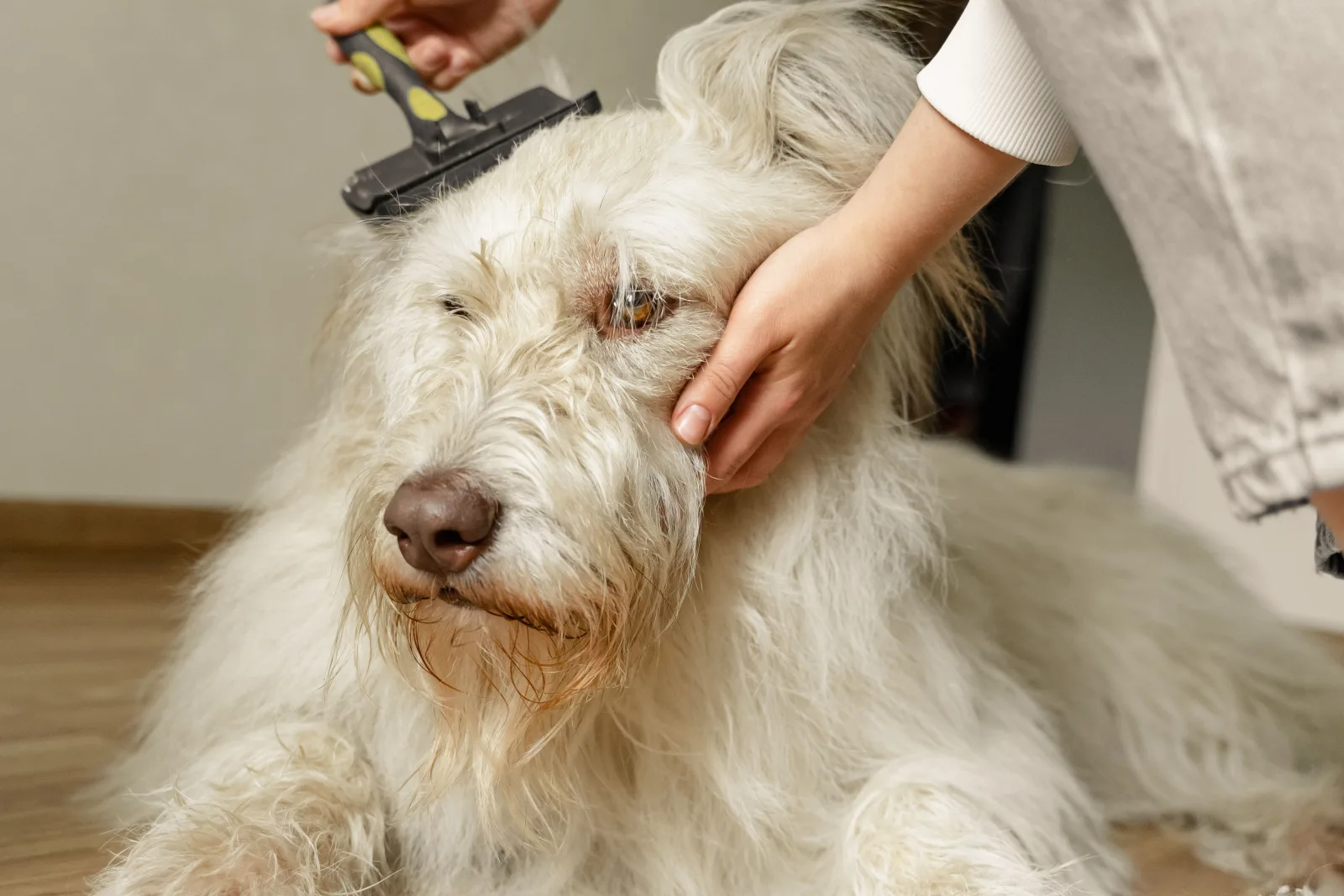
- Brush regularly. Besides removing loose hair, brushing spreads the skin's natural oils through the coat.
- Check for parasites. Look closely at the skin under the coat for fleas, ticks and small white "flakes" that seem to move - a warning sign covered in more detail in our article on dandruff in dogs.
When it's more than dryness
Ordinary seasonal dryness usually clears up within a few weeks of making the changes above. It's time to see a vet when:
- the flaking persists despite less frequent bathing and a better diet,
- open sores, scabs or large bald patches appear,
- the skin smells unpleasant or feels greasy,
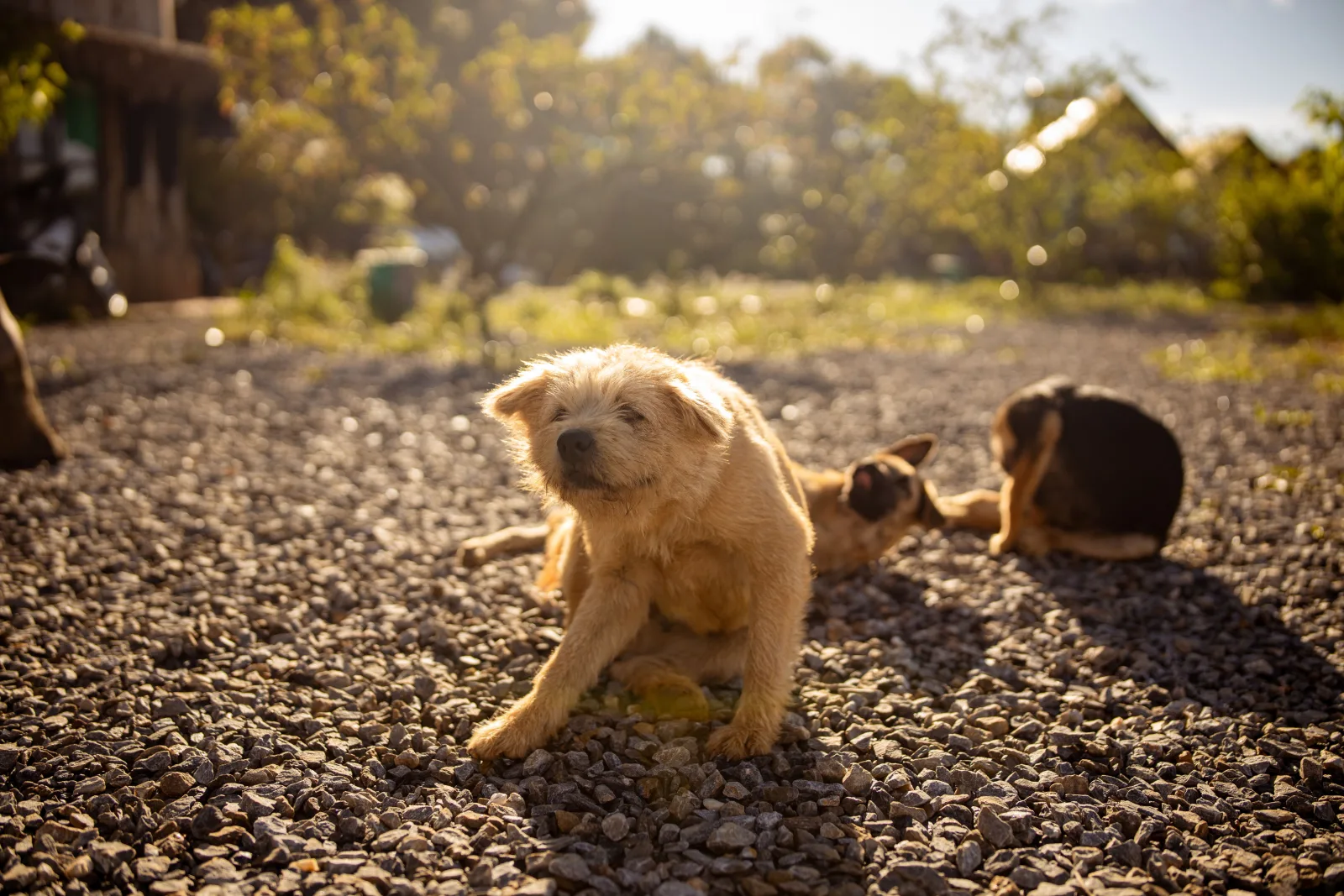
- your dog is scratching hard enough to injure the skin (more on this in our articles on dog itching and scratching with no fleas),
- the flare-ups return seasonally, at the same time every year.
These signs can point to an allergy, a bacterial or fungal infection, or a hormonal condition like hypothyroidism - none of which grooming alone will fix, and waiting on a diagnosis only prolongs your dog's discomfort.
Healthy skin and a shiny coat mean your dog is ready to run, sniff and enjoy every walk to the fullest. Find spots near you on the DOGOUT map and plan an outing with the pack that your dog is genuinely excited for.
Sources
Frequently asked questions
- Why does my dog's skin get dry specifically in winter?
- Heating drops indoor humidity, sometimes below 30 percent, which dries out the skin barrier - just like it does for people. A humidifier (aim for 30-50 percent humidity), less frequent bathing and omega-3 supplementation usually improve things within a few weeks.
- Can bathing too often dry out a dog's skin?
- Yes, and it's one of the most overlooked causes. Bathing more often than every 4-6 weeks without a medical reason, plus harsh or mismatched shampoos, strips the skin's natural protective oils. Use a gentle dog-specific shampoo and bathe only when truly needed.
- Does diet affect dry skin in dogs?
- Yes. A lack of essential fatty acids (omega-3 and omega-6) in the diet can lead to a dull, flaky coat. A good-quality complete food usually covers this, but for chronic dryness it's worth asking your vet about supplementation.
- How do I tell ordinary dry skin apart from an allergy?
- Plain dry skin usually doesn't itch intensely and improves once you adjust grooming habits. If your dog is scratching hard, chewing at their paws, has reddened skin, or the flare-ups return seasonally, that points more toward an allergy than simple dryness and needs a vet check.
- When does dry skin in dogs need a vet visit?
- When flaking persists despite less frequent bathing and a better diet, when open sores, scabs or bald patches appear, when the skin has an unpleasant smell, or when there's intense itching leading to self-injury. These signs can point to an infection, allergy or hormonal condition (like hypothyroidism) that grooming alone won't fix.