Dog Car Carrier Guide: How to Choose and Fit One Safely
For safe car transport you have three main options: a rigid crate strapped down in the boot, a car harness clipped into the seatbelt, or a barrier separating the boot from the cabin. Whichever you choose, it has to restrict the dog's movement enough that it does not become a projectile under hard braking - a dog loose in the car is a real risk to itself and to everyone else inside. Polish traffic law does not mandate one specific piece of gear, but it does require that an animal not obstruct the driver's view or create a road hazard - getting this wrong can end in a fine.
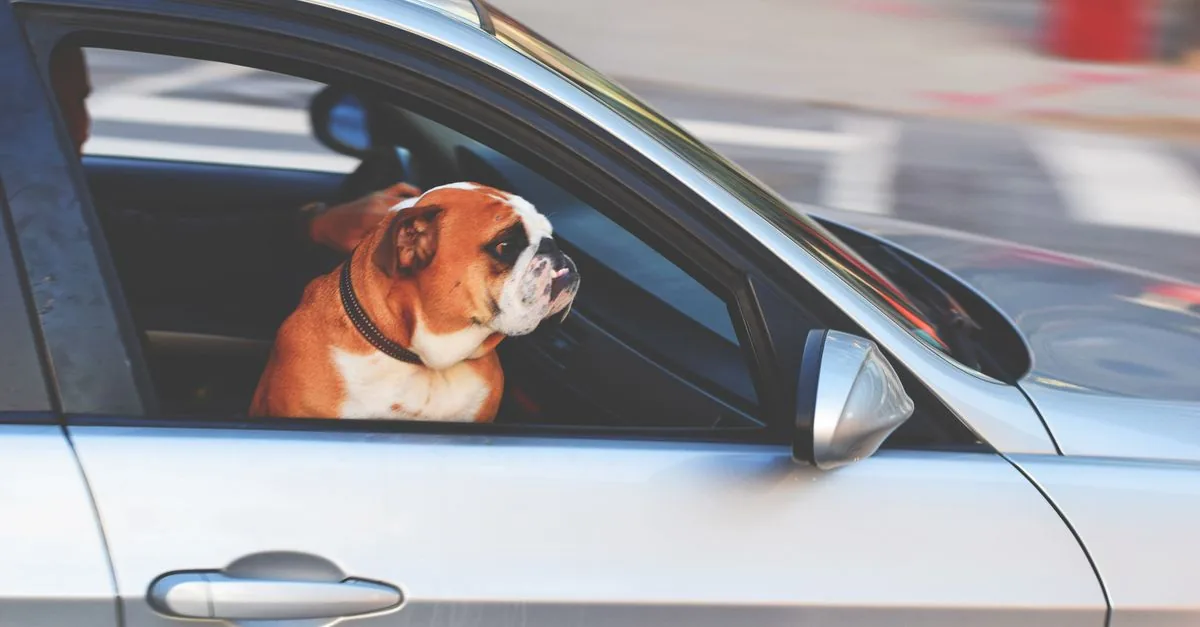
A dog loose in the cabin during a drive is not just a distraction for the driver, it is a real hazard the moment you need to brake hard. A ten-kilogram dog at 50 km/h becomes, on impact, a force comparable to several hundred kilograms. A proper carrier or another form of restraint is not a fussy extra - it is basic protection, for the dog and for everyone else in the car.
Three ways to transport a dog safely
There is no single "best" option - the right choice depends on your dog's size, your car, and how often you travel together.
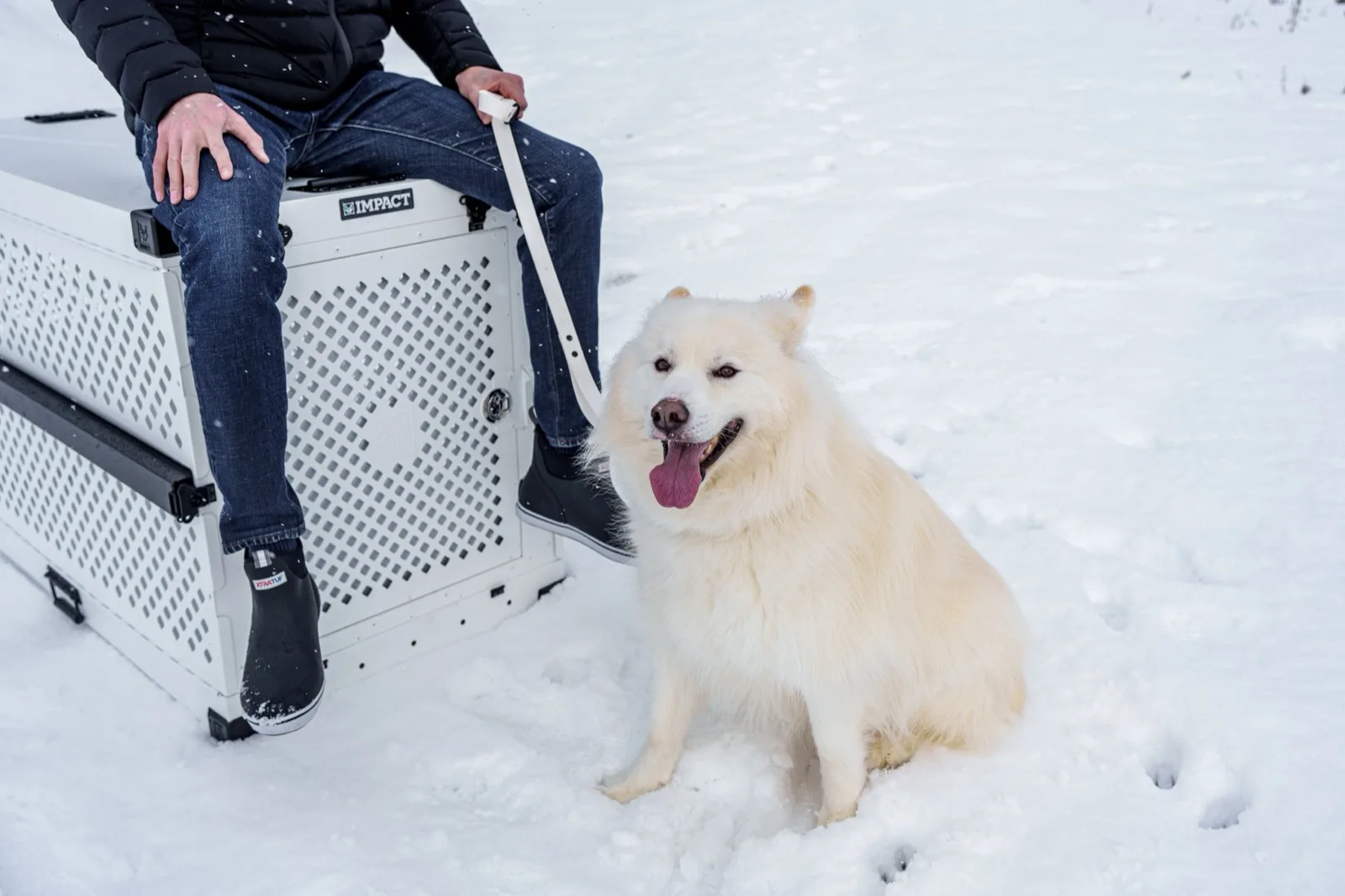
Rigid crate - the most predictable protection, as long as it is securely strapped down and correctly sized. Good for dogs that get anxious in the car, an enclosed space can actually be calming for them.
Car harness - clips into the seatbelt through a metal attachment. Convenient for larger dogs where a crate will not fit the boot. Quality varies enormously between models - look for ones that have been through crash testing rather than relying on the manufacturer's claim alone.
Boot barrier - a mesh or grille separating the boot from the cabin. A good addition for large dogs travelling loose in the boot, but on its own it does not protect the dog in a collision - it only limits movement toward the cabin.
Hard-shell crate or soft-sided carrier
Alongside the rigid crate, the market also has soft-sided carriers, fabric bags sometimes stiffened with a light frame, popular mainly for small dogs. They are comfortable to carry, fold flat when not in use, and usually cost less than a solid crate. But they come with a clear limitation: in a collision they do not offer protection comparable to a rigid structure, the fabric deforms and nothing shields the dog from impact against the car's interior. A soft-sided carrier works fine for short, calm trips with a small dog, a vet visit, for example, but for longer routes and higher speeds, a rigid crate or a crash-tested harness remains the safer choice.
How to size a carrier correctly
Too small a crate is just as much of a problem as too large, the dog has nowhere to settle comfortably, which becomes real stress on a longer trip. Too large lets it roll around under braking, increasing injury risk.
Measure your dog in two positions:
- standing - floor to the top of the head (add a margin for comfortable movement),
- lying flat - nose to the base of the tail, stretched out.
Compare against the crate's interior dimensions, not exterior - manufacturers describe this differently, so check the spec carefully.
Crash safety - what is worth knowing
Crash testing for dog crates and car harnesses is its own category of research, carried out by organisations including Germany's ADAC and the US-based Center for Pet Safety. Results are sometimes surprising, some products on the market deform under impact or become an additional hazard rather than protection. Poland has no mandatory "crash-tested" labelling requirement, so if verified safety matters to you, it is worth checking directly whether a given manufacturer publishes test results rather than relying solely on the store listing.
What Polish law actually says
Poland's traffic code does not mandate one specific way to transport a dog, but it sets a general requirement: the animal must not restrict the driver's visibility, interfere with driving, or create a road hazard. In practice, that means some form of restraint is required, crate, harness, barrier or seatbelt, not free choice.
The consequences of transporting a dog unsafely depend on how an officer classifies the situation, from a fine for creating a road hazard, to liability under the animal protection act if the method of transport causes the dog to suffer. More frequent roadside checks on this specific issue have also been announced, so it is not a topic likely to go unnoticed at a routine stop.
Table - comparing the options
| Option | Best for | Watch out for |
|---|---|---|
| Rigid crate | Small and medium dogs, dogs anxious about car travel | Must be strapped down, never loose |
| Car harness | Large dogs, limited boot space | Quality varies widely - look for crash-test data |
| Boot barrier | Large dogs travelling loose in the boot | Does not protect on its own in a frontal collision |
Attachment points in the car - check these before buying
A good carrier is not enough if you have nothing solid to strap it to. Before you buy, check whether your car and the model you are considering actually work together:
- Boot tie-down straps - most solidly built crates have side or top loops for threading a boot strap through. Without that, a crate sits loose and slides around the boot under braking, defeating the point of having one.
- Isofix compatibility - some newer crates have anchors compatible with the Isofix points on the back seat, originally designed for child car seats. That is usually the most stable mounting option if your car has them.
- Seatbelt attachment - for car harnesses, check that the metal clip actually fits your car's seatbelt buckle. Some older car models have non-standard buckle shapes that a standard clip will not lock into.
- Boot space versus back seat - measure the space before you buy, not after. A crate that barely fits an estate car's boot may not fit at all in a smaller city car.
Common mistakes when transporting a dog
- A crate sitting loose, not strapped down. Even the best crate offers no protection if it becomes a projectile flying around the boot on impact. Always secure it with a tie-down strap or an Isofix-style anchor if the manufacturer provides one.
- Buying an oversized crate "for comfort." Instinct says more room is better, but too roomy a crate lets a dog roll around under braking, increasing injury risk instead of reducing it.
- Cheap, uncertified car harnesses bought on price alone. The market is full of inexpensive harnesses marketed as "safe" that have never been through any crash test, a manufacturer's claim on the packaging is not the same as an independent test result.
- A dog's first ride in the crate being a long trip. A dog that has never used a crate before should meet it at home first, then take a few short test drives, before you attempt a longer journey.
What a good carrier costs
Prices for crates and car harnesses vary a lot depending on size, material, and whether the product has been through independent crash testing. Basic plastic or metal crates for smaller dogs start at a few dozen zloty, but crash-tested models with sturdier construction cost several hundred zloty and up, especially in larger sizes for bigger breeds. This is an expense worth treating as a safety investment rather than a place to cut corners.
Practical tips to start
- Get your dog used to the crate gradually, at home, before the first car trip, with treats, a familiar blanket, no rush.
- Do not feed your dog right before a long trip, a full stomach plus a crate is a fast route to motion sickness.
- Stop every 2-3 hours on longer trips so your dog can stretch and relieve itself.
- Never leave a dog in a crate inside a parked car in summer, even briefly, the temperature inside climbs far faster than it seems from outside.
For more on the trip itself, route planning, breaks, preparing your dog, see our guide on travelling with a dog by car, and if you are planning a longer trip, our guide to dog-friendly holidays in Poland.
A carrier protects your dog during the drive itself, but it will not help if your dog slips away once you have arrived, at a rest stop, a campsite, or somewhere unfamiliar. That is why, for longer trips, more owners now pair a well-fitted carrier with a GPS collar tracker, in unfamiliar terrain it is easier to lose focus for a moment, and that is exactly when finding your dog quickly matters most.
Once you arrive
Safe transport is only the start of a good trip. Once you get where you are going, it helps to know where to actually take your dog, on the DOGOUT map you will find places tagged by other owners nearby, with current rules and reviews, instead of guessing your way around an unfamiliar town.
Frequently asked questions
- Is a dog carrier legally required in Poland?
- The law does not name one required piece of gear, but it does require that a dog not block the driver's view or movement and not create a road hazard. In practice that means the dog needs to be secured in some way, crate, car harness, barrier or seatbelt. Unsecured transport can be grounds for a fine if police judge it created a hazard.
- What size crate should I choose for my dog?
- Your dog should be able to stand up, turn around and lie down comfortably inside, without so much space that it can be thrown around under braking. Measure your dog standing (floor to the top of the head) and lying flat (nose to tail base), add a small margin, and compare against the crate's interior dimensions.
- Are car harnesses for dogs as safe as a crate?
- It depends on quality and fit. Crash-tested car harnesses (tested to standards like those used by Germany's ADAC) can be comparably safe, but many cheaper models never go through that testing. A well-fitted, securely mounted rigid crate usually offers more predictable protection than an average harness.
- Where in the car should a dog carrier go?
- Standard placement is the boot, separated from the cabin by a mesh or barrier, or on the back seat, firmly strapped in through the crate's tie-down points. Avoid placing an unsecured crate facing the front windscreen - that is the most exposed position in a frontal collision.
- Does a small dog need a car carrier too?
- Yes - small dogs become projectiles just as easily under hard braking, and they are also more likely to try climbing onto the driver's lap, which is dangerous in its own right. Smaller crates on the back seat, strapped in with a seatbelt, work well for small breeds.