GPS Tracker for Dogs: How It Works and What to Check Before Buying
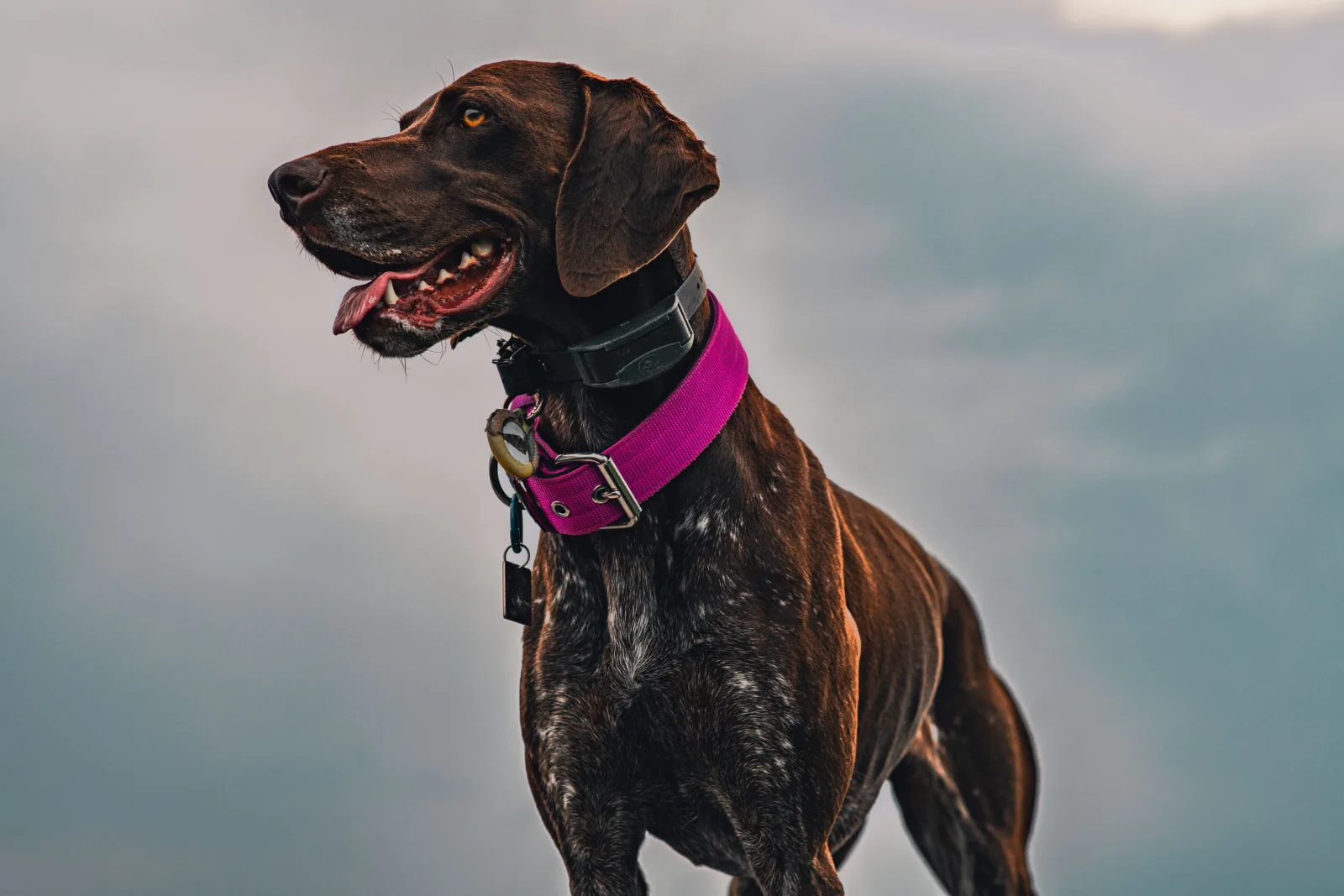
A GPS tracker for dogs is a device attached to the collar that shows your dog's position on a map in your phone. SIM-card models work over the mobile network with practically unlimited range, but usually need a subscription running to tens of zloty a month. Bluetooth-only models are cheaper and subscription-free, but their range is measured in metres - good for finding a dog in a park, not for tracking one after it bolts far away. Before buying, check battery life, waterproofing and the device's weight relative to your dog's size.
A dog that once slipped out of the garden, or bolted off the leash at the sight of a cat, tends to stick in the memory. A GPS tracker will not prevent that from happening, but it drastically cuts the time needed to find your dog afterwards, and that often matters most for safety. Here is how this category of gear works and what to check before buying.
How a GPS tracker for dogs works
The device clips onto the collar (or comes built into a dedicated tracking collar). Inside is a transmitter that reports the dog's position to an app on the owner's phone. Two very different technologies share this market, and they are easy to confuse:
- GPS + SIM card - the device connects to satellites and sends data over the mobile network, so you can see your dog's position with practically no distance limit, as long as there is signal.
- Bluetooth - the device talks directly to your phone, no SIM card needed, but usually only within a few dozen metres.
These are not competing technologies - they solve different problems. GPS is what you need when a dog has genuinely gone missing: bolted from the yard, got lost on a longer trail. Bluetooth is the cheaper, more convenient option when a dog wanders off a short distance in a park and you need to find it quickly among other dogs.
What to check before buying
Before picking a specific model, check five things that genuinely affect day-to-day use:
- Battery life - the more frequent the position updates, the faster the battery drains. Budget models can need charging every 1-2 days on a high-frequency tracking mode.
- Waterproofing - dogs walk in the rain, run through puddles, sometimes go for a swim. Check the actual IP rating, not just a "waterproof" label on the box.
- Weight and size - a device clipped to the collar has to be proportional to the dog. On small breeds, an extra few dozen grams can genuinely get in the way.
- Subscription cost - most GPS models require a recurring data fee. That is a cost to calculate annually, not just at the point of buying the device.
- Update frequency - some models refresh location every few seconds, others every few minutes to save battery. Check whether that setting is adjustable for different situations (an active walk versus standby at home).
Table - GPS vs Bluetooth at a glance
| Feature | GPS tracker | Bluetooth tracker |
|---|---|---|
| Range | Practically unlimited (network coverage) | A few dozen metres |
| Subscription | Usually required | Usually none |
| Best for | A missing dog, longer trails | Finding a dog nearby |
| Starting price | Higher | Lower |
| Battery drain | Higher (data transmission) | Lower |
What it costs over a year
The device itself is only part of the cost. With GPS models, factor in the subscription, typically the tens of zloty per month, which over a year adds up to a sum comparable to, sometimes higher than, the device price itself. Bluetooth models are cheaper to run since they usually have no recurring fee, but in exchange offer a much shorter range. Before comparing two models purely on purchase price, work out the total cost for the first year of ownership, the difference can be significant.
Buying checklist - check these before you pay
The spec sheet on a product page rarely tells the whole story. Before you hit buy, run through these points, each one genuinely affects whether the tracker works for your dog or ends up in a drawer within a month.
- Check the collar attachment type. Some trackers use a universal clip that fits any collar of the right width. Others are sold as an integral part of the manufacturer's own collar and cannot be moved to a different one, if you already have a collar you like, confirm the device actually fits it before you pay.
- Decode the waterproof rating, not just the marketing label. An IP rating has two digits, the second covers water. IPX4 means splash and rain resistant, not submersion-proof. If your dog swims or wades into deeper water, you need at least IPX7 (brief submersion) or IPX8 (deeper, longer). The word "waterproof" on its own, without a specific IP rating, guarantees nothing.
- Weigh the battery-life-versus-size tradeoff. It is a direct compromise: a bigger battery runs longer but adds weight and bulk to whatever is hanging off your dog's neck. Compact models built for small breeds typically last 2-3 days on tracking mode, while larger housings for bigger dogs can run a week or more on a single charge.
- Compare subscription models, not just the device price. Some manufacturers sell their own locked SIM with a subscription you cannot switch to a cheaper plan, you are tied to one provider for the life of the device. Others let you insert any prepaid SIM, which gives you control over cost but means topping it up yourself and tracking the expiry date.
- Weigh the device and compare it against your dog's weight. If the manufacturer does not list the tracker's weight in the spec, that is usually a sign to ask directly or look elsewhere, on dogs under 5-6 kg, every extra ten grams on the collar matters.
- Check real-world range, not just the manufacturer's claim. Advertised Bluetooth range is measured under lab conditions with nothing in the way, in a city, between buildings, or in a forest, real range is often noticeably shorter. Where possible, read reviews from owners in terrain similar to yours before committing to a Bluetooth-only model.
Common mistakes when choosing a tracker
- Buying the cheapest model without checking the subscription. A low device price sometimes hides a high monthly subscription that, over a year, outweighs the saving versus a pricier but cheaper-to-run model.
- Ignoring device weight for small dogs. A tracker designed with large breeds in mind, clipped to a small dog's collar, can genuinely restrict movement and cause chafing.
- Assuming Bluetooth can substitute for GPS. These are two different technologies for two different situations, a cheap Bluetooth tracker won't help if your dog genuinely goes missing beyond a range of a few dozen metres.
- Skipping a test run before a trip. It's worth checking the device's performance and battery life on an ordinary walk near home before trusting it in unfamiliar terrain on a longer trip.
Do you actually need a GPS tracker
Not every dog does. It makes the most sense for:
- dogs with a strong prey drive, easily pulled into a chase,
- dogs that bolt - from the yard, an open gate, off the leash,
- fearful individuals or breeds that might panic and run far, fast,
- longer trips to unfamiliar terrain where the dog runs off-lead.
If your dog has a reliable recall, is rarely out of sight, and mostly walks in familiar, safe places, a tracker is a convenient extra rather than a necessity.
How this connects to the DOGOUT map
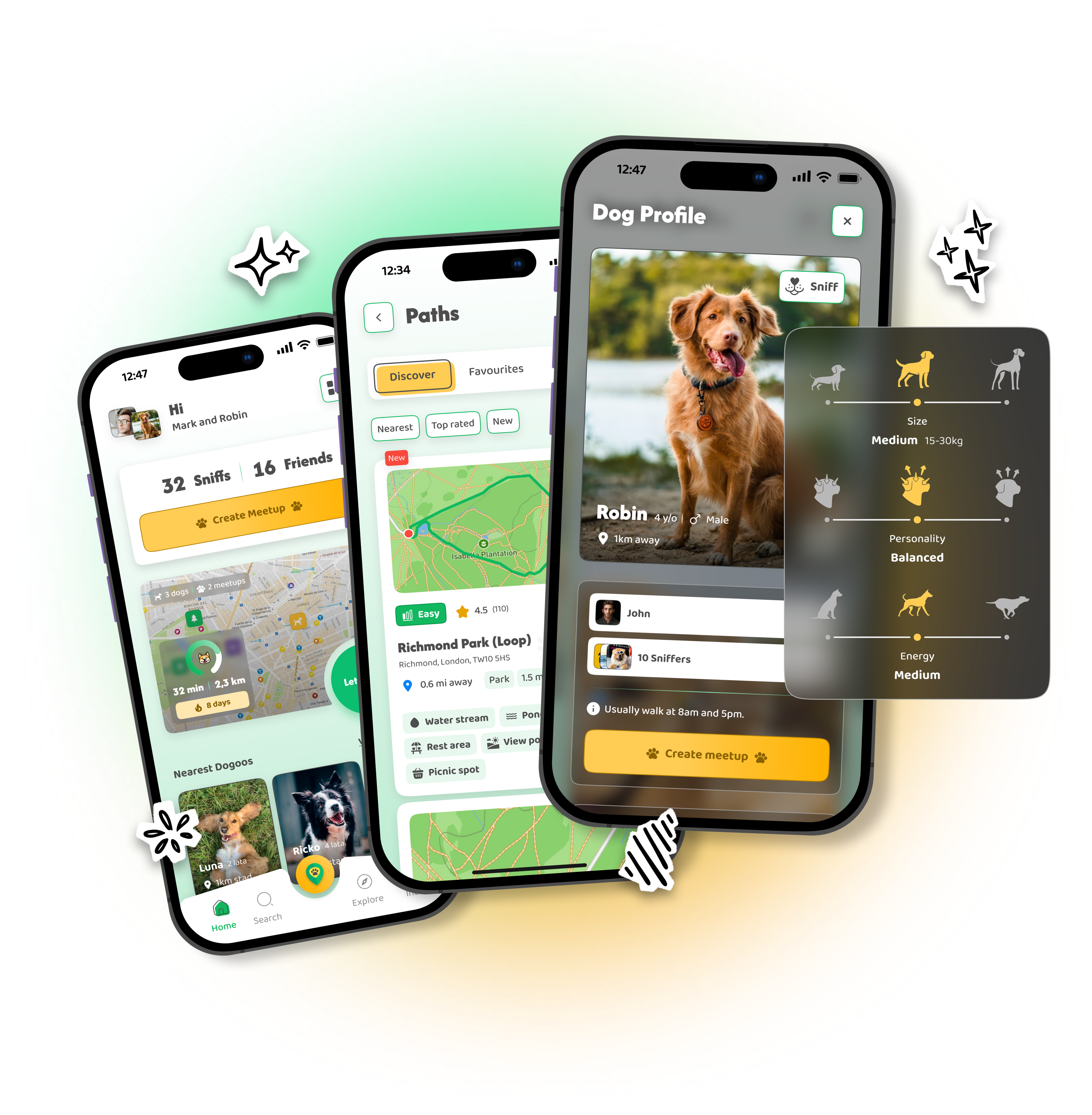
It is worth separating two things. A GPS collar tracker is a physical device that locates a dog once it is out of control, lost, bolted, following a scent trail. DOGOUT does not replace that and does not pretend to be that kind of hardware. What the app genuinely offers is live walk tracking, real-time visibility of your position to friends during an active walk according to your privacy settings, plus a community-tagged map that makes it easier to find safe, fenced places where taking the lead off is actually an option in the first place.
If you do go for a physical GPS tracker, it pairs well with a properly fitted car carrier for road trips and a reflective vest for walks at dusk, together they form a sensible safety kit, especially in autumn and winter when visibility drops and dogs are more likely to vanish into the undergrowth.
Before you buy
Do not buy the first model from a ranking list without checking two things: the real annual cost of the subscription, and reviews of battery performance in your climate (batteries lose capacity faster in cold weather). A tracker that needs daily charging quickly ends up in a drawer instead of on the collar, and then it protects nothing. Open the DOGOUT map and see where other owners nearby have tagged safe places to let a dog off-lead - a useful first step, even before you invest in hardware.
Frequently asked questions
- What is the difference between a GPS tracker and a Bluetooth tracker for dogs?
- GPS uses satellite positioning plus the mobile network, so it shows your dog's location with practically no distance limit, at the cost of a subscription. Bluetooth works over a range of a few dozen metres, with no subscription, and is mainly useful for finding a dog nearby, for example if it wanders off in a park or forest.
- How much does it cost to run a GPS tracker for a dog?
- Beyond the one-off device cost, most GPS models require a data subscription, typically in the tens of zloty per month. Some cheaper Bluetooth-only models have no recurring fees at all - worth checking before you buy, since the annual cost can be surprisingly high.
- Is a GPS tracker safe for a small dog?
- It needs to match the dog's weight and size - too heavy a device on a small dog's collar (chihuahua, Yorkshire terrier) can strain the neck and restrict movement. Check the device weight in the manufacturer's spec and compare it against your dog's weight before buying.
- Does a GPS tracker work if a dog is in a basement or dense forest?
- GPS signal can weaken under thick tree cover, in tunnels or underground - that is a physical limitation, not a defect in a given device. In those conditions, positioning can be less accurate or delayed until the device picks up a signal again.
- Does a GPS tracker replace microchipping?
- No. Microchipping is identification - it lets someone confirm a found dog's owner, but it does not show real-time location. A GPS tracker is a separate, additional tool for ongoing tracking, not a substitute for mandatory microchipping.