Reflective Dog Vest Guide: When It Actually Makes a Difference
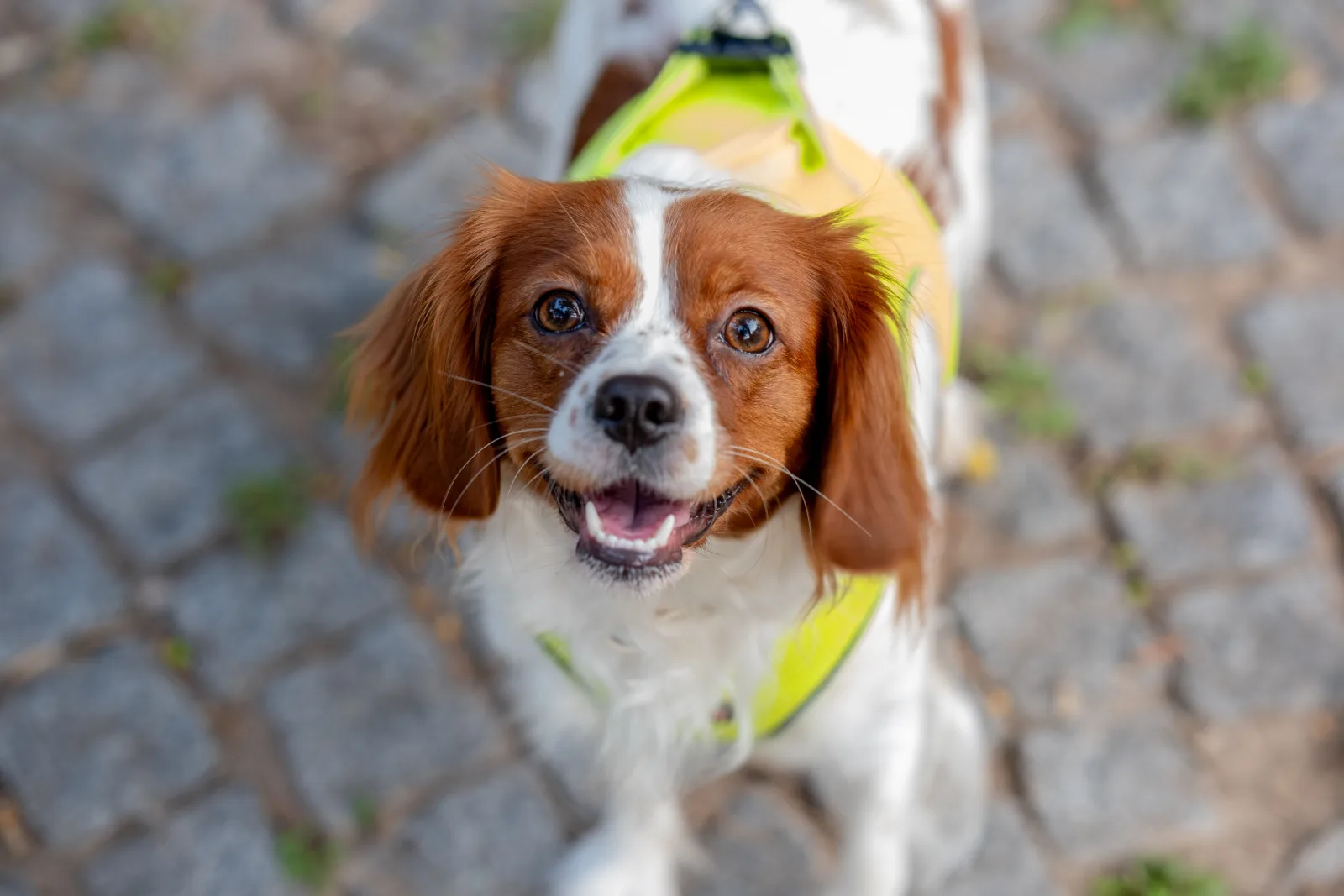
A reflective dog vest earns its place mainly in autumn and winter, when most walks fall at dusk or after dark, and on routes along roads with no pavement. A driver spots a dog wearing reflective gear from several dozen metres further away than one with no markings at all. If you would rather not add a whole extra layer, a reflective collar, a reflective leash or a small LED clip-on light achieves a similar effect - what matters is visibility, not the specific product.
After dark a driver picks a dog out of the roadside far later than in daylight, and the gap between "in time" and "too late" is often tens of metres of braking distance. A reflective vest is one of the simplest and cheapest ways to change that, though it is not always the only right answer.
When a reflective vest genuinely matters
Not every walk calls for full reflective kit. It makes the biggest difference in a few specific situations:
- autumn and winter walks - when daylight hours shrink and most walks fall before or after work, meaning darkness or dusk,
- routes along roads with no pavement - verges, rural roads, unlit village streets,
- dark-coated dogs - a black or dark brown dog is practically invisible in low light without extra markings,
- forest walks at dawn or dusk - easier to lose sight of your dog, and harder for others to spot it too (hunters, during hunting season, for example).
In summer, in daylight, with good visibility, a reflective vest makes no difference at all. It is seasonal, situational gear, not something a dog needs to wear year-round.
How reflective visibility actually works
Reflective material does not glow on its own, it bounces back light hitting it, for example from car headlights. That gives a driver a much greater distance at which to spot the dog compared to plain dark fur, or even bright clothing with no reflective element. That directly translates into more time to react, slow down, steer clear, stop.
Two materials are often confused:
- reflective - bounces back light from an external source (like headlights), does not glow on its own,
- fluorescent - highly visible in low but non-zero light (dusk, dawn), because it absorbs and "amplifies" available light.
The best products combine both, so a dog stays visible both at dusk and in full darkness under a car's headlights.
Vest or alternatives - what to choose
A full vest gives the largest reflective surface and is visible from multiple angles, front, side, back. That makes it the best option for regular walks after dark along roads.
If you would rather not add another layer, cheaper and simpler alternatives work too:
| Option | Visibility | Comfort for the dog |
|---|---|---|
| Reflective vest | Very good, large surface area | An extra layer, can overheat in summer |
| Reflective collar/harness | Good, but lower and narrower | No extra layer |
| Reflective leash | Moderate, depends on the dog's movement | Zero impact on the dog |
| LED clip-on light | Very good after dark, active light source | Lightweight, easy to clip onto existing gear |
A good compromise is often reflective harness for everyday wear plus an LED clip-on light for the darkest months, rather than investing in a separate vest that will spend most of the year in a drawer.
Buying checklist - what to look for before you buy
Not every vest marketed as "reflective" actually delivers on that promise. Before you pick a specific model, check these points:
- A certification or a stated visibility distance. Better vests carry a mark showing compliance with EN 13356 (the European standard for non-professional reflective accessories) or a concrete manufacturer figure for the distance at which the vest is visible under headlights. The word "reflective" on a product listing alone guarantees nothing, what matters is the actual surface area and quality of the material.
- Reflective placement - sides and chest, not just the back. A driver most often sees a dog from the front or the side, crossing a road or appearing round a bend, a vest reflective only along the topline is nearly invisible in that situation, even though it is "technically" reflective. Look for models where reflective trim wraps around the sides and front too.
- A fit that does not restrict shoulder movement. Too tight blocks a natural stride, too loose slips to one side, either way it stops doing its job. More on sizing in the section below.
- Breathable material. On longer walks or energetic play, mesh lining or breathable fabric genuinely matters, a dense, non-breathable vest can overheat a dog even in winter if it runs around a lot.
- Adjustable straps at the chest and neck. Coat thickness changes with the season and a puppy grows month to month, adjustable straps let the same vest keep fitting for longer instead of buying a new size every few months.
- The type of reflective material. Cheaper vests use a thin reflective film stitched onto the fabric, which cracks and loses effectiveness after a few washes. Pricier models use woven-in reflective tape, like 3M Scotchlite, sewn into the seam, which holds up through far more wash cycles without losing performance.
Fitting a vest correctly
If you do go for a vest, fit matters just as much as with a harness. Measure the chest circumference at its widest point and the back length, then check against the manufacturer's size chart, do not just guess. A vest should not pinch under the front legs or restrict shoulder movement. If your dog walks stiffly or tries to shake it off right after putting it on, that is a sign the size or cut is wrong.
Common mistakes
- Buying a vest by eye, without measuring. Too tight restricts movement and chafes under the front legs, too loose slips to the side and stops doing its job, the reflective material needs to face outward, not shift onto the dog's flank.
- Only putting a vest on when it's "properly dark." Dusk, the window between sunset and full darkness, is when drivers see worst, it's worth putting reflective gear on then too, not just after full night falls.
- Relying on bright colour alone. A yellow or orange vest with no reflective element is visible in daylight, but under car headlights after dark it performs far worse than genuine reflective material.
- Not checking reflective condition over time. Reflective materials wear down and lose effectiveness, especially after repeated washing. Check each season whether a vest still genuinely bounces back light, not just whether it still looks reflective.
- Reflective trim only on the dog's back. A vest that only reflects along the topline is visible to a driver approaching directly from behind, but in the typical road situation, a dog crossing while a car approaches from the side, that placement barely works at all. Headlight angles rarely hit the topline directly.
- Relying on the vest alone in full darkness with no light source. Reflective material only works when something is lighting it up, in places with no street lighting and no car traffic, a forest or an open field, a vest alone cannot replace an active light. Add an LED clip-on or a head torch for yourself in those settings.
- Never checking whether the vest stays put during running and play. A vest that slips or twists during energetic play or a run stops doing its job exactly when the dog is moving the most and hardest to keep an eye on. Test it during a short, high-energy play session before trusting it on a real walk.
What it costs
Simple reflective dog vests typically cost a few dozen zloty, rising with material quality, size adjustability and extra features (pockets, a back handle, reinforcement). Cheaper alternatives, an LED clip-on light or a reflective leash, run to roughly ten to a few dozen zloty, making them a good starting point if you're not sure a full vest is even necessary.
Safety is more than one item
Your dog's visibility is only one piece of the puzzle, the rest is your own visibility as a walker (reflective jacket, a head torch) and route choice. If you regularly walk after dark, it is worth checking the DOGOUT map to see which routes other owners nearby actually use in the evening, often avoiding stretches without a pavement or lighting that you would not think about until you find yourself there in the dark.
A reflective vest is not a fad or an unnecessary extra, it is one of those rare purchases that costs little and meaningfully reduces the risk of an accident. Put it on your dog before autumn shortens the days dramatically, not after the first stressful evening on a roadside verge.
Frequently asked questions
- Do I need a reflective vest if my dog already has a reflective collar?
- A collar reflects light from around neck height, which is relatively low and close to the ground, it can be hard for a driver to spot from a distance, especially with a short dog. A vest covers a much larger area across the back and sides, so it is visible from further away and from more angles.
- How do I size a reflective vest for a dog?
- Measure the chest circumference at its widest point and the back length from the base of the neck to the base of the tail, then check against the specific manufacturer's size chart, sizing varies between brands. A vest should not pinch under the front legs or restrict shoulder movement, the same fit principles as a harness.
- Do reflective materials actually work, or is it marketing?
- Reflective material genuinely bounces back light from a source like car headlights, which meaningfully increases the distance at which a driver spots the dog and has time to react. This is not a cosmetic effect, road safety research on pedestrian and animal visibility consistently shows reflective and fluorescent elements improve driver reaction time after dark.
- What are cheaper alternatives to a reflective vest?
- A reflective or blinking leash, an LED clip-on light attached to a collar or harness, or even reflective stickers on existing gear, all of these improve a dog's visibility, though none covers as much reflective surface area as a full vest.
- Is a reflective vest useful in summer too?
- Yes, though less often, mainly for early morning or evening walks at dusk, especially along unlit roads without a pavement. In summer, lighter, more breathable versions with reflective trim tend to be a better choice than a full vest, to avoid overheating the dog.