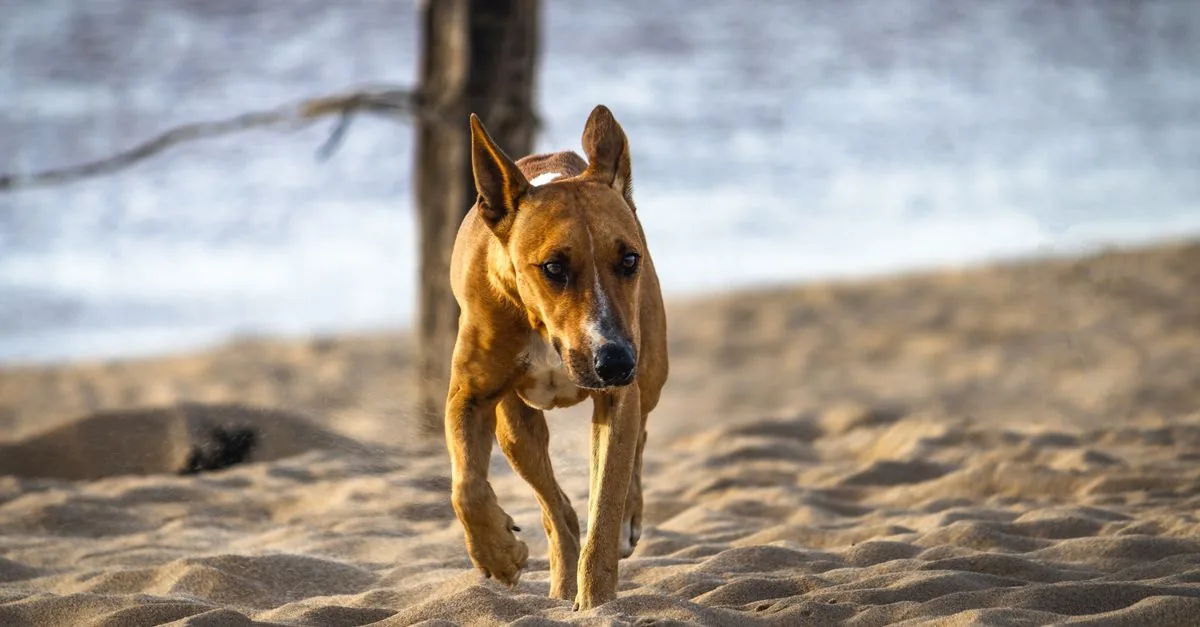
Park Oliwski With a Dog - The Ban and What to Do Instead

The rules of Park Oliwski ban bringing animals onto the grounds, and the signs saying so have stood at the gates since 2011. Legally it is a request from the site manager rather than an enforceable rule: a Polish municipality has no statutory power to ban dogs from publicly accessible land. For anyone walking a dog, the more useful fact is this. Nearby, the Oliwa Forest and Dolina Radosci begin, where a leashed dog is entirely at home and the routes run for hours rather than two loops of a garden path.
Park Oliwski is one of the finest historic gardens in the Tricity and one of the few addresses in Gdansk where you cannot walk in with a dog. The question comes up week after week in search, so here is the straight answer, together with what it actually means on the ground.
What the sign at the gate says
The park rules, set by the city greenery authority, ban bringing animals onto the grounds. Signs saying so have stood at the entrances since 2011, after a request from the district council and some residents. The argument was that this is a historic monument to be protected from dog waste, and that visitors should be able to relax there without stress.
One word carries the whole thing. This is not a ban on letting a dog off the leash, it is a ban on bringing a dog in, which formally covers a dog walking quietly to heel on a short lead.
What the ban is worth legally
About as much as a polite request. Polish law gives a municipality no tool to ban dogs from publicly accessible land, and administrative courts have repeatedly held that municipal councils have no authority to impose them. The manager can apply such a clause as a matter of good manners, but it is not a rule anyone can fine you under for simply walking in.
Before you treat that as a green light, two things are worth keeping in mind.
First, a fine can still arrive on a different basis. A dog running loose and mess left behind are breaches that apply across the whole city and have nothing to do with this park's rules.
Second, the site manager may ask you to leave, and a debate about case law at the gate will improve nobody's day, least of all the dog's.
Our take is simple: this is not the hill to die on. Nearby the forest begins, and a dog is better off there than on a gravel path between clipped hedges.
What you get instead, within the same walk
- The Oliwa Forest. One entrance is from Bytowska street. Instead of two loops of garden path you get a network of forest roads you can walk for hours.
- Dolina Radosci. The classic longer outing: a stream, ponds, wide tracks and shade on warm days.
- The beach at Jelitkowo out of season. From autumn to spring the Gdansk beaches are the easiest ground in the city for a dog. What applies where in summer is covered in our guide to dog-friendly beaches in Poland.
- Reagan Park in Przymorze. A large, level space for an everyday walk, with the sea a short march away. It sits alongside the rest of the city in our piece on dog parks in Gdansk.
Rules that apply in all of those places
In woodland the dog stays on a leash. The ban on letting a dog run loose in a forest comes from Poland's forest act, and breaching it is an offence punishable by a fine or a reprimand.
Nature reserves inside the Tricity Landscape Park are a separate matter. There, the ban on bringing dogs comes straight from the nature protection act. The signs are unambiguous and that ban does carry real consequences.
Oliwa in autumn and winter
The valleys get muddy at this time of year, and after rain the streams carry more water than they look like they do from the footbridge. Keep a towel in the car and expect the dog to come back dirtier than it went in. Dusk falls here before four, so an afternoon outing turns into a night one faster than you adjust. What to put on yourself and on the dog is in our guide to walking a dog after dark.
A closed gate is not the end of your walks, just a reason to know your own district better than the average guidebook does. Open the DOGOUT map to see where people in Oliwa actually walk their dogs, and add the spots you know yourself.
Sources
Frequently asked questions
- Can you enter Park Oliwski with a dog?
- The park rules ban bringing animals onto the grounds, and signs at the gates have said so since 2011. It is a ban on bringing a dog in at all, not a ban on letting one off the leash, so formally it covers a dog walking to heel.
- Is there a fine for walking in with a dog?
- Not for entering as such: there is no legal basis for a municipality to ban dogs from public land. A fine can still follow from rules that apply across the city: a dog running loose, or mess left behind.
- Where should you walk in Oliwa instead?
- The Oliwa Forest starts a few minutes away, with one entrance from Bytowska street, and Dolina Radosci lies beyond it. It is woodland, so the dog stays on a leash, but the trails are long and quiet.
- Does the ban also cover a small dog carried in your arms?
- The wording covers bringing animals in, with no exception for size or for being carried. Arguing the point at the gate achieves little when the alternative is a few minutes away.
- Are dogs allowed in the Oliwa Forest?
- Yes, but Polish forest law bans letting a dog run loose, so a leash is the safe choice. Dogs are not taken into the nature reserves that lie within the forest.
- Could the ban ever be lifted?
- The subject comes back in Gdansk regularly, but the rule has stood since 2011. Before a visit, the simplest check is the sign at the gate, since the site manager decides what it says.