Walking a dog after dark - visibility and safety
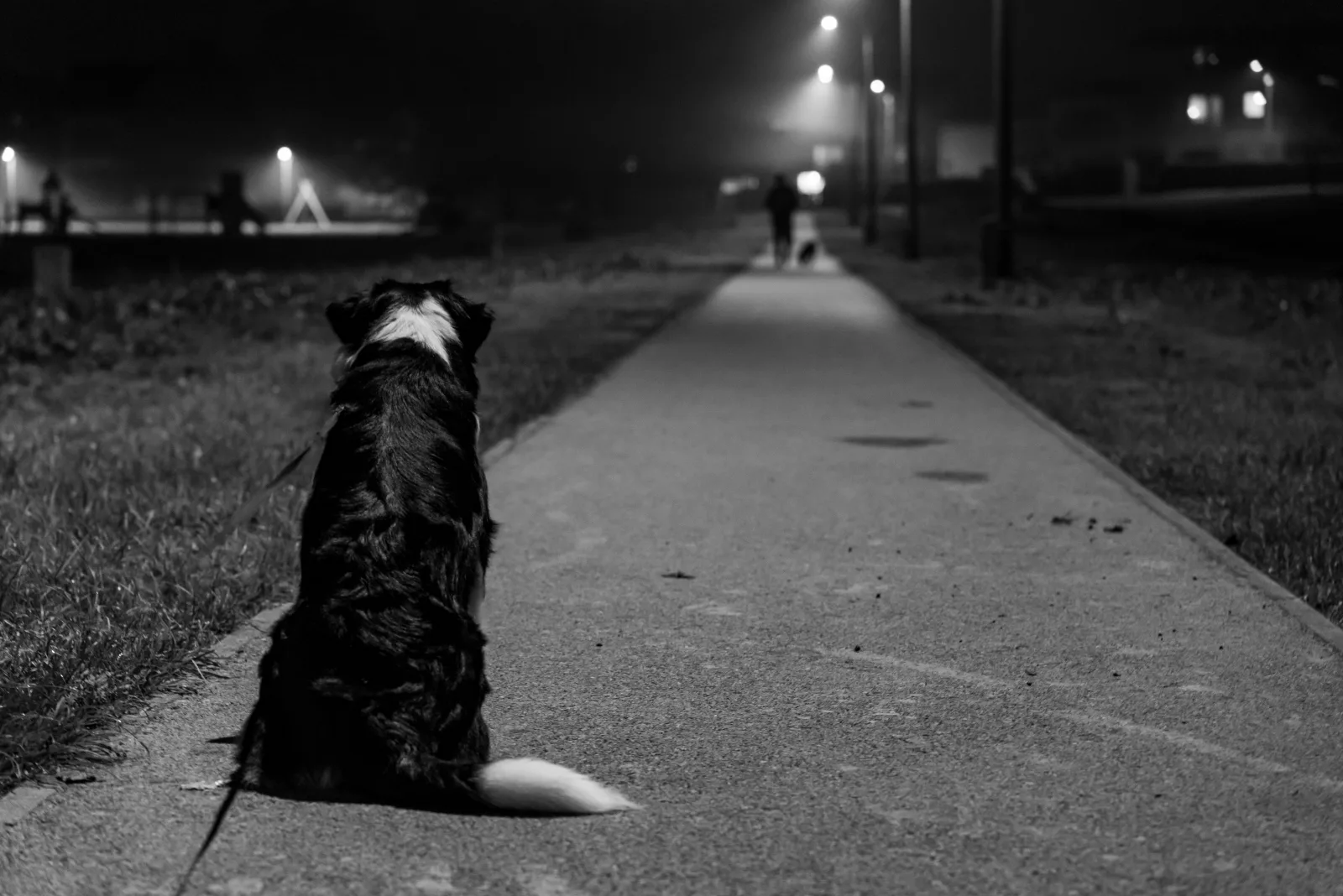
Once the clocks change, the afternoon walk becomes a night walk, and a dark dog with no lighting is effectively invisible to drivers and cyclists. The minimum kit is reflective gear on you, a light-up collar or LED tag on your dog and a headtorch. Add three habit changes: pick routes with pavements or lighting, shorten the leash around traffic, and expect your dog to react differently in the dark, because it sees less detail than usual while hearing and smelling more.
By late October it is dark before five, and the walk that was an afternoon outing for half the year suddenly becomes a night walk. That is not a small change. A driver on a residential street, a cyclist on a park path and a runner on a forest track all see you seconds later than they would in summer, and those seconds are the whole story.
The good news: the problem is solved by a small amount of kit and three changes of habit.
Visibility: reflective and lit are not the same thing
This is a distinction worth learning once.
Reflective material is passive. It only shines when light falls on it, such as headlights. Near a road it is excellent. In a dark park it does nothing.
Active lighting, a glowing collar, a tag or an LED clip, produces its own light. It is visible from every direction whether or not anyone is shining anything at you.
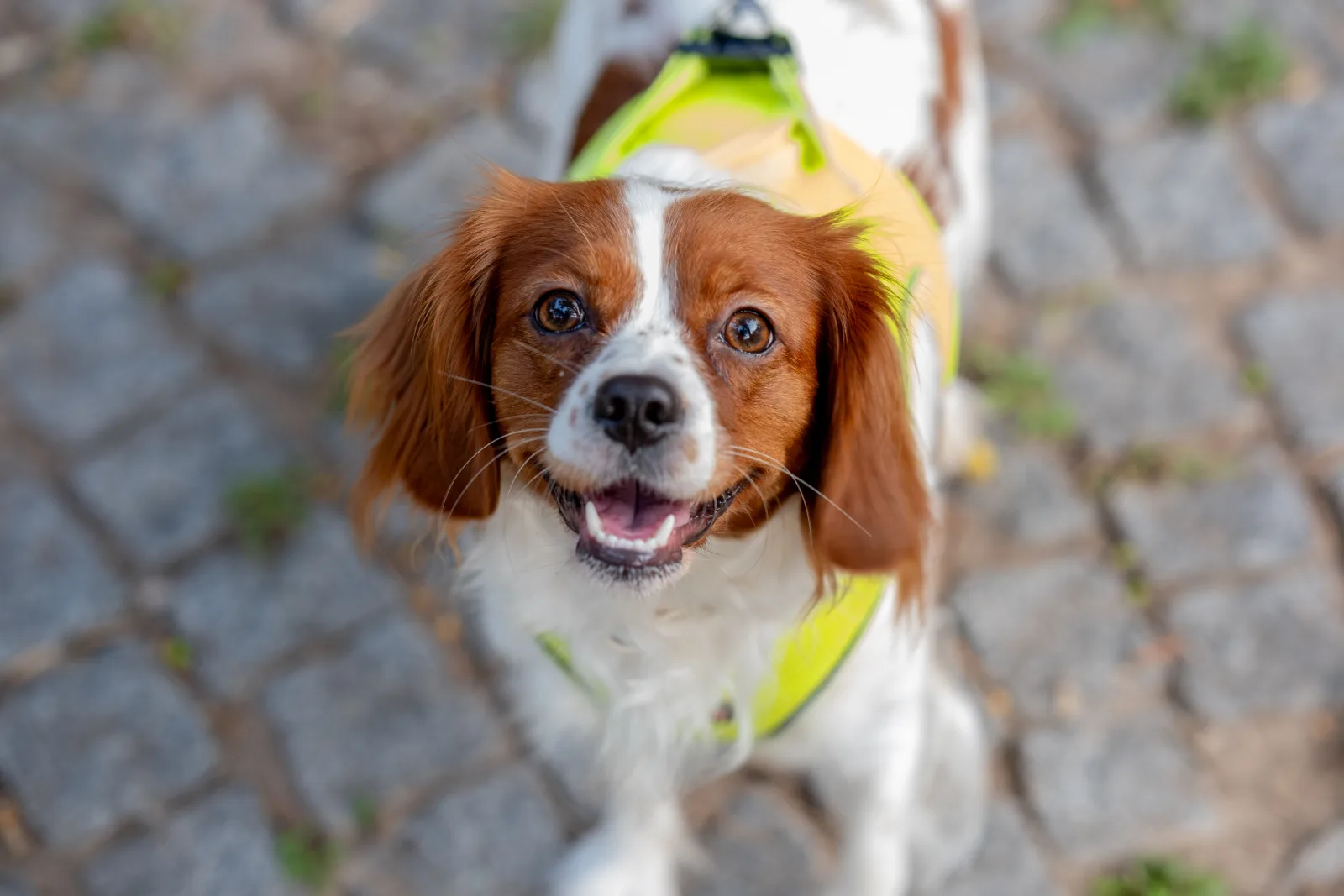
The sensible kit combines both: a reflective vest or harness on the dog, a small LED at the collar, and a reflective band or jacket on you.
Small things that make a difference:
- A light visible from both sides. A single diode on the back is not enough when your dog walks between you and the road.
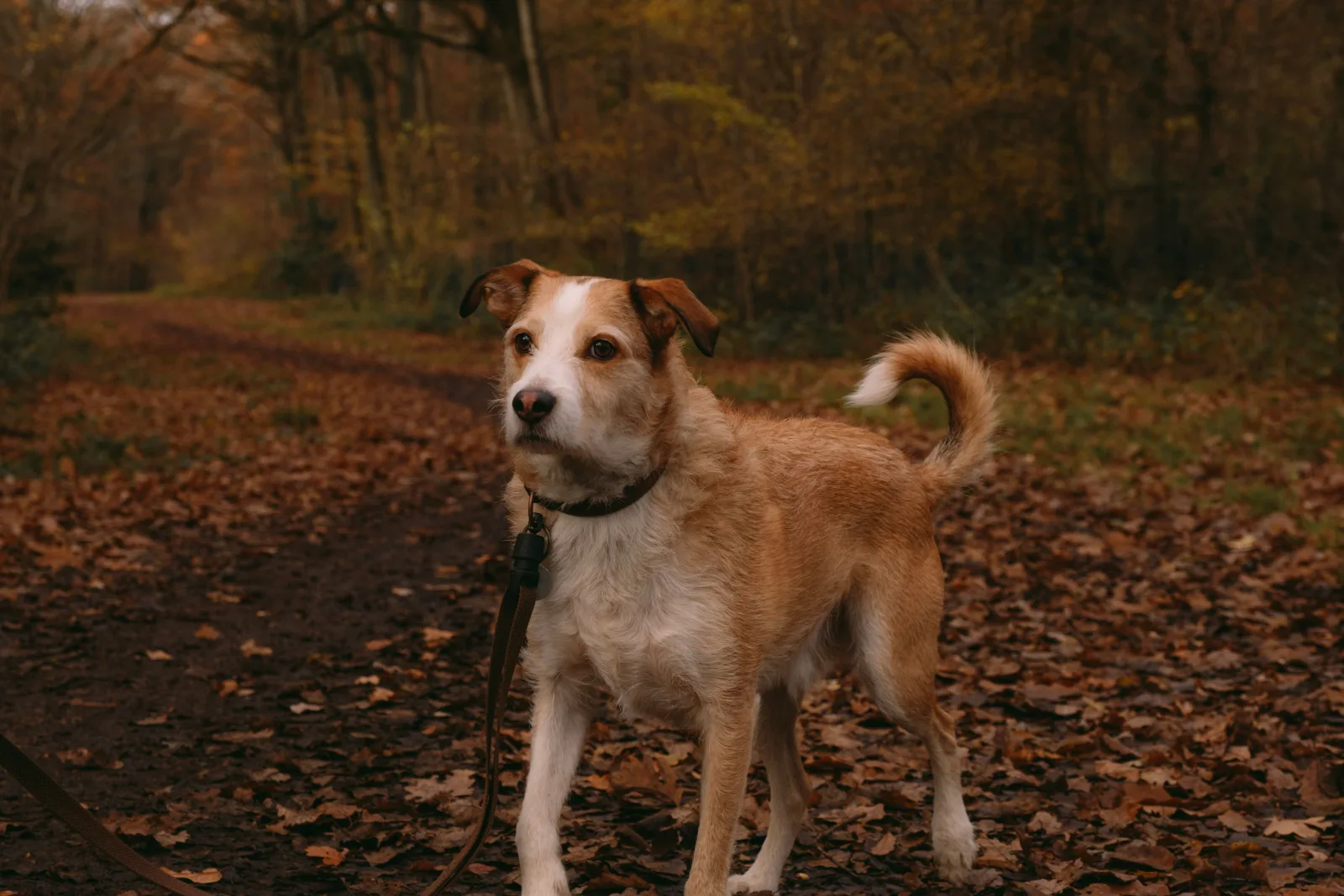
- Leash colour. A black leash disappears. A light or reflective one shows a driver that dog and human are connected, and exactly where.
- A spare battery or a second clip. The light always dies on the evening you need it most.
Headtorch: light the path, not the dog
A headtorch beats a handheld torch because it leaves both hands free. Angle it to light the path a few metres ahead. Shining it into your dog's eyes is as unpleasant for them as it would be for you, and it ruins night adaptation for both of you. In town, where street lighting does most of the work, the lowest setting is enough.
How dogs behave in the dark
Dogs see better than we do in low light, but that does not mean they see everything. They resolve less detail while responding far more strongly to movement, sound and scent. In practice, after dark:
- your dog notices things before you do and reacts before you can see why,
- sudden lunges are more likely when a cat, hedgehog or cyclist appears,
- less confident dogs are more alert and get wound up faster.
Hence a simple rule: shorten the leash and keep your dog close anywhere there is traffic. A long line is great in open, familiar ground, not on a pavement beside a road.
Route matters more than in summer
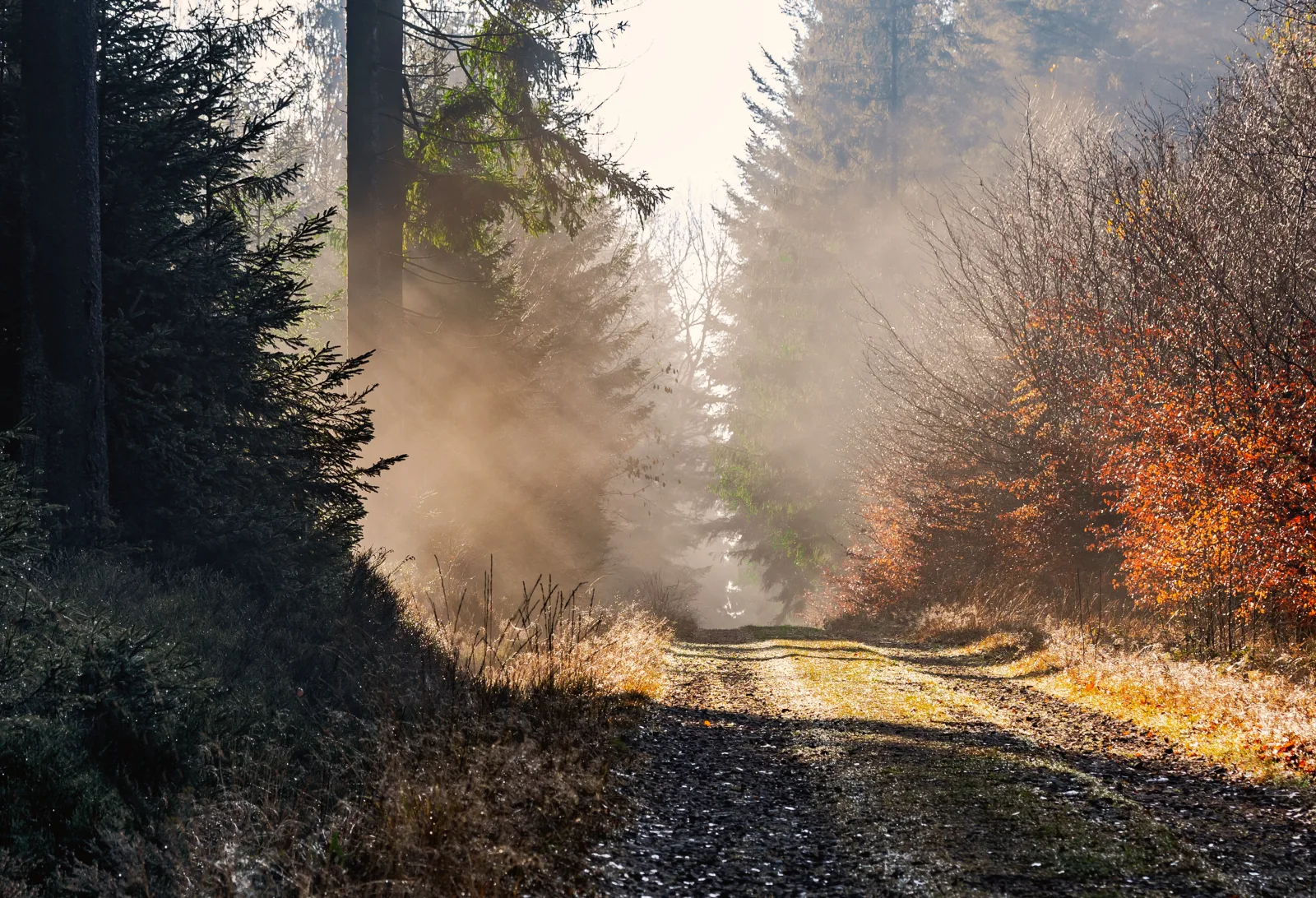
In the evening, choose what you know. A lit park path, a pavement, a surfaced riverside route. A new, unfamiliar trail in the dark is a direct route to a twisted ankle and a dog stepping into a hole.
Autumn adds one more argument for familiar places: driven hunt season is under way in forests, and wildlife movement peaks at dusk and dawn. How to check hunt dates is covered in a separate guide.
The minimum kit for the season
- a reflective vest or harness for your dog,
- a light-up tag or LED collar, visible from both sides,
- a headtorch with a spare battery,
- reflective material on your jacket, backpack or an armband,
- a light or reflective leash.
Together that costs about as much as one routine vet visit, and lasts several seasons.
Dark does not mean worse. With good visibility, an evening walk is often calmer than a daytime one, with fewer people and fewer triggers. Check the DOGOUT map for lit routes near you, and add the ones you walk yourself.
Frequently asked questions
- Which is better, reflective gear or an LED light?
- Both, because they work differently. Reflective material only shines when light hits it, such as car headlights, so it works near roads. An active LED collar or tag is visible on its own, including where nothing else is lit. The best result comes from combining them.
- Can dogs see well in the dark?
- Better than humans in low light, but it is not unlimited night vision. Dogs resolve less detail and colour, while picking up movement far better, and of course they use scent and hearing. That is why surprises are more likely after dark: your dog reacts to something before you can see the cause.
- Can my dog be off leash after dark?
- Off-leash dogs are banned in forests at any time of day, and after dark there are more reasons to keep the leash on: worse visibility for drivers, more wildlife on the move and less chance of spotting what your dog has found. If you want to give freedom, use a long line in open, familiar ground.
- How do I help a dog that is nervous about dark walks?
- Start with familiar, lit routes and shorter distances, then build up. Avoid places with sudden stimuli such as fireworks or noisy junctions. If your dog is genuinely panicking rather than simply cautious, it is worth talking to a behaviourist.
- Does a headtorch bother the dog?
- A strong beam straight into the eyes bothers anyone, dogs included. Angle the torch to light the path a few metres ahead rather than your dog, and use a lower setting where there is street lighting anyway.