Slowinski National Park With a Dog - No Dunes, but Lake Lebsko Works
In Slowinski National Park a dog is allowed on two of the seven suggested routes: from Kluki to Lake Lebsko and the Cieminskie marshes, 7.3 km and free of charge, and the shorter one to Bieliki and the former military site, 2 km and ticketed in season. The rest, including the shifting dunes, the Czolpino lighthouse, the Lacka dune and Rowokol, are closed to dogs, and so is the beach inside the park. The dog must be leashed. Tickets apply from 1 May to 30 September and cost 10 zloty standard, 5 zloty reduced.
Slowinski National Park has a reputation problem among dog owners: the internet repeats a flat "no dogs there", while the park's own notices say something more precise. The truth sits in between, and here it can be stated exactly, because the park has published which of its suggested trips are open to dogs and which are not.
Two routes out of seven
The park suggests seven trips and states for each one whether a dog may come along. Two are open:
| Route | Length | Ticketed in season | Dog |
|---|---|---|---|
| Kluki to Lake Lebsko and the Cieminskie marshes | 7.3 km | no | yes |
| Bieliki and the former military site | 2 km | yes | yes |
| To the Holy Mountain of the Slovincians (Rowokol), from Smoldzino | 2.8 km | no | no |
| To the Lake Gardno viewing platform, from Rowek | 4.4 km | yes | no |
| To lakes Dolgie Wielkie and Dolgie Male | 11.3 km | yes | no |
| To the Czolpino lighthouse across the shifting dunes, from Baranki | 8 km | yes | no |
| To the "Polish Sahara", the Lacka dune | 13 km | yes | no |
So: the shifting dunes, the Czolpino lighthouse, the Lacka dune and Rowokol are closed to dogs, while Kluki and Lebsko are open. The park also publishes a separate map of the dog-accessible routes, so download that before you travel rather than reconstructing a route from a description.
Why the dunes are out and Lebsko is in
The ban is not arbitrary. The Nature Protection Act bans dogs from strictly and actively protected areas in national parks and nature reserves, with exceptions for assistance dogs and for herding dogs where the protection plan allows grazing. The shifting dunes and the beach strip are exactly that kind of ground. The routes around Lebsko and Kluki, by contrast, run through sections the park was able to open.
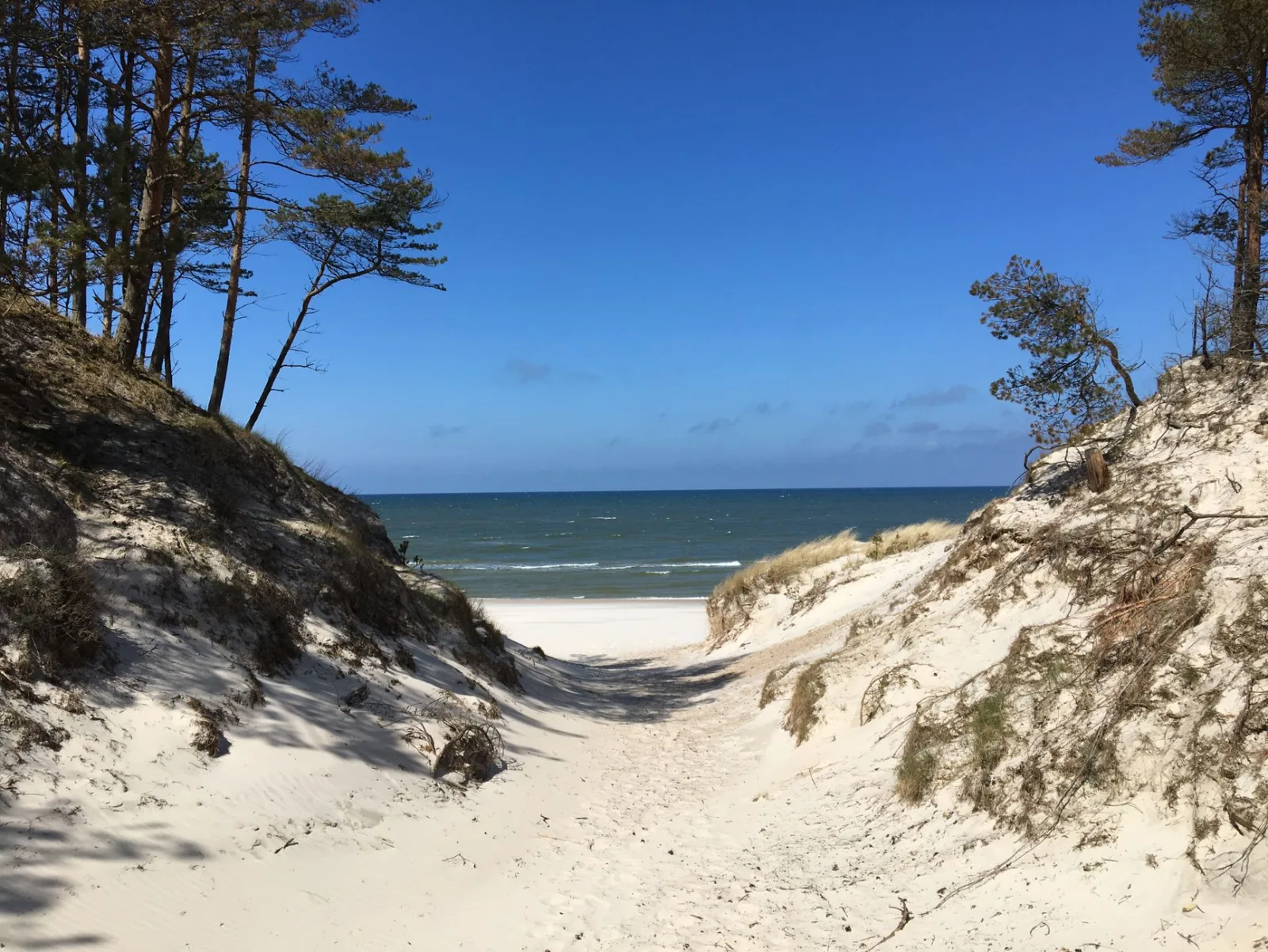
In practice there is one thing to remember: the dog route in this park is lakes and reed beds, not sand.
The beach inside the park is a ban too
The most common disappointment on site concerns the beach. The beach strip within the park boundary is covered by the ban and there is no approaching it from another side. If the sea is the point of the trip, look outside the park, where the coastal municipalities designate dog beaches. We have collected them in dog beaches in Poland, and the stretch around the park is covered in Leba with a dog.
The Kluki route: what is actually there
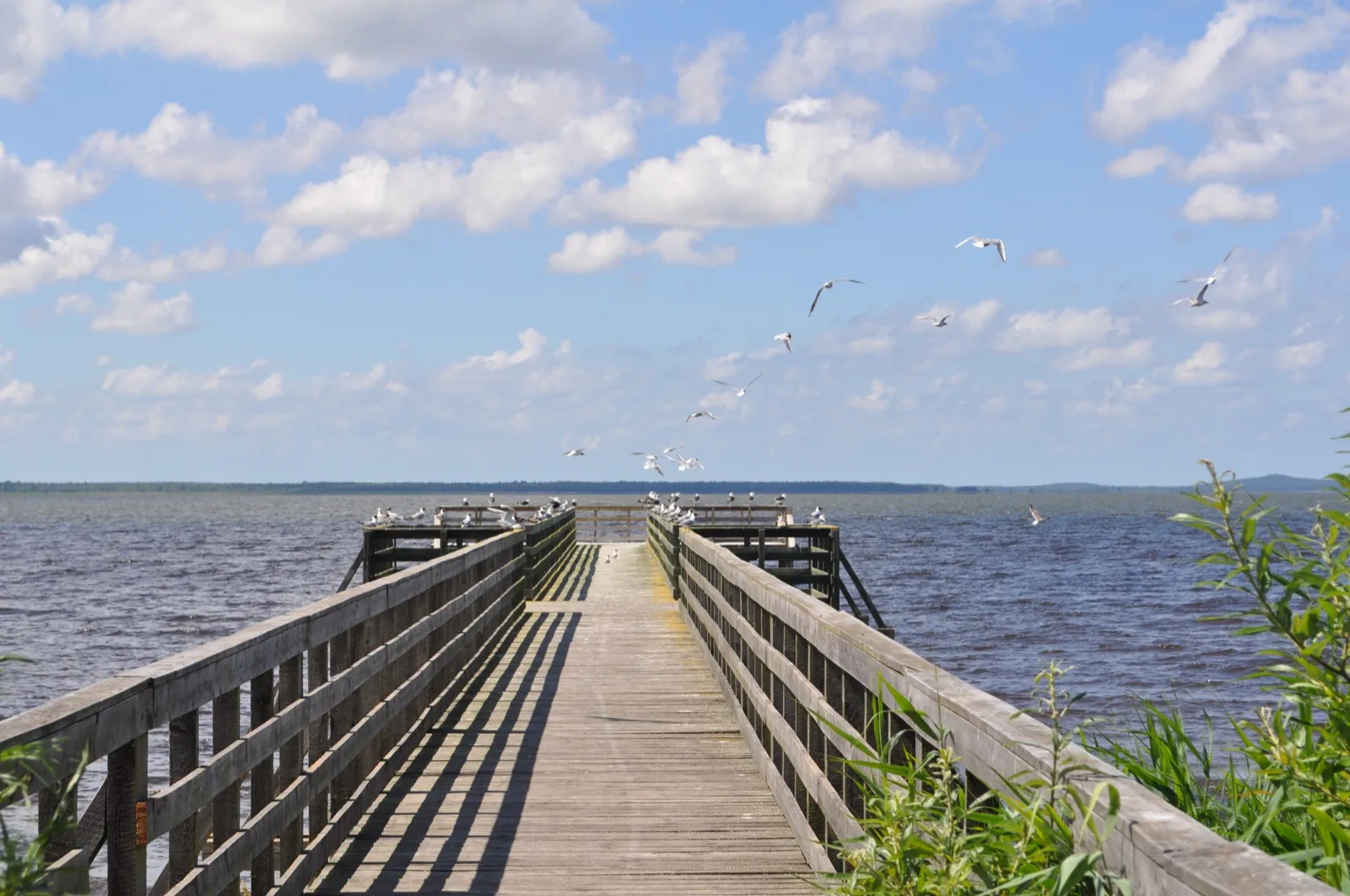
Kluki is an open-air museum village on the southern shore of Lebsko and the best starting point for a group with a dog. The 7.3 km route leads to the lake and the Cieminskie marshes, carries no fee in season, and the terrain is nothing like the dune part of the park: water, reeds, forest, boardwalks.
For a dog that has a few concrete consequences:
- It is wet and damp for most of the year. A towel in the boot is not overkill.
- Boardwalks get slippery after rain and morning dew.
- Mosquitoes. There are plenty of them over the marshes in the warm months, so bring a product suited to your dog and checked with a vet if the dog is small or young.
- Birds. This is breeding ground, which is the whole point of the leash rule rather than a formality.
Season, tickets and timing
Fees apply from 1 May to 30 September on selected trails: 10 zloty standard, 5 zloty reduced. Outside that window entry is free. Children under 7, Large Family Card holders and residents of the neighbouring municipalities enter free of charge.
From a dog's point of view the best window happens to be the cheap one: September, October and early spring. Fewer people, fewer mosquitoes, cooler air, and the lakes at their best. July and August by Lebsko mean heat with no shade on the open sections.
Before you go
What the park opens does get adjusted, and boardwalks can close after storms. The dog-route map and the park's notices override any article, this one included.
The DOGOUT map shows where owners around Leba, Smoldzino and Kluki actually walk their dogs and where a dog can legally get into the water. The dunes are out, a weekend by Lebsko is not. Grab the leash.
Frequently asked questions
- Can you enter Slowinski National Park with a dog?
- Yes, but only on designated routes. The park opens two of its seven suggested trips to visitors with dogs and publishes a map of the dog-accessible routes. The rest are closed.
- Can a dog walk on the shifting dunes?
- No. The route to the Czolpino lighthouse across the shifting dunes and the route to the Lacka dune are both marked as closed to visitors with dogs. These are strictly and actively protected areas, where the ban follows from the Nature Protection Act.
- Which routes in the park are open to dogs?
- The 7.3 km route from Kluki to Lake Lebsko and the Cieminskie marshes, which is free of charge, and the 2 km route to Bieliki and the former military site, which is ticketed in season.
- Can a dog go on the beach inside the park?
- No. The beach within the park boundary is covered by the ban. If the sea is the point of the trip, you need to go outside the park, for example to the dog beaches designated by the coastal municipalities.
- How much is entry to Slowinski National Park?
- A standard ticket is 10 zloty and a reduced one 5 zloty, charged from 1 May to 30 September on selected trails. Outside that window entry is free. Children under 7, Large Family Card holders and residents of the neighbouring municipalities enter free of charge.
- Does the dog have to be on a leash in the park?
- Yes. A leash applies along the whole open route, and Polish forest law requires one in woodland anyway, regardless of the form of protection.