

Dog Losing Weight Despite Eating Well - What It Can Mean
Losing weight despite a normal or increased appetite is a signal that always needs a vet visit - it's never "just how they're built." The most common causes are diabetes, internal parasites, exocrine pancreatic insufficiency (EPI) or other absorption problems, less often kidney or liver disease, or cancer. If the weight loss comes with vomiting, diarrhea, marked weakness or dehydration, that's a sign for urgent care, not a visit you can put off.
Your dog eats every gram of their portion, sometimes asks for more - and yet you can see the ribs, the spine, a waist that keeps getting narrower. It's one of those signs that's easy to dismiss ("well, at least they're eating normally"), but one that always deserves a vet visit. A good appetite isn't proof of health if the weight keeps dropping.
Why this happens
Weight loss despite eating means the dog's body isn't using the energy from food the way it should - or is losing it faster than it can replace it. The most common causes:
| Cause | What's happening |
|---|---|
| Diabetes mellitus | An insulin deficiency means cells can't use glucose from the blood despite high levels - the "three P's": increased appetite (polyphagia), thirst (polydipsia) and urination (polyuria) |
| Intestinal parasites | Parasites take a share of nutrients before the body can absorb them - some species are microscopic and invisible to the naked eye |
| Exocrine pancreatic insufficiency (EPI) | The pancreas doesn't produce enough digestive enzymes, so food passes through the intestines largely unprocessed - the dog is usually very hungry, eats a lot, and still loses weight rapidly |
| Kidney or liver disease | Disrupts metabolism and nutrient absorption |
| Cancer | A rarer but serious cause, especially in older dogs - cancer cells "consume" the body's energy |
None of these can be identified by eye - which is exactly why unexplained weight loss always needs testing, not just observation.
What diagnosis looks like
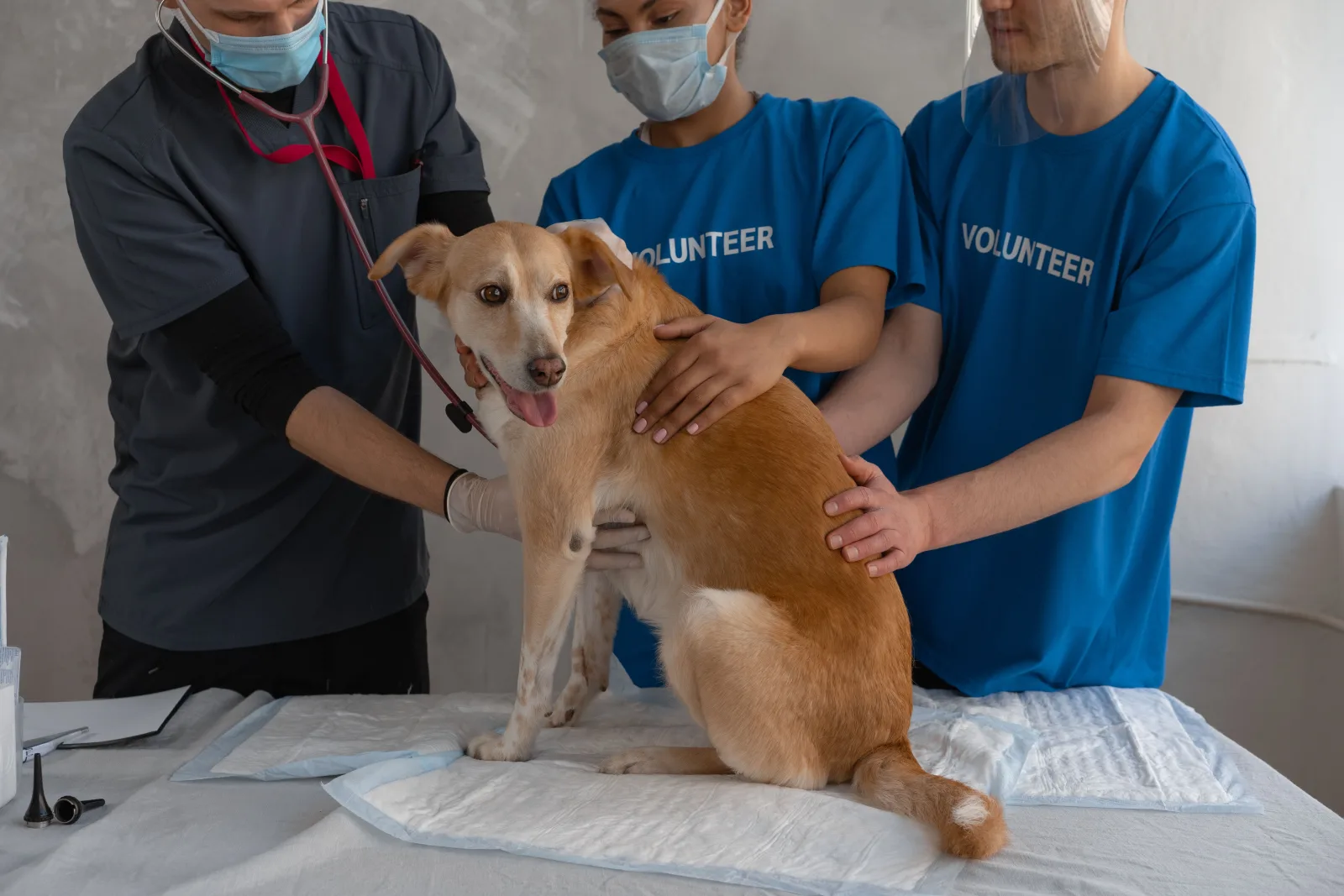
Your vet will usually start with a history (since when has the weight loss been visible, has food, water or urination changed) and a thorough physical exam, including a body condition score. Next steps typically include:
- blood and urine tests - the basics for suspected diabetes, kidney or liver disease,
- a fecal test - to check for internal parasites, including ones invisible to the naked eye,
- a specific blood test for EPI, if your dog eats a lot yet loses weight rapidly and passes large, greasy stools,
- an abdominal ultrasound, if the results point to a need for a closer look at internal organs.
If you're also noticing increased thirst alongside the weight loss, read more in our article on a dog drinking excessive water - it's a common, related sign in several of the causes above, including diabetes and Cushing's disease.
What else to watch for
Before your visit, it's worth noting whether, besides the weight loss, you're seeing:
- a change in appetite - eating more or less than usual,
- a change in drinking and urination,
- a change in stool consistency or frequency,
- energy level - is your dog as keen for walks as before,
- coat condition - has it gone dull or started shedding unevenly.
These details genuinely speed up diagnosis, because they let your vet narrow the list of suspects right away.
When it's urgent
Book a visit as soon as reasonably possible whenever you notice gradual, unexplained weight loss - it's not something worth watching for weeks. Go urgently, the same day, if the weight loss comes with vomiting, diarrhea, noticeable weakness or dehydration (check by gently lifting the skin at the back of the neck - in a dehydrated dog it's slow to snap back), or if the weight loss is happening very fast, over just a few days.
A good habit is weighing your dog regularly - once a month, ideally on the same scale, such as at the vet's office or a pet store. Tracking weight over time catches a slow decline much earlier than the eye can, and genuinely shortens the time it takes to reach a diagnosis.
A healthy weight is what lets your dog enjoy every walk without running out of breath. Once your vet confirms everything checks out, find new routes near you on the DOGOUT map and get back to exploring with the pack.
Sources
Frequently asked questions
- Does weight loss despite a good appetite always mean something serious?
- Not always something life-threatening, but it always needs proper diagnosis - it's not something you can just watch indefinitely. A dog's body losing weight despite eating means it's somehow not using the energy from food correctly, and there are many possible causes, ranging from easily treatable to more serious.
- How does diabetes cause weight loss despite a good appetite in dogs?
- With diabetes, the body can't properly use glucose because of an insulin deficiency, so despite high blood sugar, the cells are effectively starving. The dog eats more, sometimes much more, and still loses weight. Increased thirst and urination are also typical.
- Can internal parasites cause weight loss despite eating?
- Yes. Intestinal parasites take nutrients from food before the dog's body can absorb them. Some are microscopic and won't be visible to the naked eye in stool, which is why a simple fecal test at the vet is a basic, easy first step for unexplained weight loss.
- What is exocrine pancreatic insufficiency (EPI) in dogs?
- It's a condition where the pancreas doesn't produce enough digestive enzymes, so food passes through the intestines largely unprocessed. Dogs with EPI are usually very hungry, eat a lot, and still lose weight rapidly, often passing large, greasy stools. Diagnosis requires a specific blood test.
- When does weight loss in a dog need an urgent, not routine, vet visit?
- Urgently, when the weight loss comes with vomiting, diarrhea, noticeable weakness, dehydration (skin that's slow to snap back after a gentle pinch, dry gums), or rapid weight loss over a short period. If your dog has been gradually losing weight over several weeks but otherwise seems normal, book a visit as soon as you reasonably can, though not necessarily the same day.