Dog Drinking Excessive Water - What It Can Mean
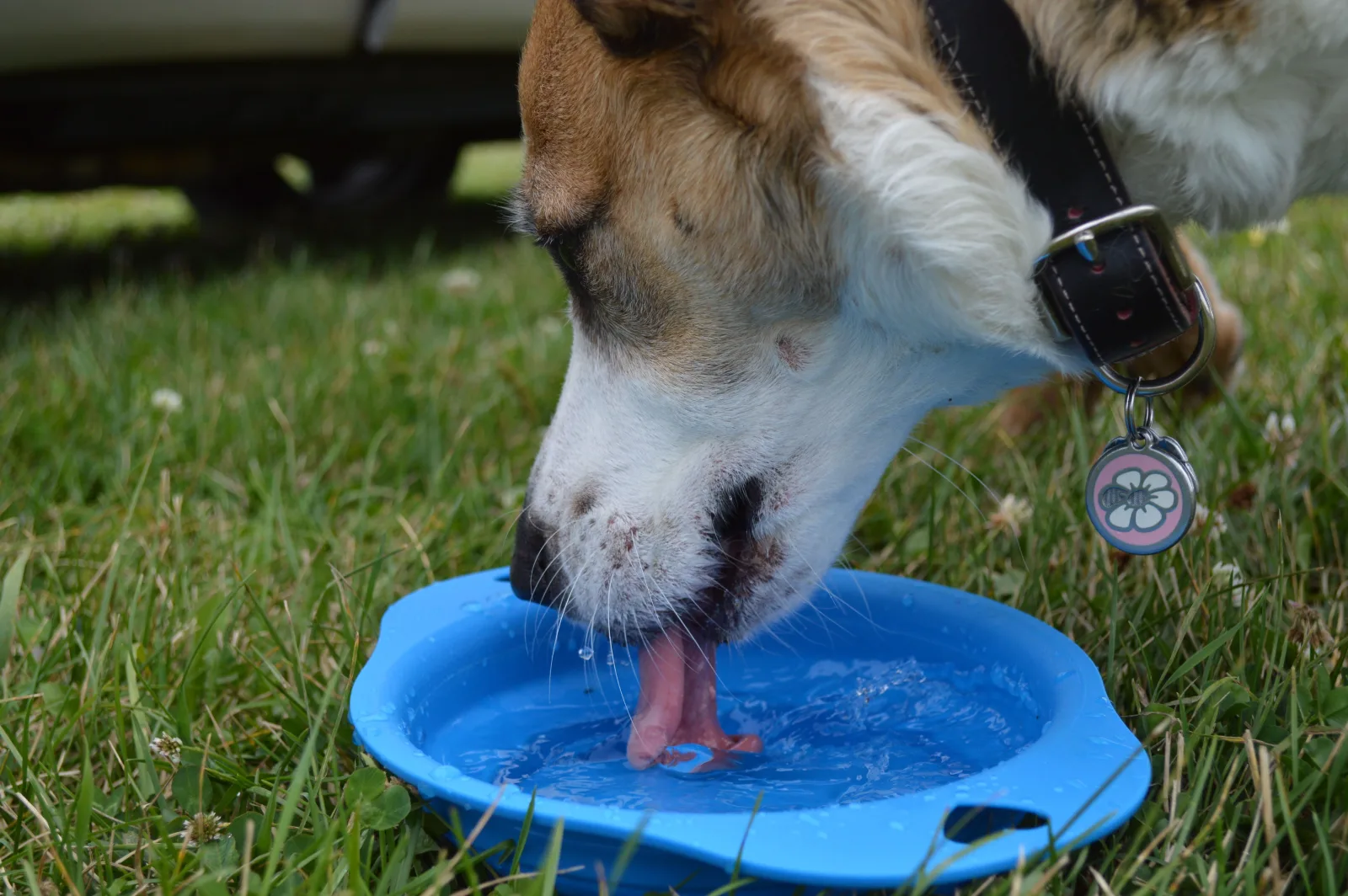
A healthy dog usually drinks about 50-80 ml of water per kilogram of body weight per day. Drinking noticeably more - especially if it lasts several days and comes with more frequent urination - can point to diabetes, kidney disease, Cushing's disease or another condition that needs diagnosis. A one-off spike after heat or exercise is nothing to worry about, but ongoing excessive thirst is always worth mentioning to your vet.
An empty bowl twice a day instead of once, a dog waking up at night for a drink, or suddenly asking for water on walks when it never used to. Increased thirst (polydipsia) doesn't hurt on its own, so it's easy to shrug off - but it's one of the most commonly ignored signals that something in your dog's body needs a closer look.
How much water is normal?
A healthy, resting adult dog typically drinks 50-80 ml of water per kilogram of body weight per day - less active dogs closer to the lower end, active dogs and those on dry food (which has less moisture than wet food) closer to the upper end. Drinking above roughly 90-100 ml per kilogram per day, sustained for several days, counts as excessive thirst and is worth mentioning to your vet.
Dogs naturally drink more on hot days, after intense exercise, with a fever after vaccination, or after sneaking a salty snack off the table. None of that is cause for concern if it settles back to normal within a day or two.
When increased drinking signals illness
If your dog is drinking noticeably more than usual with no obvious explanation (weather, exercise) and it's sticking around, it's worth knowing the most common medical causes:
| Cause | What's happening |
|---|---|
| Diabetes mellitus | Insulin deficiency raises blood sugar, and the excess sugar pulls water into the urine - the dog drinks more to compensate. Often comes with a bigger appetite despite weight loss. |
| Kidney disease | The kidneys lose their ability to concentrate urine, so the body loses more water and needs more to replace it. |
| Cushing's disease | Excess cortisol from the adrenal glands increases thirst and urination, often alongside a bigger appetite and a pot-bellied look. More in our guide to Cushing's disease in dogs. |
| Liver disease | Disrupts metabolism and the body's fluid regulation. |
| Pyometra (unspayed females) | A uterine infection, usually a few weeks after a heat cycle - life-threatening and needs immediate care. |
None of these can be diagnosed by eye - your vet will need bloodwork, a urine test (including its concentration), and sometimes an abdominal ultrasound. They'll start with a history: since when has the drinking increased, has your dog lost weight, is the appetite up or down, is urination more frequent.
What else to watch for
Increased drinking rarely shows up alone. Check whether it comes with:
- more frequent urination, night-time wake-ups, or accidents indoors in a previously house-trained dog,
- a change in appetite, either up or down,
- weight loss or gain (if your dog is losing weight despite eating well, see our piece on a dog losing weight despite eating),
- low energy, less enthusiasm for walks,
- in females - vaginal discharge, especially a few weeks after a heat cycle.
These extra signs help your vet narrow things down, so it's worth jotting them down before your appointment, along with roughly how long they've been going on.
When to see a vet right away
Most cases of increased thirst call for a scheduled vet visit in the coming days, not an emergency dash to the clinic. The exception: an unspayed female who starts drinking noticeably more a few weeks after her heat, especially with lethargy, fever, vomiting or discharge - this can be pyometra, a life-threatening condition that needs immediate veterinary care. Sudden, very intense thirst paired with vomiting, marked weakness or loss of appetite also needs urgent attention.
In every other case - when your dog is simply drinking more than usual for a few days with no other worrying signs - book a check-up rather than waiting it out. Catching the cause early makes treatment easier and more effective.
A healthy, well-hydrated dog is ready for a walk any time of day. Find spots with water access near you on the DOGOUT map and set up a walk with someone from the pack once your vet gives the all-clear.
Sources
Frequently asked questions
- How much water should a healthy dog drink per day?
- Roughly 50-80 ml per kilogram of body weight per day, depending on activity level, temperature and diet (dogs on dry food drink more than dogs on wet food). Drinking above about 90-100 ml per kilogram per day, sustained for several days, is worth flagging to your vet.
- What conditions cause a dog to drink a lot of water?
- The most common causes are diabetes mellitus, chronic kidney disease and Cushing's disease (hyperadrenocorticism). Less often, increased thirst comes with liver disease, diabetes insipidus, or - in unspayed females - pyometra, which is life-threatening.
- Is hot weather enough to explain more drinking?
- Yes, if the drinking rises with temperature and activity and returns to normal once your dog cools down. What's concerning is thirst that doesn't track with weather or exercise, lasts more than a few days, or comes with weight loss, lethargy or more frequent urination.
- Does increased thirst always come with more urination?
- Usually, yes - it's one mechanism: the body loses more water through urine, so the dog drinks more to compensate. If you notice accidents indoors in a previously house-trained dog, night-time wake-ups to urinate, or larger, more frequent wet patches on walks, that's a signal to see your vet.
- When does excessive drinking need urgent veterinary care?
- Right away if an unspayed female starts drinking noticeably more within a few weeks of her heat cycle, especially alongside lethargy, fever, vomiting or vaginal discharge - this can be pyometra, a life-threatening condition. Sudden, very intense thirst combined with vomiting, weakness or loss of appetite also needs urgent attention.