

Dogs on Trains and Public Transport in Poland
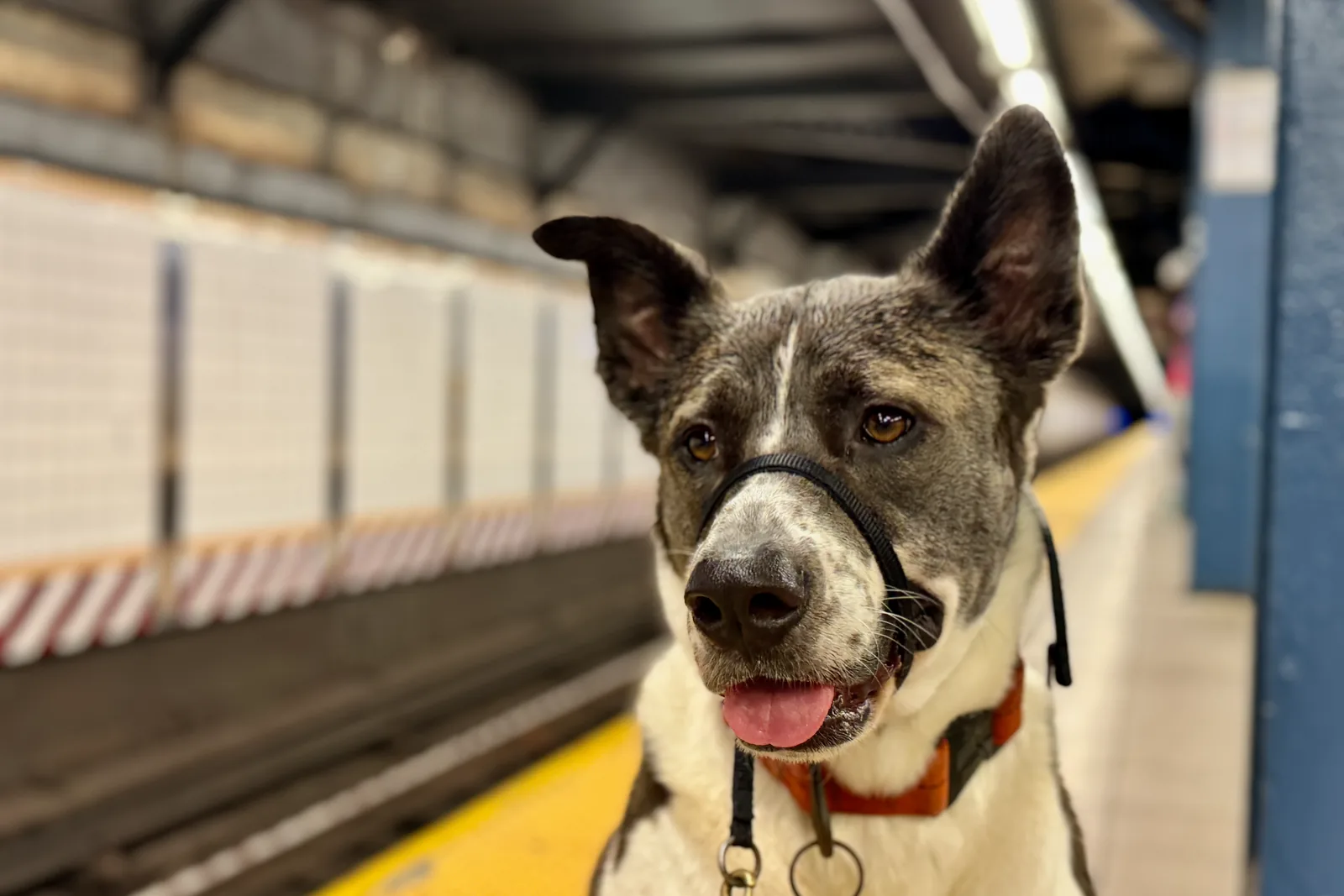
On Polish trains a dog in a carrier travels free, while a dog on a lead needs a ticket: 11.90 PLN on PKP Intercity and 5 PLN on POLREGIO, both flat rates regardless of distance. Outside a carrier a lead and a muzzle are required for the whole journey, along with a current rabies vaccination certificate. In city transport the rules are set locally: in Warsaw a dog rides free but needs a muzzle and a lead. Assistance dogs are exempt from those requirements.
Not having a car does not have to mean you only go where you can walk. A train plus a bus opens up the whole country to your dog: trails, forests, the coast, the lakes. But that is no longer a walk, it is a journey with regulations, a fare and a muzzle, and it is better to learn the rules before the platform than on it.
Trains: what it costs and what you must carry
Poland's two largest national operators have similar rules and very different fares.
| PKP Intercity | POLREGIO | |
|---|---|---|
| Dog in a carrier | free | free, as hand luggage |
| Dog on a lead | 11.90 PLN, flat rate | 5 PLN, flat rate |
| Does the fare depend on distance | no | no |
| Lead and muzzle outside a carrier | required for the whole journey | required |
| Document | current rabies vaccination certificate | current rabies vaccination certificate |
| Seat or berth | an animal may not occupy one | animal and carrier go in luggage space, not on a seat |
| Assistance and guide dogs | separate rules, no muzzle or lead, harness instead | free, no muzzle or lead, harness instead |
Two things are worth taking from that table. First, the fare is flat, so crossing the country costs your dog the same as two stops. Second, a carrier has to actually be a carrier - under the regulations it must effectively limit the animal's access to its surroundings, and the dog may not put any part of its body outside it. A bag with a head sticking out does not qualify, and the conductor is entitled to treat that dog as a dog on a lead.
What about the other operators
We verified the fares above directly with PKP Intercity and POLREGIO. Regional operators - Koleje Mazowieckie, Koleje Slaskie, Koleje Dolnoslaskie, SKM and the other regionally owned companies - have their own tariffs and their own regulations, and their dog fares can differ. If you are taking a regional train, check your operator's price list before you travel rather than assuming the Intercity rate applies.
Fares and regulations also change over time, so even a verified rate is worth a glance on the operator's site before a longer trip.
City transport: the city decides
There is no single nationwide rule about dogs on buses and trams in Poland. Each city's transport authority sets them, in a document usually called przepisy porzadkowe (public order regulations) or regulamin przewozu. That is why "does my dog need a muzzle on the tram" has one answer in Warsaw and possibly another in your city, and the only reliable source is the local regulation.
In Warsaw, the public order regulations of Warszawski Transport Publiczny permit carrying on vehicles and bringing into metro stations:
- small domestic animals, if they are not a nuisance to passengers and are placed in a basket, box or cage suitable for the animal,
- dogs, provided they are not behaving aggressively, are not a nuisance to passengers and wear a muzzle and are kept on a lead,
- assistance dogs as defined by the act on vocational and social rehabilitation and the employment of people with disabilities.
On top of that comes a duty of supervision: the passenger is responsible for the animal they carry and for any damage it causes. An animal may also not occupy a seat.
The regulations set no fare for carrying a dog, so in practice a dog rides free in Warsaw. The same is true in several other cities, but that is something to check locally, not to assume.
A muzzle that is not a punishment
On public transport a muzzle is simply a requirement, so the question is not whether but how to keep your dog from hating it. Two things decide everything:
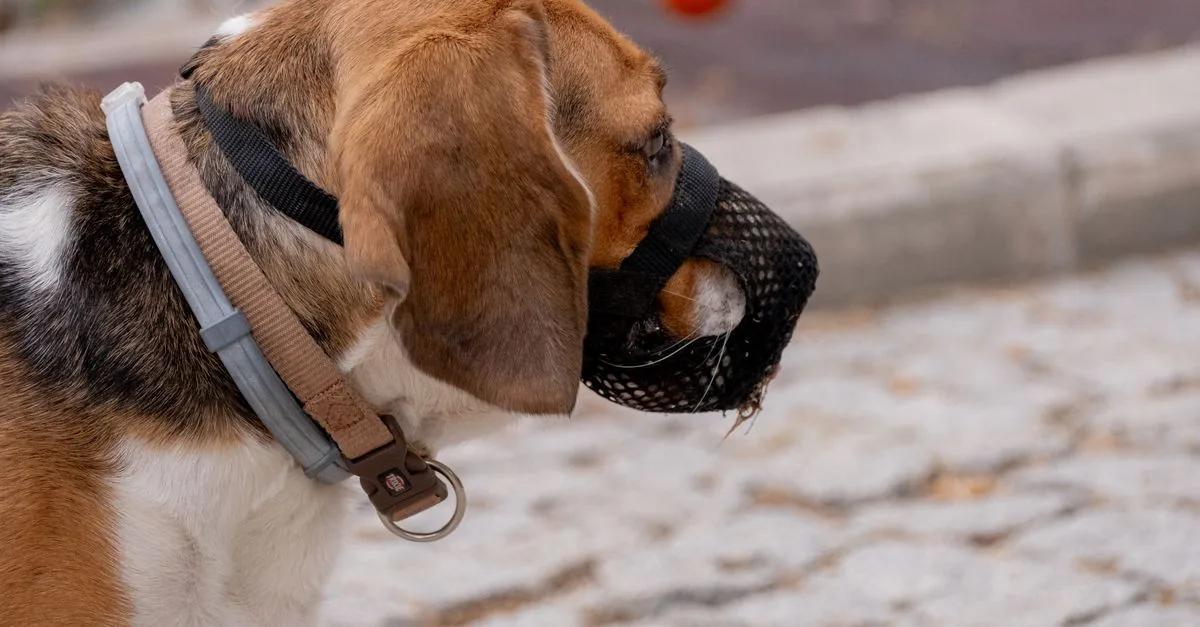
- The type of muzzle. A basket muzzle that lets the dog open its mouth, pant and drink. Fabric muzzles that clamp the jaws shut block panting, which is the only way a dog sheds heat; in a crowded, warm vehicle that is a real problem.
- Preparation in advance. A dog's first encounter with a muzzle must not happen on the platform. We set the whole process out in our guide to muzzle training a dog - it takes a few days of short sessions and saves both of you a very bad first journey.
The first trip, step by step
- Start with a short leg. Two tram stops or one railway stop, and back. The goal is the experience, not arriving anywhere.
- Pick an off-peak hour. An empty carriage is a completely different situation from a 4pm crush.
- Feed the dog about three hours before departure, not immediately before. A full stomach plus vehicle motion is a recipe for travel sickness.
- Walk the dog before you go onto the platform so it can relieve itself.
- Carry water and a folding bowl. In a heated carriage a dog drinks more than you would expect.
- Bring a mat or blanket and lay it at your feet. A dog with a designated spot settles far better than one standing and hunting for a position.
- Board near the doors and stay close to an exit, ideally in an open-plan carriage or by the luggage space, not in the middle of a packed corridor.
- Reward calm instead of reacting only once the dog is agitated. A few treats for lying down do more than a soothing voice.
What to pack
| Item | Why |
|---|---|
| Basket muzzle | A regulatory requirement; it must allow panting |
| Short lead, not a retractable one | Control in crowds and at the doors |
| Vaccination certificate | Required by the rail operators |
| Water and folding bowl | Heated carriages are drying |
| Mat or blanket | A designated spot calms the dog |
| Poo bags | Platform, station, bus stop |
| Towel | A wet dog in autumn and winter |
The dog that is frightened of crowds and noise
Public transport is a lot of stimuli at once: screeching brakes, doors, strangers very close, vibration through the floor. If your dog starts yawning, lip-licking, panting without exertion or hunching while still at the stop, that is not stubbornness but stress - we list the signals in our article on stress signals in dogs.
In that situation, do not push the journey through. Go back to the step where the dog was calm: standing near the stop and watching vehicles from a distance, then boarding and getting straight off, then one stop. A dog with serious reactivity or anxiety deserves help from a behaviourist, not another attempt at "getting used to it".
If the alternative is a car, it is worth knowing the rules for carrying a dog safely there too - we collected them in travelling with a dog by car. And if the plan is bigger and you are crossing a border, separate documentation requirements apply, described in travelling abroad with a dog.
Getting there by public transport opens up routes that are hard to reach by car anyway: trailheads, lake shores, forests with no car park. Check the DOGOUT map for what you can reach by tram or train from your area, build your dog a few calm first journeys, and turn transport into a tool rather than an obstacle.
Sources
Frequently asked questions
- How much does a dog ticket cost on a Polish train?
- On PKP Intercity, carrying a dog outside a carrier costs a flat 11.90 PLN regardless of distance or train category. On POLREGIO the same service costs 5 PLN, also a flat rate. A dog inside a carrier travels free with both operators. Fares change, so check your operator's price list before you travel.
- Does a dog need a muzzle on a Polish train?
- Yes, if it travels outside a carrier. PKP Intercity's regulations require a muzzle for the entire journey and the dog to be kept on a lead; POLREGIO sets the same condition. A dog travelling inside a carrier needs neither, because it does not leave the carrier.
- What documents do I need to travel with a dog by train in Poland?
- A current certificate of rabies vaccination. Both PKP Intercity and POLREGIO require it, regardless of whether the dog travels in a carrier or on a lead. Carry the vaccination booklet or pet passport itself rather than a photo on your phone.
- Can a dog occupy a seat on the train?
- No. PKP Intercity's regulations state plainly that an animal may not occupy a seat, couchette or sleeper berth, even if a ticket and reservation were bought for it. The dog travels on the floor, and a carrier goes in the luggage space or on your lap.
- Do dogs travel free on buses and trams in Poland?
- Rules are set by each city's transport authority, so there is no single national answer. In Warsaw the public order regulations allow a dog to be carried at no charge, provided the dog is not aggressive, is not a nuisance to passengers, wears a muzzle and is kept on a lead. In your own city, check the document usually called przepisy porzadkowe or regulamin przewozu.
- Do assistance dogs follow different rules?
- Yes. An assistance dog working with a person with a disability is exempt from the muzzle and lead requirement, but should wear a harness and have documentation confirming its assistance-dog status. On POLREGIO, assistance and guide dogs travel free. The basis is the Polish act on vocational and social rehabilitation and the employment of people with disabilities.