Easiest Dog Breeds for Beginners - How to Choose the Right One
The easiest dog breeds for first-time owners are Labrador Retriever, Golden Retriever, Poodle (Miniature), Cavalier King Charles Spaniel, Bichon Frise, and Shih Tzu. What they share: high intelligence, a genuine desire to cooperate with their owner, and a forgiving temperament that tolerates beginner mistakes. The best choice depends on your lifestyle - how active you are, how much space you have, and how much time you can give.
Getting your first dog is one of the more exciting decisions you can make. It is also one of the longer ones - a dog shares your life for a decade or more. Picking a breed that fits how you actually live, not how you imagine you will live, is the single most important thing you can do before the puppy comes home.
What makes a breed "easier" for beginners?
No dog is maintenance-free. The difference is how well a breed tolerates beginner mistakes and how quickly it understands what you want.
Beginner-friendly breeds typically have:
- Willingness to cooperate - they want to please their owner, not challenge the pecking order,
- High learning motivation - they quickly work out what gets rewarded,
- Forgiving temperament - no hair-trigger aggression or anxiety from a single mishandled moment,
- Moderate exercise needs - manageable without a professional training plan.
Top 6 breeds for first-time owners
| Breed | Size | Activity | Grooming | Best for |
|---|---|---|---|---|
| Labrador Retriever | Large | High | Low | Active owners, garden |
| Golden Retriever | Large | High | Medium | Families, active owners |
| Miniature Poodle | Medium | Medium | High (clipping) | Apartments, active owners |
| Cavalier King Charles Spaniel | Small | Low - medium | Medium | Apartments, seniors |
| Bichon Frise | Small | Low | High (clipping) | Apartments, families |
| Shih Tzu | Small | Low | High (long coat) | Apartments, seniors |
Labrador Retriever - the classic for good reason
For many years the most registered breed in the world. Labs are open to cooperation, strongly food-motivated (a goldmine in positive training) and very forgiving. They will shake off a training mistake and try again. One caveat: a Labrador needs a lot of movement - without daily long walks and play, they lean towards destruction. If you have a garden or an active lifestyle, this is your dog.
Golden Retriever - gentle and emotionally tuned in
The Golden is the breed for owners who want a deep bond. Sensitive, patient, and remarkably good at reading human mood. Slightly more emotionally delicate than a Lab - responds as well to tone of voice and praise as to treats. Needs regular brushing (long coat). Outstanding with children, making it a popular family choice.
Miniature Poodle - the smartest dog in a compact body
The Poodle ranks second in Stanley Coren's famous canine intelligence study, right behind the Border Collie. That means very fast learning - but also a dog that cannot be left to its own bored devices. Great for apartments, low-shedding (needs a groomer every 6-8 weeks), and often better tolerated by people with dog allergies - though no breed is truly 100% hypoallergenic. See our guide on hypoallergenic dogs for more detail.
Cavalier King Charles Spaniel - the calm companion
The Cavalier is living proof that you do not need a high-energy dog to enjoy a full life with one. Around 30-40 minutes of exercise a day suits it well. Gentle, affectionate, naturally cooperative - ideal for apartment life and for seniors. One health note: Cavaliers are prone to heart disease and neurological conditions. Buy only from a breeder who health-tests both parents.
Bichon Frise - cheerful and low drama
The Bichon seems to approach every day with genuine enthusiasm. Gentle, social, and reasonably trainable. Like the Poodle, it is low-shedding - good news for allergy-prone households. The white curly coat needs regular grooming appointments. Adapts well to apartment living and handles time alone better than many small breeds.
Shih Tzu - for the sofa-and-park lifestyle
The Shih Tzu was bred as a companion dog at the Chinese imperial court - and it has never forgotten it. Minimal exercise, maximum affection, and the occasional stubborn streak in training. Needs daily brushing or regular groomer visits. The right pick for beginners who want a calm, compact companion.
How to match a breed to your actual lifestyle
"Easier" matters less than "matched." A mismatched breed - even a gentle one - can cause real problems.
Before you decide, answer these honestly:
- How much time do you have for walks each day? A Labrador without at least an hour of movement is a Labrador with behavioural problems.
- Do you have a garden, or do you live in a flat? Smaller breeds manage apartments well; larger breeds generally prefer a garden or an owner with a genuinely active routine.
- Are there children or other animals at home? Goldens and Labs are the gold standard for kids. Cavaliers and Bichons are also great - as long as the kids learn to respect the dog's space.
- What is your grooming budget? Poodles and Bichons need a groomer every 6-8 weeks - a real cost and time commitment that first-time owners often overlook.
Whatever breed you pick, proper socialisation from the very first days is non-negotiable. Even the easiest breed can develop problems if it never learns that the world is a safe place.
Also remember: every dog needs mental exercise, not just physical. A dog that goes out only for toilet trips will get bored - and creative. For practical advice on getting this right, read our guide on how many walks a dog needs.
Rescue or breeder?
Both are valid - if you do it responsibly.
From a shelter or rescue, you can adopt an adult dog with a known-ish personality. Breed mixes are less predictable on paper but often make brilliant companions - and you give a dog a second chance.
From a registered breeder, you get more predictability around temperament and health, provided the breeder genuinely health-tests parents. Buying a puppy from an unverified private seller is buying a lottery ticket without knowing the odds.
Either way - before you commit, observe how the dog interacts with people, how it reacts to new stimuli, whether it seems confident and settled. Breed is a guide, not a guarantee.
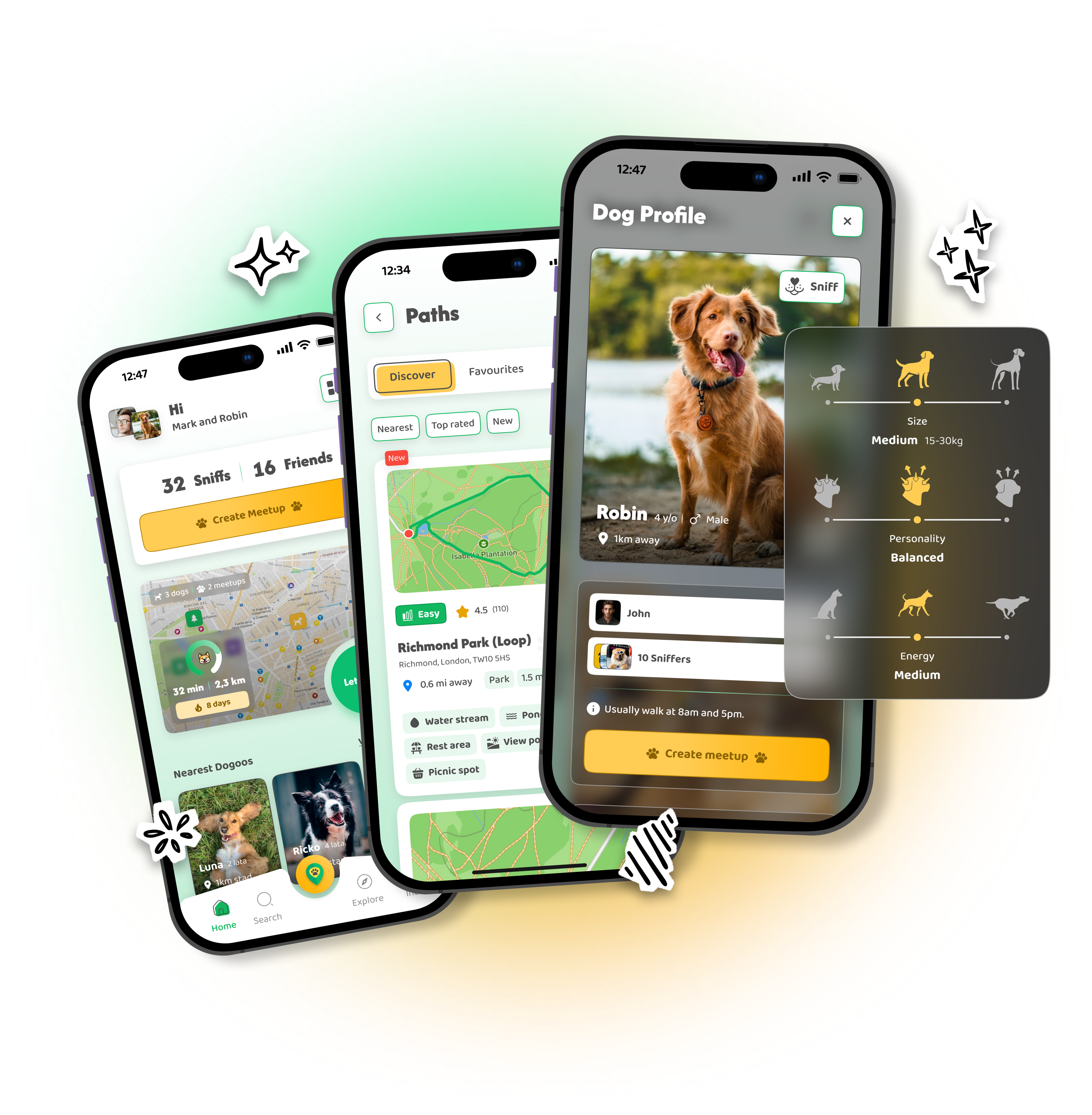
Ready to get outside with the pack? Open the DOGOUT map - find dog parks, off-lead areas, and favourite routes recommended by local owners near you.
Frequently asked questions
- What is the easiest dog breed for a first-time owner?
- Labrador Retrievers and Golden Retrievers top most expert lists - both are intelligent, forgiving, and love working with people. If you prefer a smaller dog, a Miniature Poodle or Cavalier King Charles Spaniel are excellent choices.
- Should a first-time owner get a puppy or an adult dog?
- An adult rescue dog can actually be the easier choice - their personality is already formed and they are often house-trained. A puppy gives you more control over socialisation and bonding, but demands enormous time and attention for the first few months.
- What small dog breeds are easiest for beginners in an apartment?
- Cavalier King Charles Spaniel, Bichon Frise, and Shih Tzu all thrive in apartments - they need modest exercise and handle smaller spaces well. A Miniature Poodle also does great in a flat, as long as it gets daily walks.
- Is a Labrador good for a first-time owner?
- Yes - one of the best. Labs are intelligent, highly food-motivated (great for positive training), and will forgive your early mistakes. Just keep in mind that a Labrador needs at least 1.5-2 hours of activity per day - a bored Lab will redecorate your home for you.
- Which dog breeds should beginners avoid?
- Siberian Husky, Border Collie, and Belgian Malinois all need experienced handlers and very high activity levels. For a first-time owner they often become a source of constant frustration - for both sides.
- How long do these beginner-friendly breeds live?
- Labs and Goldens average 10-12 years, Miniature Poodles and Cavaliers around 12-14 years, Shih Tzus and Bichons up to 14-16 years. Every year of a dog's life is a year you are responsible for - factor longevity into your decision.