How Many Walks Does a Dog Need Per Day?
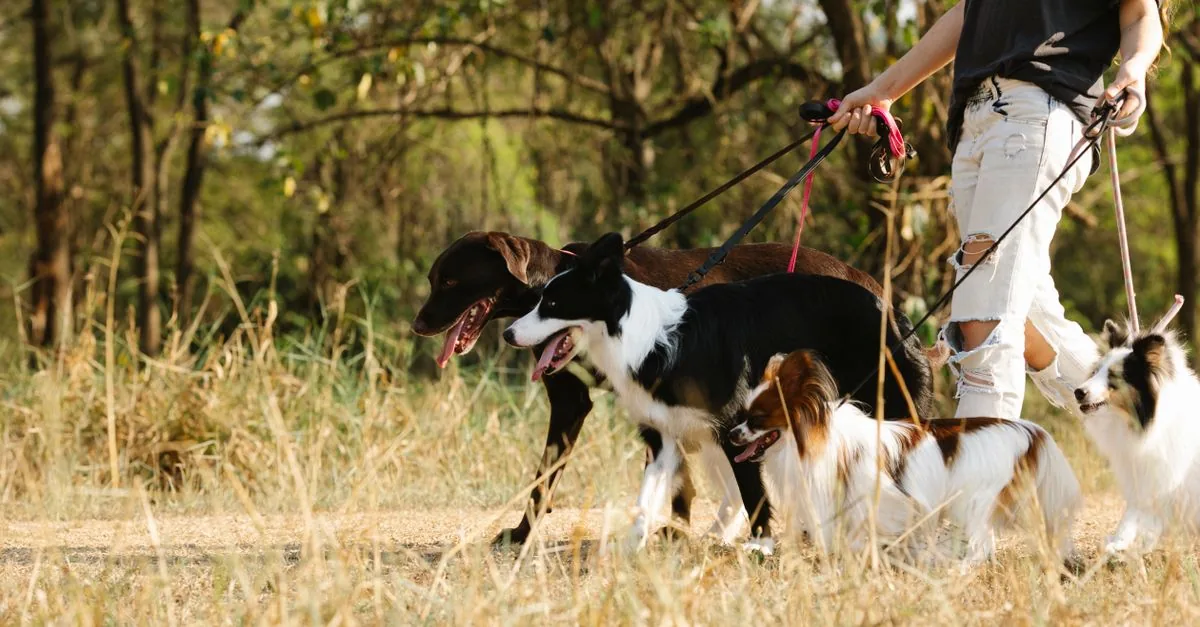
Most adult dogs need at least 2 walks per day totalling 30-60 minutes, but high-energy breeds can need 90 minutes or more. The right amount depends on your dog's breed, age, health, and mental stimulation it gets at home. Too little leads to restlessness and destructive behaviour; too much strains joints - especially in puppies and seniors.
Every dog needs to get outside. But "how much" is one of the most common questions owners ask - and the answer isn't one neat number. It depends on your dog. Here's how to think it through.
The baseline: what most adult dogs need
Two walks a day is the minimum for most adult dogs. That's not a ceiling - it's a floor. For the majority of medium-to-large breeds in reasonable health, you're looking at 30 to 60 minutes of walking per day spread across those outings. High-energy working breeds push well past that. Low-energy companion breeds may settle for a little less.
But total time on the lead isn't the whole picture. A dog that walks the same 10-minute loop twice a day is under-stimulated even if it's technically "walked." New environments, smells, and social encounters matter just as much as distance. That's exactly what making your walks more interesting is about - changing routes and adding variety makes exercise count for more.
High-energy vs low-energy breeds: a quick comparison
Breed type and purpose are the biggest predictors of how much exercise a dog actually needs. Here's a practical overview:
| Breed type | Examples | Daily walk time (adult) | Notes |
|---|---|---|---|
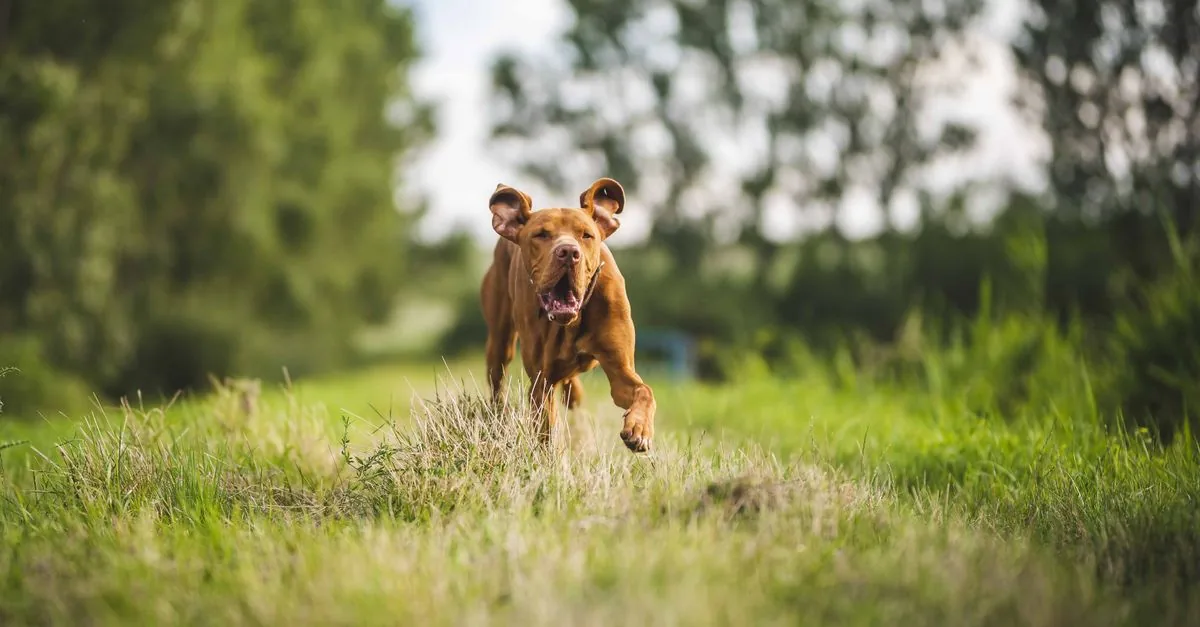
| High-energy working/herding | Border Collie, Malinois, Husky, Vizsla | 90-120+ min | Need mental challenges too - sniffing, training, problem-solving |
| Active sporting dogs | Labrador, Golden Retriever, Springer Spaniel | 60-90 min | Love off-lead running and fetch if space allows |
| Terriers | Jack Russell, Airedale, Bull Terrier | 60-90 min | Compact but high-drive; boredom causes trouble fast |
| Medium-energy companions | Beagle, Corgi, Cocker Spaniel | 45-60 min | Nose work and social walks help a lot |
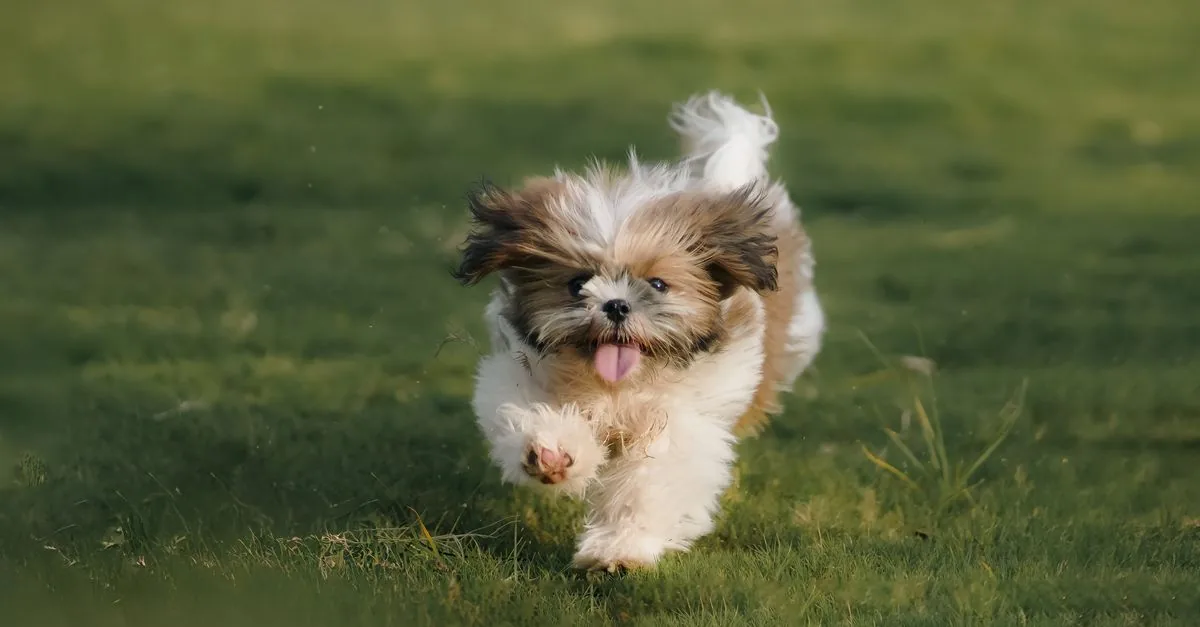
| Low-energy companions | Basset Hound, Shih Tzu, Pug | 30-45 min | Quality over quantity; avoid heat and hard surfaces |
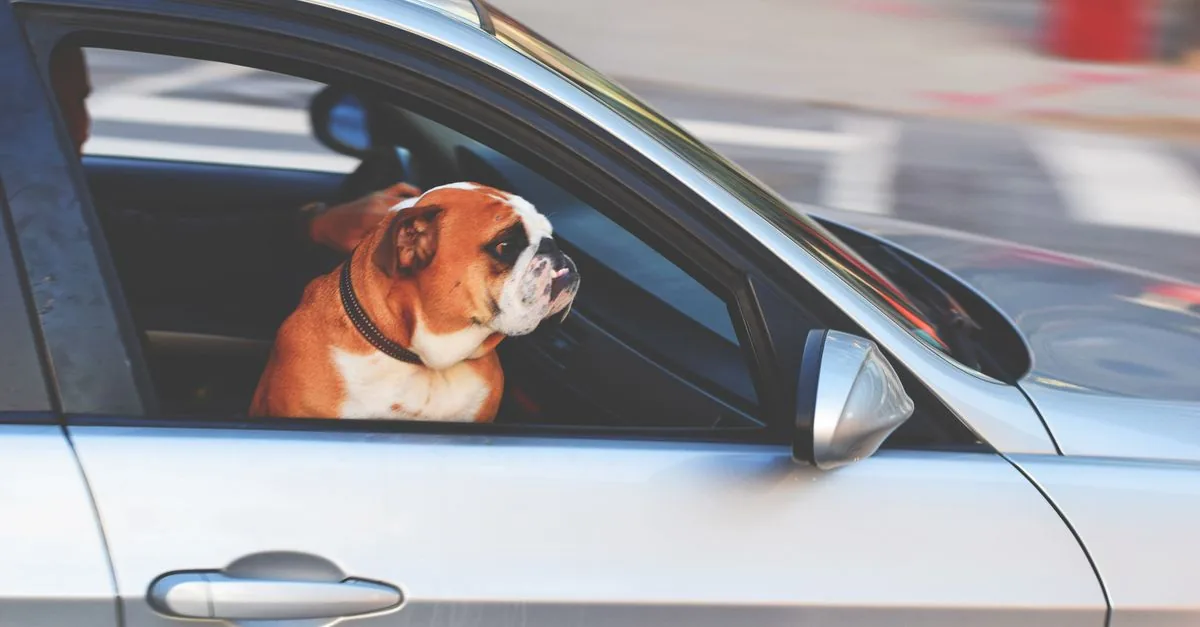
| Brachycephalic breeds | Bulldog, French Bulldog | 20-30 min | Breathing limits exertion; shorter walks, cooler times of day |
These are guidelines, not rules. An individual dog within any breed can sit at either end of the range. Know your dog.
Puppies and senior dogs: special cases
Puppies
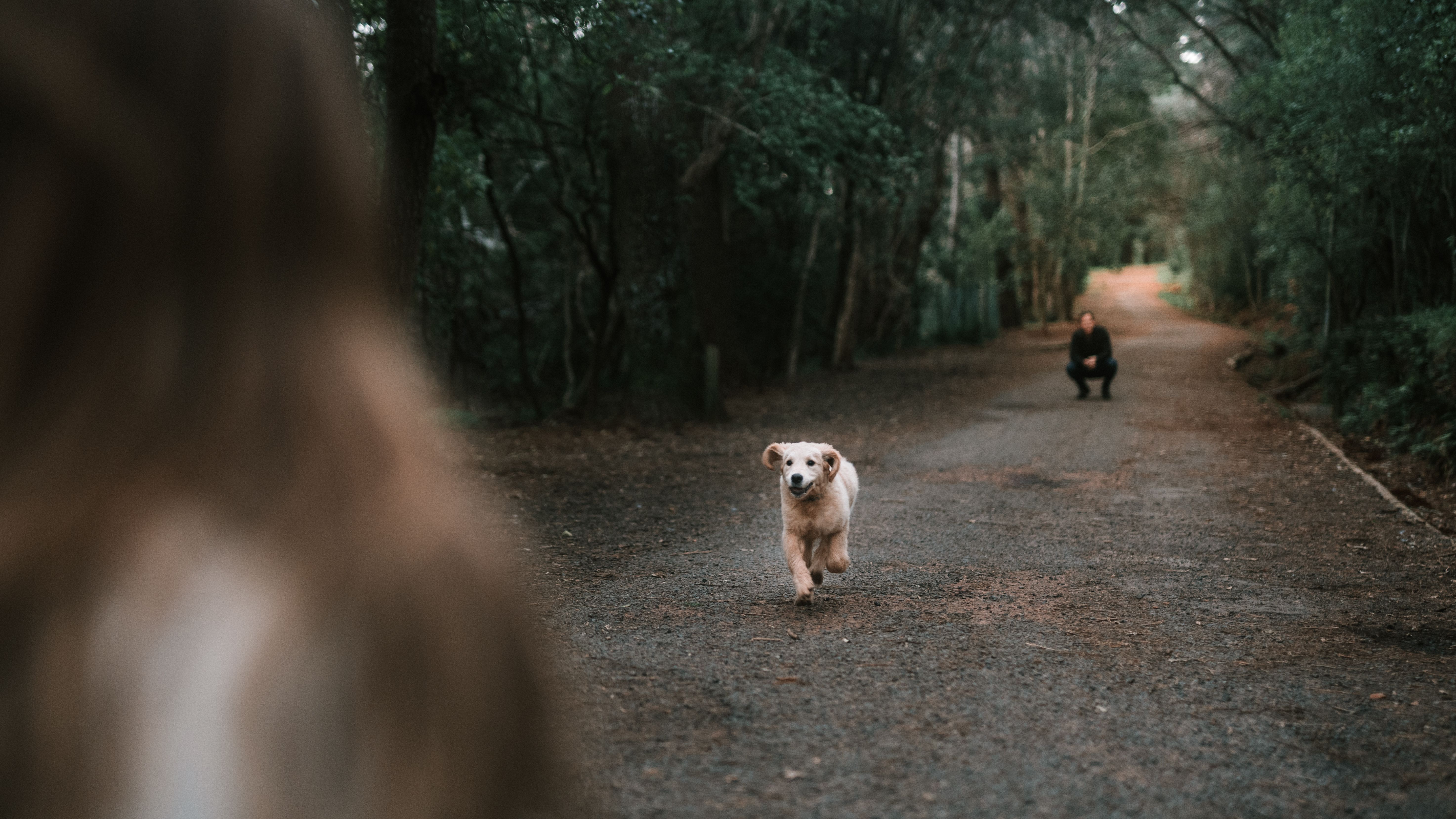
Young dogs need careful management. Their joints are still developing, which means too much exercise - especially jumping, running on hard surfaces, or very long distances - can cause lasting damage. The widely used "5 minutes per month of age, twice a day" rule of thumb is a useful starting point: a 3-month-old puppy gets around 15 minutes per session. But this is a guideline, not a hard limit. Let your puppy's energy and your vet's advice guide you. Full details in our article on walking a puppy.
Senior dogs
Older dogs need consistent movement to keep joints mobile and muscles from wasting - but the pace and distance should match their current capacity, not what they managed at age three. Watch for stiffness after walks, reluctance to start moving, or obvious pain. Shorter, more frequent walks often work better than one long effort.
Mental exercise counts too
Physical exercise is only half the equation. A dog that's physically tired but mentally bored will still act out. Sniffing is the most powerful mental workout dogs have - a 20-minute sniffer walk through a new neighbourhood can tire a dog more than a 45-minute march on the same pavement. Add puzzle feeders, training, and social encounters to the mix.
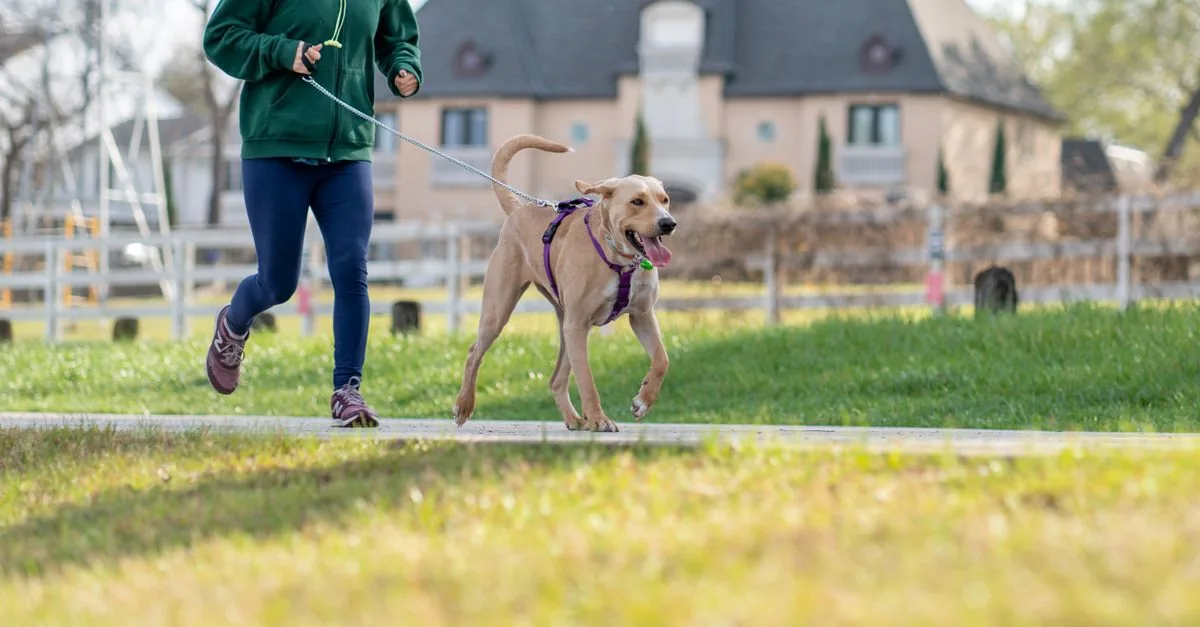
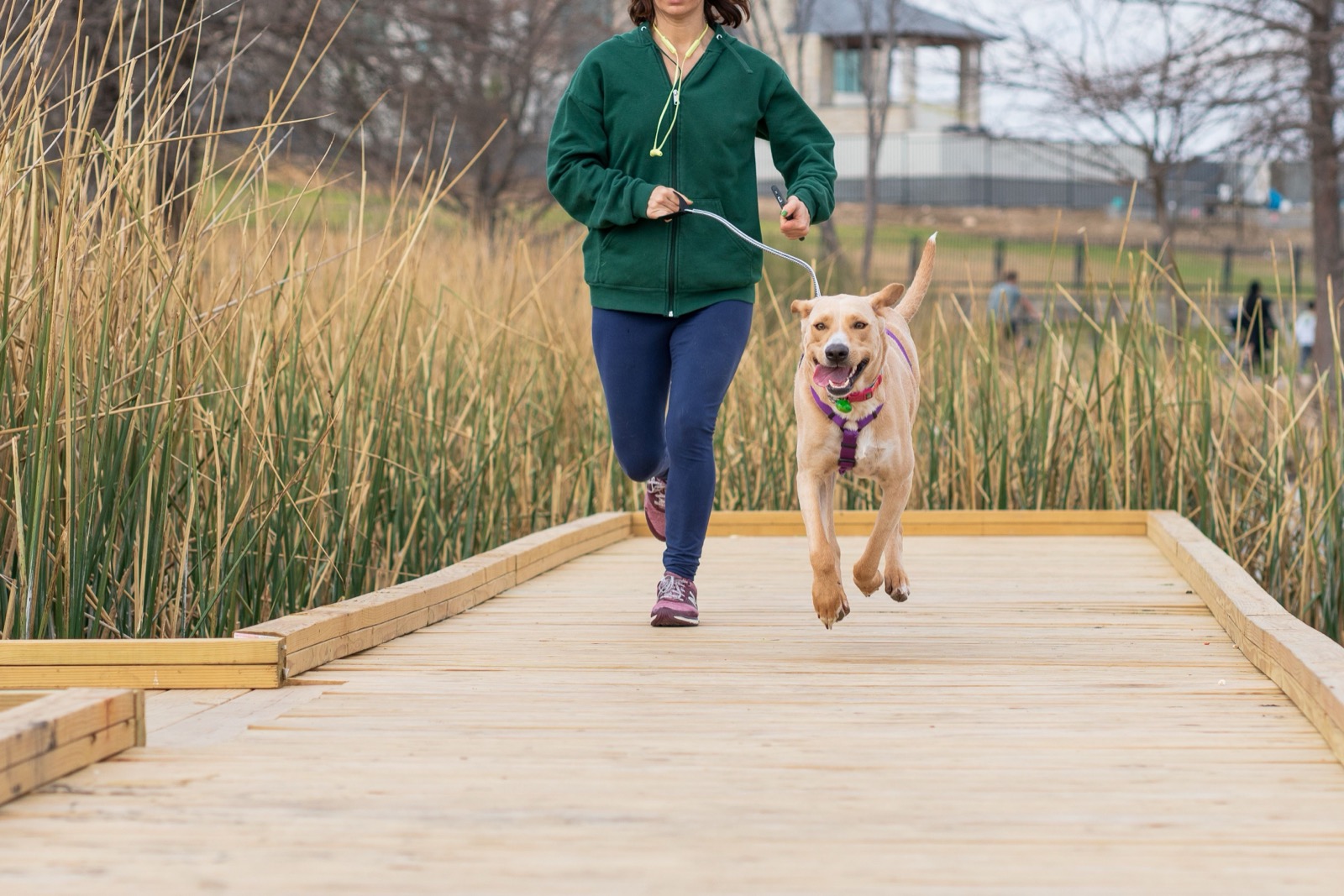
Speaking of social - running with your dog is a great way to hit both physical and mental intensity at once, if your dog's breed and health are suited to it.
Signs the balance is off
Too little exercise:
- Restlessness and inability to settle indoors
- Destructive chewing, digging, or shredding
- Excessive barking or whining
- Jumping, nipping, or hyper behaviour that doesn't calm down
- Attention-seeking that doesn't ease up
Too much exercise:
- Limping during or after walks
- Lagging behind or refusing to move
- Excessive panting that takes a long time to settle
- Stiffness the morning after a long outing
- Reluctance to get up or go outside
If you spot any of the "too much" signs, ease off and speak to your vet. Over-exercise injuries in dogs - particularly puppies and large breeds - can become chronic problems.
There's no one-size answer - but there are better walks
The right number of walks isn't a formula. It's the amount that keeps your specific dog calm, healthy, and happy at home. Start from the baseline, watch your dog's behaviour and physical condition, and adjust.
What you can control beyond frequency is quality. New routes, off-lead time where it's safe, sniffing opportunities, and other dogs to meet all multiply the value of every outing. If you're short on ideas, the guide on where to take your dog covers dog-friendly spots across Poland worth adding to your rotation. Use the DOGOUT map to find trails, off-lead areas, and spots other owners have marked near you - and see who's already out walking so you don't have to go it alone.
Frequently asked questions
- How many times a day should I walk my dog?
- At minimum twice a day for most adult dogs. Three or four shorter walks often work better than one long one - they keep energy levels steady and give your dog more chances to sniff, explore and relieve itself.
- How long should each walk be?
- That depends on your dog. A Greyhound can cover 5 km without breaking a sweat; a Bulldog is done after 20 minutes. Aim for at least 15-20 minutes per walk and adjust up from there based on your dog's energy and breed type.
- Is one long walk a day enough?
- For most dogs, no. Dogs need regular toilet breaks throughout the day, and one burst of exercise doesn't substitute for consistent movement and mental stimulation. Two to four walks spread across the day is the healthier pattern.
- Do small dogs need fewer walks?
- Not necessarily. Small high-energy breeds like Jack Russell Terriers or Miniature Schnauzers often need as much exercise as medium breeds. Size isn't the deciding factor - energy level and breed purpose are.
- How do I know my dog isn't getting enough exercise?
- Watch for restlessness, excessive barking, destructive chewing, hyper behaviour at home, or your dog pestering you constantly. These are classic signs of pent-up energy with nowhere to go.
- Can I walk my dog too much?
- Yes, especially puppies and senior dogs. Signs of over-exercise include limping, lagging behind on walks, reluctance to move, or excessive panting that doesn't settle quickly. If in doubt, shorten the walk and check with your vet.