Mushroom picking with a dog - how to do it sensibly
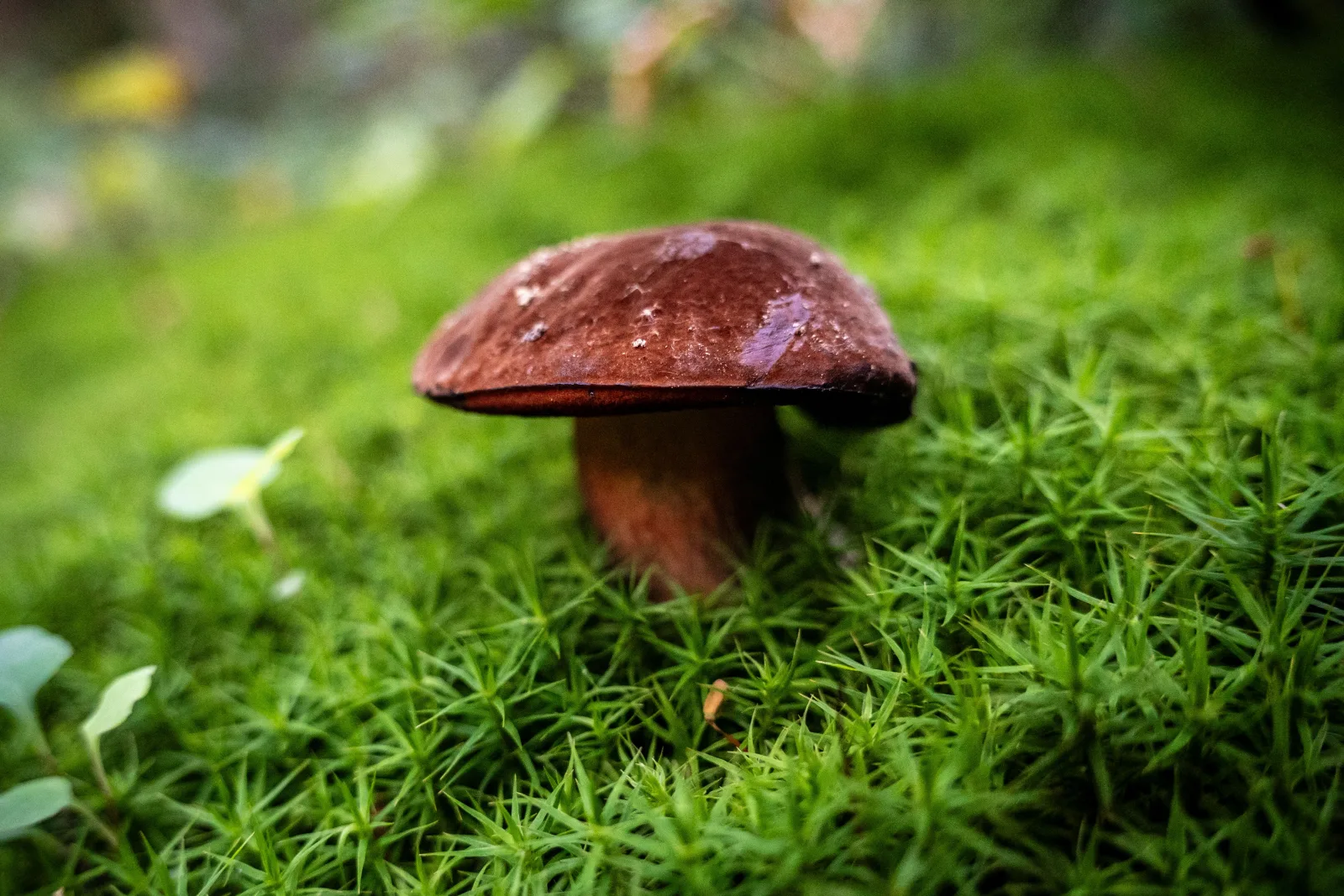
You can go mushroom picking with a dog as long as it stays on a leash, since off-leash dogs are banned in forests. The main risk is not the foraging itself but your dog eating a mushroom off the ground. Dogs cannot tell species apart, and death cap poisoning damages the liver with symptoms that may appear only after many hours. If you suspect your dog swallowed a mushroom, call your vet immediately and bring a sample of the same mushroom rather than waiting for vomiting.
Mushroom foraging and a dog sound like an ideal combination: cool forest, slow pace, plenty of sniffing. In practice there are two catches worth knowing about before your first trip, and both concern your dog's safety rather than your basket.
Catch one: a dog cannot tell species apart
This is the most important line in this article. People spend years learning mushrooms and still get it wrong occasionally. A dog goes by smell and texture alone, and plenty of toxic species smell neutral or even appealing to them.
The worst case is poisoning by death cap and related species containing amatoxins. It unfolds deceptively: the dog eats the mushroom, behaves completely normally for hours, and the signs of liver damage appear only later, when treatment is far harder. Hence the rule: do not wait for symptoms.
If you suspect your dog ate a mushroom:
- Call your vet or the nearest emergency clinic. Immediately.
- Take a sample of the same mushroom if one is growing nearby, or photograph it sharply, including the underside of the cap and the base of the stem.
- Note the time it happened.
- Do not induce vomiting on your own without veterinary advice.
Warning signs: vomiting, diarrhoea, drooling, lethargy, abdominal pain, muscle tremors, an unsteady gait.
Catch two: the dog stays on a leash
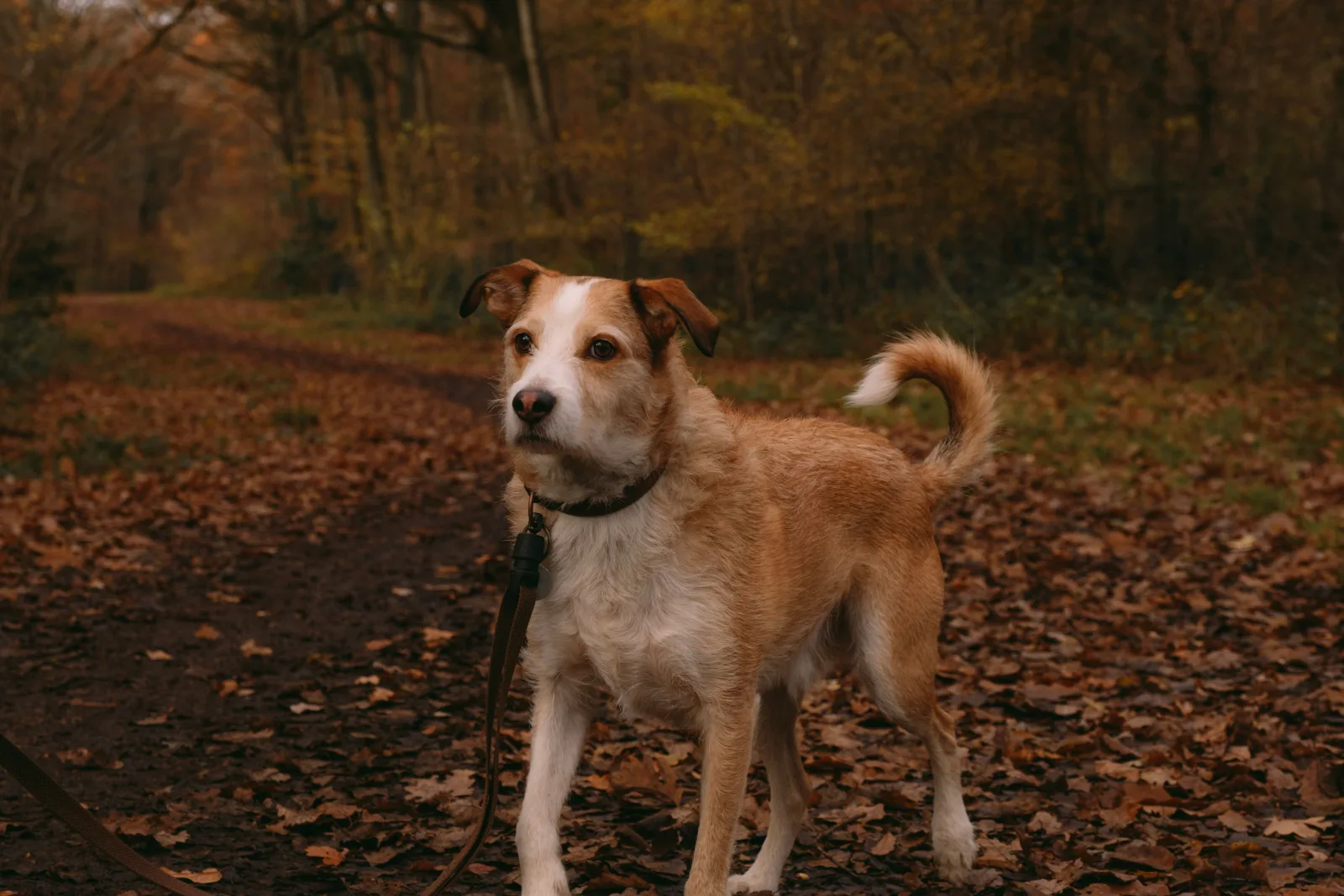
Forest law bans letting dogs run loose in woodland, and breaking the rule carries a fine or a formal reprimand. For foraging that is convenient rather than restrictive: you walk slowly and stop often, so a long line gives the dog room while you keep an eye on what it is picking up. Autumn also brings driven hunt season, covered in a separate guide, which is another reason to keep your dog close.
Organising it so neither of you is bored
The classic mistake is treating the dog as an accessory to the basket. Two hours of standing next to a crouching human is dull, and a bored dog looks for something to do at ground level, which is exactly where you do not want its attention.
- Give the dog its own task. Every fifteen minutes, scatter a handful of treats in the moss and let it search. Sniffing tires a dog more than walking does.
- Use stops for short training reps. Three repetitions of "leave it", "down" or a recall, then move on. It resets your dog's attention and reinforces the cue that actually matters here.
- Train "leave it" beforehand, at home. A cue used for the first time over a death cap will not work.
- Set a time limit. For most dogs, ninety minutes to two hours at a slow pace is the sensible ceiling. After that they get grumpy and harder to manage.
- Watch seniors and puppies. Slow walking in cold, damp conditions is a different load from a brisk walk, and older dogs lose heat faster.
When to leave the dog at home
Some dogs are a poor fit for foraging, and there is no point forcing it. A dog that picks up everything it finds and ignores "leave it" is in constant danger in a forest full of mushrooms. The same goes for highly excitable dogs, for whom two hours on a short leash is pure frustration, and for dogs recovering from illness who will get cold at that pace.
In that case the better plan is simple: a proper brisk walk with the dog in the morning, mushrooms in the afternoon without them. More ideas for autumn outings in our piece on autumn forest walks.
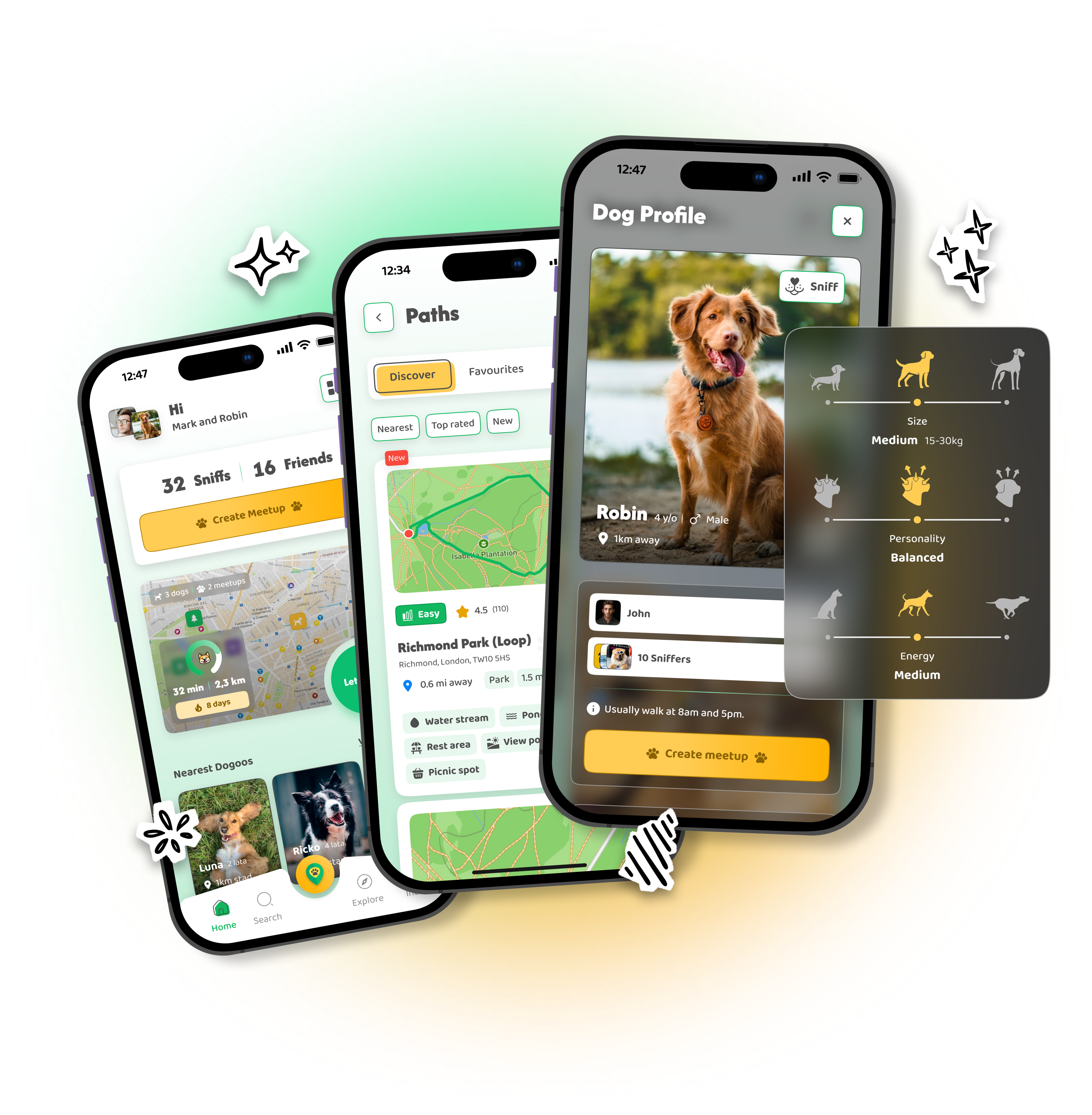
Foraging with a dog can be done well: leash, a trained "leave it", a job for the dog and the emergency vet number in your phone. Check the DOGOUT map for the woodland your local crew recommends at this time of year, and add your own.
Sources
Frequently asked questions
- Can a dog come mushroom picking?
- Yes, but on a leash. Forest law bans off-leash dogs, and since foraging means walking slowly and stopping constantly, a long line gives your dog freedom while you keep control over what goes into its mouth.
- What should I do if my dog eats a mushroom?
- Call your vet straight away rather than waiting for symptoms. If you can, take a sample of the same mushroom or photograph it clearly, including the underside of the cap and the base of the stem. The most dangerous poisonings show up late, so a dog that seems fine an hour later proves nothing.
- What are the signs of mushroom poisoning in a dog?
- Typically vomiting, diarrhoea, drooling, lethargy and abdominal pain, sometimes tremors or an unsteady gait. Symptoms can appear within an hour or only after many hours depending on the species. Any of them after a forest walk is a reason to contact a vet.
- Can a dog be trained to find mushrooms?
- Dogs are trained to find specific species by scent, truffles being the classic example, but that takes a defined target and many repetitions. For ordinary foraging it is not a realistic plan. Give your dog scent games with treats instead and keep the mushrooms to yourself.
- How do I keep my dog busy while I pick?
- Give it a job: scatter treats in the moss every so often, run short training reps at each stop, and keep a snuffle mat in the car for the way home. A dog that just stands next to a crouching human for two hours gets bored, and a bored dog starts picking things up.