Running With Your Dog: How to Start Safely and Go Further
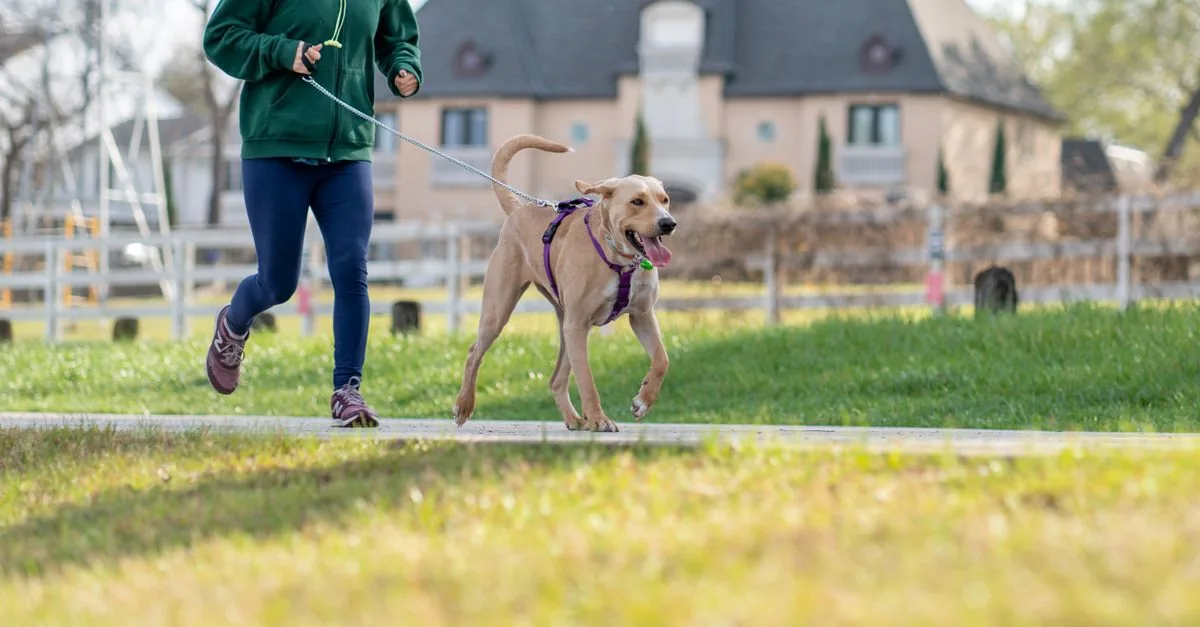
Running with your dog is one of the best things you can do together - but it needs the right dog (age, breed, health), a sensible build-up plan, and respect for heat and surface. Most dogs are ready for short jog intervals from around 12-18 months, depending on breed size. Always check with your vet first, especially for large breeds.
Running solo is fine. Running with your dog is something else entirely. They're faster than you think, more enthusiastic than you're ready for, and completely committed to the effort. When it works, it's one of the best kinds of exercise you can share. When it's done wrong - wrong age, wrong breed, wrong heat, wrong surface - it causes real harm. Here's how to do it right.
Is your dog ready to run?
Age - growth plates first
The single most important factor before you start: your dog's growth plates must be closed. Growth plates are the soft cartilage at the ends of bones that harden into solid bone as the dog matures. Sustained impact on open growth plates can cause permanent damage to joints and limbs.
General guideline: small breeds close around 12 months; medium breeds around 12-14 months; large and giant breeds may take until 15-18 months or longer. These are estimates - individual variation exists, and some large breeds take even longer.
Always check with your vet before starting a running programme. An X-ray can confirm whether growth plates are closed. The 5-minute appointment is worth it.
Senior dogs need a different kind of assessment: arthritis, cardiovascular health and general fitness all change with age. Your vet can tell you whether jogging is appropriate or whether a brisk walk is the better call.
Breed suitability
Not every dog is built to run. Some breeds are natural-born running partners. Others face serious physiological limits that make sustained aerobic effort risky or cruel.
| Breed group | Examples | Running suitability |
|---|---|---|
| High-energy working & sporting | Husky, Vizsla, Border Collie, Weimaraner, Dalmatian, Pointer | Great - built for sustained effort, need significant exercise |
| Active medium breeds | Labrador, Golden Retriever, Australian Shepherd, Springer Spaniel | Good - adjust for age and fitness, watch heat with Labs/Goldens |
| Hounds | Greyhound, Saluki, Whippet | Good for short bursts, not endurance - sprinters by design |
| Small terriers & active small breeds | Jack Russell, Parson Russell | Good - surprisingly capable, watch distance on hard ground |
| Brachycephalic (flat-faced) | French Bulldog, English Bulldog, Pug, Boxer, Shih Tzu | Not recommended - compressed airways, overheating risk, stick to brisk walks |
| Very small breeds | Chihuahua, Toy Poodle, Pomeranian | Not ideal - joint load disproportionate to size, short walks are better |
| Senior dogs (any breed) | - | Assess individually - consult vet; gentle jogging may be fine, or not |
Safety checklist before every run
Always start with a 5-minute warm-up walk. Cold muscles and joints need to loosen before asking them to work hard. This is as true for your dog as it is for you.
Paw care. In summer, test the asphalt with the back of your hand: if it's too hot to hold for 5 seconds, it's too hot for your dog's paws. Run on grass or early in the morning. In winter, road salt and ice can crack and burn paw pads - rinse and check paws after every run.
Hydration. Dogs cannot sweat through their skin - they cool by panting. That process is far less efficient than sweating, which means they overheat faster than you do. Bring water and a collapsible bowl on every run longer than 20 minutes. Offer it at regular intervals, not just when you're thirsty.
Heat danger. The rule is simple: don't run your dog in midday summer heat. Early morning or evening only. Watch for overheating signs at any time of year: excessive panting that doesn't stop, slowing to a halt, heavy drooling, glazed eyes, stumbling. If you see these, stop immediately. Move to shade. Offer cool (not ice cold) water in small amounts. If the dog doesn't recover quickly, get to a vet.
Building up gradually - the 6-week start plan
Going from zero to 5 km on day one is how you get a sore dog and a cancelled running programme. Build systematically.
Weeks 1-2: run-walk intervals
Run 1-2 minutes, walk 3 minutes. Repeat 4-5 times per session. Three sessions per week, not more. After each session, check your dog: any limping, reluctance to put weight down, or stiffness the next morning means you've gone too fast.
Weeks 3-4: extend the run intervals
If week 1-2 went well, increase running intervals to 3-4 minutes, walking 2 minutes between. Start to feel out what a comfortable sustained pace looks like for your dog.
Weeks 5-6: steady runs
By now your dog should be comfortable with 15-20 minutes of mostly continuous jogging. Push toward a steady 3-4 km. Still not every day - two to three runs a week with full recovery between them.
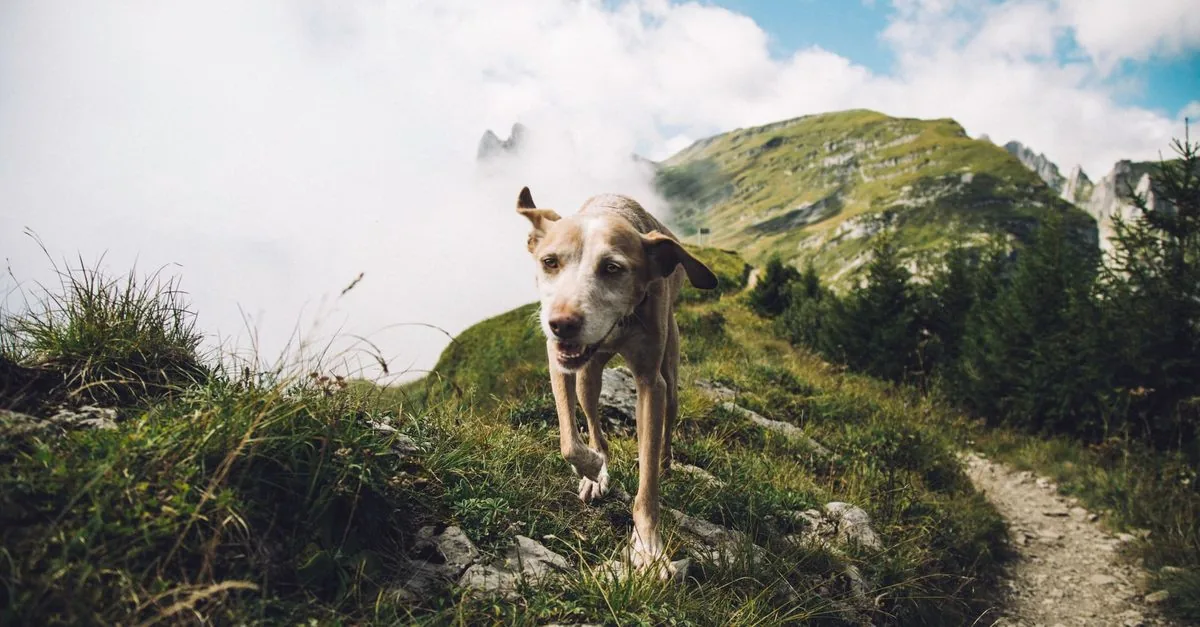
A dog that's genuinely fit and ready for longer distances is also a dog that's great company on mountain and forest trails - the surface variety alone makes trail running far easier on joints than road running.
Canicross - running together, properly
Canicross is the sport of running with your dog connected to you. It started in the sledding world as off-season training and turned into its own discipline with races, communities and dedicated gear.
The gear
Three pieces matter:
- Dog harness - a pulling-style harness that distributes force across the chest and shoulders, not the throat. Never run with a collar - neck injury risk is real.
- Bungee line - absorbs the jerk when a dog accelerates or changes direction. A rigid lead is dangerous for both of you at running pace.
- Waist belt for the runner - keeps your hands free and puts the connection at your hip, which is the right position for balance and efficiency.
Canicross lets your dog run at its natural pace rather than slowing down to match yours. For high-energy breeds, it's transformative - they get to work, you get towed up hills. Check out our guide on how many walks a dog actually needs to understand where running fits into your dog's broader exercise picture.
Surface matters more than distance
Grass and forest paths absorb impact. Concrete does not. For a dog covering the same distance:
- Grass or forest path: lower joint stress, paws protected, cooler underfoot.
- Asphalt or concrete: higher impact on joints over time, paw heat risk in summer, higher chance of paw abrasion.
If you live in a city and most of your running is on hard surfaces, keep sessions shorter, check paws regularly, and prioritise finding parks and green spaces for at least some of your runs. A broader list of where to take your dog can help you spot off-road options you didn't know were nearby.
Find running routes, trails and active dog owners near you on DOGOUT - the map shows dog-friendly parks, forest paths and who's already out there. Your best running partner might just be a tap away.
Frequently asked questions
- What age can a dog start running?
- As a general guideline, small breeds are often ready from around 12 months and large breeds from 15-18 months, when growth plates have mostly closed. Always confirm with your vet - starting too early on hard surfaces can cause permanent joint damage.
- Can a French bulldog or pug run with me?
- Not really. Brachycephalic breeds - flat-faced dogs like French bulldogs, English bulldogs, pugs and boxers - have compressed airways that make sustained aerobic effort genuinely risky, especially in warm weather. Brisk walks are fine; running is not.
- How do I keep my dog cool on a summer run?
- Run in the early morning or evening, never midday. Always bring water and a collapsible bowl. Watch for overheating signs: excessive panting, slowing to a stop, heavy drooling, glazed eyes, stumbling. If you see these, stop immediately, find shade, and offer water.
- What is canicross?
- Canicross is the sport of running with your dog attached to you by a bungee line. The dog wears a pulling harness (not a collar), the runner wears a waist belt, and the bungee line connects them. It's safe, sociable and lets your dog run at its natural pace.
- Is concrete bad for a dog's paws when running?
- Hard, unforgiving surfaces like concrete and asphalt put more stress on joints and paw pads than grass or forest paths. In summer, asphalt can also burn paws. Prefer softer surfaces where you can, especially while building up distance.
- How long should a dog run before I increase distance?
- Start with run-walk intervals of 1-2 minutes running, 3 minutes walking, 2-3 times per week. After 2-3 weeks of consistent sessions with no signs of soreness, increase the running intervals. Most dogs are ready for a steady 5 km after 6-8 weeks of gradual build-up.