

Dogs and All Saints Day - Cemeteries, Crowds and Candles
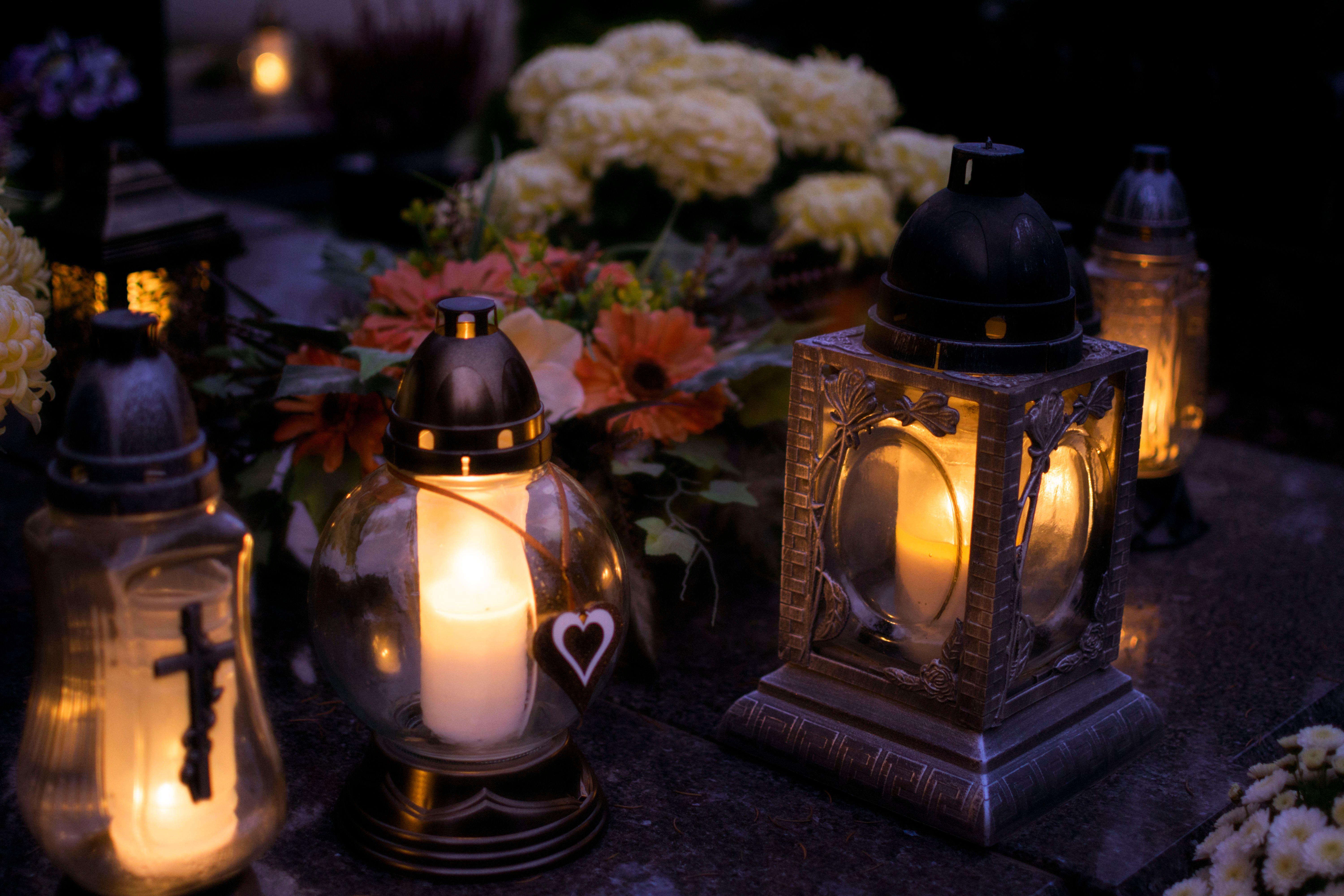
Whether dogs may enter a cemetery is decided by whoever manages it, not by national law, and the answer varies: some cemeteries admit leashed dogs, others post a clear ban at the gate. Check the rules for the specific cemetery before 1 November. Regardless of the rules, All Saints Day is one of the hardest days of the year for a dog: crowds, narrow paths between graves, open flames at nose height and heavy candle smoke. For most dogs the better option is staying home and getting a proper walk at another time.
In Poland, 1 November is the day half the country travels. If you have a dog, the same question comes back every year and it does not have a single answer: does the dog come along? Let us separate two things that usually get muddled: what is allowed, and what makes sense.
What is allowed: it depends on the cemetery
There is no single national rule governing whether a dog may enter a cemetery. The manager of each cemetery sets the rules, and they vary considerably. Some admit dogs on a leash, some post an explicit ban at the gate, and others say nothing, in which case custom and common sense decide.
Practical advice: check this before 1 November, not at the gate with the dog on a lead and family waiting in the car. The rules are usually displayed at the entrance, and for larger cemeteries often on the manager's or parish website.
What makes sense: for most dogs this is the wrong day
Even where it is formally allowed, the second question is worth asking. All Saints Day is one of the hardest days of the year from a dog's point of view:
- Crowds. Not park crowds but dense, slow-moving ones in narrow paths with nowhere to step aside.
- Open flame at dog height. Hundreds of candles sit exactly at nose and tail level. A wagging tail plus a long coat plus a flame is not a theoretical risk.
- Glass. A knocked-over candle breaks, and you are walking the same ground afterwards.
- Smell. Heavy wax and smoke are a load on a dog's nose that we barely register.
- The mood around you. Dogs read tension in people well and do not always know what to do with it.
For a calm dog used to crowds and walking to heel this may be manageable. For a puppy, a reactive dog, an anxious one or an older one it is simply too much.
Three plans that work
| Situation | Plan |
|---|---|
| Dog stays home fine | stays home, walks morning and evening |
| Dog cannot be left | split roles, one person at the cemetery, one with the dog |
| You want to visit the grave with the dog | go a few days earlier or later, when it is empty |
The third option is the most underrated. A cemetery on 28 October or 4 November is a completely different place: quiet, uncrowded, candles not yet or no longer at full count. If having your dog with you matters, that is the day, not 1 November.
What not to do
Do not tie the dog up outside the gate. It is the most common idea and the worst available. A dog tied up in the biggest crowd of the year, unable to move away, approached by passing adults and children, is a situation where even a calm dog can react out of character.
Do not leave the dog in the car in the cemetery car park. November can be cold, but a car in sun still heats up, and with full car parks nobody will notice.
If you are going anyway
A few things that genuinely reduce the risk:
- Short lead, not a retractable one. Five metres of line among graves is a recipe for catching a candle.
- Walk the edges, not the middle. Fewer people, fewer flames, easier to back out.
- Pick your hour. Early morning is incomparably calmer than the afternoon.
- Watch the dog, not just the path. Tucked tail, lip licking, panting without exertion are signals to leave rather than push through.
- Know your exit. Find the nearest gate before you need it.
If your dog struggles with being left at home, that is worth working on regardless of the date. We cover it in dog separation anxiety. For a quiet walk once the clocks go back, see walking a dog after dark.
In one sentence
Check the cemetery's rules, but before you do, ask yourself whether your dog would want to be there on 1 November at all. For most dogs the answer is no, and a good walk the next day settles it better than an hour in a crowd.
The DOGOUT map shows where you can get out quietly nearby while half the city queues outside the cemetery. Head somewhere empty.
Frequently asked questions
- Are dogs allowed in cemeteries?
- It depends on the cemetery. The rules are set by its manager rather than national law. Some admit leashed dogs, others post a clear ban. The rules are usually displayed at the gate.
- Is 1 November a good day to visit a cemetery with a dog?
- For most dogs, no. Crowds, narrow gaps between graves, hundreds of flames at dog-nose height and heavy candle smoke add up to a great deal of stimulus at once.
- Are grave candles dangerous for a dog?
- Open flame at nose and tail height is a real burn risk, particularly with a wagging tail and long coat. There is also glass, which breaks when knocked over.
- What if the dog cannot stay home alone?
- The best plan is splitting roles: one person visits the cemetery while another stays with the dog or walks it elsewhere. If the dog has separation anxiety, a day in a crowd is not the answer either.
- When is the best time to visit a grave with a dog?
- Outside the peak, so not 1 November. A few days earlier or later the cemetery is empty and quiet, and the whole problem disappears.