Teach a Dog to Swim - Step by Step, Without Stress
Never start teaching a dog to swim by throwing it in - that is the fastest route to a phobia. Introduce your dog gradually: from shallows where it can stand, through play at the edge, to its first strokes with you supporting its belly. Choose a calm body of water with a gentle entry, use a buoyancy vest, and always reward bravery. Not every dog needs or wants to swim - flat-faced breeds like Bulldogs struggle for anatomical reasons. Always rinse your dog after swimming in natural water.
Swimming is one of the best forms of exercise for a dog - it takes pressure off the joints, tires the dog out beautifully, and is huge fun on a hot day. But contrary to popular belief, not every dog is born ready to swim, and not every dog enjoys it. Teaching a dog to swim is a process built on trust and gradual steps, not on "throwing it in at the deep end". Done well, it gives you a shared passion for years. Done by force, it can put a dog off water for life.
Should your dog swim at all?
Let us start with an honest truth: swimming is not for every dog. Before you begin, look at your dog's build and temperament.
| Dog group | Swimming ability |
|---|---|
| Retrievers, spaniels, poodles, gundogs | Natural swimmers, usually love water |
| Shepherds, herding dogs, mixed breeds | Usually do well with proper teaching |
| Flat-faced breeds (Bulldog, Pug, Boxer) | Great difficulty, tire fast - swimming is risky |
| Heavy, stocky, short-legged dogs (Basset, Corgi) | Struggle to stay up - need special caution |
| Older dogs or those with joint problems | Swimming can be useful for rehab, but only supervised |
If you have a flat-faced dog or one built poorly for swimming, do not force it. You can give it the joy of wading in shallow water, but depth is not for it - these breeds drown easily. When in doubt, consult a vet, especially with an older dog or one with health conditions.
Preparation - before you get in
Good preparation does half the work:
- Choose the right spot. A calm body of water with no current or waves, a gentle, gradual entry, and a sandy or grassy bottom. Quiet lakes and shallow coves are ideal. Avoid fast rivers, steep banks, and water with algal blooms.
- Get a buoyancy vest. During training this is essential - it holds the dog in a good position, adds confidence, and gives you a handle.
- Pick a warm day and warm water. First attempts in cold water are asking for reluctance.
- Bring motivation. A favourite floating toy, high-value treats, good humour, and patience.
- Do not feed the dog just before swimming. As with people, exertion on a full stomach can be risky.
Teach a dog to swim step by step
The whole trick is to make every stage positive for the dog and to let the dog set the pace.
- Getting used to the edge. Start with a walk on wet sand and in shallows where the dog stands confidently. Reward every step towards the water. No rush.
- Play in shallow water. Throw a toy right at the edge, where the dog's paws still reach the bottom. Walk in with it, be its point of support.
- Wade in yourself. Dogs are social and happily follow their owner. Your calm presence in the water is the best encouragement.
- First swimming strokes. When the dog reaches the point where it loses the bottom, gently support its belly with your hand to keep it horizontal. Many dogs at first only "paddle" with their front legs and splash - the support helps them engage the back legs too.
- Short, happy sessions. A few first strokes towards the shore, lots of praise, and a break. Finish before the dog tires or gets scared.
- Gradually increase the distance. Session by session the dog swims more confidently and further, always towards a safe, shallow shore.
Never throw a dog into water or drag it into the depths by the lead. That is the fastest way to build lasting fear that then takes months to undo.
Swimming and fetch - a natural pairing
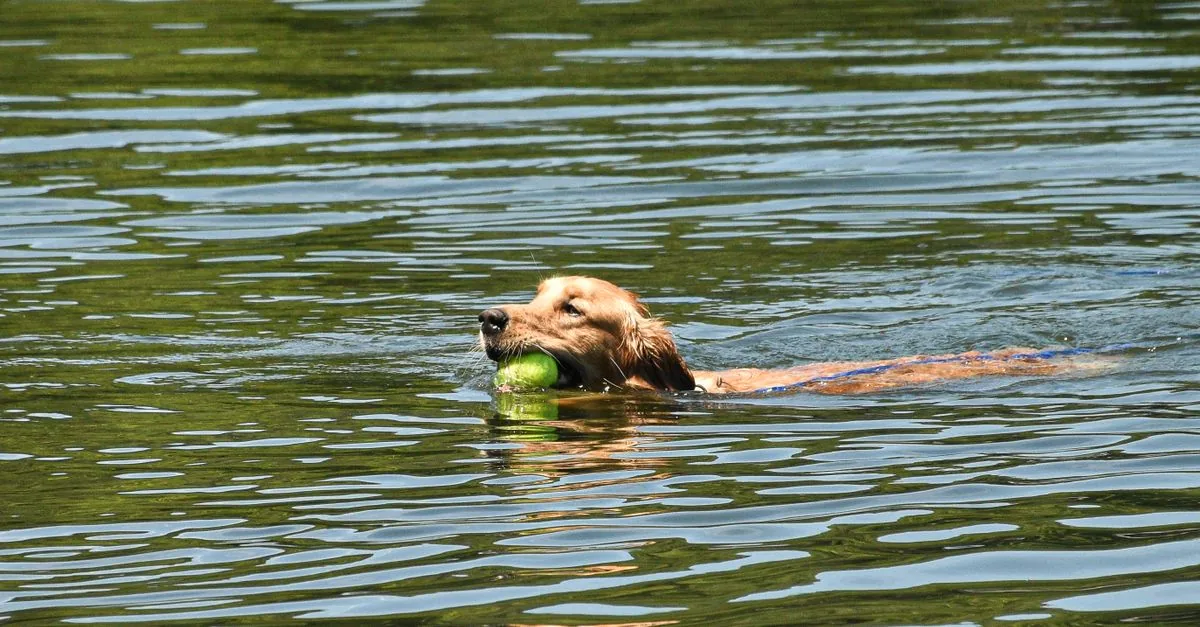
For dogs that love to retrieve, water and a toy are a great duo. Throwing a floating toy just past the line where the dog starts to swim keeps it focused on the target rather than on fear. Retrieve motivation can carry a dog over that first mental barrier faster than treats alone. If your dog is still learning to bring things back, see our guide to teaching your dog to fetch - the two skills complement each other and you can develop them in parallel.
Safety - what to remember every time
- Never take your eyes off a dog in water. Fatigue comes suddenly, and a drowning dog often makes no sound at all.
- Make sure the dog does not drink. Salt water causes diarrhoea and dehydration, and stagnant lake water risks infection and blue-green algae poisoning. Bring fresh drinking water.
- Take breaks. Swimming is more tiring than it looks. Watch for a lowered rear and chaotic movements - signs it is time to rest.
- Mind the temperature and cold water. Water that is too cold risks chilling, especially in puppies and older dogs.
- Protect the ears. Dogs with floppy ears are prone to infections after contact with water - dry the ears thoroughly afterwards.
- Always rinse the dog afterwards. Salt, algae, sand, and bacteria irritate the skin - rinse the coat with clean water. Read more in our guide to bathing a dog.
Where to practise swimming with your dog
The best spots are calm, shallow bodies of water with a gentle entry and a place where dogs are welcome. In season it pays to go outside peak hours, so the dog can learn calmly, without a crowd of stimuli. On the DOGOUT map you can check swimming spots and dog beaches flagged by other owners nearby, and along the way meet dogs that already swim - and nothing encourages a dog into water like the sight of another dog having a great time. For more location ideas, see our guide to dog-friendly beaches in Poland.
Summary
Teaching a dog to swim is a lesson in patience and trust. Go gradually, from shallows to first independent strokes, always reward bravery, and never force it. Choose a safe body of water, fit a buoyancy vest, and respect your dog's limits - because not every dog has to become a swimmer, but every dog deserves to discover water at its own pace and without fear.
Frequently asked questions
- Can all dogs swim?
- No. It is a myth that all dogs can swim instinctively. Many dogs will stay up for a moment, but they do it inefficiently and in a panic. Flat-faced breeds like the French Bulldog and Pug, and heavy, stocky dogs, genuinely struggle to swim because of their build - for them water can be dangerous.
- At what age can I start teaching a dog to swim?
- You can start introducing water in puppyhood, once the dog has had its core vaccinations - starting with shallow, warm water and play at the edge. Do not push a young dog or force it into depth. Adult dogs can learn too; it just takes more patience if they already have bad associations with water.
- How do I teach a dog that is afraid of water?
- Patiently and without force. Start with simply walking on wet sand and in the shallows, rewarding every step. Wade in yourself so the dog follows you. Never throw a dog into water or drag it by the lead - that builds lasting fear. Count progress in weeks, not in a single day.
- Does my dog need a buoyancy vest?
- During training and for weaker swimmers, definitely. A vest keeps the dog in the correct position, adds confidence, and gives you a handle if something goes wrong. It is also useful on a boat, in deep water, and for older dogs or those with joint problems.
- Is lake or sea water harmful to dogs?
- Drinking salty seawater causes diarrhoea and dehydration, and gulping stagnant lake water risks infections and blue-green algae toxins. Make sure your dog does not drink while swimming, bring fresh water, and avoid water with algal blooms. Always rinse your dog with clean water afterwards.
- How long can a dog swim?
- Swimming is very tiring, far more than it looks. Start with a few minutes and take breaks - a tired dog loses strength suddenly and can start to drown. Watch for signs of fatigue: a lowered rear, chaotic leg movements, heavy breathing. Better to stop too early than too late.