

Why Join a Dog Owner Community
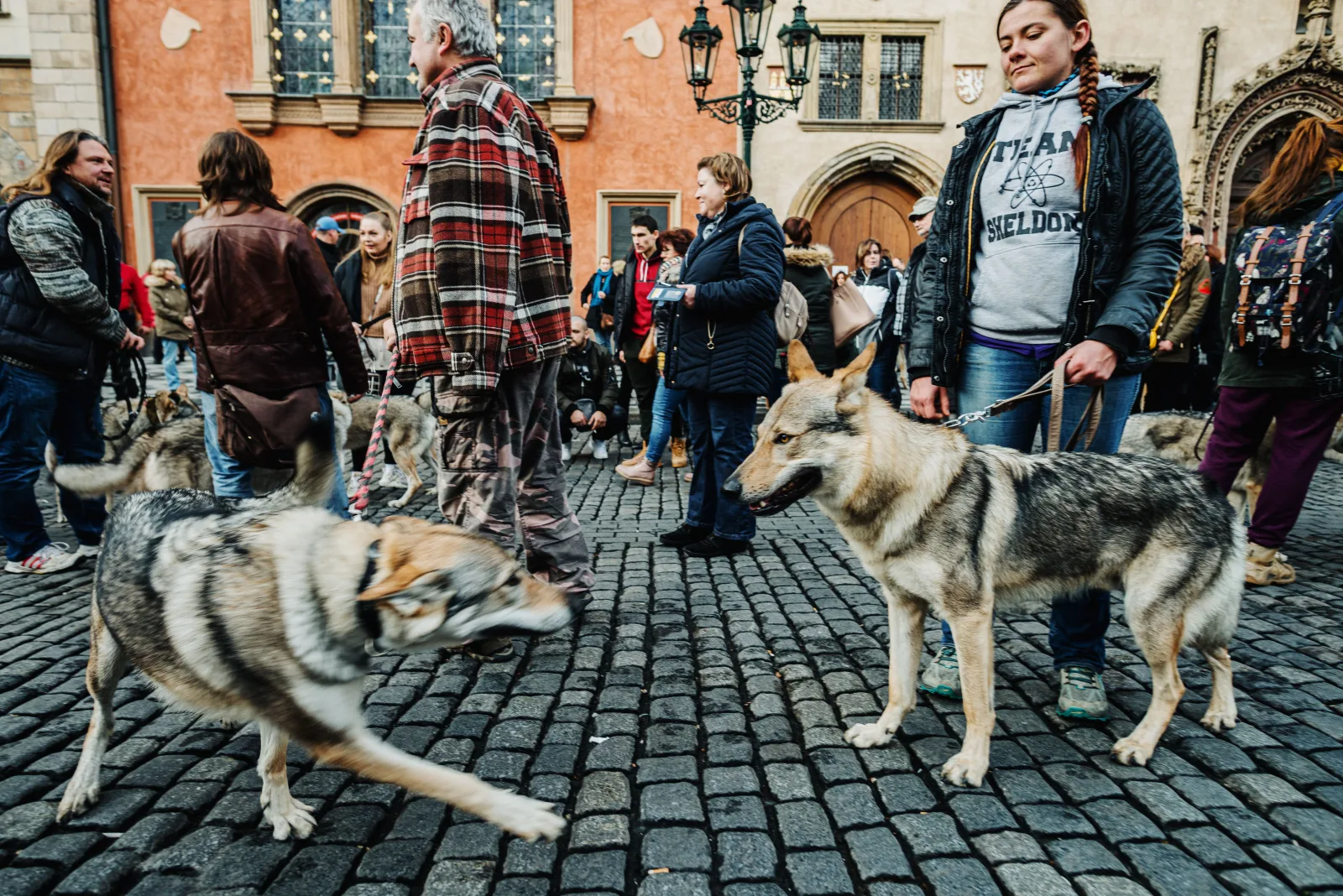
A local community of dog owners gives you something no feed can: real contact, concrete help from someone who's actually been in your situation, and company on a walk instead of another solo lap around the block. This isn't a sentimental add-on to life with a dog - it's a practical answer to an isolation that affects people and dogs alike, more and more, in cities.
A dog alone in an apartment for eight hours, and an owner scrolling their phone in the evening instead of taking a longer walk - two sides of the same problem. Isolation doesn't spare dogs, even though we rarely talk about it in those terms. A dog owner community is one of the few things that genuinely changes that, not through another app to scroll, but through people who actually leave the house.
This isn't a case for deleting every app on your phone. It's a question about what a given app actually does with your time - does it keep you glued to the screen, or does it lead you out the door and on to an actual person in an actual place.
The enemy worth naming
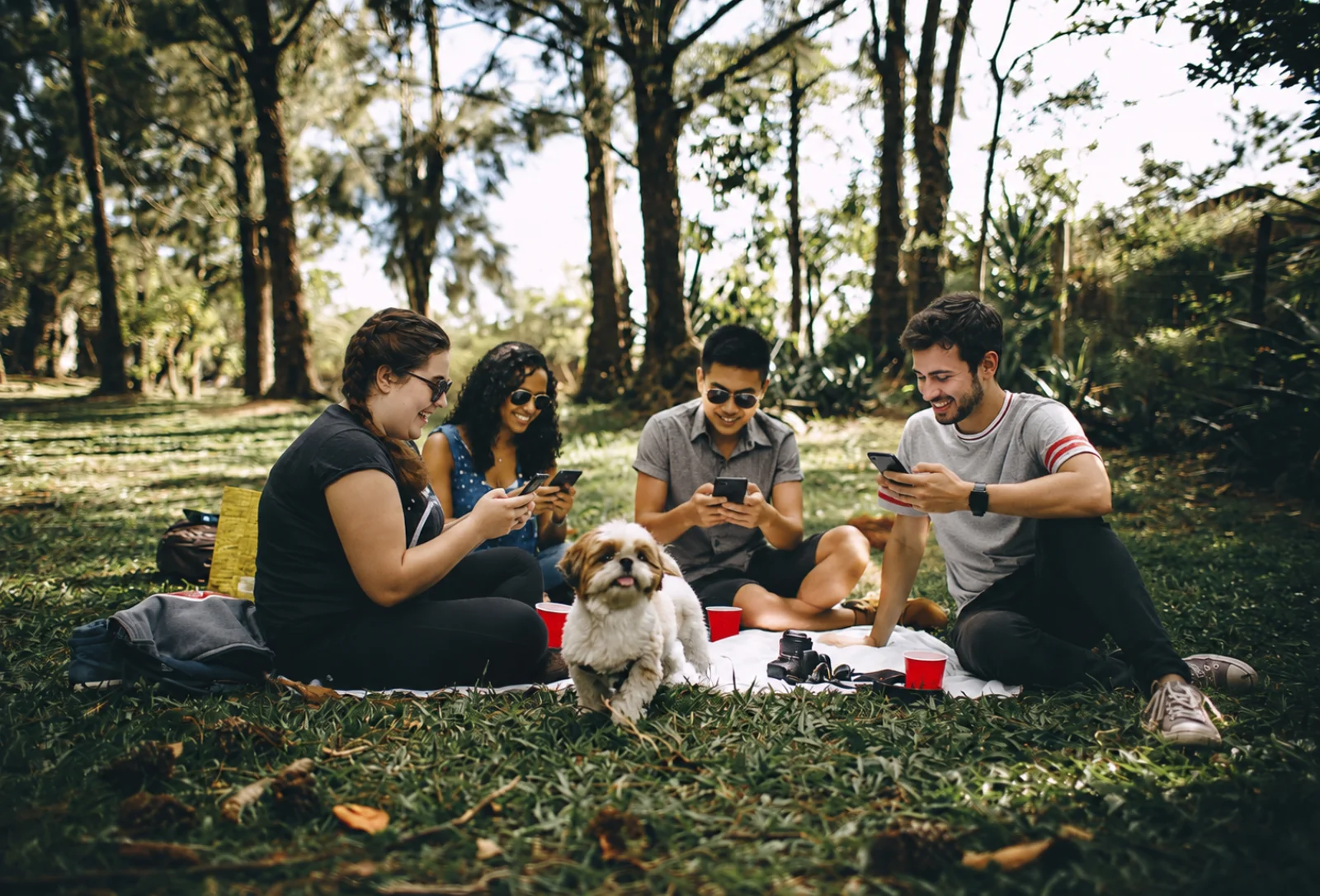
Endless-scroll culture - Tinder, TikTok, a feed with no bottom - normalises contact that never leaves the screen. Empty interactions, likes instead of conversation, connections that never make it past the app. It's convenient, but it doesn't build anything lasting, for a person or, even less so, for a dog that has no concept of a screen and needs contact in the real world, not a digital stand-in.
The second problem is isolation inside four walls, increasingly common in cities where neighbours don't know each other, remote work removes the natural excuses to talk, and the only fixed point of the day is a quick lap around the block. A dog in that situation isn't just a passive bystander - it lives in the same rhythm, gets less stimulation, less contact with other dogs, fewer reasons for a walk to run longer than the obligatory ten minutes.
A dog owner community answers both problems at once: it gets you out of the house and builds relationships that don't end at the screen.
What being part of a local community actually gives you
Concrete help from someone who's already been there. A neighbour mentioning that wild boar have been active in a certain woods for a month, or someone recommending a vet open on Sundays - that knowledge can't be copied from an article or found in a search engine. It's local, current, first-hand.
Company instead of a solo lap. Regular contact with people who also walk a dog every day turns an obligation into something you look forward to. For the practical side of finding that company, see how to find a dog walking buddy.
Socialization that happens on its own. A dog that regularly meets the same dogs on neutral ground learns to read signals in a way no amount of training at home replaces. More on that in dog socialization.
Natural contact with none of the small-talk pressure. The conversation starts with the dogs - how old, what breed, does he play well with others - not with you. It's one of the few social settings where the topic is already sorted before you open your mouth.
Safety in numbers. Hazard warnings, updates about changes nearby, someone noticing something's off - all of it works better with more people sharing what they've actually seen.
New places instead of the same loop. Someone who's walked a dog in the same area for years knows routes that show up nowhere else yet - a forest that's tick-free in summer, a beach where dogs are genuinely welcome, a shortcut that saves fifteen minutes on a rainy day. That knowledge moves through a community faster than through any guide, because it updates constantly, in the middle of an ordinary walk-and-talk.
Why this isn't just another "social app"
It's easy to mistake a dog owner community for another feed to scroll. The difference is fundamental: a feed feeds on your attention and tries to keep you on the screen as long as possible. A real community does the opposite - it pushes you out the door and only really finishes once you're on the walk, not on the next scroll. If the app you're using measures success by time spent inside it rather than time spent outside, it isn't a community in the sense meant here.
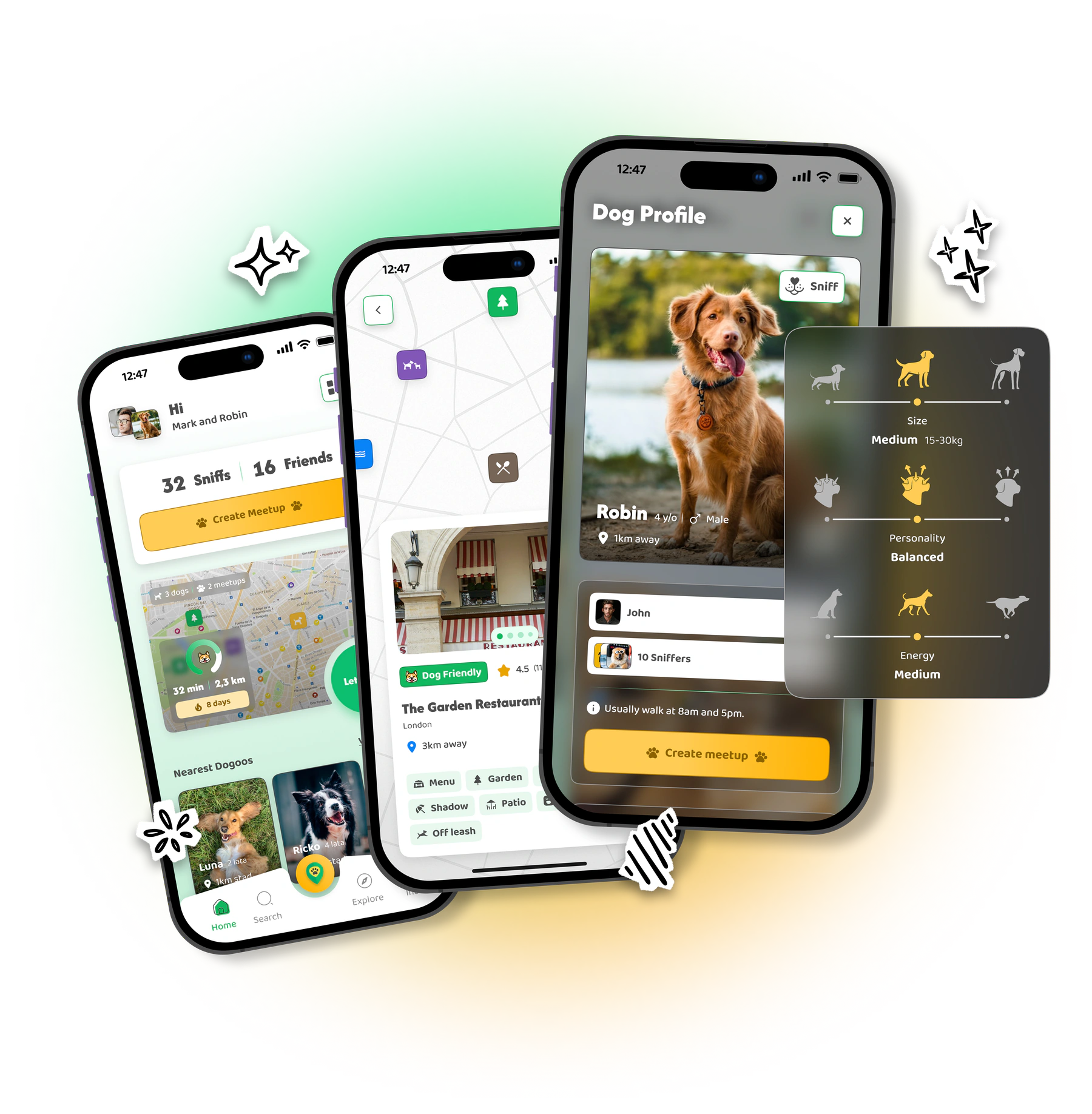
DOGOUT is built around exactly that distinction - the map, meetups, and profiles aren't the point in themselves, just the route to getting outside and meeting someone in person. For what that looks like in the app day to day, see what a dog walking app really does.
| A feed to scroll | A real dog owner community | |
|---|---|---|
| Measure of success | Time spent in the app | Time spent on the walk |
| Contact | A like, a comment, a DM with no follow-through | Meeting at a specific place and time |
| Effect on the dog | None - the dog doesn't see a screen | Real socialization and exercise |
| What's left after a week | Another scroll | A neighbour you know, a route you trust |
This table isn't against technology as such - it's against measuring an app's value by time spent in it rather than time spent outside. A good app for dog owners should aim to make itself unnecessary for that particular evening as fast as possible, because you're already out there with someone it helped you meet.
Introverts welcome too
The worry "I'm not the social type, this isn't for me" is common and understandable, but a dog removes most of that pressure. You don't have to start a conversation about nothing, you don't have to force a smile and introduce yourself. The dog does it for you - it approaches, sniffs, and the conversation starts naturally with "what's his name" and "how old is she." Plenty of people who've joined a local dog community, despite not thinking of themselves as naturally social, say exactly this: the barrier to entry is lower than in almost any other way of meeting people.
Big city or small town - it works differently, but it works
In a big city, the problem is too much anonymity - hundreds of owners in the same neighbourhood who never meet because there's no natural occasion to. There, a dog community acts like a filter: it helps you find the handful of people from your immediate area among thousands of anonymous passers-by.
In a smaller town, the problem tends to run the other way - fewer people, so it's harder to happen across someone with a similar routine or walking style. There, the value of a community rises, because every new contact means more, and a map showing who's active within a few kilometres saves weeks of passing the same people on the same streets with no way to start talking.
In both cases, the mechanism is the same: visibility turns chance into choice. Instead of hoping someone strikes up a conversation in the park one day, you can see exactly who's out and when, and decide for yourself whether to join.
How to start without a big commitment
You don't need to sign up for anything formal or promise regular attendance. It's enough to:
- Walk at similar times in the same places - over time you'll start recognising the same faces.
- Check the map and upcoming meetups in an app like DOGOUT and join whichever one fits your schedule.
- Say something to someone you already recognise by sight - a single "hey, want to walk together" is enough to start.
Community builds from small, repeated contact, not one big New Year's resolution.
It's harder in winter and rain, and that's exactly when it matters most
It's easiest to join a community in spring, when the weather itself invites longer walks. The real value shows up in winter, when natural motivation drops, days are short, and a solo walk in the dark rain is the last thing anyone wants. That's exactly when a walk arranged with someone else - because they're waiting, because you already agreed - makes the biggest difference between going and skipping it. A community that only sticks together on nice days isn't really a community, it's a seasonal extra. One that works, works all year.
Join before someone else does it for you
You don't have to wait for someone to strike up a conversation in the park. Open the DOGOUT map, see who's walking nearby today, and join the nearest meetup. Our community isn't an app - it's people who actually get outside.
Get outside. Let your dog live - and meet the people who think the same way.
Frequently asked questions
- How is a dog owner community different from a regular social media group?
- A social media group usually stops at photos and comments - contact that stays on the screen. A real dog owner community moves into the real world: walks together, meetups, live information about places and hazards, not just comment threads.
- Does joining a dog community help the dog, not just the owner?
- Yes, and directly. Regular contact with other dogs on neutral ground is socialization nothing else replaces - and a dog also picks up on an owner who's calmer and less isolated, because it shapes the whole rhythm and quality of your walks together.
- I'm an introvert - is a dog owner community still for me?
- Yes, because the dog is a built-in reason to talk, with none of the pressure of small talk. The conversation starts with the dogs, not with you - it's one of the few social settings where you don't have to invent something to say.
- Do I need a lot of free time to be part of a dog community?
- No. Walking regularly at similar times in the same places, or occasionally joining a planned walk in an app, is enough. Community builds from small, repeated contact, not one big commitment.
- How do I start if I don't know anyone in my area yet?
- The simplest way is a live map and meetups in an app like DOGOUT - you'll see who's walking nearby and can join with one tap, with no need to already know anyone.