

How to Find a Dog Walking Buddy
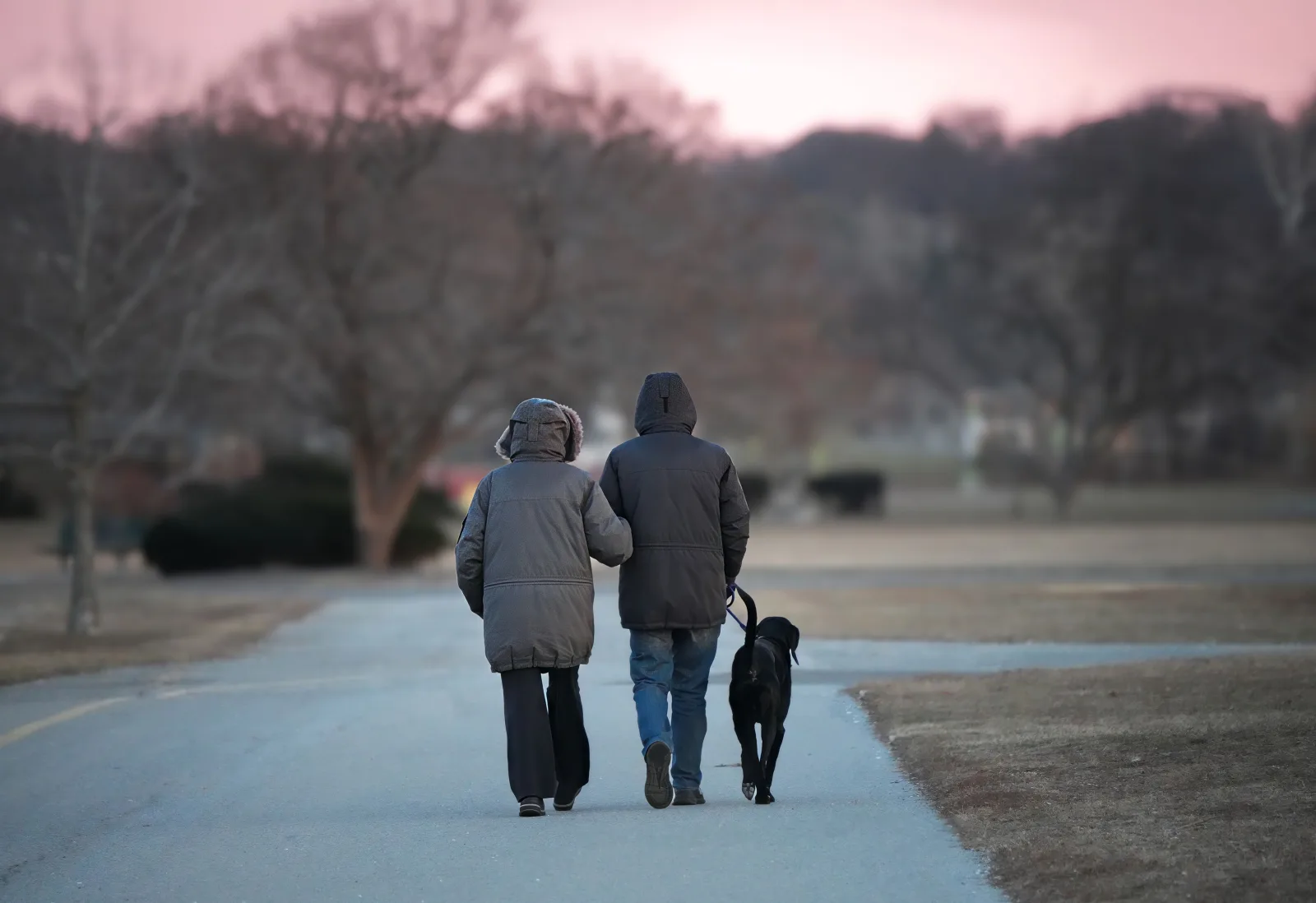
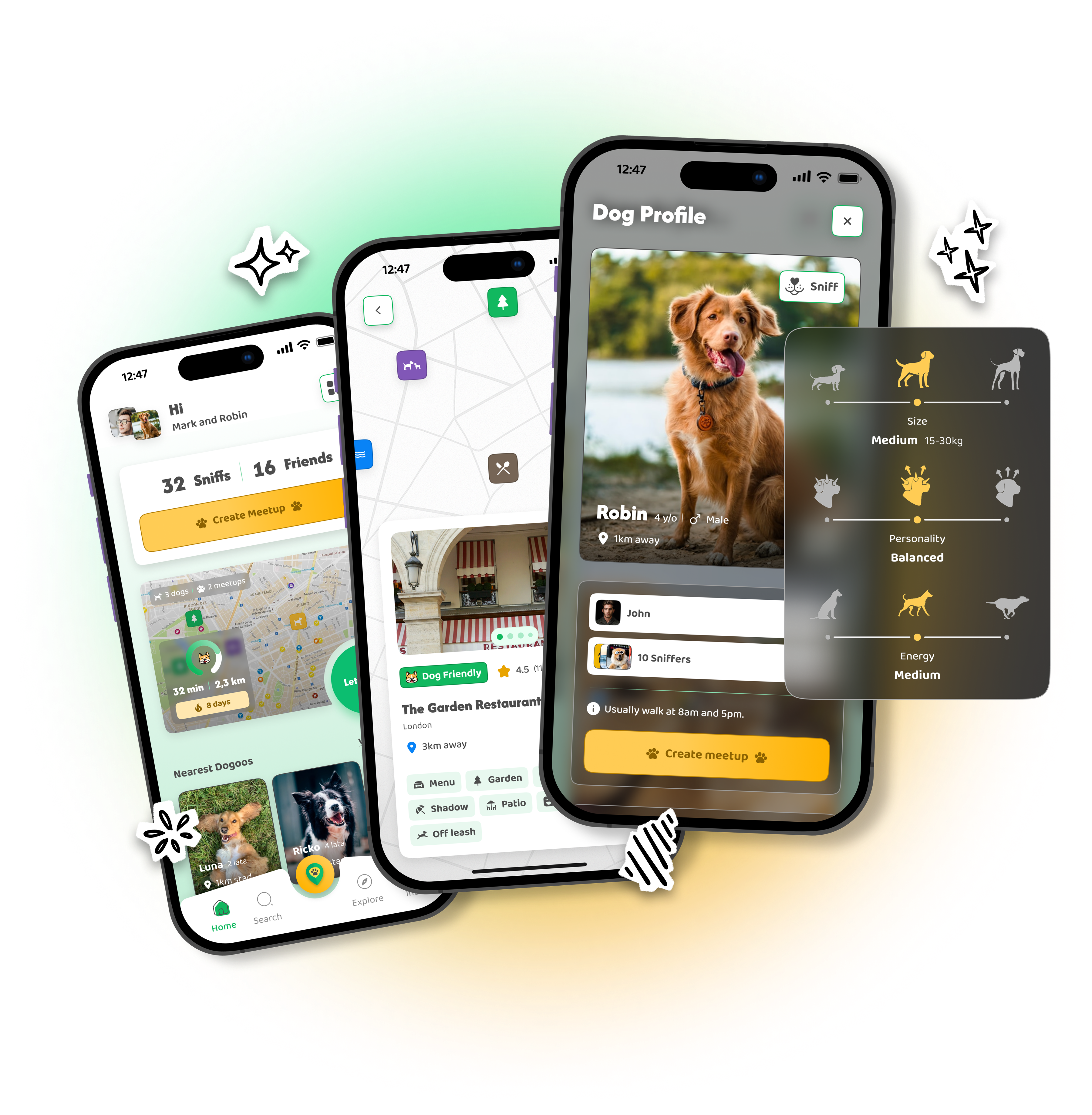
The simplest way to find a dog walking buddy is to look where other owners already gather: a live map like DOGOUT's, local dog-owner groups, and the same walking spots at the same time of day, where you start recognising the same dogs and faces. Walking with company isn't a nice-to-have - it's more motivation to actually get out, real safety when you'd otherwise be alone, and socialization that works both ways, for the dog and for the person.
A solo walk around the same block at the same time is the default script of life with a dog, and it's also the easiest part to change. Company on a walk isn't a nice extra. It's a real shift in three areas at once: how often you actually get out, how safe the walk is, and how much your dog learns from other dogs. Here's why it's worth finding someone to walk with, and how to do it without the awkwardness.
The problem is rarely a lack of wanting company. It's not knowing where to actually look for it - messaging a stranger "want to walk together?" feels odd, and standing in a park hoping someone strikes up a conversation isn't a plan. The good news: you don't have to invent this from scratch. There are specific, proven places where other owners are looking for exactly the same thing.
Why walking with company actually changes things
Motivation. A solo walk is the easiest thing to cancel - it's raining, you're tired, tomorrow works just as well. A walk someone else is waiting for is much harder to skip. That's not about willpower - it's simple mechanics: a commitment to another person behaves differently than a commitment to yourself.
Safety. A route, especially in the evening, in a forest, or somewhere less travelled, is safer with two people than with one. Someone noticing you've tripped, that your dog got tangled in something dangerous, or that something's off on the trail is a concrete benefit, not sentiment. We go deeper on the safety side specifically in live dog walk tracking and safety.
Socialization - for the dog and for you. Regular contact with another dog on neutral ground teaches your dog to read signals and burns energy differently than a plain march. But it works the other way too: for a lot of owners, a walk with someone is one of the few real conversations in the day, especially with remote work or living somewhere new. More on socialization, including the harder cases, in dog socialization.
These three rarely show up alone. A walk someone's waiting for tends to also be a safer walk and a more valuable one for the dog, because it runs longer and covers more ground than a fast solo lap around the block. That's why looking for company isn't a luxury for the socially inclined - it's a practical lever that improves the quality of everyday walks no matter how much time you have.
Where to actually look for a walking buddy
A live map and meetups in an app. The fastest route to someone who's actually nearby right now and also looking for company. In DOGOUT, joining someone else's walk or posting your own takes one tap, with a choice of public, friends-only, or private visibility. No need to trade five messages to agree a time and place - the rest gets sorted on the spot.
Local dog-owner groups. Most cities have social-media groups built around a neighbourhood or a breed. They're slower than a live map, but good for building longer, steadier friendships over time.
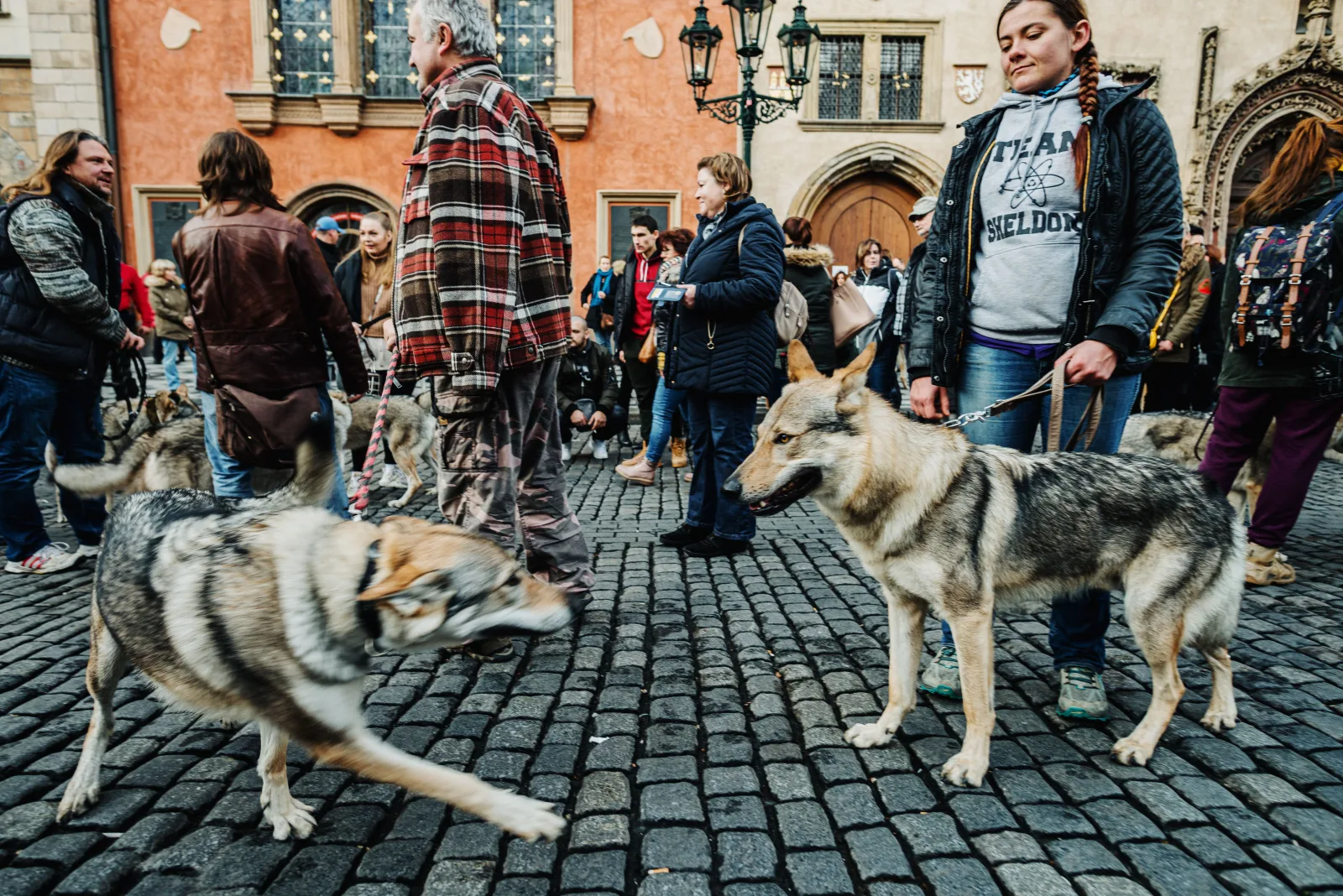
Regular walking spots. The most organic route - the same park, the same time, the same off-leash field. After a few weeks you start recognising the same dogs and faces, and "good morning" slowly turns into "let's walk together tomorrow." It takes time and consistency, but no app or organising effort - it works on its own as long as you keep showing up at the same times.
Comparison - where to look and what to expect
| Source | Speed | Good for | Notes |
|---|---|---|---|
| Live map and meetups in an app | Fast - today, right now | A spontaneous walk with someone nearby | You see who's active nearby immediately |
| Local dog-owner groups | Slower - days, weeks | Building longer friendships | Takes initiative to message and arrange |
| Regular walking spots | Slowest - weeks, months | Natural, repeat relationships | No app needed, but requires consistency |
None of these sources compete with each other - they work well together. A regular walking spot builds recognisable faces, a live map lets you lock in a specific time with a specific person, and a local group pays off once you already know who you're looking for.
What to do if nobody replies at first
Early attempts sometimes go quiet, and that doesn't mean you're doing something wrong. A few things genuinely improve your odds:
- Post walks regularly, not just once. A single post is easy to miss. Consistent presence, whether in an app or a group, builds recognition, and recognition builds trust.
- Be specific about time and place. "Maybe we could walk sometime" gets no replies. "Tomorrow 6pm, entrance on X street" does.
- Walk at the same times. Even with nobody arranged, a fixed walking time raises the odds you'll bump into the same people by chance - and chance encounters often turn into arranged walks faster than messages to strangers do.
- Don't read early silence as a verdict. Building a local network takes weeks, not days. That's normal, not a sign something's wrong with you or your dog.
Bad weather isn't an excuse, it's a variable to plan for
Rain, cold, and early autumn darkness are the most common reasons a solo walk gets cancelled, which is exactly why company matters most then. A walk someone's waiting for is far less likely to turn into a walk that never happens, simply because someone's counting on you. If you're specifically looking for company through a rough stretch of weather, say so when you arrange it - plenty of people actively prefer evening group walks in winter, when a solo walk in the dark is the least appealing option of all.
When to go group, when to go 1:1
Not every dog thrives in a crowd. Anxious, uncertain, or older dogs usually cope better meeting one familiar dog than a whole group of strangers at once. Confident, sociable dogs can do well at bigger meetups - more stimulation, more chances to play. Match the format to the dog you actually have, not the one in the photos online.
If your dog is reactive or fearful of other dogs, a group walk shouldn't be the first step. Start with a behaviourist instead - they can assess where you are and how to build contact safely. Forcing a meetup on a reactive dog tends to make the underlying problem worse, not better.
Company that lasts
The best walking relationships rarely start with a grand plan - usually it's one good walk together, followed by another, then another, until it's just a normal part of the week. Instead of waiting for that to happen by chance outside your building, you can speed it up: open the DOGOUT map, see who's walking nearby today, and either join in or post your own walk.
A dog doesn't need a perfectly planned expedition. It needs to get outside, and it's simply easier to do that more often with someone beside you.
See who's walking nearby today
You don't have to wait for a chance encounter in the park or hope someone answers a group post. DOGOUT's map shows walks and meetups posted by owners near you in real time - join with one tap, or post your own if nobody's planned anything yet. Set up your first walk together this week, instead of another month of solo laps around the block.
Frequently asked questions
- Why look for a dog walking buddy in the first place?
- Because walking with someone solves three problems at once: motivation (it's much harder to cancel on a walk someone's waiting for), safety (you're not alone on the route), and socialization (regular contact with another dog on neutral ground). None of the three is fully replaceable by a solo walk.
- Where can I actually find someone to walk dogs with?
- Three proven sources: the map and meetups in an app like DOGOUT, local dog-owner groups on social media, and regular walking spots in your area - a park, an off-leash field, a specific path at a set time, where over weeks you start recognising the same faces and the same dogs.
- How do I set up a first walk with someone I don't know?
- Pick a neutral, open space in daylight, keep it short at first (20-30 minutes is enough to see whether the dogs get along), and tell the other person upfront about your dog's temperament - friendly, cautious, needs space. If the dogs don't hit it off right away, that's normal, not a failure.
- What if my dog is fearful or reactive around other dogs?
- A group walk isn't the right first step there. Talk to a behaviourist first - they can assess where your dog is and how to build contact with other dogs safely. Forcing a reactive dog into a meetup tends to make things worse, not better.
- Is a group walk better than walking 1:1?
- Depends on the dog. Calmer or more anxious dogs usually cope better meeting one familiar dog than a whole group at once. Confident, sociable dogs can thrive in bigger meetups. Match the format to the dog you actually have, not the one in the photos online.