Adopting a Shelter Dog - A Step-by-Step Guide
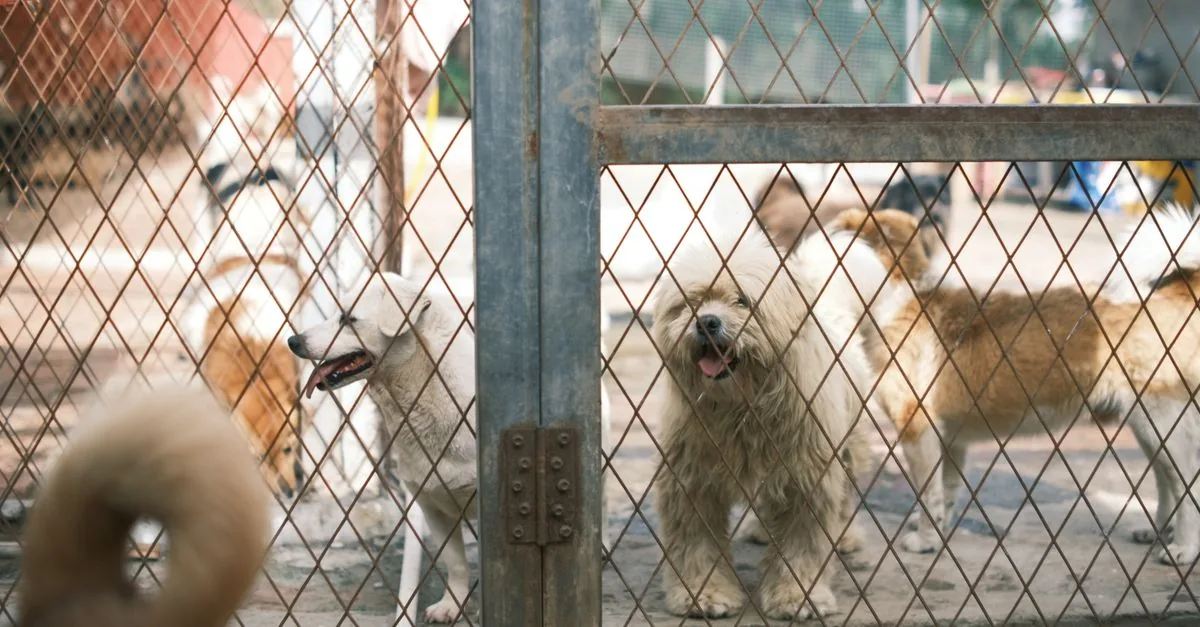
Adopting a shelter dog is a decision for years, not a spur-of-the-moment impulse. Before you bring the dog home, prepare your house, buy the basics, and agree the rules with the whole family. When choosing, match the dog's energy and character to your lifestyle, not just its looks. Remember the 3-3-3 rule: the first 3 days the dog decompresses, over 3 weeks it learns the routine, and after 3 months it truly feels at home. Be patient, provide predictability, and if behavioural problems arise, get help from a behaviourist.
Deciding to adopt a shelter dog is one of the most rewarding choices you can make - and one of the most binding. You give a second chance to a dog that needs it, but you also take on responsibility for a living being, often with a history you do not know. A well-prepared adoption is not a spur-of-the-moment impulse at the shelter, but a considered process that begins long before you bring the dog home.
Before you decide - an honest talk with yourself
Adoption is a commitment for a dozen years or more. Before you start, answer a few questions honestly:
- How much time can I realistically give a dog each day - for walks, play, presence?
- What is my lifestyle - active or calm, predictable or changeable?
- Who else lives in the home, and does everyone want a dog?
- Can I afford a dog: food, vet, gear, a possible behaviourist?
- Is my housing situation stable?
These are not questions meant to put you off - they help you choose a dog that genuinely fits your life. The most common reason dogs are returned to shelters is mismatch, not a "bad dog".
How to choose the right dog
The biggest temptation in adoption is to go by pity and looks. Yet the key thing is matching the dog's energy and character to your lifestyle.
- Talk to the volunteers. They know the dogs day to day and will tell you more than any description. Ask about energy level, attitude to other dogs, people, children, and any known fears.
- Visit the dog several times. One meeting is not enough. A shelter dog is often stressed and shows a different side than when calm.
- If you can, take the dog for a walk. Outside the kennel a dog often changes completely.
- Do not go on breed alone. Most shelter dogs are mixed breeds, and an individual dog's character says more than a label. If you do care about the predictability of certain traits, our guide to how to choose a dog breed can help.
- Consider an adult dog. It has a settled character that is easier to assess, and is often a calmer choice than a puppy.
Preparing your home and the basics
Before the dog crosses the threshold, the home should be ready:
| Item | What for |
|---|---|
| A bed in a quiet corner | The dog's own safe place to decompress |
| Bowls, food (the shelter's food to start) | Diet continuity, so as not to add stomach stress |
| Lead, collar, and harness with an ID tag | Safety and identification from day one |
| Secured fencing and gates | Newly adopted dogs often try to escape |
| Toys, chews | An outlet for stress and energy |
| Cleaning supplies | Accidents in the first days are normal |
Take care of the "soft" side too: agree shared rules with the whole family before the dog arrives - where the dog sleeps, who feeds it, what is off limits. Consistency from day one gives the dog a sense of predictability.
The 3-3-3 rule - what settling in looks like
A newly adopted dog does not show its true character straight away. A helpful signpost is the 3-3-3 rule:
- First 3 days - decompression. The dog is overwhelmed by a new world. It may be withdrawn, hide, and not eat, or conversely be over-excited. This is not the time for guests, trips, or intensive training. Give the dog peace, space, and minimal stimulation.
- First 3 weeks - learning the routine. The dog starts to grasp the rhythm of the day, learns where food is, when walks happen, whom it can trust. It slowly reveals its character, and the first behavioural challenges may surface.
- First 3 months - a sense of safety. The dog truly feels at home, relaxes, and shows its full personality.
This is a rough framework, not a fixed rule. Some dogs open up in a week; others, after a hard past, need half a year. The key takeaway: do not judge a dog by its first days.
The first weeks - building trust and routine
In practice, a few things matter most in this period:
- Predictability. Fixed meal and walk times, calm, repeatable days. Routine is like solid ground under a dog's feet.
- Patience with house training. Even an adult dog may need time to learn new rules - treat accidents without anger.
- Slow discovery of the world. Do not take a newly adopted dog straight to crowded events or dog parks. Dose the stimulation, watch the reactions. Working on calm exploration is part of socialisation, which lasts a lifetime, not just in puppies.
- Learning from scratch. An adult dog learns too - and often faster than a puppy. Practical tips are in our guide to training an adult dog.
- Safety on walks. A newly adopted dog may be scared and try to escape. For the first while keep it on a lead, even if it seems calm, and consider a well-fitted harness that is harder to slip out of.
When to get help
Some adopted dogs bring difficult experiences with them - fears, reactivity, resource guarding, separation anxiety. That does not mean the dog is "broken" - it simply needs support. If you see escalating fear, aggression, or behaviour you cannot manage, do not wait for it to "sort itself out". Consult a vet first (to rule out pain and illness), then a certified behaviourist. Early, sensible help is easier and more effective than unpicking entrenched problems.
Summary
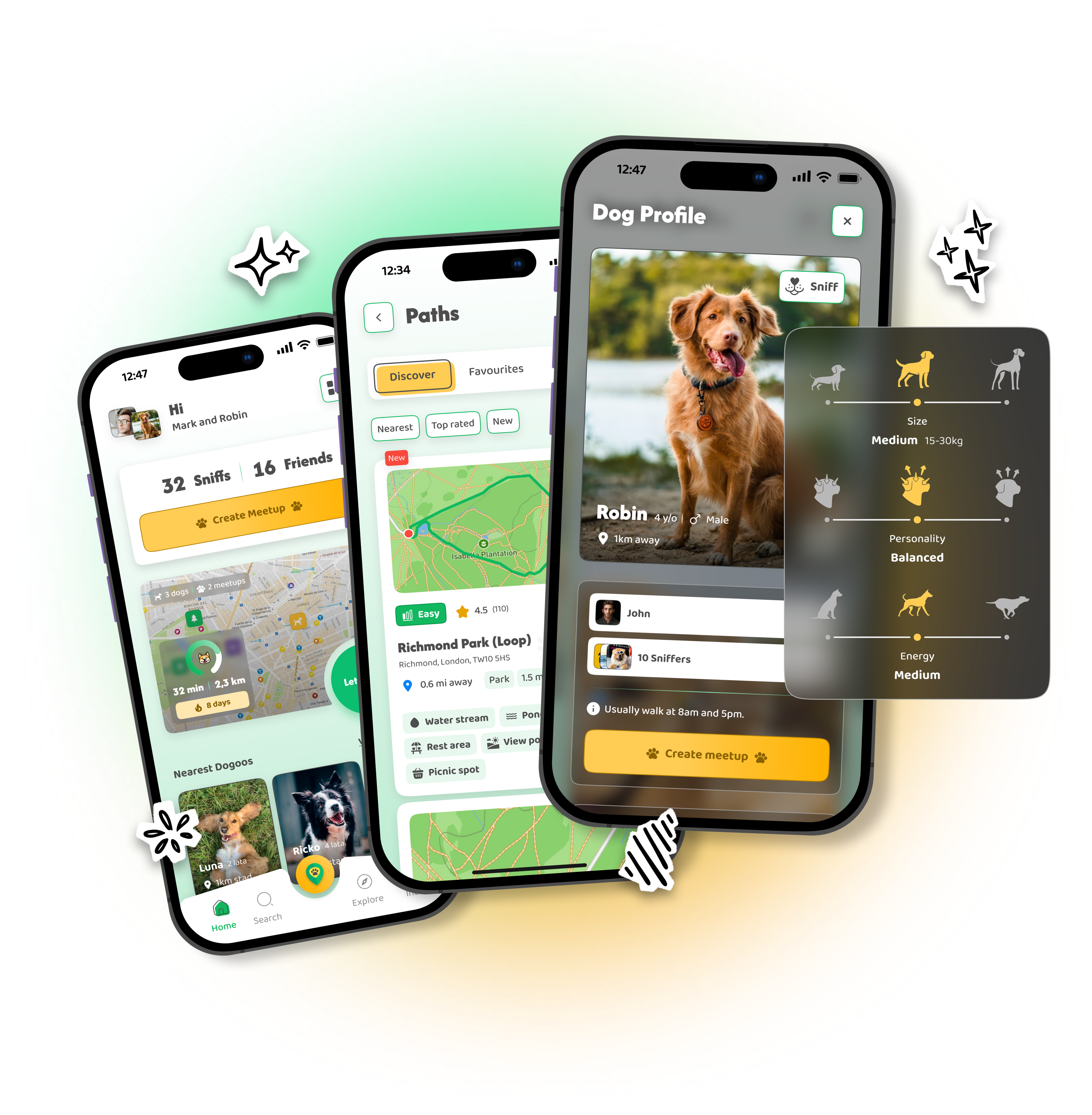
Adopting a shelter dog is a marathon, not a sprint. Prepare before you decide, choose the dog with your heart but also your head, get the home ready, and arm yourself with patience - especially in the first weeks, while the dog is still decompressing. The 3-3-3 rule reminds us that a dog's true character emerges over time. Give it that time, and it will repay you with a bond that is hard to find elsewhere. And once the dog is ready to explore the world, the DOGOUT map will show you calm places to walk and other owners nearby, to make your first outings together that much easier.
Frequently asked questions
- How do I choose a dog to adopt from a shelter?
- Go by fit, not just looks or pity. Think about how much time you have, how active you are, and who else lives in the home, then look for a dog whose energy and character match. Talk to the volunteers who know the dog day to day - their knowledge is priceless. Visit the dog a few times and, if you can, take it for a walk before deciding.
- What is the 3-3-3 rule when adopting a dog?
- It is a rough settling-in guide. For the first 3 days the dog is overwhelmed and decompressing - it may be withdrawn or, conversely, over-excited. Over 3 weeks it learns the routine and starts to open up. After about 3 months it feels safe and shows its full character. It is a guideline, not a fixed rule - every dog has its own pace.
- Will a shelter dog have behavioural problems?
- Not necessarily. Many dogs end up in shelters not because of behaviour but because their owner's situation changed. Some do carry difficult experiences and may need work on fear or trust. Patience, predictability, and behaviourist support where needed resolve most early difficulties.
- How do I prepare my home for a shelter dog?
- Set up a calm space of the dog's own (a bed in a quiet corner), the full basic kit, and dog-proof the home against escape - check fences, gates, and windows. Agree shared rules with the whole family before the dog arrives. Also plan the first days so someone can be home.
- Is it better to adopt a puppy or an adult shelter dog?
- It depends on your lifestyle. An adult dog usually has a settled character and less need for intensive care than a puppy, and its temperament is easier to assess straight away. A puppy needs house training, socialisation, and a lot of time. For many people a calm adult dog is a better fit than a dream but demanding puppy.
- How long does a shelter dog need to settle in?
- Usually counted in weeks and months, not days. Under the 3-3-3 rule, a full sense of safety often only comes after about 3 months. Some dogs open up faster; others, after a hard past, need half a year or more. Do not judge a dog by its first days - that is not yet its true self.