

Autumn Shedding in Dogs - What Is Normal and What Is Not
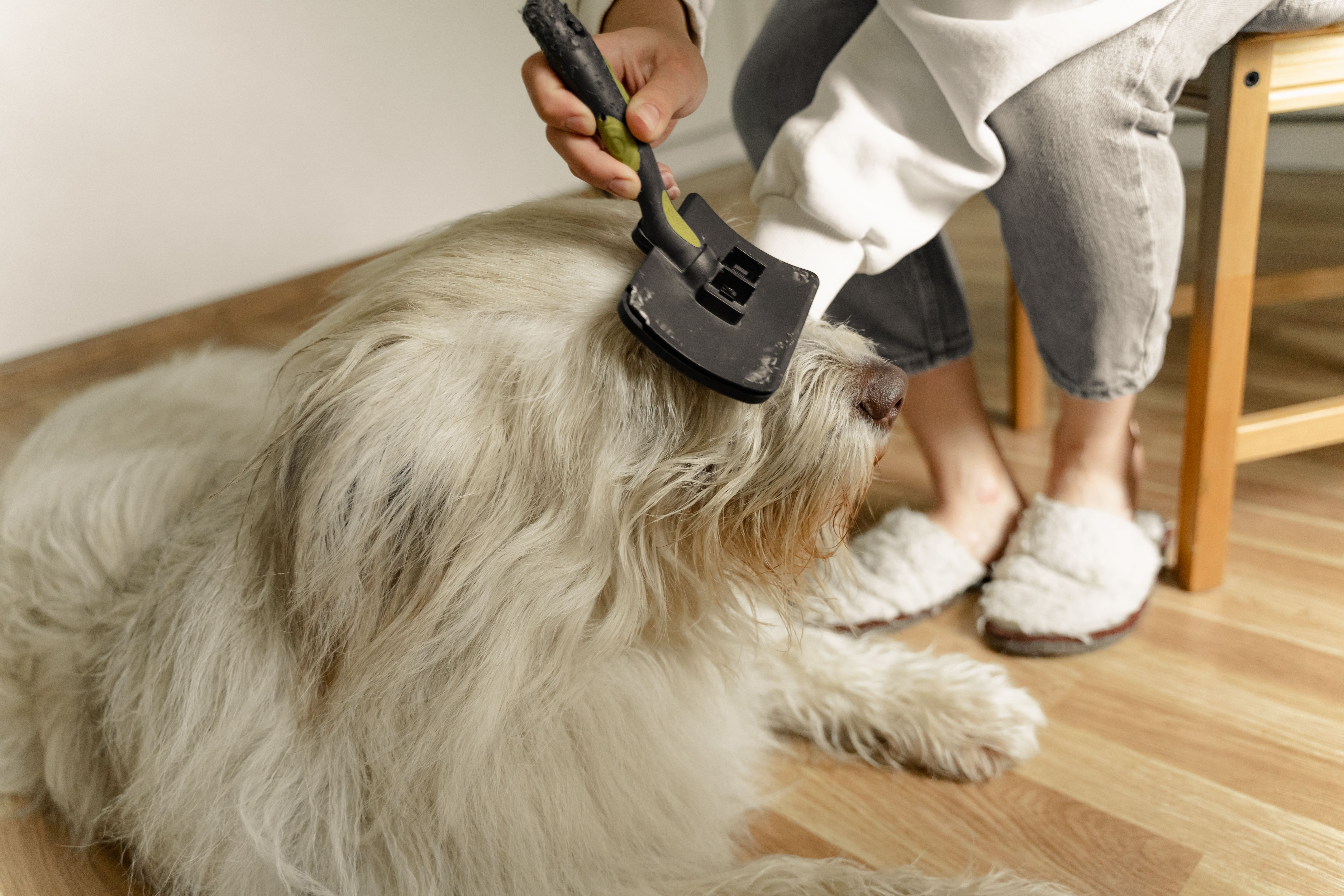
In autumn, dogs with an undercoat swap a light summer layer for a denser winter one and shed heavily for roughly two to four weeks. Regular brushing is the effective answer, daily at the peak, with a tool matched to the coat type. Shaving a double-coated dog does not solve shedding and damages the coat's function. Signs that this is not ordinary shedding include bald patches, reddened skin, itching, scabs, or hair loss that is symmetrical on both sides of the body.
September and October produce the same scene in most homes with a dog: hair on the sofa, hair on your trousers, hair in places the dog has never been. This is not a malfunction. It is the coat changing over for winter, and it is one of the more sensible things a dog's body does at this time of year.
What is actually happening
Dogs with an undercoat have a two-layer coat: guard hair, longer and coarser, and the undercoat, dense and soft, which does the insulating. In autumn the light summer undercoat is replaced by a much denser winter one, and that is the process burying your flat.
It usually takes two to four weeks, though in breeds with a very heavy coat it can run longer. Dogs living in flats with constant temperature and artificial light often shed less seasonally and more evenly year round, which is also normal.
What actually helps
The answer is boring and effective: brushing, regularly.
| Stage | Frequency | Notes |
|---|---|---|
| before the peak | 2-3 times a week | keeps it manageable |
| peak shedding | daily | short sessions, 10-15 minutes |
| after the peak | twice a week | back to routine |
The rule that makes the biggest difference: short daily sessions beat one long weekly one. Your dog tolerates it better, and you remove the undercoat before it has a chance to mat.
Match the tool to the coat type rather than to a fashionable name. A dog with a dense undercoat needs something that reaches beneath the guard hair. A short-haired dog without an undercoat does not need an aggressive tool at all and its skin is easy to irritate.
What not to do
Do not shave a double-coated dog hoping for less hair indoors. This comes back in every discussion so let us be plain: shaving does not stop the coat changing. It does disrupt its function, because the same layer that warms in winter protects against overheating and sun in summer. Regrowth after shaving can be uneven, and in some dogs the coat never returns to its previous quality.
Do not bath weekly to "rinse the coat out". A bath can help release loose undercoat, but too often it dries the skin and makes things worse. If you do bath, thorough drying is critical: a wet undercoat takes a very long time to dry.
When it is not ordinary shedding
This is the part worth remembering the article for. Seasonal shedding has a characteristic pattern: hair comes out evenly, the skin underneath looks normal, and the dog is not scratching more than usual.
Signs that something else is going on:
- bald patches or clear thinning in one spot
- reddened skin, scabs, dandruff
- itching - scratching, chewing or licking specific areas
- symmetrical loss on both sides of the body, often on the flanks, a pattern sometimes linked to hormonal disorders
- a change in skin odour or a greasy coat
None of those fit under "well, it is autumn". That is the point to see a vet rather than to reach for a stronger brush. We cover it in more depth in dog skin conditions.
Practical notes for the season
- Brush outdoors or in the bathroom, not on the carpet. It saves half an hour of cleaning.
- Pair it with paw cleaning after the walk; you are back from the woods anyway and the dog is calmer after exercise. The post-walk routine is in cleaning dog paws after a muddy walk.
- Check the skin while you are there. Autumn is a good time to spot a tick or a scrape in passing.
- Fight the hair on the dog, not on your clothes. Undercoat you have brushed out never reaches the sofa.
Finally
Autumn shedding looks dramatic and is one of the most sensible things a dog's body does before winter. Two to four weeks, a brush within reach, no drama. Just look at the skin now and then, not only at the hair on the floor.
Then get outside: the DOGOUT map will point you to where it looks best at this time of year. The coat is coming out regardless, better that it comes out in the woods.
Frequently asked questions
- How long does autumn shedding last?
- Usually two to four weeks, although in dogs with a very dense undercoat it can stretch beyond a month.
- How often should you brush during shedding?
- Daily at the peak and two to three times a week outside it. Short, regular sessions work better than one long session once a week.
- Will shaving the dog help with shedding?
- No. Shaving does not stop the coat changing, and in double-coated breeds it disrupts a coat that protects against both cold and overheating. Regrowth can be patchy.
- Which dogs shed most?
- Breeds with a dense undercoat such as huskies, German shepherds, samoyeds, spitz types and golden retrievers. Dogs without an undercoat shed gradually year round with no clear season.
- When is hair loss a reason to see a vet?
- When you see bald patches, redness, itching, scabs or dandruff, or when the hair loss is symmetrical on both sides of the body. That is not the pattern of seasonal shedding.