Cleaning Dog Paws After a Muddy Walk - Less Is Better
In most cases rinsing with lukewarm water and drying thoroughly is enough, especially between the toes where moisture lingers. Daily washing with shampoo is unnecessary and dries out the skin and pads, which in autumn and winter ends in cracking. The step that matters most is not the washing but the drying: damp paws are the most common cause of irritation and licking. If your dog pulls its paw away, the problem is usually the pace and the grip rather than the water.
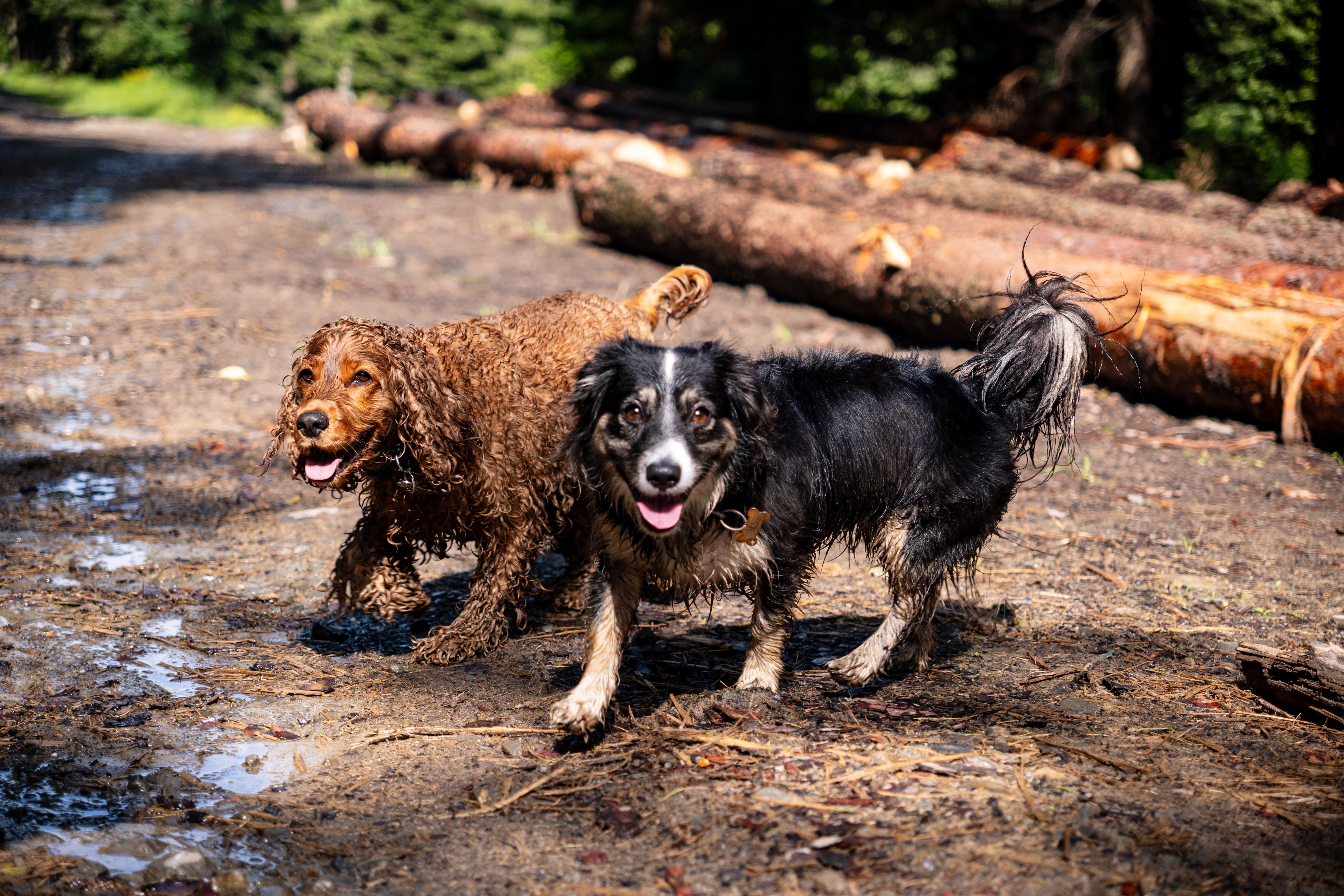
Autumn reduces every walk to the same ending: the dog looks delighted, the paws look like earthworks, and you are standing in the hallway with a towel wondering how to do this faster. The good news is that you are probably doing one step too many.
Water is enough
After an ordinary muddy walk, a rinse with lukewarm water is entirely sufficient. Shampoo, soap or specialist washes are not needed every time, and used daily they do more harm than good: they strip the natural oils, dry out the skin and pads, and in autumn and winter that ends in cracking and irritation.
Save the detergents for what actually requires them: tar, oil, something clearly sticky or foul. Ordinary mud is not that case.
The water should be lukewarm. Hot irritates, very cold is unpleasant, and an unpleasant routine repeated daily is the shortest path to a dog that bolts at the sight of the bowl.
Drying matters more than washing
This is the step most people skip and the one that decides everything.
Moisture left between the toes is the most common cause of autumn irritation, redness and persistent paw licking. The dog walks in the cold, comes back, gets a quick rinse, somebody runs a towel over the top, and that is that. Between the toes it stays wet for hours.
How to do it properly:
- Gently separate the toes and run the towel between them, not just over the top of the paw.
- Check around the pads and the hollow at the back of the paw, where most of it collects.
- Keep a dedicated paw towel by the door, absorbent and within reach. Hunting for a towel every day is the main reason this step drops out of the routine.
When your dog pulls away
A very common problem, and almost always for the same reason: pace and grip, not water.
- Do not pull the paw up and back. That forces an unnatural joint angle and is simply uncomfortable. Support the paw from underneath, close to the dog's body.
- Keep sessions short. One paw, praise, pause. Four paws at once with a dog that is already objecting only reinforces the objection.
- Finish before your dog protests, not after. That is the whole difference between "this is fine" and "I need to escape this".
- Practise dry. A few days of lifting and holding the paw without water, with a reward, usually fixes it faster than any gadget.
Wipes and other shortcuts
| Method | When it works | Limitation |
|---|---|---|
| lukewarm rinse | mud, standard autumn | still needs drying |
| wet wipes | light dirt, on the go | no match for thick mud |
| paw-washing cup | quick clean at the door | still needs drying |
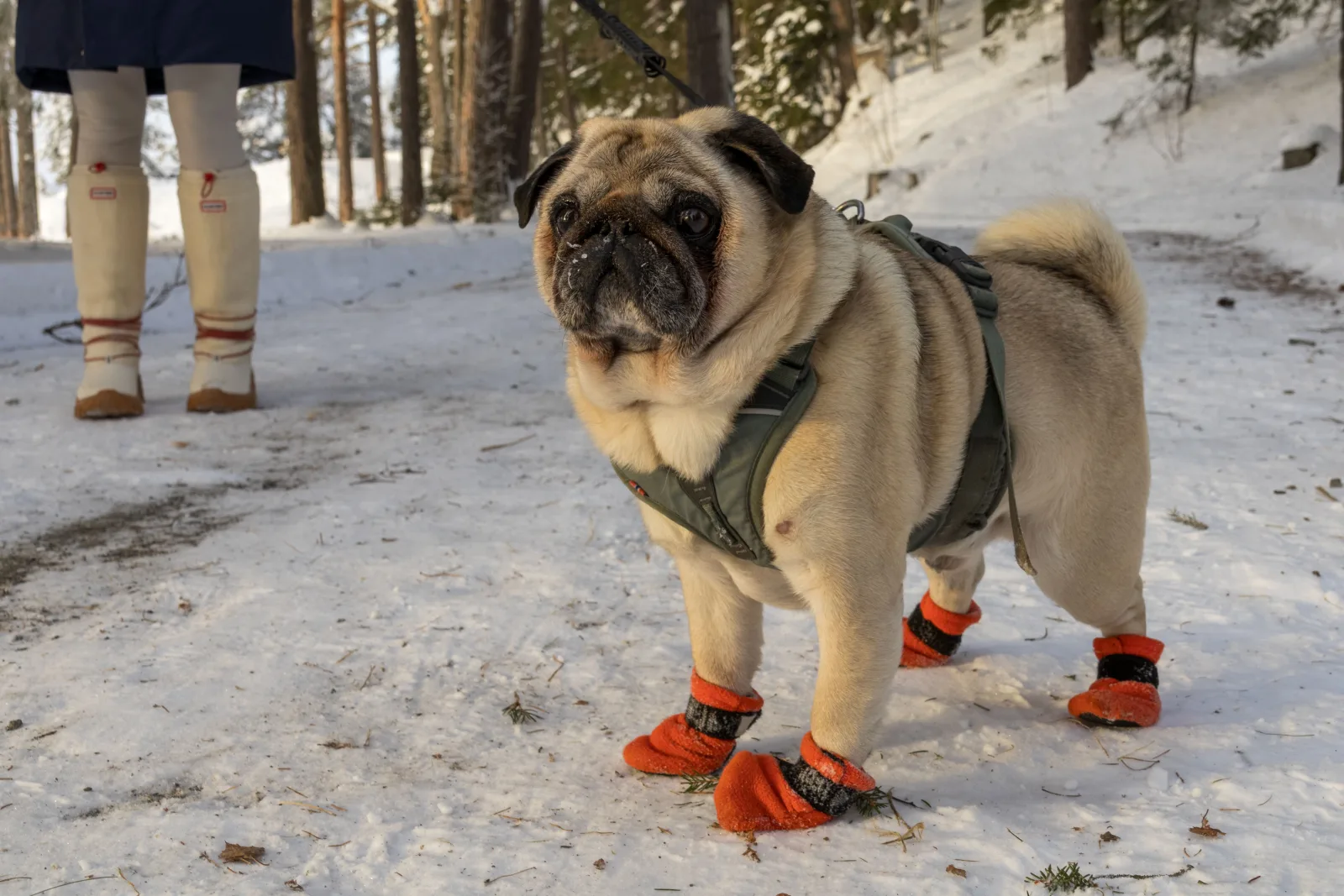
| protective boots | road salt, sharp ground | the dog has to get used to them |
Boots are a separate topic, more winter than autumn, covered in dog boots.
What to look for while you are there
Paw cleaning is the best moment for a daily check, since you are already holding the paw:
- cuts and scrapes, particularly on the pads
- foreign bodies between the toes - thorns, twig fragments, packed balls of mud and hair
- redness or swelling that persists despite a clean, dry paw
- persistent licking of one specific paw - that is a signal, not a habit
The last two are a reason to see a vet rather than to wash more thoroughly.
The autumn reality
Mud season realistically runs from October to March with a break for frost, so it is worth setting this up sensibly once rather than improvising for half a year. Towel by the door, lukewarm water, thirty seconds per paw, done.
For how to handle autumn woodland walks in general, see autumn forest walks with a dog.
Finally
Mud is not the problem. It is evidence the walk was real. The problem tends to be what we do afterwards: too much detergent and not enough towel.
The DOGOUT map shows routes other guardians have marked as sensible at this time of year, including the less boggy ones. Mud washes off; the walk does not come back.
Frequently asked questions
- Do you need to wash a dog's paws after every walk?
- Not with shampoo. After a muddy walk a rinse with lukewarm water and thorough drying is enough. Daily washing with detergents dries out the skin and pads.
- What water temperature should you use?
- Lukewarm. Hot water irritates and very cold water is unpleasant, which is how dogs learn to pull away and make the whole routine harder.
- Which matters more, washing or drying?
- Drying. Moisture left between the toes is the most common cause of irritation, redness and paw licking in autumn.
- My dog pulls its paw away, what should I do?
- Slow down and change your grip. Support the paw from underneath without pulling the joint upwards, keep sessions short, and finish before your dog objects rather than after. A few days of dry practice usually solves it.
- When is a dirty paw a reason to see a vet?
- When you find a cut, a foreign body between the toes, persistent redness or swelling, or your dog keeps licking one specific paw even though it is clean.