

Bernese Mountain Dog Temperament - Gentle Giant Explained
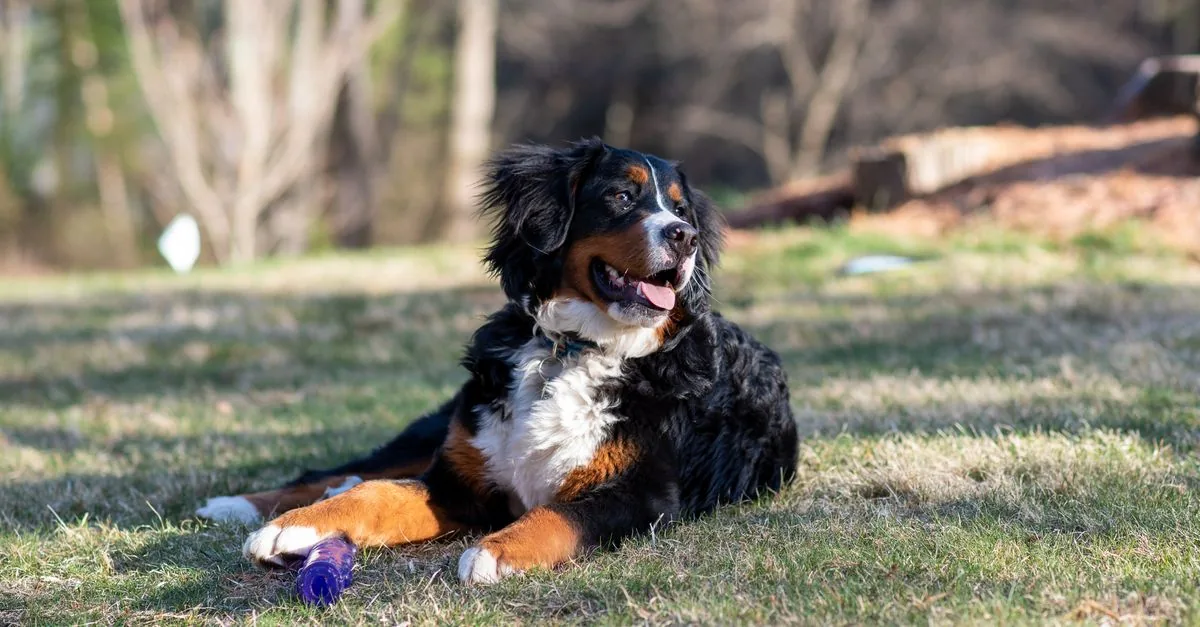
The Bernese Mountain Dog is a calm, loyal, and deeply affectionate breed. Berners bond strongly with their families, are patient with children, and need around 1 to 1.5 hours of daily exercise - not a high-performance athlete, but a willing outdoor companion. Their main challenges are poor tolerance for being alone and a relatively short lifespan of 7 to 10 years.
Walk into a room with a Bernese Mountain Dog and everyone stops to stare - in the best possible way. That tricolor coat, those calm dark eyes, and the characteristic habit of leaning against your legs as if to say "I'm here, don't worry." This is the Berner. But what is actually behind that gentle appearance?
Where does the Bernese Mountain Dog come from?
The Berner Sennenhund originates from the canton of Bern in Switzerland. For centuries these dogs worked as farm dogs: pulling carts of cheese and milk between alpine villages, guarding property, and assisting herders. They lived close to people as working partners and family members simultaneously. That dual role - capable working dog and loyal companion - is still written into the breed's character today. The Bernese Mountain Dog belongs to FCI Group 2 and was formally recognized in the early 20th century.
Key temperament traits at a glance
| Trait | Description |
|---|---|
| General temperament | Calm, balanced, gentle |
| Family bond | Very strong - classic "velcro dog" |
| With children | Excellent - patient and tolerant |
| With strangers | Initially reserved, then friendly |
| Trainability | Good - responds well to calm, positive approach |
| Energy level | Moderate |
| Tolerance for solitude | Low - struggles with long hours alone |
| Lifespan | Average 7-10 years |
The "velcro dog" - what Berners really need
If you remember one thing about the Bernese Mountain Dog temperament, let it be this: this breed lives for its people. Berners lean against legs, rest their heads on laps, and follow their owners from room to room. It is not clinginess for its own sake - it is a deep social need built over centuries of living and working alongside humans.
This means a Berner is not the right fit for someone who is away from home for 10 hours a day. Long periods of solitude are genuinely hard on this breed and can lead to separation anxiety and destructive habits. If your schedule keeps you away often, this is worth thinking about seriously before you commit.
Is the Bernese Mountain Dog aggressive?
No - Berners are naturally gentle and rarely initiate conflict. Towards strangers they can be slightly reserved at first - watchful rather than fearful - before shifting to a friendly, tail-wagging welcome. If you notice fear-based reactions or reactivity, early socialization is the best investment you can make. For persistent issues, consult a certified animal behaviourist.
Berners with children and other animals
The Bernese Mountain Dog is a classic family dog - and the label is earned. These dogs are patient, tolerant, and almost self-regulating in how they adjust their energy to match smaller or more vulnerable companions. Children often gravitate towards them naturally, and the feeling is usually mutual.
One practical note: males can reach up to 50 kg. Supervised play with very small children is wise - not because of any aggressive tendency, but because a large enthusiastic dog can accidentally knock a toddler over.
With other dogs, Berners generally get along well. With cats and other household animals, early socialization makes the difference.
How much exercise does a Berner actually need?
Here is something that surprises many people: the Bernese Mountain Dog is not a high-endurance breed. About 1 to 1.5 hours of activity per day is enough. Calm walks, play sessions in a park or garden, and swimming on warmer days suit this breed perfectly.
What to avoid:
- Hard exercise in the heat - the double coat traps warmth and Berners overheat faster than many breeds
- High-impact or strenuous training before 15 months - growth plates need time to close; joint stress early on can cause lasting damage
- The same walk every day - Berners appreciate variety; mixing up your walks keeps them engaged
Training a Bernese Mountain Dog
Berners are sensitive - that is their great training advantage and the thing that demands the most care. Harsh corrections, raised voices, and physical punishment are completely counterproductive. A Berner who feels intimidated or confused will shut down rather than try. This is not stubbornness - it is emotional sensitivity.
What works:
- Short, positive sessions with food or toy rewards
- A calm, confident tone from the handler
- Consistency and patience - Berner puppies mature a little later than average
The breed does well in obedience work, scent activities, and tracking - all good ways to engage the mind and body together.
The lifespan question - being honest about Berners
This has to be said clearly. The Bernese Mountain Dog has an average lifespan of 7 to 10 years - shorter than most breeds of comparable size. The primary reason is a high predisposition to cancer, which affects a significant proportion of Berners, often from age 5 or 6 onwards.
If you are considering this breed, knowing this in advance matters. Preventive vet care - regular check-ups, blood panels, and imaging after age 5 - can catch problems earlier. For more context on how breed and size affect longevity, see how long dogs live.
This is not a reason not to choose a Berner. Many owners who have loved and lost one say they would do it again without hesitation. But it is something to walk into with open eyes.
Is a Bernese Mountain Dog right for you?
A Berner fits well if you spend a lot of time at home, have easy access to green spaces, want a calm and affectionate companion that does not need marathon exercise sessions, and are happy with children and other animals around. The breed is also a good match if you are ready for genuine emotional attachment - and honest with yourself that the time together will likely be shorter than with most breeds.
It is probably not the right fit if you are away from home most of the day, live in a very small flat without outdoor access, want a running or high-endurance partner, or are not ready for regular coat maintenance during heavy shedding seasons.
The Bernese Mountain Dog leaves fur on your sofa, paw prints on your floor, and - without question - something lasting in your life. Calm, warm, absolutely devoted.
Have a Berner and looking for quiet trails, off-lead areas, or other calm dogs to walk with? Check the map in DOGOUT - spots added by other owners are one tap away, and you can arrange a meetup with dogs that share your Berner's gentle pace.
Frequently asked questions
- Are Bernese Mountain Dogs good with kids?
- Yes - Berners are one of the best breeds for families with children. They are patient, gentle, and rarely overreact. Because of their large size (up to 50 kg for males), supervised play with small children is still a good idea, not because of aggression, but because an accidental knock can unsettle a toddler.
- How much exercise does a Bernese Mountain Dog need?
- Around 1 to 1.5 hours of activity per day is sufficient. Calm walks, free play in a garden or park, and occasional swimming suit this breed well. Avoid strenuous exercise in hot weather - their thick double coat makes them heat-sensitive. Also avoid heavy impact exercise before 15 months, when growth plates are still open.
- Can a Bernese Mountain Dog live in an apartment?
- They can manage, but they thrive with outdoor space. A house with a garden is ideal. If you live in an apartment, daily walks and regular time outdoors become even more important. Berners are large dogs that need room to move comfortably.
- How long do Bernese Mountain Dogs live?
- Unfortunately not long - the average lifespan is 7 to 10 years. Berners have a high predisposition to cancer, which is the main cause of their shorter life expectancy. Routine vet checks, including blood work and imaging after age 5, are especially important for this breed.
- Are Bernese Mountain Dogs easy to train?
- Yes - they are eager to please, responsive to their handler, and pick up commands reliably with positive reinforcement. However, they are sensitive and will shut down if treated harshly. Short, calm, reward-based sessions work far better than raised voices or punishment.
- Do Bernese Mountain Dogs cope well alone?
- No - this is one of their biggest needs. Berners form very strong bonds with their families and do not handle long hours of solitude well. Extended alone time can lead to separation anxiety and destructive behaviour. This breed is happiest when it is part of daily family life.