Can Dogs Eat Onion and Garlic? In Short: No
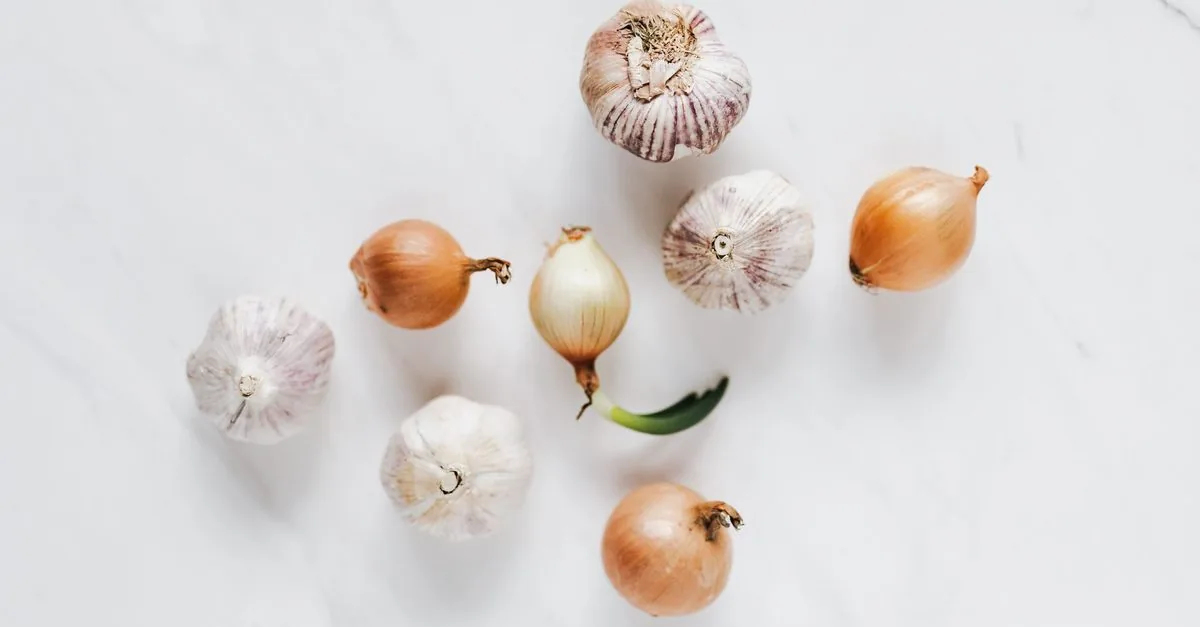
No. Onion, garlic, leek and chives (plants in the Allium genus) are toxic to dogs. They contain sulfur compounds that damage red blood cells and can cause anaemia. They are toxic in every form - raw, cooked, dried and powdered. If your dog has eaten onion or garlic, contact your vet even if it looks fine for now, because signs are often delayed.
Onion and garlic are staples of our kitchen - and one of the things a dog should never get. The trouble is they rarely reach the bowl in pure form. More often they hide in leftovers, sauce, seasoned meat or a slice of pizza. So it is worth knowing why they are dangerous and what to do once your dog has eaten some.
Why onion and garlic are toxic
Onion, garlic, leek and chives belong to the Allium genus. They contain sulfur compounds (thiosulfates) that a dog's body cannot process safely. These compounds damage red blood cells, causing them to break down. The result can be haemolytic anaemia - a state where the blood carries less oxygen and the dog becomes weak and lethargic.
Important: cooking does not remove the toxicity. Boiled, fried, dried or powdered onion is just as dangerous as raw - and powdered can be even more concentrated. That is why seasonings and ready mixes (like powdered soups) are risky too.
How much it takes to harm
There is no "safe portion" worth testing. As a rough guide, a toxic dose is on the order of 15-30 g of onion per kilogram of body weight, but that is only a reference point - individual sensitivity varies. The key nuances:
- Garlic is stronger - about 3-5 times more toxic than onion.
- Small amounts add up. Repeated scraps (for example garlic "for ticks") can do damage.
- Smaller dog, bigger risk. The same spoon of sauce hits a small dog harder than a large one.
Signs of poisoning - often delayed
This is a sneaky poisoning, because signs usually do not appear at once. Red blood cell damage builds up, and symptoms often show only after a day or several days.
| Sign | What it points to |
|---|---|
| Weakness, lethargy, reluctance to move | Developing anaemia |
| Pale gums | Fewer working red blood cells |
| Dark, reddish urine | Red blood cell breakdown |
| Rapid breathing and heart rate | Low blood oxygen |
| Vomiting, diarrhoea, no appetite | Digestive irritation |
What to do if your dog ate onion or garlic
- Work out what and how much. The type (onion, garlic, leek), the form (raw, in a dish) and the rough amount plus the dog's weight - this helps assess the risk.
- Call your vet or an emergency clinic. Do not wait for symptoms - with this poisoning time matters, and signs are delayed.
- Do not induce vomiting on your own without clear instruction.
- Watch the dog for a few days and note when it happened.
Where onion and garlic hide
Most often a dog does not get at raw onion - it gets it in something. Watch especially for:
- Leftovers and meat seasoned with garlic or onion.
- Sauces, soups, stews and one-pot dishes.
- Pizza, sandwiches, takeaway food.
- Seasonings and blends (onion and garlic powder, stock cubes).
- "Home tick remedies" with garlic - popular and risky.
The rule is simple: if a dish was seasoned for human taste, assume it is not for the dog.
Is garlic for ticks a good idea
There is a belief that a little garlic "repels ticks". The problem is that garlic is more toxic than onion, and given regularly it builds up in the body. The effectiveness of such protection is doubtful, while the risk is real. Instead of experiments, reach for proven veterinary parasite products and discuss the choice with your vet. Your dog's blood health is not a good place for home trials.
What to give instead
There are plenty of safe, healthy snacks - carrot, apple without seeds, a piece of pumpkin. It is always worth keeping a list of foods toxic to dogs handy, alongside the equally dangerous chocolate. For the full overview, see what dogs can and cannot eat.
Kitchen closed, world open
The best way to stop a dog begging for food is a dog full of experiences. Instead of scraps - a proper walk, sniffing and a new place to discover. Get out with your dog, give it a real dose of the world outside, and the plate stops being the main event of the day.
Sources
Frequently asked questions
- How much onion harms a dog?
- There is no safe dose worth testing. A rough toxic amount is on the order of 15-30 g of onion per kilogram of body weight, but sensitivity varies and garlic is several times stronger. Treat any amount as a reason to contact your vet.
- Does a little garlic really hurt?
- Garlic is about 3-5 times more toxic than onion, so even small, repeated amounts can add up. Do not use garlic 'for ticks' without veterinary advice - it is a risky home remedy.
- My dog ate a dish with onion - what now?
- Call your vet or an emergency clinic and tell them what and how much your dog ate, plus its weight. Do not induce vomiting on your own without instruction. Signs of anaemia can appear only after a few days, so keep watching your dog.
- What are the signs of onion or garlic poisoning?
- Weakness, lethargy, pale gums, rapid breathing and heart rate, dark or reddish urine, loss of appetite, sometimes vomiting and diarrhoea. They often appear with a delay, a day or several days after eating.
- Are some dogs more sensitive?
- Yes. Japanese breeds such as the Akita and Shiba Inu can be more prone to red blood cell damage. Extra caution is warranted with them.