Dog Cafe Etiquette - Training a Calm Visit, Step by Step
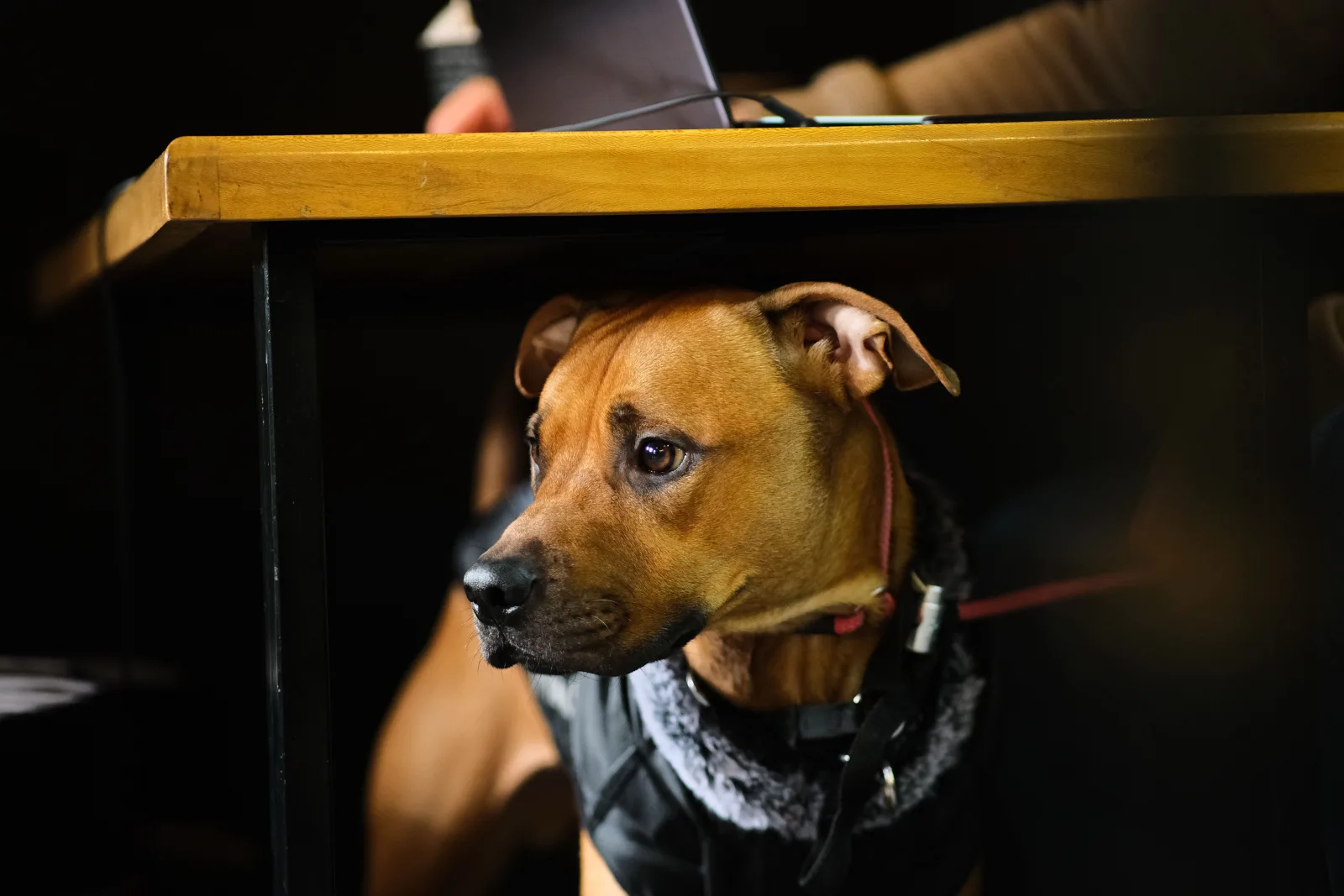
Calm cafe behaviour is a learned skill, not something a dog does instinctively. The key is mat training at home first - teach your dog to lie on a designated spot for gradually longer stretches, then move the exercise into progressively more demanding environments, finishing with a real cafe during quieter hours. Bring the mat, a long lead and something to chew - and leave before your dog starts getting bored or stressed.
A dog lying calmly under the table while you drink your coffee is not luck, and it is not just "good temperament." It is a learned skill you can build step by step, the same way you would teach a sit or a recall. Dog-friendly cafes and restaurants are becoming more common - but a venue being open to dogs is not enough if your dog does not know what is expected of them.
Why mat training is the foundation
The most effective tool for teaching calm behaviour in public is mat training - teaching your dog that a specific mat or blanket means "settle here and relax," regardless of the surroundings. The advantage of this method is that the mat is portable - your dog learns to associate the behaviour with an object, not a specific place, so you can bring that skill anywhere.
Start at home, in a quiet room:
- Put the mat on the floor and reward your dog every time they step on it or lie down.
- Gradually extend how long your dog stays on the mat before getting rewarded.
- Start introducing small distractions - walk across the room, knock on a door, turn on the TV - rewarding your dog for staying put.
- Once they have mastered this in a quiet setting, move the mat to a busier room in the house, then to a quiet balcony or porch.
Building duration is the key
The most common mistake is jumping too fast from five minutes of home training to an hour in a crowded cafe. A dog who has learned to settle calmly for five minutes cannot automatically do the same for half an hour in a loud, unfamiliar environment.
Build duration gradually, the same way you would build stamina in any other kind of training:
| Stage | Environment | Target duration |
|---|---|---|
| 1 | Quiet room at home | 2-5 minutes |
| 2 | Busier part of the house, with distractions | 5-10 minutes |
| 3 | Quiet outdoor spot (bench, patio) | 10-15 minutes |
| 4 | Cafe during quiet hours, side table | 15-20 minutes |
| 5 | Cafe during normal hours | 20-30 minutes and up |
Do not move to the next stage until your dog is fully comfortable at the previous one. This is not a race.
Choosing the first cafe matters
The first experience shapes how your dog reacts to every visit after it. Instead of starting with a packed city-centre cafe on a Saturday afternoon, choose:
- Quiet hours - early weekday mornings instead of the weekend rush.
- A side table, not the middle of the room - less movement around your dog, fewer things to process at once.
- A venue you already know - if you have been there without your dog before, you know what to expect from the space and staff.
Always ask staff before you sit down with your dog - not every dog-friendly venue has a spot suited to a large or anxious dog.
What to bring
The same mat your dog trained on at home is the single most important item - the familiar scent and texture help carry the "settle here" association into a new place. Beyond that:
- A long lead - limits movement without constant collar tension the way a short lead does.
- Something to chew - a chew toy or treat that lasts longer than one bite, to keep your dog calmly occupied.
- A few treats - to reward calm settling throughout the visit, not just at the start.
Reading stress signals at the table
Even a well-trained dog can get tired or stressed in a new, stimulus-rich environment. Watch for:
- Yawning unrelated to tiredness and frequent lip licking - classic tension signals.
- Panting despite no physical effort - a sign of arousal or stress.
- Being unable to settle, repeatedly standing up and lying back down.
- Staring at the door or the exit - your dog wants out.
When you spot these signs, do not wait for whining or barking - that is already a late-stage signal. Wrap up the visit, take your dog for a short walk, and go back to training in a less demanding setting next time.
Difficult moments at the table
Even a well-trained dog will run into situations that need extra handling:
- Food drops on the floor - teach a "leave it" command before your first cafe visit. A dog who lunges for every crumb is not just breaking etiquette, they also risk eating something unsafe, like chocolate or xylitol.
- Strangers want to pet your dog - it is well meant, but not necessarily in the interest of a dog who has just settled. Do not be afraid to politely say "I'd rather let them rest right now" - that is not rude, it is responsible management of the situation.
- Another dog enters the venue - if your dog is still learning and a new dog turns up at a nearby table, watch the reaction closely. If tension builds, a short walk outside and a return a bit later often defuses things better than forcing calm on the spot.
Cafes with a large dog or more than one dog
A large dog takes up more physical space, so choosing the right table matters even more - look for spots where your dog can lie down comfortably without blocking the path for staff and other guests. If you have two dogs, train them separately before attempting to bring both at once - two dogs learning at the same time in a new environment tend to wind each other up rather than support each other's calm.
Not every dog needs to like cafes
It is worth saying plainly: not every dog will enjoy long stretches in a closed, stimulus-heavy space, even after solid training. Highly anxious dogs, dogs reactive to other dogs or people, or simply very active dogs who struggle with stillness may never become ideal cafe companions - and that is not a failure, just a matter of matching the activity to the dog you actually have.
If you are looking for venues in your city that genuinely welcome dogs, check our roundup of dog-friendly cafes and restaurants - it also covers how to spot a genuinely welcoming venue before you even walk in.
When your dog is ready, go together
A calm cafe visit is not just a convenience for you - it is a new way to spend time together, and dog-friendly venues keep growing in number. If you are looking for a welcoming spot, or someone to share a coffee with while your dogs settle at your feet, check the DOGOUT map for places and people tagged by other owners near you.
Frequently asked questions
- How long does it take to train a dog to behave calmly in a cafe?
- It depends on the dog - some pick up the basic mat training in a few weeks of regular home practice, others need a few months, especially if the dog is naturally excitable or unsure in new places. Consistency matters more than speed.
- Can I just take my dog to a cafe without training first?
- You can try, but you risk making the first experience stressful for your dog - and a stressful first impression makes future attempts harder. It is better to invest a week or two in training at home and in quiet settings before moving to a real venue.
- What should I bring on the first cafe visit with my dog?
- The mat or blanket your dog trained on at home - the familiar scent and texture helps them settle. Add a long lead to limit movement without constant collar tension, a few treats, and something to chew that lasts longer than one bite.
- How do I know my dog is getting tired or stressed at a cafe?
- Yawning unrelated to sleepiness, frequent lip licking, panting despite no physical exertion, being unable to settle, and staring at the door or exit are all signs it is time to wrap up. Do not wait until your dog whines or barks.
- Is every dog cut out for cafes?
- No, and that is fine. Highly anxious dogs, dogs reactive to other dogs or people, or dogs who simply struggle with long periods of stillness may never enjoy this kind of outing - that is not a failure, just a matter of matching the activity to the individual dog.