

Bringing Your Dog to Work - How to Prepare You Both
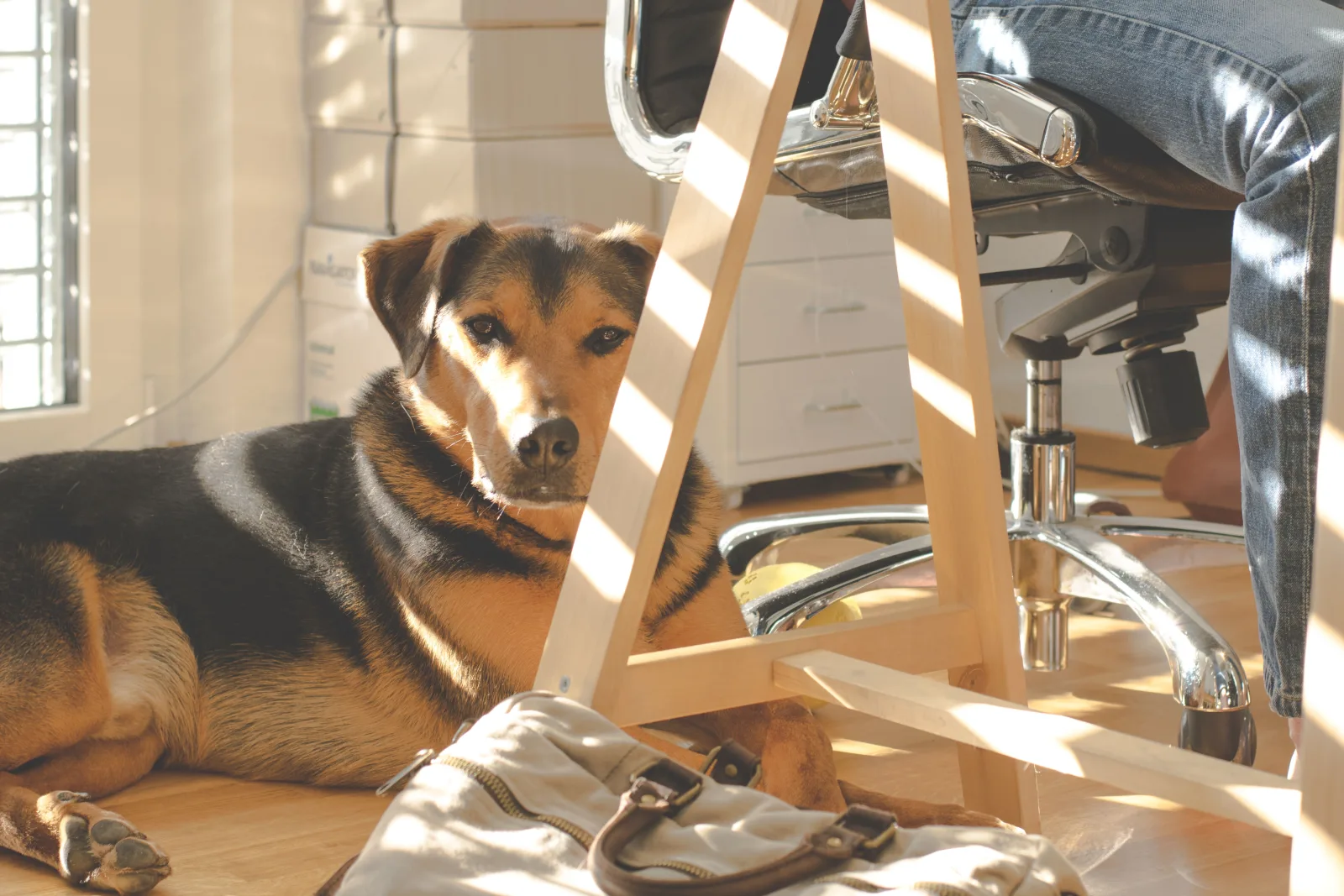
More companies in Poland now allow dogs in the office, especially creative agencies and pet-industry businesses - often on set days of the week, less often every day. Before bringing your dog to work, check whether they can settle calmly for several hours without constant stimulation, how they handle strangers and other dogs in an enclosed space, and whether your company actually has clear rules about pets. Always have a plan B - if your dog is clearly stressed, taking them home midday is not a failure.
More offices in Poland are opening their doors to dogs - creative agencies, startups, pet-industry companies. A 2023 CESAR survey found that nine out of ten owners who brought their dog to work noticed a real improvement in wellbeing and work quality. But before you pack the lead alongside your laptop, it is worth honestly assessing whether your particular dog is ready for it - because not every dog is, and that is nothing to be embarrassed about.
The trend is real, but still niche
A dog in the office is no longer just a quirky Silicon Valley thing - it is becoming a real option at Polish companies, especially where the workplace culture is less formal. Some companies designate specific weekdays for dogs, others allow it daily, depending on internal policy. Advocates argue that having dogs around lowers stress and helps build team relationships - but before you start planning your dog's first day, check whether your company actually has formal rules about pets. No policy at all is a risk, both legally and practically.
Is your dog cut out for this - an honest assessment
Not every dog is built to spend several hours in an office environment. Before your first attempt, answer these questions honestly:
- Can your dog settle calmly without constant stimulation? An office is not a walk - most of the day is stillness, occasionally broken up by movement around a desk.
- How do they react to strangers coming and going? Offices see new faces daily - couriers, clients, visitors.
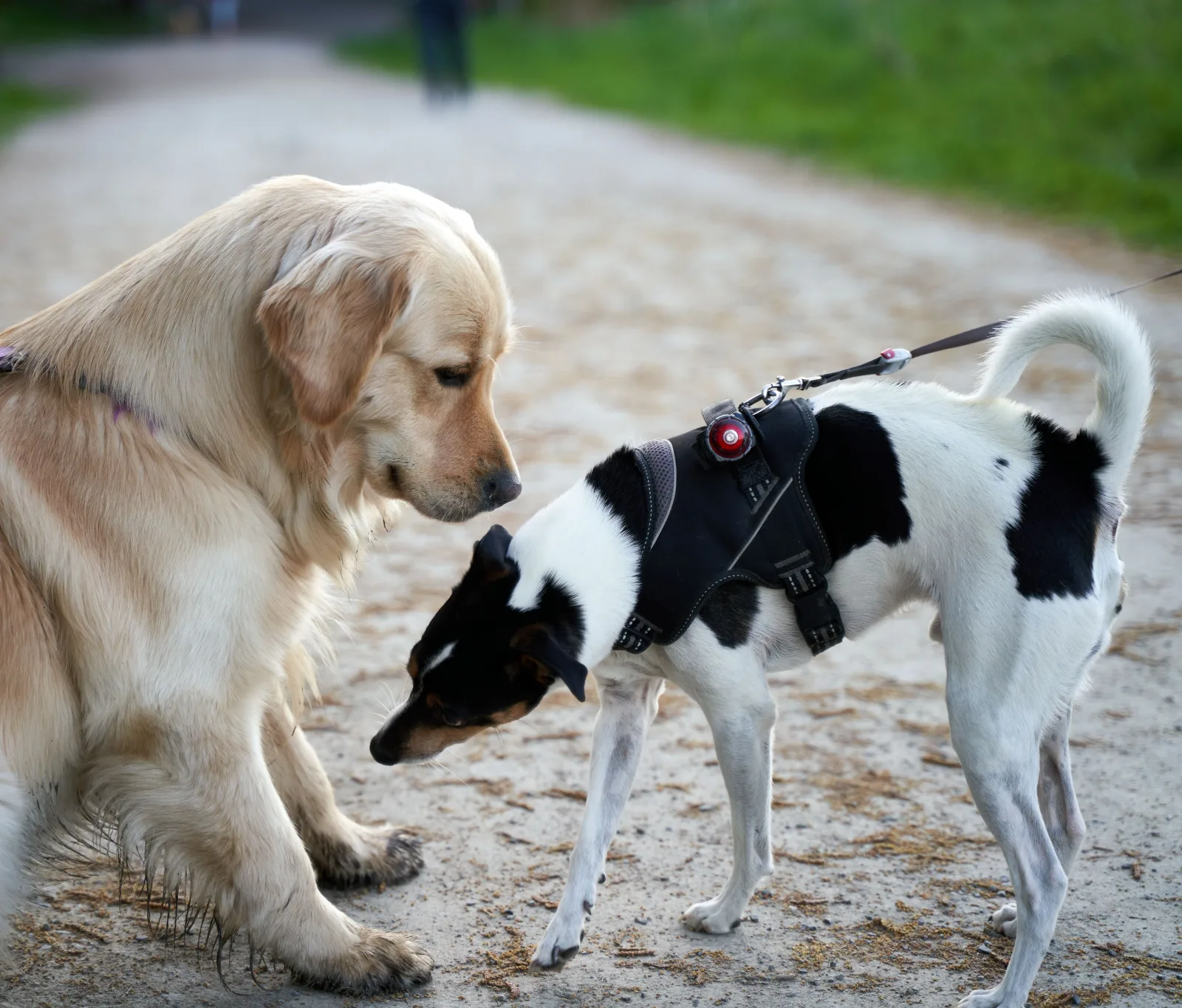
- How do they react to other dogs in an enclosed space? If more than one dog visits the office, calm coexistence without constant interaction matters more than friendliness.
- Does your dog struggle with separation anxiety? Counterintuitively, a dog who copes badly with being left alone may also cope badly with too much closeness and no personal space all day.
If your answer to most of these is "not sure" - that is a signal to test a shorter visit before planning a full day.
Training before day one
As with preparing a dog for a cafe, this skill is best built gradually rather than tested for the first time on a full eight-hour workday. Start by teaching calm settling on a designated spot at home, then move that exercise into more demanding environments - see our guide on dog cafe etiquette for the exact same mat-training method, which works just as well under a desk.
The first office visit should be short - two or three hours, ideally on a quieter day of the week, with no major meetings or visitors.
What to pack for day one
- A familiar bed or mat - carrying the scent of home gives your dog a reference point in a new place.
- A water bowl - offices rarely have one ready.
- Something to chew that lasts a while - a chew toy or food puzzle keeps your dog calmly occupied for longer stretches.
- A few treats - to reward calm behaviour throughout the day.
- Poop bags - obvious, but easy to forget in a new routine.
Take your dog on a longer, more intense walk before leaving home. A dog who arrives at the office already somewhat tired physically settles far more easily than one full of unspent energy.
When to honestly admit it is not working
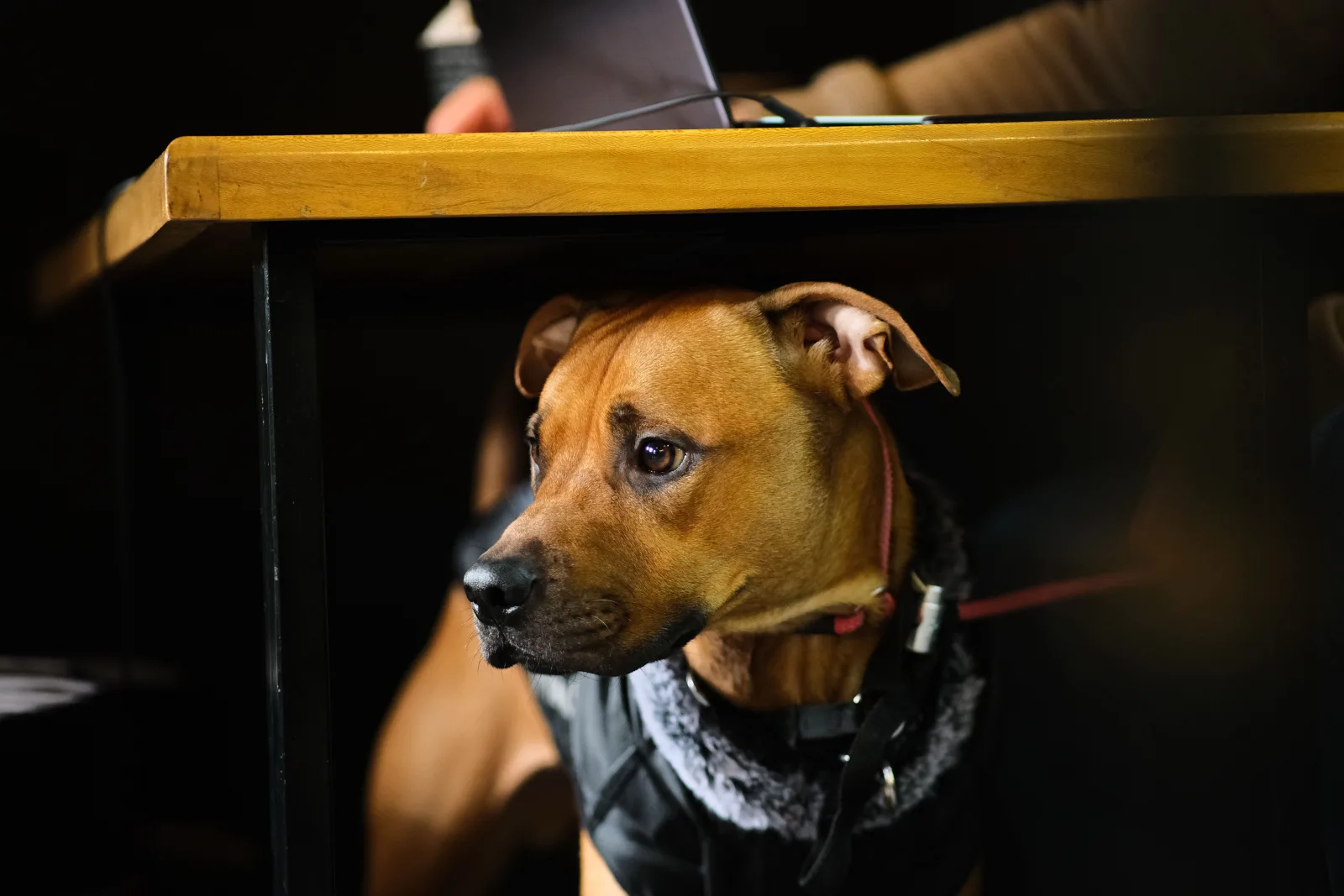
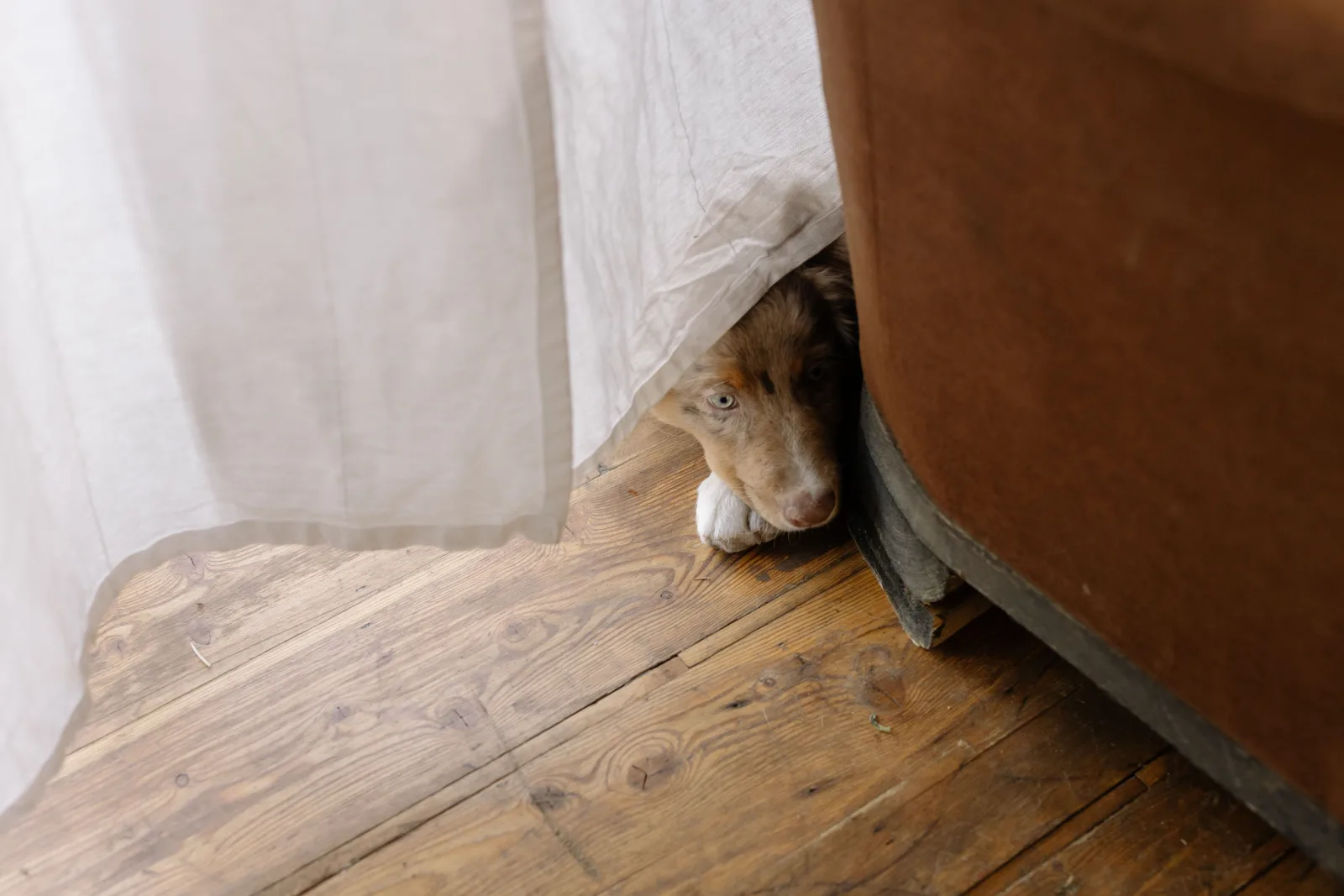
Watch for stress signals throughout the day: panting with no physical exertion, being unable to settle, excessive whining, trying to get out from under the desk toward the door. A short walk outside often relieves the tension. But if the stress persists despite breaks, taking your dog home midday is a reasonable call, not a failure - for some dogs, the office will simply never become a comfortable place, and it is better to accept that than to keep pushing it.
Questions worth asking before day one
Before planning your first visit, get clear answers from HR or your manager:
- Is there a formal policy on dogs in the office, or is approval decided case by case?
- Are there days of the week or zones of the office off-limits to dogs?
- What happens if a dog damages company property or there is an incident with another employee?
- Does the company's liability insurance cover this kind of situation, or does responsibility fall entirely on the owner?
- Are there already other dogs visiting the office, and if so, how is that managed?
No clear answers to these questions is a signal to wait until the rules are spelled out, rather than going ahead on your own initiative.
How to structure the first week
Instead of testing a full workday right away, spread the trial across several stages over a week or two:
| Day | Duration | Goal |
|---|---|---|
| 1 | 1-2 hours | Check your dog's baseline reaction to the new environment |
| 2-3 | 3-4 hours | Observe how they handle longer stillness and movement around the desk |
| 4-5 | Full day, with a walk break midway | Test the actual target scenario |
If stress builds at any stage, go back to the previous level instead of pushing further. It is better for your dog to spend shorter, calm days at the office than long days full of tension.
Remember your coworkers
Not everyone on the team has to be enthusiastic about dogs in the office - allergies, past bad experiences, or simply personal preference matter just as much as your own. A well-managed dog-friendly policy asks the team before it goes into effect and sets clear rules, such as dog-free zones for people who need them.
Find support beyond the office
If your company is not ready for dogs yet, or your dog simply thrives on a different daily rhythm, DOGOUT can help you find other owners near your office - for a shared walk on a lunch break or a quick meetup after work. Sometimes that is a better fit than pushing for eight hours under a desk.
Frequently asked questions
- Do companies in Poland really allow dogs at work?
- Yes, it is a growing trend, especially in creative agencies, startups and pet-industry companies. Some companies set specific days of the week for dogs, others allow it every day - always check with HR about the formal policy before deciding to bring your dog in.
- How do I know if my dog is ready for a day at the office?
- Start with short tests at home and in less demanding public settings - check whether your dog can lie calmly for an hour without constant attention, how they react to a ringing phone, strangers coming and going, and other dogs in an enclosed space.
- What should I pack for the first day with my dog at the office?
- A familiar bed or mat, a water bowl, something to chew that lasts a while, a few treats, and poop bags. Take your dog on a longer walk before leaving home, so they arrive at the office already partly tired out.
- What if my dog gets stressed at the office?
- Watch for signals - panting for no reason, being unable to settle, excessive whining, trying to get out from under the desk. A short walk outside often helps. If the stress persists despite breaks, taking your dog home midday is a reasonable call, not a failure.
- Does a dog in the office bother coworkers who don't have dogs?
- It can, if there are no clear rules. A well-managed dog-friendly policy accounts for allergies, fear of dogs and everyone's preferences - for example by setting dog-free zones or asking the team before rolling the policy out.