Socializing an Adult Dog - How to Introduce New Company
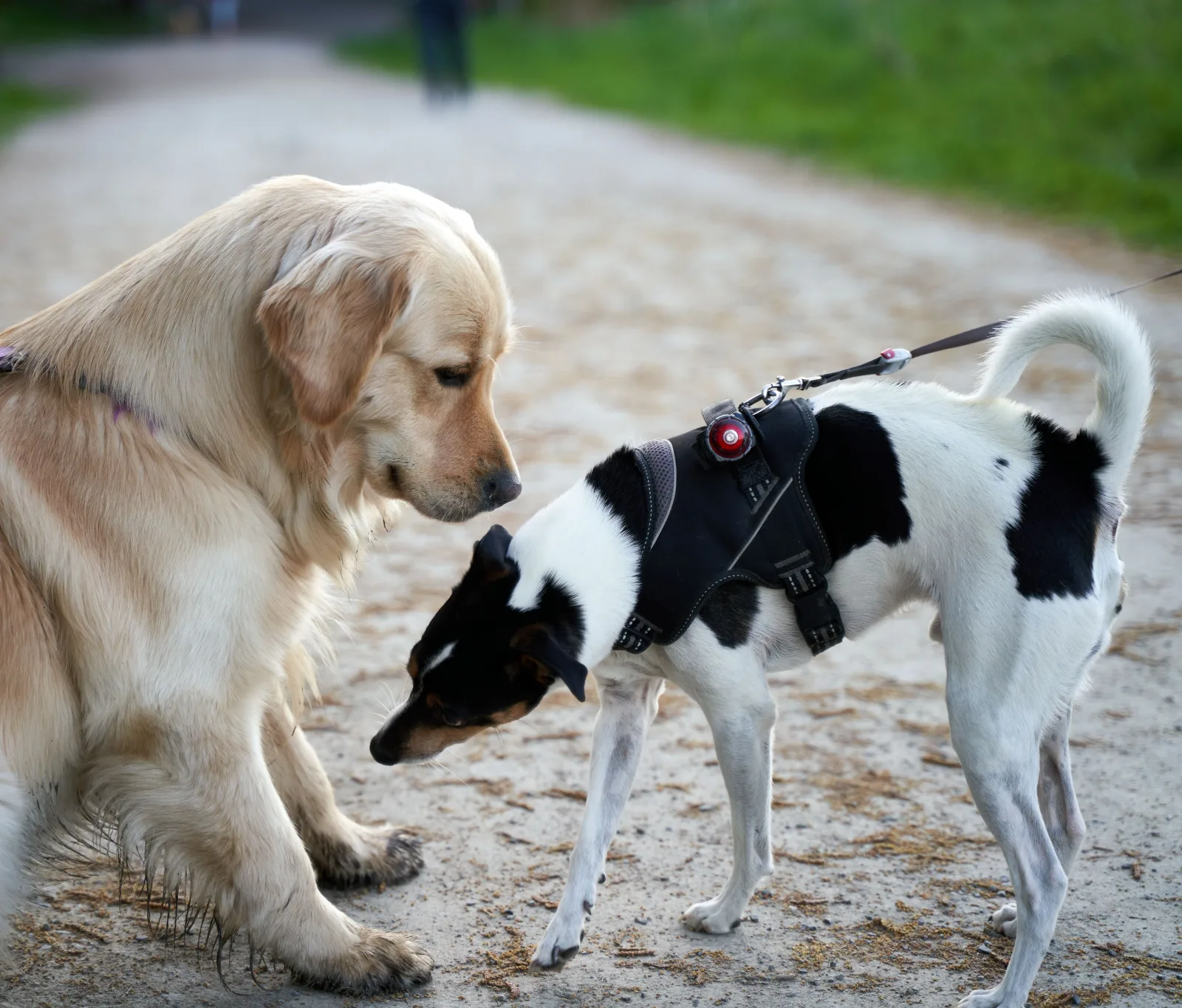
Socializing an adult dog is not about building neutral associations from scratch like with a puppy - it is about gradually changing reactions that already exist. Distance is the key tool: start a meeting with another dog far enough away that your dog stays calm, and only close the gap once they stop reacting with tension. Parallel walks, a relaxed handler and avoiding face-to-face confrontation at the start work far better than one forced on-leash meeting.
A puppy meets the world with a blank slate - an adult dog has already written on it. If you have a dog who never had much chance to meet other dogs as a puppy, went through a bad experience, or simply spent years living mostly alone, socialization is still possible. It just looks nothing like the advice written for puppies.
Why this is a different job, not the same lesson later
The critical socialization window for puppies runs roughly from 3 to 14 weeks of age - the period when a young dog's brain most easily forms neutral or positive associations with new things. In an adult dog, that window is closed. That does not mean learning is impossible - it means you are working with different material.
Instead of building a first impression from zero, you are modifying a reaction that already exists. An adult dog who is scared of other dogs is not scared because "nobody socialized them" in a simple sense - they are scared because they already have a learned association, likely based on a real experience, or the lack of one. This work looks more like behavioral training than neutral exposure, which is why it takes more time, more consistency, and sometimes a specialist's help.
Rule number one: distance, not bravery
The most common mistake when introducing an adult dog to other dogs is closing the distance too fast - with the best of intentions, on the theory that "they just need to meet." It backfires.
A dog who tenses up at the sight of another dog from twenty metres away will not learn anything useful if you put them face to face with that same dog from two metres. What works instead is what behaviorists call working "under threshold" - at a distance where your dog notices the other dog but stays calm enough to take treats, respond to your voice, and function normally.
A practical protocol:
- Start at a distance where your dog stays calm - that might be fifty metres.
- Reward calm behaviour, checking in with you, a loose body.
- Close the distance gradually, over several walks - not in one session.
- If your dog stiffens, growls or cannot look away from the other dog, back off. That is a sign you are too close, not that the training is not working.
Parallel walks instead of face-to-face meetings
Two dogs walking side by side in the same direction, at a safe distance, communicate something completely different than two dogs placed face to face on short leashes. Moving in the same direction is naturally less confrontational for dogs than a static nose-to-nose standoff - it is one of the standard tools for behavioral work with reactive or unsure dogs.
In practice: arrange a joint walk with someone, but start on opposite sides of the street or with a wide gap on the same path. Walk in parallel without stopping to face each other. If both dogs stay calm across a few such walks, only then is it worth considering closing the gap.
Bringing a new dog into a home that already has one
A different scenario, governed by similar rules, is adopting a second adult dog into a home where your current dog already lives. Here too, the key is gradual closeness, not putting both dogs in one room right away.
A tested approach:
- First meeting on neutral ground, not in either dog's home - on a walk, for example, not inside the flat your current dog considers their territory.
- Separate resources at the start - separate bowls, beds and toys, at least for the first few weeks. Competing over resources is one of the most common triggers for conflict between dogs sharing a home.
- Supervised time together, separate time apart - do not leave both dogs unsupervised until you have seen, repeatedly, that they are genuinely comfortable together.
- Patience measured in weeks, not days - dogs sharing a home can need a month or more to settle into a stable, calm dynamic.
If at any stage you see a stiff posture, growling over food or resources, or eye contact avoidance turning into physical avoidance, slow down and consider a behaviorist before the situation turns into a real conflict.
Common mistakes when socializing an adult dog
A few traps that are easy to fall into, even with good intentions:
- Moving too fast - wanting to "speed up" the process because you see a bit of improvement usually sets progress back several steps.
- Relying on one "friendly" dog as a test case - one calm neighbourhood dog is not representative of every dog your dog will meet day to day.
- Punishing fear or aggression reactions - raising your voice or a leash correction in response to growling teaches a dog that showing a warning is dangerous, which paradoxically increases the risk they will skip the warning next time and go straight to a bite.
- Lack of consistency - occasional work once every few weeks gives far weaker results than short but regular sessions a few times a week.
Body language you need to know by heart
Before you start socializing an adult dog, learn to read the signals they give during the process - it is your only real measure of progress.
- Good signs - a loose body, a tail wagging freely at back height, interest in sniffing rather than staring at the other dog, quick glances away.
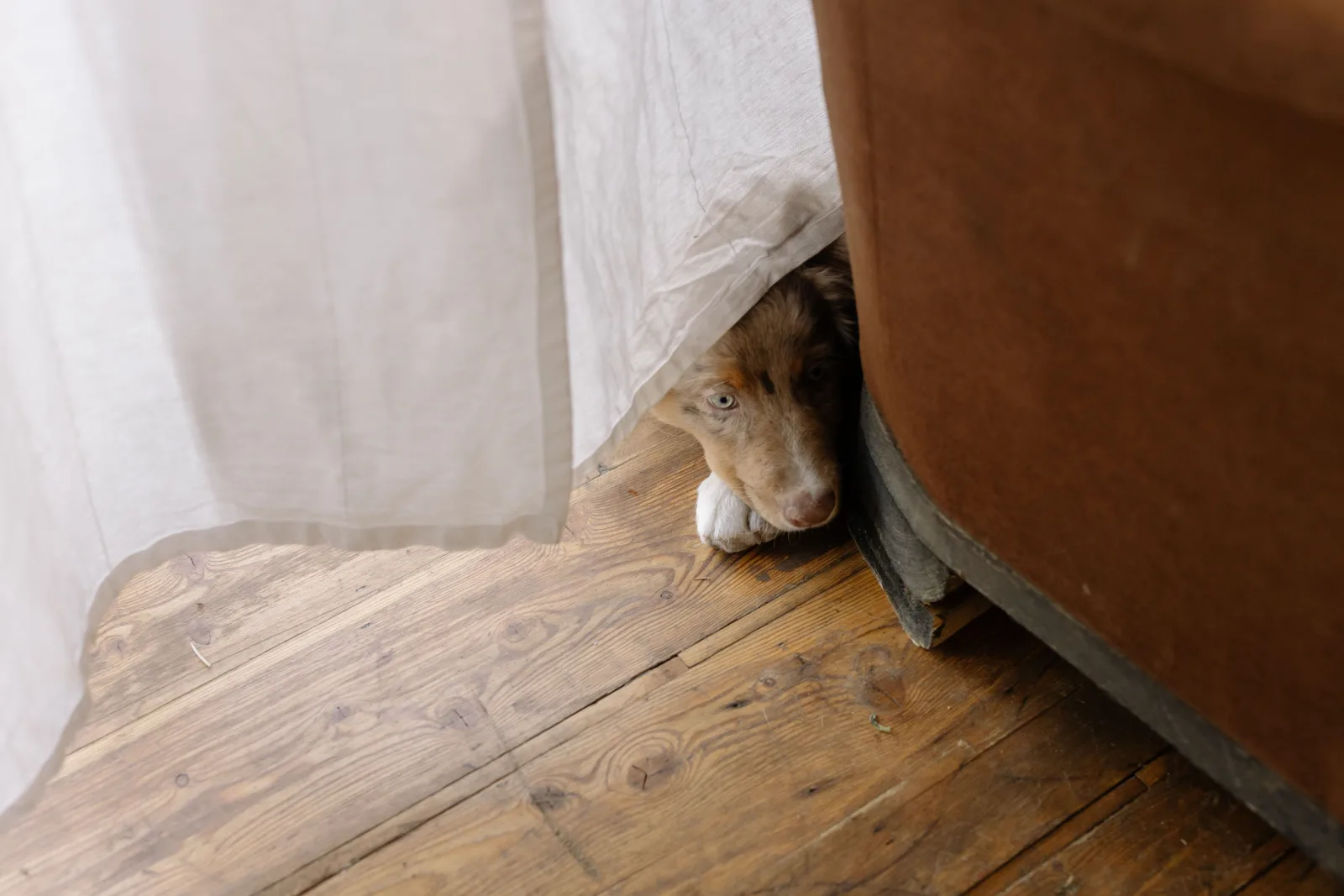
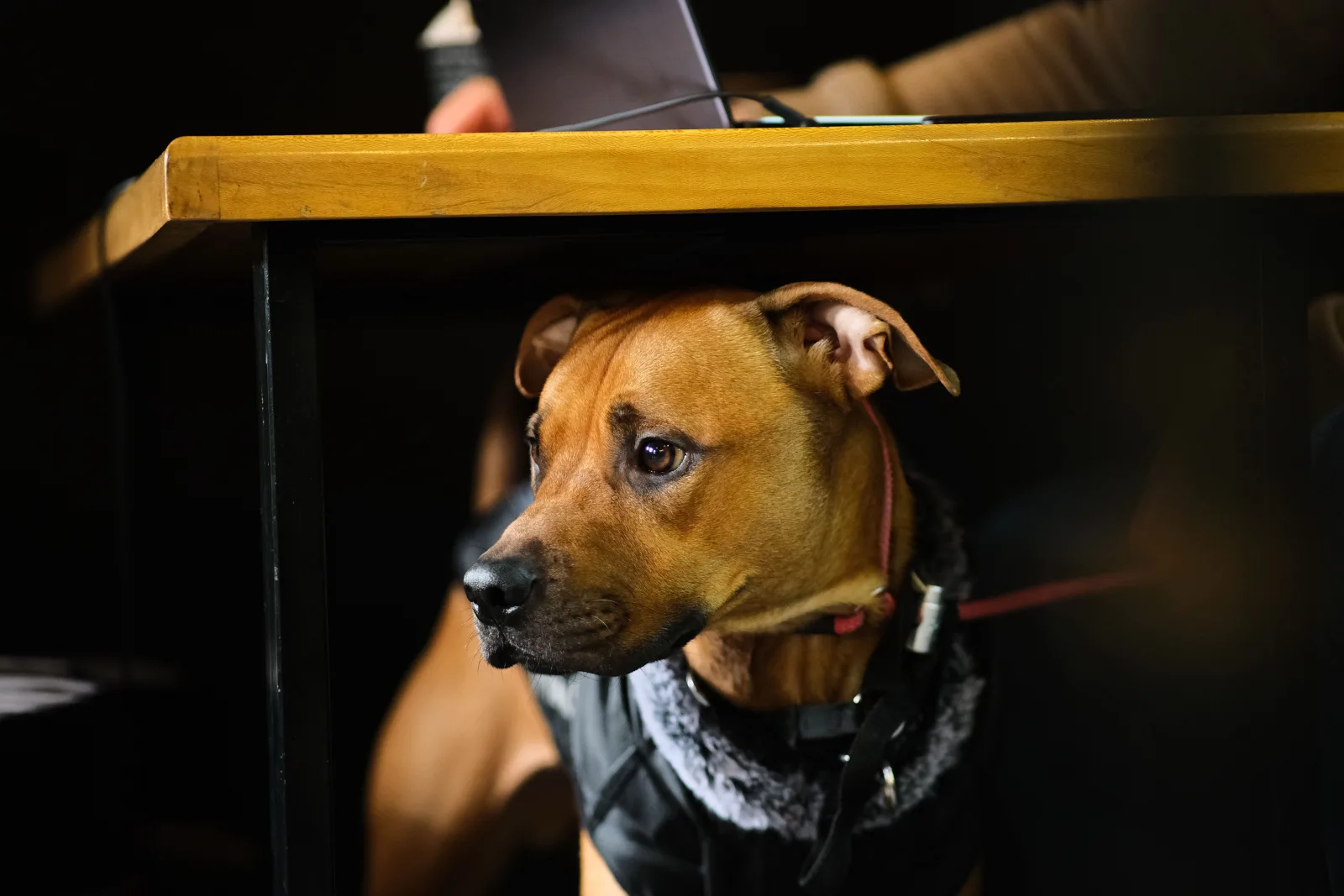
- Warning signs - a stiff body, a high rigid tail, an unblinking stare, growling, trying to pull away or hide behind you.
If you see warning signs, do not wait for them to escalate into something worse. Increase the distance and try again another time.
Adopted dogs and dogs with an unknown history
A dog from a shelter or found on the street often carries a history you do not know. It could be a past attack by another dog, years of isolation, or simply no exposure to other dogs during the key developmental period. In these cases, start with an even larger distance than usual, and do not assume a "friendly neighbourhood dog" will solve things faster than systematic work. Sometimes the best first step is simply observing other dogs from a safe distance, with no interaction at all - and that counts as progress too.
When to bring in a specialist
If your dog reacts with strong stress, aggression or panic even at a large distance, if nothing changes after several weeks of consistent work, or if you simply do not feel confident running this process on your own, that is the moment for a behaviorist, not a reason to give up. For the general rules of socialization and how the critical window works for puppies, see our guide on dog socialization.
New company is an opportunity too, not just a challenge
Socializing an adult dog is often slow work, but it pays off - a dog who, after months of effort, can calmly pass another dog on a walk is a real quality-of-life change for both of you. If you are looking for low-pressure opportunities for controlled meetings with other owners and their dogs, check the DOGOUT map - you will see who is walking nearby, and you can start with something as simple as a shared walk on the same route, at a pace that works for both dogs.
Frequently asked questions
- Can an adult dog still be socialized?
- Yes, though the process looks different than it does for a puppy. Instead of building first impressions from scratch, you are working to change reactions that already exist - fear, over-excitement or defensiveness. It takes more time and consistency, but most dogs show real improvement.
- What does a first meeting between an adult dog and a new dog look like?
- It should happen at a distance, on neutral ground, without a direct nose-to-nose confrontation. A parallel walk at a safe distance, gradually closed over time, works far better than putting two dogs face to face on short leashes.
- How do I know my dog is ready for a shorter distance?
- Watch the body language: a loose body, a tail wagging at back height, and interest in sniffing rather than staring at the other dog are good signs. Stiffening, growling, a high stiff tail or trying to pull away mean the distance is still too short.
- Does an adopted shelter dog need a different approach?
- Often, yes. A dog with an unknown history may have learned negative associations with other dogs from past experiences. Start with a much larger distance and pure observation rather than direct meetings - and do not rush it, even if the neighbour's dog seems friendly.
- When is it worth calling a behaviorist?
- When your dog reacts with aggression, panic or strong stress even at a large distance, when things are not improving after several weeks of consistent work, or when you simply do not feel confident running this process alone. That is not a failure - it is the fastest way to make progress.