

Dog Chasing Cats and Bikes - How to Manage the Chase Instinct
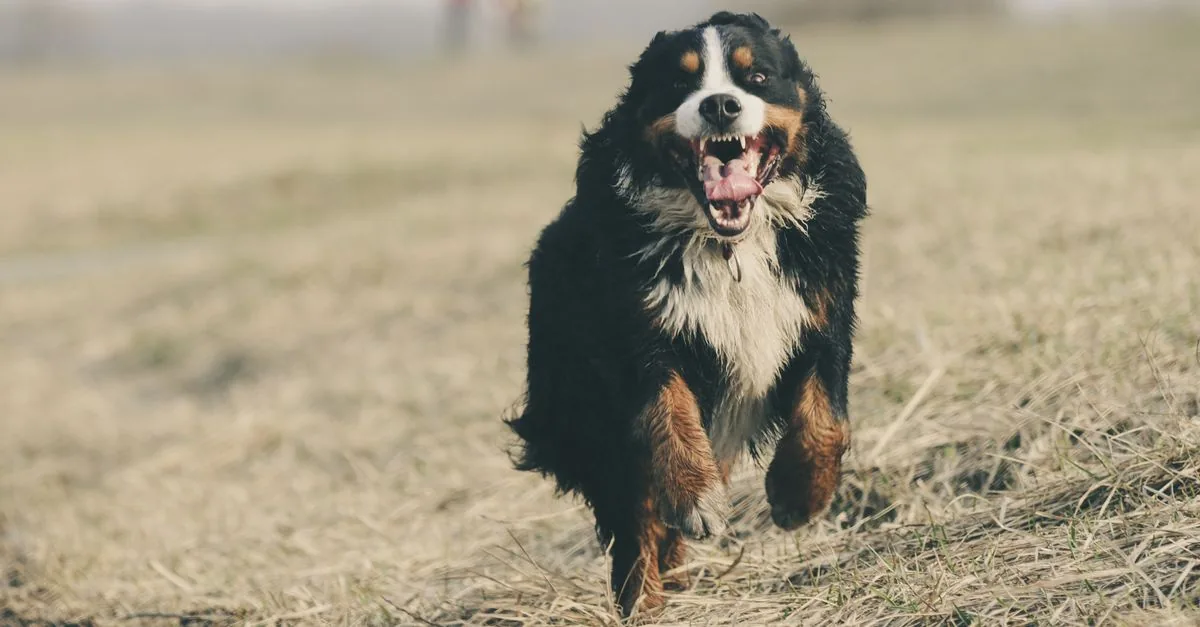
Chasing cats, bikes and joggers is prey drive, not disobedience. You can't fully delete it - but you can manage it. The plan has three parts: control the environment (long line, distance from triggers), build a rock-solid recall plus impulse control, and redirect the urge onto a toy. Around traffic, safety always comes first.
Your dog spots a cat and checks out completely. A bike whips past and the leash nearly takes your arm off. A jogger crosses the path and your dog launches like a slingshot. This isn't spite or a training gap - it's prey drive in its rawest form. The good news: you can manage it. The bad news: you can't just switch it off.
Where does the chase come from?
Chasing isn't a whim - it's a hardwired program buried deep in your dog. Behaviourists call it the predatory sequence: orient, eye, stalk, chase, grab-bite. A fast object moving away automatically triggers that chain. To your dog it makes no difference whether a cat bolts, a bike flashes by or a person runs - what matters is the movement.
Some breeds have this program turned up. Sighthounds were built to chase by sight, herding breeds to eye and stalk, terriers to grab. That doesn't mean a dog without a "hunting" pedigree won't chase - the instinct simply sits at a 3 in some dogs and a 9 in others.
The key thing to accept: you don't erase the instinct. You manage it. The goal isn't a dog that never notices a cat - it's a dog that notices the cat and stays with you.
Manage first - before you start training
Training takes weeks and months. During that time your dog can't be rehearsing chases on live triggers, because every successful chase is a reward that strengthens the behaviour. So management comes first.
A long line is your safety buffer
Until your recall is genuinely reliable, a high-drive dog stays on a long line (15-50 ft) anywhere triggers show up. The dog gets freedom to move, and you get a physical guarantee they won't vanish after a cat into the road. Clip the line to a harness, never a collar - a jerk at full sprint can injure the neck.
Distance makes the difference
The closer the trigger, the stronger the impulse. Train at a distance where your dog can still listen to you. If they see a cat and stop responding to your voice, you're too close. Back off, add distance, then work.
| Situation | Recommended approach |
|---|---|
| Busy road, train tracks, car park | Short leash, dog at heel, zero slack |
| Park with bikes and joggers | Long line, distance from the path, reward calm |
| Field with wildlife | Long line until recall is reliable |
| Meeting a cat in the neighbourhood | Add distance, redirect attention, reward |
| Fenced dog run with no triggers | Off-leash fine, train recall |
Build recall and impulse control
This is the heart of the work. A dog that can stop mid-stride is a safe dog.
A strong recall
Recall for a high-drive dog has to compete with one of the strongest rewards in its world. That means highest-value treats only, lots of reps, and distractions added gradually. Start at home, then the garden, then on a long line outdoors. The full step-by-step plan is in our guide on how to teach your dog a reliable recall.
Impulse control
A dog that can wait can also hold back a chase. Train "leave it", "wait" and a cued eye contact - looking into your eyes interrupts the predatory sequence before the dog winds up. Play "look at me": when a trigger appears and the dog glances at you, it gets the jackpot. Over time, the sight of a cat becomes a cue for the dog to look at you instead of bolting.
An emergency stop
Teach your dog one unique word - an emergency stop. You use it only in critical moments and always reward it as highly as you possibly can. Practise it fresh, in calm conditions, and don't burn it on everyday use. It's your safety brake for the second your dog is about to launch.
Redirect the instinct instead of suppressing it
Chasing is a need, and an unmet need comes back twice as strong. Instead of only blocking it, give the dog a legal outlet.
- Flirt pole (a pole with a toy on a line) - the dog chases and grabs a toy on a line in controlled conditions. It satisfies the drive and teaches that you switch the game on.
- Fetch and tug - channel the grab and the chase.
- Scent work - searching for hidden treats engages the same "hunting" brain in a calm way.
A dog that's properly tired out mentally is far less likely to go hunting for triggers on its own. For ideas on richer, more engaging walks, see our guide on dog socialization.
Safety around traffic
There's no room for experiments here. A dog that chases bikes and cars is risking its life - and the driver's. Near roads, tracks and car parks, it's a short leash, dog at heel, zero slack. No training is reliable enough to trust around moving vehicles. A similar mechanism shows up when a dog lunges toward other dogs - we cover how to work on that in our guide on the lunging dog on leash.
If the chasing is extreme - the dog drops into a "hunting trance" and stops hearing you, or it gets worse despite your work - bring in a behaviourist. That's not failure, it's good sense.
A high-drive dog needs places where it can run legally - fenced runs and routes away from traffic. Find them on the DOGOUT map, add the spot that works for you, and meet up with someone else who's training their dog too. Get out there and give your dog a job before it finds its own.
Frequently asked questions
- Can you train a dog to stop chasing cats and bikes?
- You can't fully delete prey drive - it's a hardwired program, not a habit. But you can manage it reliably: through environmental control, a strong recall, impulse control and redirection onto a toy. The goal is a safe, predictable dog, not a dog with no instinct.
- Why does my dog chase bikes and joggers?
- A fast object moving away triggers the predatory sequence - the same one that evolved for hunting. Movement launches the chase automatically, whether it's a cat, a bike, a scooter or a runner. It's instinct, not aggression.
- What is an emergency stop cue and how do I teach it?
- An emergency stop is one unique word you use only in critical moments and always pair with your highest-value reward. You train it from scratch in calm conditions, before the dog has launched. Over time the word can pull a dog out of a chase even with a live trigger present.
- Can a dog with high prey drive ever be off-leash?
- Until your recall is genuinely reliable, keep the dog on a long line anywhere with triggers. Near busy roads and wildlife, off-leash is too risky. The safety of your dog and others matters more than their freedom.
- Does a flirt pole help with chasing?
- Yes. A flirt pole - a pole with a toy on a line - lets the dog satisfy the urge to chase and grab in a controlled way, where the prey is a toy, not the neighbour's cat. It also teaches that you switch the game on, so obedience becomes the key to the reward.