Dog Coat Discoloration - Where It Comes From and What to Watch For
Rust or brown staining on a light-coated dog's fur - around the eyes, mouth, paws - is usually caused by porphyrins, natural compounds in tears and saliva that darken in sunlight. It's a cosmetic, harmless issue. A completely different matter is a new, dark, irregular spot on the skin itself (not the coat) that appears suddenly or grows - that's always worth showing a vet, because it can rarely, but occasionally, signal a change that needs further checking.
A rust-colored streak under a white dog's eyes, brownish marks on the paws from licking, a lighter patch where the coat has sat in the sun for a long time - coat discoloration has several very different causes, ranging from completely harmless to worth a vet check. The key is telling apart staining of the coat itself from a change on the skin underneath.
Staining from tears and saliva (porphyrins)
The most common cause of visible pink-brown streaks around the eyes, mouth or on the paws is porphyrins - natural chemical compounds present in tears, saliva and urine, produced when hemoglobin breaks down. Areas that stay constantly moist - around the eyes, the chin, the spaces between the toes - encourage them to build up in the coat. On top of that, sunlight oxidizes porphyrins, so the staining darkens over time.
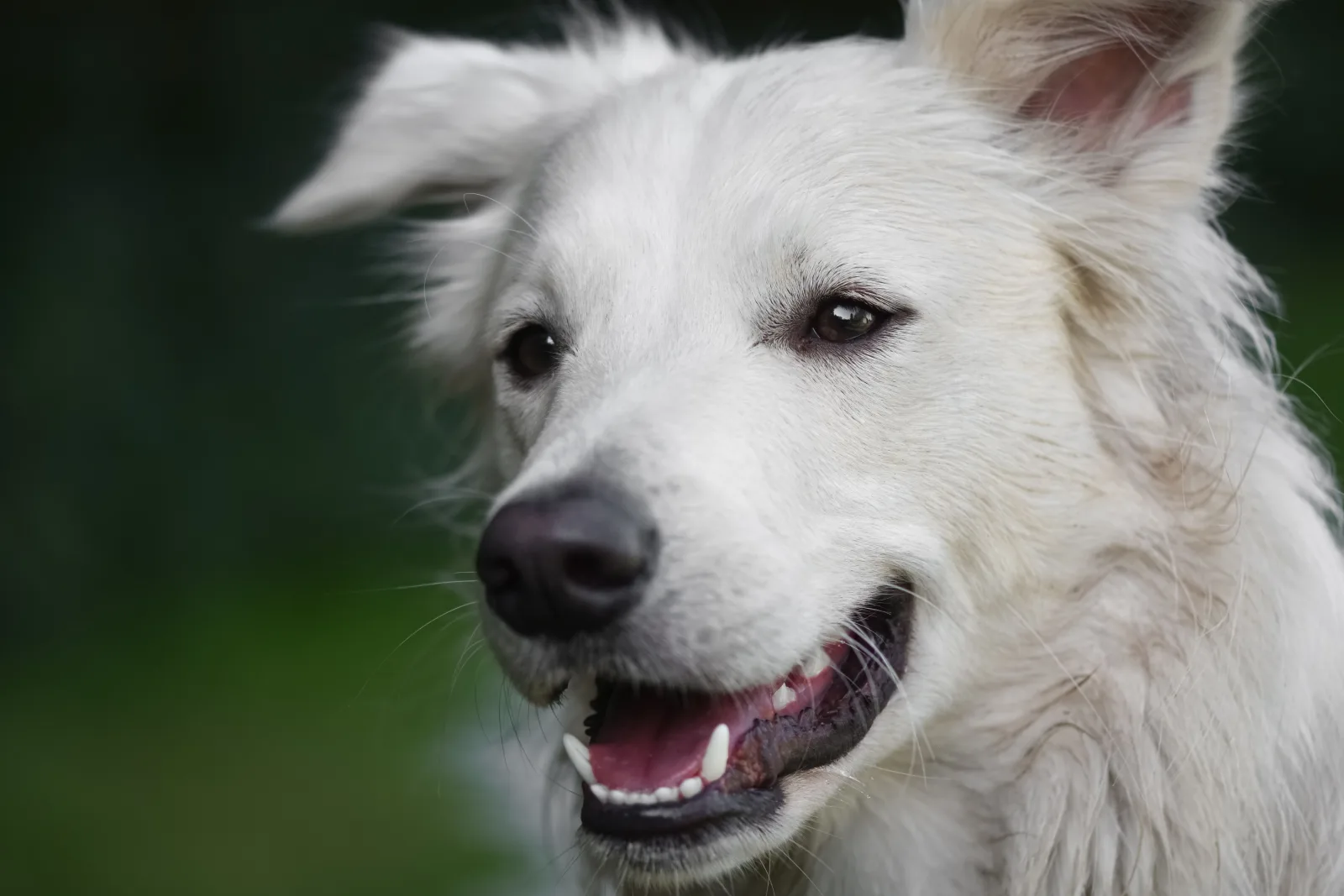
This is visible almost exclusively on dogs with light or white coats - on darker coats the same staining simply isn't noticeable. Breeds with a flat face or a particular eyelid shape (Maltese, Shih Tzu, Bull Terrier) are more prone, since their tears naturally run onto the coat instead of evaporating.
The staining itself is cosmetic and not a health risk, though constant moisture in these areas does encourage bacteria and yeast to grow - if you see redness, an unpleasant smell, or irritated skin under the stained fur, that goes beyond a purely cosmetic issue.
Coat lightening from the sun
The opposite effect - fading rather than darkening of the coat - is usually the sun at work, similar to how human hair fades. It mainly affects dogs who spend a lot of time outdoors, most visible on the back and head, the areas most exposed to UV. This is purely cosmetic and doesn't need treatment.
What to do about cosmetic discoloration
- Wipe the eye and mouth area regularly with a clean, damp cloth to reduce the buildup of moisture and porphyrins.
- Keep the fur around the eyes trimmed (for predisposed breeds), so tears don't pool in longer hair.
- Check whether excess tearing has a cause of its own - conjunctivitis, ingrown eyelashes or allergies can increase tearing and deepen the staining; worth discussing with your vet if that's the case.
- Keep skin folds and the spaces between toes dry, to limit bacteria and yeast growth that causes unpleasant odor.
When it's not about the coat anymore
A completely different matter is a change on the skin itself, not the coat. If, when you part the coat, you notice a new, dark, uneven spot directly on the skin - especially if it appeared suddenly, is growing, changing shape, bleeding, or your dog is licking or biting at it - that's a signal for a vet visit, not something to watch "by eye" for the next few weeks.
Melanoma in dogs is rare, but it can be aggressive, and early detection genuinely improves outcomes. Not every dark spot on the skin is cause for alarm - many dogs have completely harmless moles - but asymmetry, uneven edges, growth, or a changing appearance are features always worth showing a specialist.
If you're also noticing itching or irritation in that area, read our article on dog itching too, which can help you work out whether it's a separate issue or connected to the same change.
How to keep an eye on your dog's moles
A good habit is a quick skin check once a month, ideally while brushing - part the coat section by section and note both moles you already know about and any new ones. You can even snap a phone photo, which makes it easier to compare a spot's appearance a few weeks later. This routine takes only a few minutes but genuinely improves your odds of catching something early that's worth a vet's attention.
Healthy skin and coat mean a dog ready for any route - sunny, wooded, or by the water. Find spots near you on the DOGOUT map and get out there with the pack once everything's been checked.
Sources
Frequently asked questions
- Why is the fur around my dog's eyes turning pink or rust-colored?
- This is most often caused by porphyrins - natural compounds found in tears, saliva and urine, produced when hemoglobin breaks down. Areas that stay constantly moist, like around the eyes or mouth, encourage them to build up in the coat, and sunlight further oxidizes and darkens the staining.
- Does staining from tears affect every dog?
- It's mainly visible on dogs with light or white coats - on darker coats, the same staining simply isn't noticeable. Breeds with a flat face or a particular eyelid shape, like Maltese, Shih Tzus or Bull Terriers, are also more prone, since their tears naturally run onto the coat.
- Is coat staining from saliva or tears dangerous?
- The staining itself is cosmetic and not a health risk. That said, constant moisture in these areas encourages bacteria and yeast to grow, which can sometimes lead to skin irritation - if you see redness or an unpleasant smell, it's worth getting checked.
- What's the difference between coat discoloration and a skin change?
- Coat discoloration is a staining of the hair itself, visible from outside, usually in areas of constant moisture. A skin change is different - a new, dark, uneven spot on the skin itself (visible when you part the coat) that appears suddenly, grows, or changes shape. The latter is always worth showing a vet.
- When does a new dark spot on a dog's skin need an urgent visit?
- When it's asymmetrical, has uneven edges, is growing, bleeding, itching, or your dog is licking or biting at it. Melanoma in dogs is rare, but early detection genuinely improves outcomes, so any new or changing spot on the skin - not the coat - is worth showing a vet without delay.