Dog Training Collar Guide: Types and What They Mean for Welfare
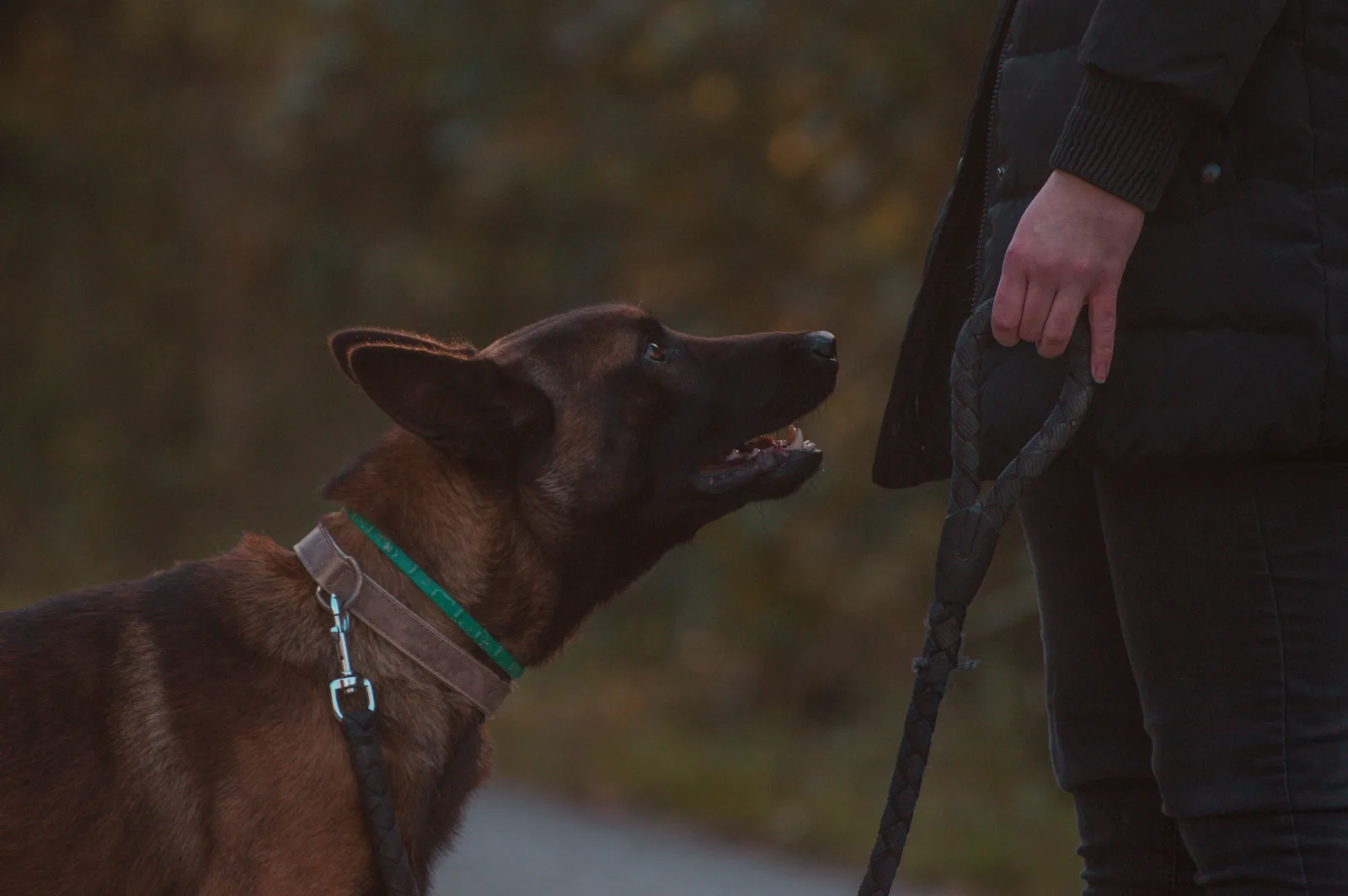
'Training collar' covers several very different tools: the martingale (a control collar that stops a dog slipping out without choking), the electronic collar (e-collar), which is legal in Poland but controversial and banned in several EU countries, and the prong collar, which current animal welfare thinking largely advises against. Before reaching for any training collar, check whether the real issue, most often leash pulling, can be solved with positive training and a well-fitted harness instead. That route is safer for the neck and for the trust between you and your dog.
Search "dog training collar" and you land on three completely different tools sharing one label: a control collar, an electronic collar and a prong collar. They differ not just in construction but in how they affect a dog, physically and emotionally. This guide breaks each one down honestly so you can choose with understanding, not just because a shelf tag says "training."
What "training collar" actually covers
Pet shops use "training collar" as a label for very different gear. The three most common types are:
- martingale (control collar) - stops a dog slipping free, without choking,
- electronic collar (e-collar) - delivers an electric stimulus via remote,
- prong collar - metal links with inward-facing prongs that press on the neck when the leash pulls tight.
Before picking any of these, ask what problem you are actually trying to solve. In the vast majority of cases, leash pulling, bolting on walks, an unreliable recall, none of these require gear that causes discomfort. Below, we cover each type honestly, including why two of them are so controversial.
The martingale collar - control without choking
A martingale collar has an extra control loop. When a dog pulls or backs away, the loop tightens gently, enough that the dog cannot slip out, but not enough to choke it if the collar is fitted correctly. Of the three, it is the only one that genuinely earns the label "safe for everyday use."
It works especially well for:
- dogs with a head narrower than their neck (sighthounds, whippets), where a standard collar slips right off,
- dogs that have repeatedly backed out of a regular collar,
- moments needing extra security, like getting a dog in and out of a car.
A martingale is not a training tool for correcting pulling - it is a safety measure, not a method. For actual leash-manners training, a front-clip harness works better.
The electronic collar - legal, but contested
An electronic collar delivers an electric stimulus (sometimes also a tone or vibration) controlled remotely by the owner. In Poland, owning and selling e-collars is legal - there is no explicit ban. If its use causes a dog pain, though, the owner can be held liable for animal cruelty under Poland's animal protection act.
The international context is worth knowing: e-collars are legally banned in several EU countries, including Germany, Austria and Sweden. That is not accidental - it reflects growing understanding of how aversive methods affect a dog's psychological welfare. Most contemporary behaviourists and trainers recommend positive methods (rewarding the behaviour you want) as both more effective and safer for the dog-owner relationship, particularly for issues like leash pulling or reactivity.
If you are still considering this gear, say for a very specific, safety-critical behaviour under the guidance of a certified specialist, it is absolutely not something to pick up and use without training and experience.
The prong collar - why fewer trainers recommend it
A prong collar is made of metal links ending in inward-facing prongs. When the leash pulls tight, the links close and the prongs press against the dog's neck, a mechanism designed to create discomfort at the moment of pulling.
The problem is that a dog stops pulling not because it understands what you want, but because it is avoiding pain. Most modern behaviourists and vets rate prong collars negatively, citing the risk of neck abrasions and injury, plus elevated stress that can later surface as other behaviours - fearfulness, reactivity. The Netherlands has banned prong collars outright, and more countries are moving in the same direction.
We stick to a modern, welfare-first approach with dogs, so the prong collar isn't something we recommend - no matter how strong or stubborn your dog is. There's simply a better way to fix this.
Table - training collar types at a glance
| Type | How it works | Status in Poland | Recommendation |
|---|---|---|---|
| Martingale (control) | Tightens gently, no choking | Legal, widely used | Safe when properly fitted |
| Electronic | Electric stimulus via remote | Legal, banned in parts of the EU | Not recommended without specialist supervision |
| Prong | Prongs press into the neck | Legal in Poland, banned in the Netherlands | Not recommended - welfare risk |
Fitting a collar, whichever type you choose
Regardless of type, a poorly fitted collar does more harm than good:
- Check the neck fit - you should be able to fit two flat fingers between the collar and the dog's neck, no more, no less.
- Position it high on the neck - a collar worn low, near the chest, puts pressure on the trachea.
- Test it without load - before a walk, check the dog's reaction to the collar in a calm setting, without leash tension.
- Check the skin regularly - abrasions, redness or a patch of worn-away fur are signs something is wrong.
What to check before you buy
Whatever type you're choosing, check a few things on the product itself before you pay:
- Material and webbing width - nylon or cotton webbing at least 2.5cm wide works for most medium and large dogs; smaller breeds do better with a thinner strap, but the stitching still needs to be solid.
- Hardware - buckle and D-ring - metal hardware (stainless steel or brass) holds up better than plastic click-buckles, which can snap under a hard pull. The D-ring for the leash should be welded, not just bent into shape.
- Adjustment range - check there's enough room to adjust in both directions - useful for a growing puppy or a dog whose weight shifts seasonally.
- Stitching and edge finishing - look for double stitching and bound or finished webbing edges, so they don't fray or rub the skin raw.
- For e-collars - real range and water resistance. Check whether the remote has confirmed water resistance (if your dog swims or walks in the rain), and whether the maker states a realistic range rather than just a marketing number.
Common mistakes with training collars
Even the right type of collar can be undermined by everyday handling mistakes:
- Fitting it loose "for safety margin." Some owners deliberately buy a larger collar, assuming a puppy will "grow into it" or that slack is safer. In practice a loose collar increases the chance of slipping out, and on a martingale it weakens the whole safety mechanism.
- Leaving it on 24 hours a day. A control or electronic collar is gear for specific situations, a walk, a training session, not something a dog should wear constantly. Continuous contact with one spot on the neck encourages abrasions and worn-away fur.
- Reaching for aversive gear with no plan. Buying an e-collar "because a neighbour recommended it" and using it without understanding the mechanism or any behavioural knowledge is the fastest way to deepen a problem rather than solve it.
- Ignoring stress signals. Yawning, lip-licking, flattened ears, avoiding eye contact while wearing a collar, these are signs the gear (or how it's being used) is not working the way it should, regardless of type.
- Buying the cheapest option without checking the hardware. A cheap plastic click-buckle collar, bought without trying it on the dog first, tends to fail at exactly the moment a dog lunges at something interesting - precisely when control matters most.
- No plan for phasing out an e-collar. If you go with an e-collar under a specialist's guidance, agree with them upfront on when and how to phase the gear out too - an e-collar should not become the only tool of control on a permanent basis.
What it typically costs
Prices for training collars vary a lot by type and brand. A simple webbing martingale usually runs to a few dozen zloty. Electronic collars, given the electronics and remote, start at a few hundred zloty, with pricier models offering extra modes (tone, vibration, adjustable intensity) costing more still. Prong collars tend to be cheap, but low price should never be the deciding factor here, the problem with this tool isn't cost, it's the mechanism itself.
What to do instead of aversive gear
If leash pulling is the main issue, a much safer and more effective route is a well-fitted harness (ideally front-clip) combined with consistent training. We cover this in more depth in our guides on stopping a dog pulling on the leash and loose-leash walking, and on choosing a harness itself in our dog harness guide. These methods build understanding between you and your dog instead of correcting behaviour through pain or fear.
Find support in the community
Choosing the right gear is one thing, but training always goes better when you have someone to compare notes with, or simply somewhere to practice loose-leash walking in real conditions - with other dogs nearby, on a busy street, in a park. On the DOGOUT map you will find quiet spots for training and people facing similar challenges nearby - sometimes the best "training tool" is just more practice in good company.
Frequently asked questions
- Are electronic dog collars legal in Poland?
- Yes, Polish law does not ban the sale or use of e-collars. If use causes a dog pain or suffering, though, an owner can be held liable for animal cruelty under Poland's animal protection act. Several EU countries, including Germany, Austria and Sweden, ban e-collars outright.
- What is the difference between a martingale and a regular collar?
- A martingale has an extra control loop that tightens gently when a dog pulls back, so it cannot slip over the head the way a regular collar can. Fitted correctly, it never tightens enough to choke. It is a common choice for sighthounds and narrow-headed breeds, and for any dog that has slipped out of a standard collar before.
- Does a prong collar hurt a dog?
- Yes - a prong collar works by pressing metal links into the neck to create discomfort or pain at the moment of a pull. Most modern behaviourists and vets rate it negatively, citing the risk of neck injury and elevated stress. The Netherlands has banned prong collars outright.
- What is the best collar for a dog that pulls hard?
- Rather than reaching for aversive gear, try a front-clip harness combined with loose-leash training - the approach most modern trainers recommend. If you still want a collar, a martingale is a safer control option than a prong or e-collar.
- At what age can a dog wear a training collar?
- A martingale-style control collar can be used on a young dog under supervision, provided it is properly fitted and rechecked often as the puppy grows. Aversive gear (e-collars, prong collars) has no place with puppies - what matters at that age is building trust, not correcting with pain.