Long Line Training Leash: What It's For and How to Use It Safely
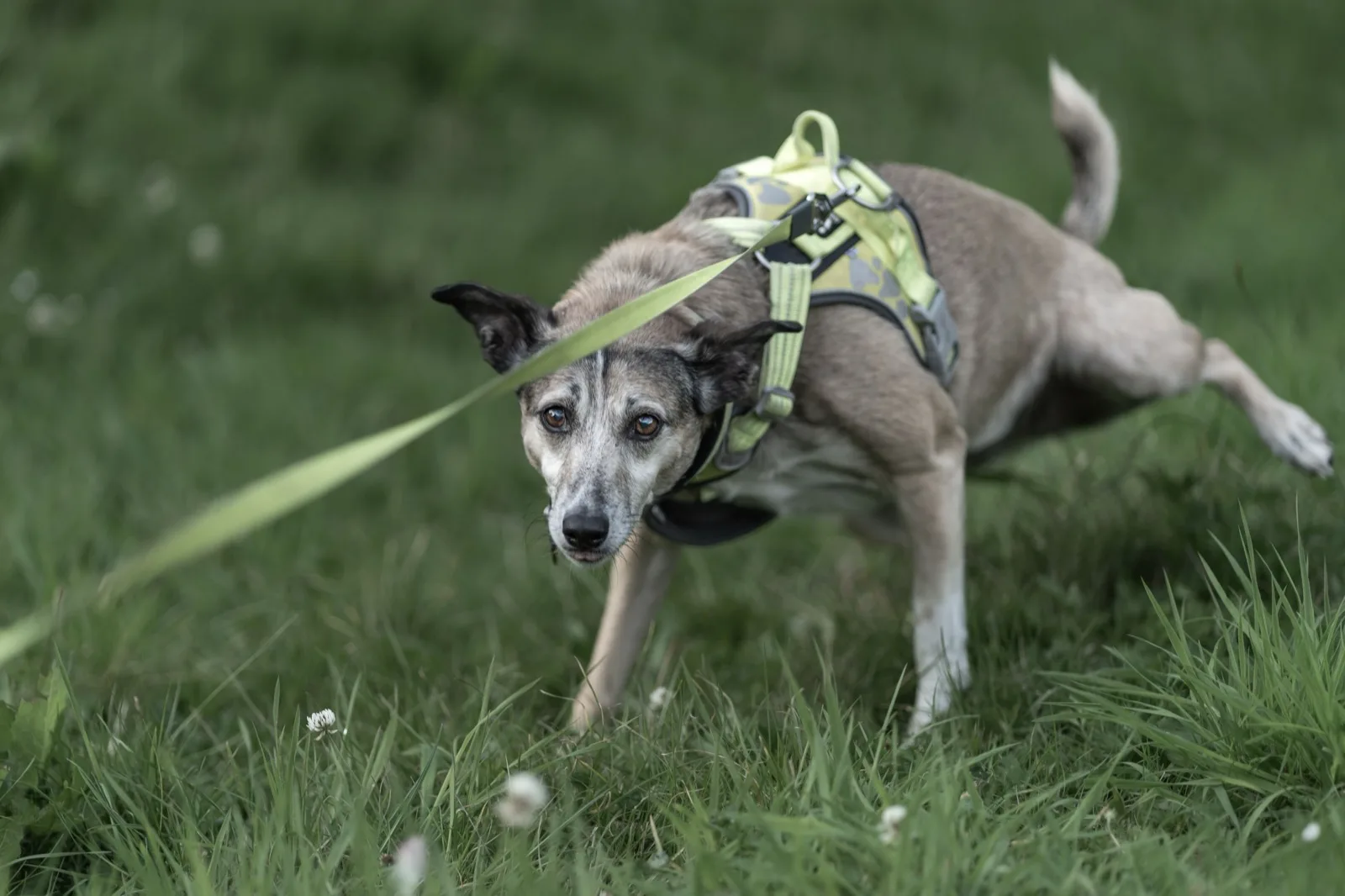
A long line (or long-line leash) is a lead running from a few metres up to fifteen or more, giving a dog far more freedom than a standard leash while staying under the owner's control - unlike a retractable leash, it has no mechanism that jams or suddenly snaps taut. It works well for recall training and decompression walks, where sniffing and exploring matter more than walking pace. The one non-negotiable safety rule: never wrap the line around your hand or any part of your body - a sudden pull at speed can cause a serious injury.
A standard 1-2 metre leash works well in the city, but it is completely unsuited to two things: recall training at a distance, and walks where the priority is sniffing and exploring rather than a set marching pace. That is exactly what a long line is for, a simple tool that is dangerous when used badly and genuinely changes the quality of walks when used well.
What a long line actually is
It is a lead, usually rope or webbing, running from a few metres up to fifteen or more, with a clip at one end and a handle or loop at the other. Unlike a retractable leash (a "flexi"), it is entirely hand-controlled, there is no reel mechanism deciding on its own how much slack to give.
That difference matters in practice. A retractable leash can suddenly lock or jerk on an unexpected movement, and the thin cord, wrapped around a hand, has caused serious injuries. A long line, held correctly, gives far more predictable control.
What it's actually for
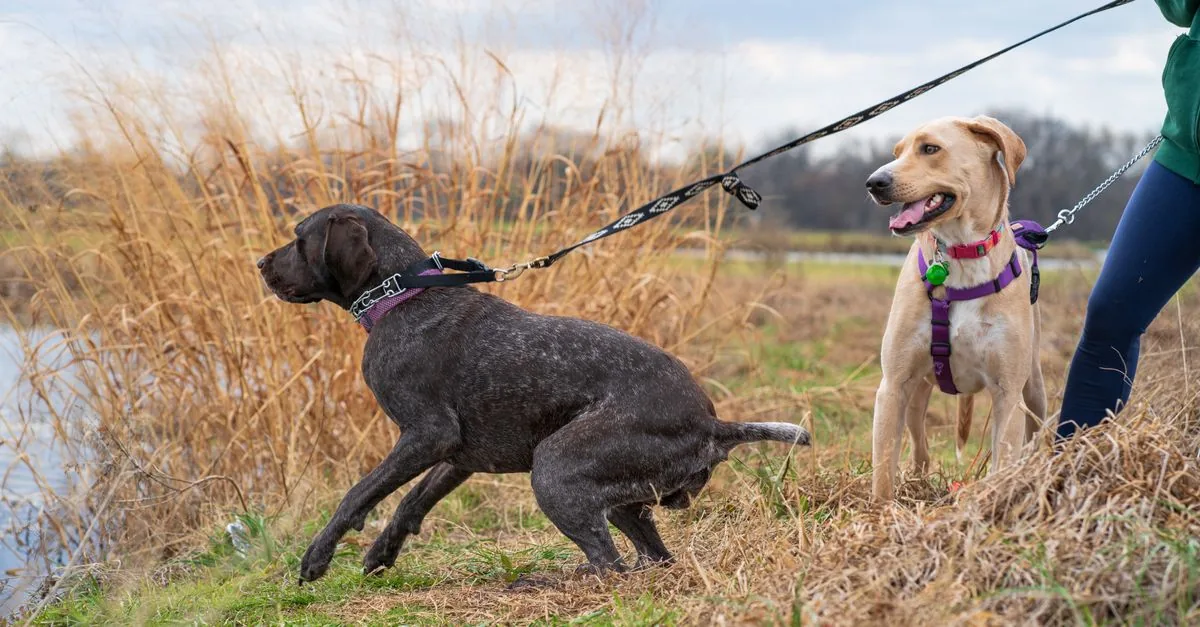
Recall training - the most common use. A long line lets you give a dog more distance while keeping the physical ability to stop it if it ignores a recall cue. It is a safe bridge between leash walking and full off-lead freedom, which should only come once recall is genuinely reliable.
Decompression walks - a walk whose goal is not covering a set route at a set pace, but giving the dog space to sniff, explore and make its own decisions about direction. This is an increasingly recommended approach for stressed, anxious, or simply under-stimulated dogs who get little out of the usual loop around the block.
Reactivity work - at a controlled distance from a trigger, a long line gives room to train without the risk of the dog reaching the source of stress.
Choosing length and material
| Length | Use case |
|---|---|
| 3-5 m | Introducing distance work, tighter spaces |
| 5-10 m | Standard for recall training and decompression walks |
| 10-15 m | Open terrain, experienced handlers |
Material affects hand comfort and the weight of the line. Flat biothane or nylon webbing is lighter and tangles less than round rope, but round rope can be more comfortable to hold for large, strong dogs because it grips better under sudden load. Avoid thin cord, on a hard pull it cuts into a hand far more than a wide webbing strap does.
Buying checklist - how to choose a long line
- Material: biothane vs nylon vs cotton. Biothane (coated webbing) is waterproof, wipes mud off easily and does not soak up moisture, it works well in forests and near water, though it tends to be stiffer and pricier than the alternatives. Nylon is lighter, cheaper and more flexible, but it absorbs water and mud, so after a rainy walk you need to dry it before coiling it away. Cotton rope sits most comfortably in the hand and tangles the least thanks to its natural stiffness, but it copes worst with moisture and wears out fastest.
- Length matched to real available space, not the longest one in stock. Buy a line for what you actually have nearby, fifteen metres in a dense forest or a small park is mostly dead length that tangles rather than gives freedom. Five to eight metres is enough for recall training in most city and suburban locations.
- Handle and grip comfort. A wide, padded handle or a loop wrapped in neoprene protects your hand on a sudden pull, thin cord with no proper handle cuts into skin and raises the risk of rope burn with more frequent training.
- Swivel clip quality. A steel swivel clip, not plastic, stops the line twisting up as the dog circles a scent, a cheap plastic clip most often fails right when tension is highest.
Safety rules - non-negotiable
- Never wrap the line around your hand, wrist or any part of your body. On a sudden pull (a dog lunging after a squirrel or another dog), this risks a broken finger, a sprained wrist, or a deep cut.
- Gather slack into loose loops in your hand, not a tight bundle, so you can release the line quickly instead of being pulled off balance.
- Scan the area before letting a dog run to full length, other people, dogs on short leashes, cyclists can easily get tangled in a fully extended line.
- Clip to a harness, not a collar - at speed with a sudden jolt, the force lands very differently than a short, controlled tug, and a collar puts that force straight on the neck.
- Avoid crowds and tight spaces - a long line is a tool for open meadows, beaches and forests, not a crowded city park.
Long line vs. retractable leash - why they're not the same
Long lines get confused with retractable leashes, but they are a completely different tool with a different safety profile. A retractable has a spring-loaded reel mechanism that tightens and loosens with the dog's movement, hard to predict when it will lock or suddenly jerk. Many behaviourists and vets advise against retractable leashes, particularly with large or impulsive dogs, precisely because of injury risk, both to the dog (cord burns) and the owner. A long line, though it looks similar at a glance, is far more predictable, because you decide how much slack there is at every moment.
When to move from a long line to off-lead
A long line is an intermediate stage, not the end goal. If a dog consistently responds to recall despite distractions (other dogs, scents, people) at the full length of the line, that is a sign you can start considering controlled off-lead moments in safe, fenced or isolated places. We cover recall and loose-leash training in more depth in our guides on loose-leash walking and stopping a dog pulling on the leash.
Common mistakes when working with a long line
- Holding the line as one tight bundle. On a sudden pull, the full force lands on one point of the hand at once, rather than being absorbed as loops release one by one. This is the most common cause of hand injuries among beginners.
- Moving to full length too quickly. A dog that has never walked on a long line needs time to learn where its limits are, start at a shorter distance and extend it gradually.
- Using a long line where it doesn't work. A busy city park, a beach at peak season, a narrow forest path shared with other walkers, in these settings a long line gets in the way more often than it helps.
- Skipping gloves when working with rope lines. For intensive training with frequent line movement through the hand, thin gloves are worth considering, they reduce the risk of rope burn, especially with large, strong dogs.
- Reaching for a retractable leash instead of a proper long line. A retractable has a reel mechanism that jams and does not give full, hand-controlled slack on a sudden lunge, recall training at a distance needs a line you control yourself at every moment, with no mechanism acting on its own.
- Letting the line tangle around the handler's legs or other dogs. A line stretched to full length lying across grass or sand is a trip hazard waiting to happen, watch where it runs, especially when other dogs on short leashes are nearby.
- Choosing too long a line for the available space. Fifteen metres in a narrow city park causes more problems than freedom, match the length to the real open space you have, not to the longest option on the shelf.
- Clipping to a collar on a dog that lunges at triggers. On a dog that suddenly bolts after a scent or another animal, a collar transfers the full force of the pull straight onto the neck, for dogs like that a harness clip is mandatory, not optional.
What it costs
Long training leashes are one of the more affordable pieces of dog gear, simple nylon webbing models in the 5-10 metre range typically cost a few dozen zloty. Pricier versions in rope material, with waterproof coating or a more comfortable handle, cost somewhat more, but this remains one of the more accessible purchases compared to the rest of a training kit.
Where to train
Open meadows, off-season beaches and forests with good visibility are the best places to work with a long line, you need space to see what is happening around you before your dog reaches it at full extension. On the DOGOUT map you will find places tagged by other owners as quiet and open, a good starting point before trying somewhere busier.
Frequently asked questions
- What length long line should I start with?
- For beginners, 5-8 metres works well, enough freedom to train recall at a distance, while still easy to manage without tangling. Longer lines, 10-15 metres, are worth introducing only once you have got comfortable handling a shorter one.
- What is the difference between a long line and a retractable leash?
- A retractable leash has a reel mechanism that tightens and loosens under tension, which makes a dog's movement hard to predict and can be dangerous on a sudden pull, the thin cord can cause serious hand injuries. A long line is fully hand-controlled, you decide how much slack to give, with no mechanism acting on its own.
- How do I hold a long line without getting tangled?
- Gather the slack into loose loops in your hand (never wrapped around your wrist), rather than one tight bundle, so you can quickly release or shorten the line without a jerk. It is worth practising this technique without the dog first, until the motion becomes automatic.
- Is a long line suitable for walking in the city?
- Generally not, in crowds, at crossings and around other dogs on short leashes, a long line tangles easily and becomes a trip hazard for other people. It is a tool for open spaces, meadows, beaches, forests without heavy foot traffic.
- Should I clip a long line to a collar or a harness?
- Definitely a harness, ideally with a back clip. A sudden pull on a long line at speed, clipped to a collar, puts heavy strain on the neck, a harness spreads that force across the chest instead.