The Oldest Polish Dog Breeds and Their History
Poland has four recognised native dog breeds: the Tatra Shepherd Dog (a livestock guardian from the Tatra Mountains, protecting flocks for generations), the Gonczy Polski or Polish Hunting Dog (a rare forest scent hound, nearly extinct after the Second World War), the Ogar Polski or Polish Hound (a tracking dog first documented in 1779), and the Chart Polski or Polish Greyhound (a fast sighthound bred for open-field hunting). All four survived partitions, two world wars and decades of communism when breeding native breeds was not a priority - and all four still work today much as they did centuries ago.
When people think of dog breeds, names like Labrador, German Shepherd or Husky usually come to mind - breeds with global fame and millions of owners worldwide. Poland, though, has its own native breeds with a history stretching back centuries, breeds that survived partitions, two world wars and communism, and yet remain in the shadow of more famous names. Here are four of them.
Tatra Shepherd Dog - guardian of the mountains
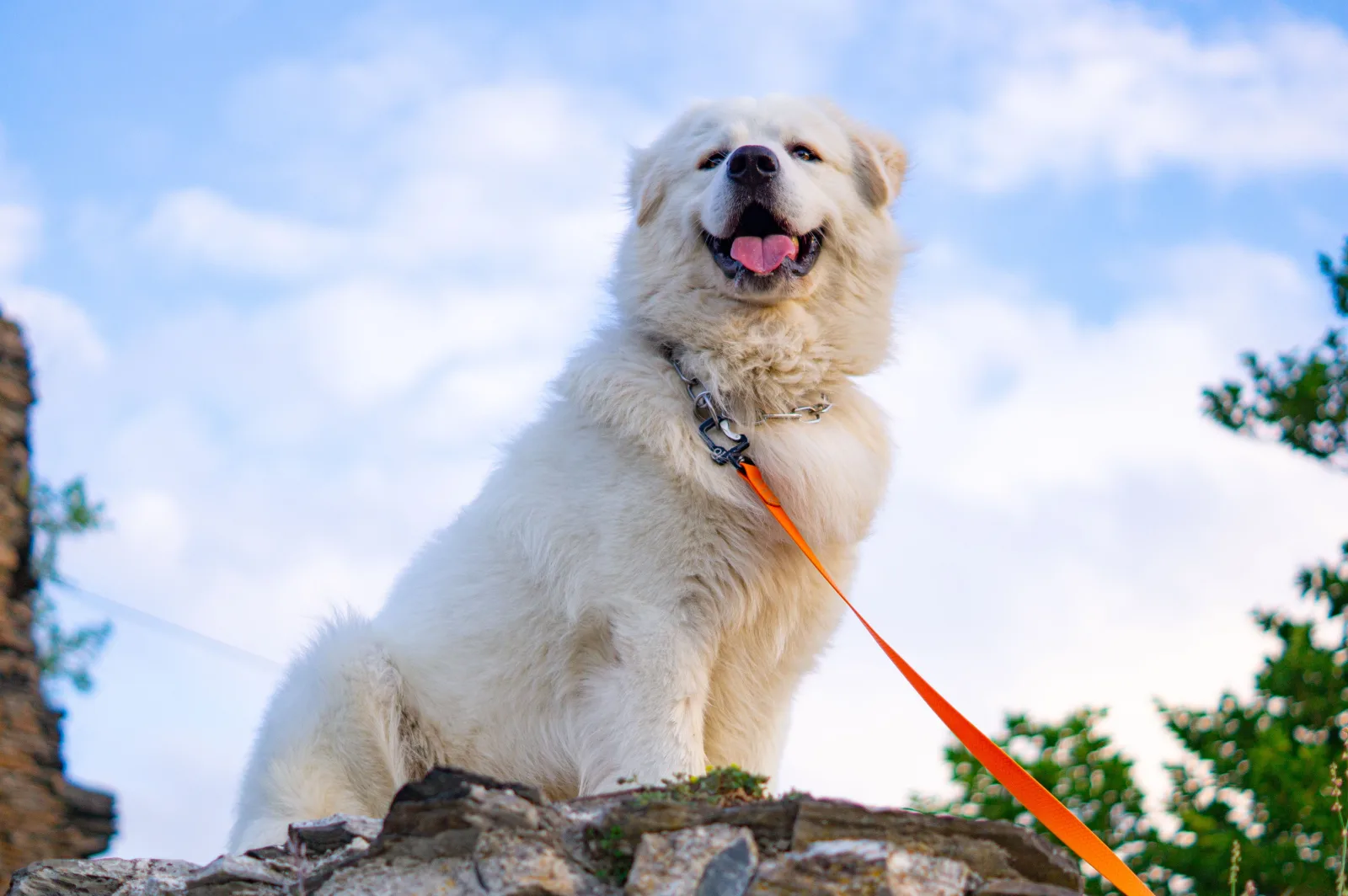
The Tatra Shepherd Dog (Owczarek Podhalański) is a large white livestock guardian originating from the Podhale region in southern Poland. Its history is tightly bound to highland shepherding traditions - for generations, dogs of this breed protected flocks of sheep from wolves and bears on the slopes of the Tatra Mountains, sleeping with the flock and guarding it day and night, largely without human supervision.
What sets the Tatra Shepherd Dog apart from a typical herding breed that directs a flock from a leadership position is its role as a guardian-defender - the dog does not steer the flock, it defends it, acting almost like a living fence against predators. Highlanders used the breed so thoroughly that its coat was sometimes even sheared and spun into wool.
The breed was nearly wiped out during the Second World War and remains relatively rare today, though beyond herding it now also works as a rescue, guard and police dog.
Polish Hunting Dog - born in the forest
The Gonczy Polski, also known as the Polish Hound or Polish Hunting Dog, is a rare scent hound native to Poland, valued for its stable temperament, resilience and low-maintenance coat. The breed originates in the dense forests of Poland, where for generations it worked as a hunting dog, tracking game by scent.
Its history is largely a story of survival. The Gonczy Polski nearly went extinct after the Second World War - the postwar years were not kind to hunting-breed conservation, and the population shrank to dangerously low numbers. Only after the fall of communism did the breed begin gaining recognition outside Poland, though it remains one of the rarer scent hounds in Europe.
Polish Hound - a trail documented in the 18th century
The Ogar Polski is a native hunting breed, developed by crossing Bloodhounds with local scent hounds - the result is a lighter, more resilient and more agile version of the classic tracking dog. The Ogar Polski was bred to work difficult terrain over long distances, where stamina mattered more than raw speed.
What makes this breed historically unusual is a documented source - the first description of the Ogar Polski appears in a 1779 book by Krzysztof Kluk on the natural history and husbandry of domestic and wild animals in Poland. It is one of the few cases where the origin of a native dog breed can be traced to a specific, dated source over two hundred years old, rather than only oral breeding tradition.
Polish Greyhound - built for speed on open ground
The Chart Polski is a Polish sighthound breed, developed for hunting on open, flat terrain, where speed and stamina over a short, intense chase mattered most. Like other sighthounds, the breed hunted primarily by sight rather than scent, tracking game movement over long distances and closing the gap on open ground.
Sighthounds as a type have a centuries-old tradition in Central Europe tied to aristocratic hunting, and the Chart Polski is the local, native variant of that tradition.
The Polish Lowland Sheepdog - a fifth breed and the one dog who saved it
Alongside the four breeds FCI recognises as fully native, it is worth mentioning one more: the Polish Lowland Sheepdog (Polski Owczarek Nizinny, or PON for short). It is a medium-sized, shaggy herding dog from the lowlands, entirely different in type from the mountain-dwelling Tatra Shepherd Dog, though the two are sometimes confused by name alone.
The PON's history is one of the most dramatic survival stories among Polish breeds. The Second World War nearly wiped out the population entirely - after the war, the breed survived in only a handful of dogs. Its recovery is owed largely to one person: Polish veterinarian Dr. Danuta Hryniewicz, and her dog named Smok. Smok sired ten litters in the 1950s, and by 1969 her Kordegardy kennel had produced more than 140 puppies, including many future champions. Practically every Polish Lowland Sheepdog alive today traces back to Smok - a single dog who quite literally saved the breed from disappearing. The official PON breed standard was accepted by the FCI in 1959.
What these histories have in common
A common thread runs through the history of nearly every Polish breed: coming close to disappearing because of war, then being rebuilt through the persistence of individual breeders, often working with only a handful of surviving dogs. This is not the story of breeds that developed peacefully over centuries without interruption - it is the story of cultural breeds that survived despite the worst circumstances that could have befallen them.
Why these breeds still matter
Poland's four native dog breeds survived partitions, two world wars and decades of communism, when breeding native breeds was not a state priority. The fact that they exist today in a form close to their historical origin owes a great deal to individual breeders and enthusiasts who refused to let them disappear.
They are worth knowing about for more than historical sentiment - they are living proof that working dogs, bred for a specific task over generations, keep strong instincts even today. If you meet a Tatra Shepherd Dog guarding a flock in the Tatras, or a Polish Hunting Dog on a hunt, you are looking at something that has existed in nearly unchanged form for hundreds of years.
See them for yourself
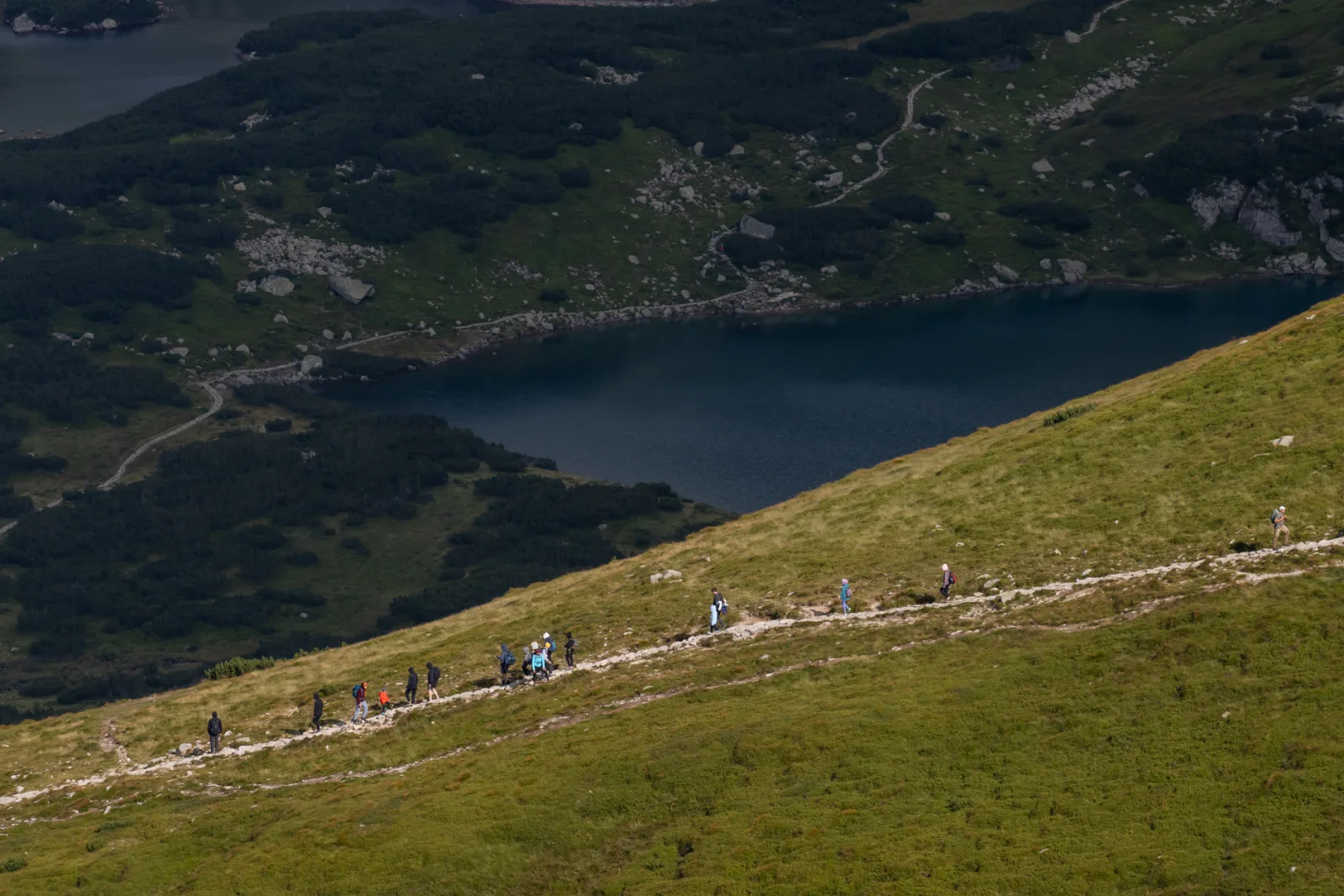
Tatra Shepherd Dogs still work with flocks on the slopes around Zakopane and Podhale - if you are planning a mountain trip with your dog, check our guide to dog-friendly Zakopane and keep an eye out for a white, shaggy silhouette on the horizon. And if you want to meet owners of other breeds, rare or native ones included, near you, open the DOGOUT map and see who is walking nearby. Sometimes the best conversation about dogs starts with "so, what breed is that?"
Frequently asked questions
- How many dog breeds come from Poland?
- The FCI recognises four breeds native to Poland: the Tatra Shepherd Dog, the Gonczy Polski (Polish Hunting Dog), the Ogar Polski (Polish Hound) and the Chart Polski (Polish Greyhound). Some sources also list the Polish Lowland Sheepdog, whose exact origins are dated differently across references.
- Is the Tatra Shepherd Dog the same breed as the Polish Lowland Sheepdog?
- No, they are entirely different breeds. The Tatra Shepherd Dog is a large white livestock guardian from the Tatra Mountains, bred to protect flocks from predators. The Polish Lowland Sheepdog is a medium-sized, shaggy herding dog for flat terrain, completely different in type and purpose.
- Did the Polish Hunting Dog really almost go extinct?
- Yes. The breed survived the Second World War and the difficult postwar decades, when breeding hunting breeds was not a priority. Only after the fall of communism did the Gonczy Polski start gaining wider recognition outside Poland, though it remains a rare breed.
- Where does the Polish Hound come from?
- The Ogar Polski was developed by crossing Bloodhounds with local scent hounds - producing a lighter, more resilient tracking dog. Its first documented description appears in a 1779 book by Krzysztof Kluk on the natural history of domestic and wild animals.
- Do Polish breeds make good family pets?
- These are primarily working dogs, bred for a specific job - herding or hunting. They have high exercise needs and strong working instincts. Before adopting, it is worth researching the specific breed's temperament closely and talking to a breeder or behaviorist about whether it fits your lifestyle.