

How to Teach a Dog Its Name - the Foundation of Training

Teach your dog its name through positive association: say the name once, and the instant your dog looks at you, mark it with a word or clicker and reward with a treat. Repeat in a quiet spot, then add distractions gradually. Never use the name to scold - the name should always predict something good.
A name is not decoration - it's the first attention button you have. Before your dog learns to sit, come or walk nicely, it needs to know that its name means one thing: look at your human, because something good is about to happen. This is the foundation the rest of training stands on.
Why teach your dog its name at all?
A name is not a command like sit. Its job is simpler and more important: to redirect your dog's attention onto you. A well-trained name says look at me, listen, an instruction or a reward is coming. Without it, every other cue starts from a worse position, because the dog has to notice you first.
That makes the name essentially a look-at-me exercise. You say the name, the dog turns its head and makes eye contact, and you reward that instantly. The more often name equals reward, the more reliable the response - even when a cat or another dog is crossing the background.
How to teach a dog its name - step by step
Step 1. Prep your rewards and a quiet space
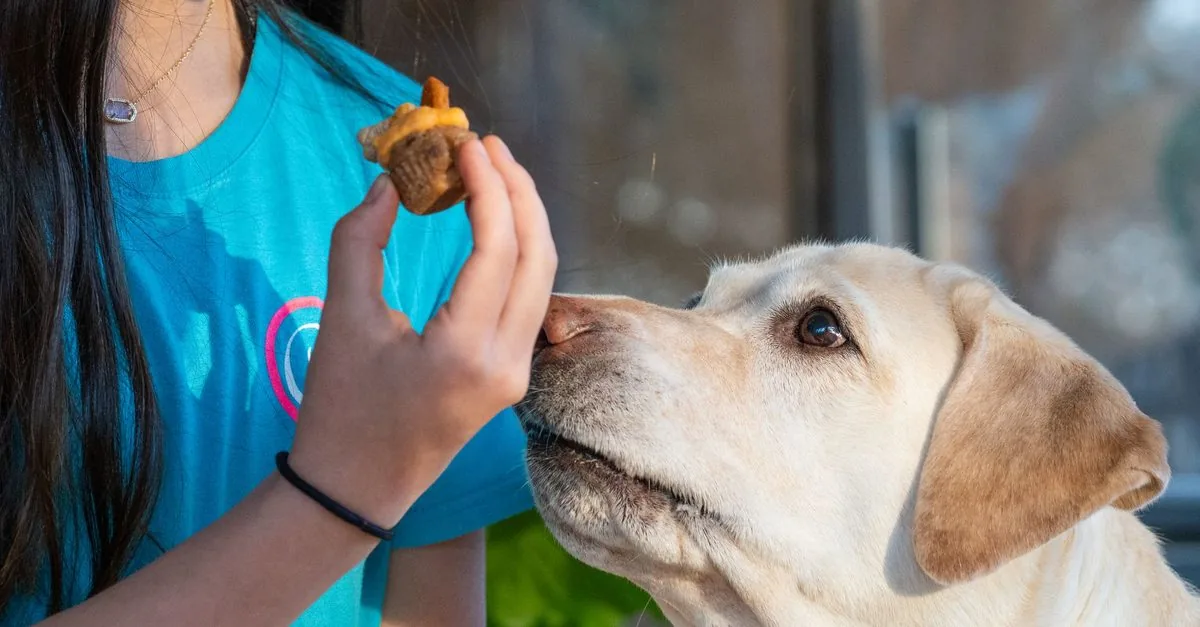
Grab a handful of small, soft treats - pea-sized, so your dog swallows them fast and snaps attention straight back to you. Cooked chicken, cheese or wet food work well. Run your first sessions in a quiet room with no distractions, close to your dog.
Step 2. Say the name once and wait
Say your dog's name once, in a bright, upbeat tone. Don't repeat it on a loop. In the first reps, it's often enough that the dog reacts with an ear flick or a glance your way.
Step 3. Mark and reward the look
The moment your dog makes eye contact, mark it immediately with a clicker or a short marker word like yes, then deliver a treat right after. The marker works like a snapshot - it tells the dog exactly what earned the reward. If you don't use a clicker, simply reward as fast as you can after the look. We cover this precise-marking technique in more depth in our guide to clicker training for beginners.
Step 4. Repeat in short sets
Do 8-10 reps, then take a break. Keep sessions short - 2 to 3 minutes - and end while your dog still wants more, not once it's bored. Three mini-sessions a day beat one long one.
Step 5. Add distance and angle
Once your dog responds reliably right beside you, make it harder in small steps: turn sideways, step a few paces away, say the name while the dog is looking elsewhere. Each change is a small bump in difficulty - add them one at a time.
Step 6. Bring in distractions
Only now move the exercise to harder settings: the garden, a quiet street, finally a park. A cue learned in the living room doesn't automatically transfer outdoors - your dog has to relearn it in each new context. If responses fall apart, drop back one level and raise the value of your reward.
What to never do with your dog's name
This is the most important part - it's easy to quietly undo all the good work here.
| Mistake | Why it backfires | Do this instead |
|---|---|---|
| Using the name to scold | The dog links its name to punishment and tunes it out | Name only with good associations; use other signals for corrections |
| Name before unpleasant things | Name before a bath or nail trims teaches avoidance | Approach calmly, without calling the name to lure |
| Repeating the name on a loop | The dog learns to ignore the first few calls | Say it once, wait, prompt with a kissy noise |
| Name before every command | The name wears out and stops grabbing attention | Name is the attention signal; the command is a separate word |
| Distractions too soon | The dog can't keep up and stops responding | Build difficulty one element at a time |
The core rule: the name should always predict something good. As long as it sometimes means a glance and a treat, and is otherwise neutral or pleasant, your dog will respond willingly and fast.
Rescue dogs and renamed dogs
An adult shelter dog learns its name exactly the way a puppy does. If you want to give a new name, choose it and pair it with rewards consistently from day one. The old name needs no special unlearning - it simply fades once you stop using it, while the new one starts predicting good things. With fearful or wary dogs, give it more time and work on higher-value rewards, with no pressure for eye contact.
From the name to the rest of training
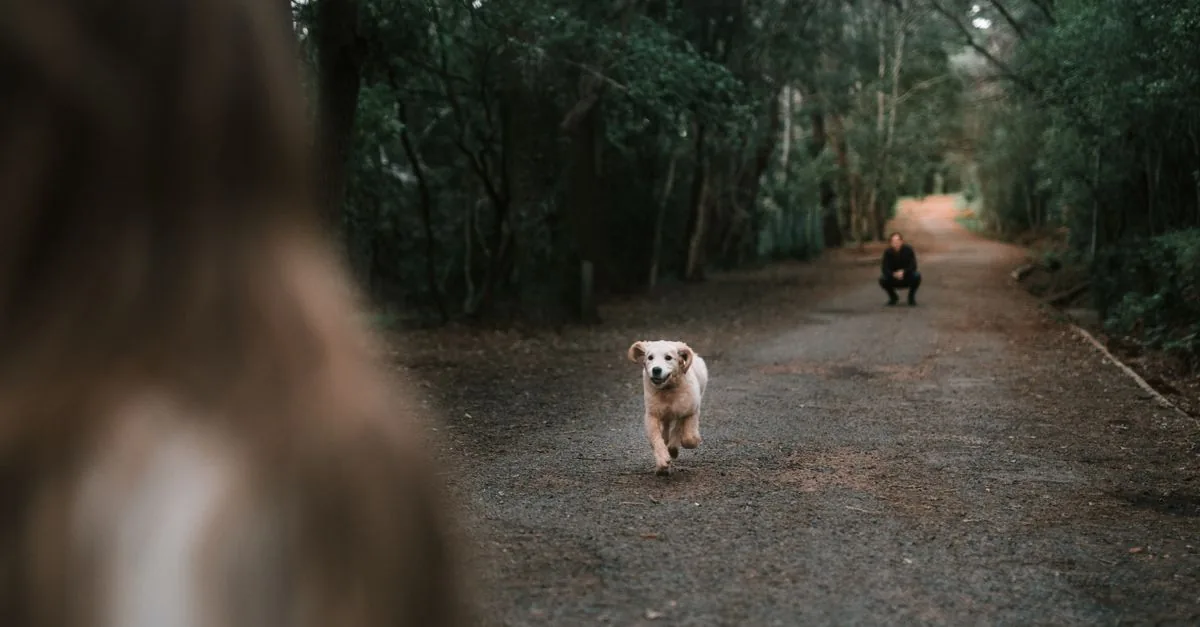
A solid response to the name is the entry ticket to everything else. It shows up most clearly in recall training - a dog that first gives you its attention on its name is far more likely to come running on the return cue. The same goes for teaching sit: when you already have your dog's attention, every lesson moves faster because you're not starting from zero.
In short, the name isn't a formality you tick off when you bring the puppy home. It's the first and most-used tool you have for communication, so build it solidly and never wreck it with punishment.
Name nailed? Time to get out there and test it in the real world. On DOGOUT you'll find calm spots near you for those first sessions, plus people who are also teaching a dog the basics - set up a walk together and practise your dog's attention where it actually counts.
Frequently asked questions
- How fast will my dog learn its name?
- Many dogs start turning toward their name after just a few short sessions in a quiet room. Reliable response in harder settings - on a walk, around other dogs - takes weeks of consistent practice. Speed depends on the dog, the value of your treats, and your consistency.
- Can I change the name of a rescue or adopted dog?
- Yes. Adult and adopted dogs learn a new name with exactly the same method as puppies - name plus reward. Pick the new name and pair it with good things consistently from day one. The old name fades quickly once you stop using it.
- Why should I never use my dog's name to scold it?
- Because your dog will associate its name with something unpleasant and start tuning it out. If the name predicts shouting, a bath or nail trims, the dog learns to ignore it. The name should always mean good things - use other signals for corrections.
- My dog ignores its name outside - what now?
- That usually means you moved to a hard environment too soon. Drop back to easier conditions, raise the value of your reward, and rebuild the response before adding distractions again. Don't repeat the name over and over - that teaches the dog it can be ignored.
- How many times should I say the name if there's no response?
- Once. Saying the name five times in a row trains your dog to ignore the first four. Say it once, wait a beat, and if there's no response, get attention with a kissy noise or movement, not another repetition of the name.
- Do I need a clicker to teach the name?
- It's not essential, but it helps. A clicker or short marker word like yes pinpoints the exact moment your dog looked at you, so the dog learns faster what earned the reward. Without a marker, just reward as quickly as possible after the look.