How to Teach a Dog to Sit - From Lure to Reliable Cue
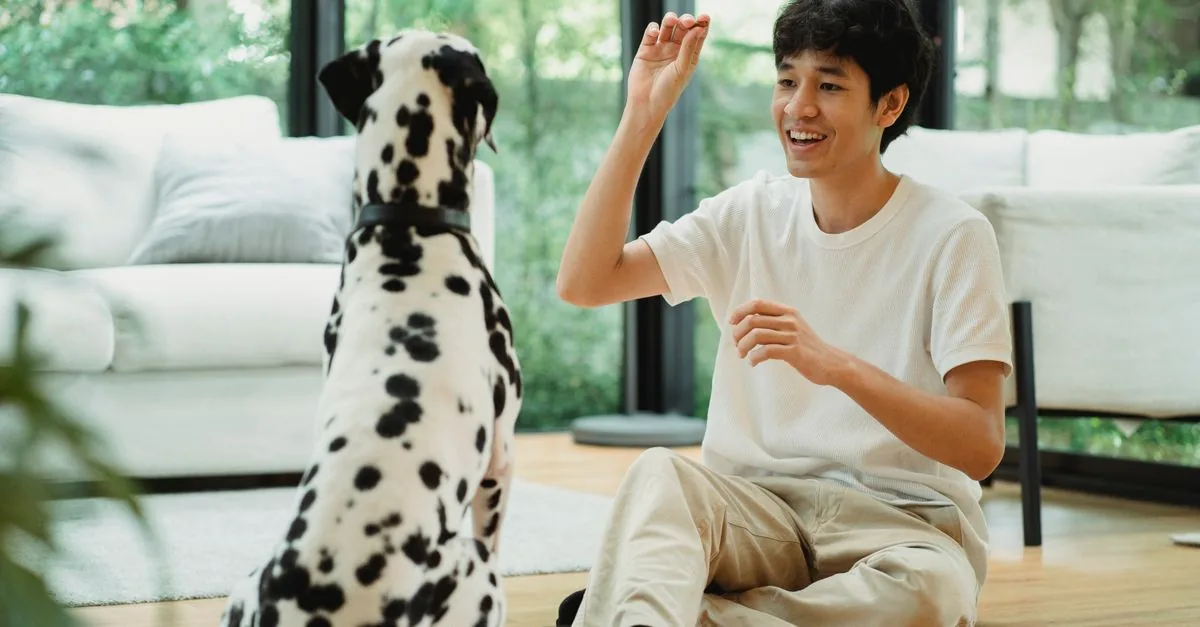
Teach sit with a lure: hold a treat at your dog's nose and slowly move it back over their head - the dog's bottom will naturally lower. Reward immediately. Repeat, then gradually fade the lure before adding the verbal cue 'sit'. Most dogs learn the basics within a few short sessions.
The sit command is a great first lesson - short, simple, and the results show up fast. Mastering it in a few days builds a habit in your dog: look at you and wait for the good stuff. Everything else in training builds from here.
Why Sit Is the First Command
Sitting is a natural resting position for most dogs - there is nothing forced about it. That is why the lure method works so smoothly: the dog discovers the position on their own by following their nose. No pushing, no frustration. It builds trust from day one and sets the tone for every training session that follows.
A reliable sit comes in handy everywhere: greeting visitors, pausing at a kerb, waiting for the food bowl, clipping on the lead. It is the command that brings a dog back to calm in everyday situations.
How the Lure Method Works
A lure is simply a treat in your hand that you use to guide the dog's body movement. The power of this method is that the dog finds the position themselves by following their nose. There is no physical force, no frustration. The payoff comes when you fade the treat out of your hand and the dog follows the gesture alone - and then the word alone.
How to Teach a Dog to Sit - Step by Step
Step 1. Prepare Rewards and Choose a Location
Use high-value treats: small pieces of cooked chicken, cheddar cheese, or sausage. Run the first sessions somewhere quiet with no distractions - indoors or in the garden. Your dog should be focused on you, not on the neighbour's cat.
Step 2. Guide the Nose With a Treat
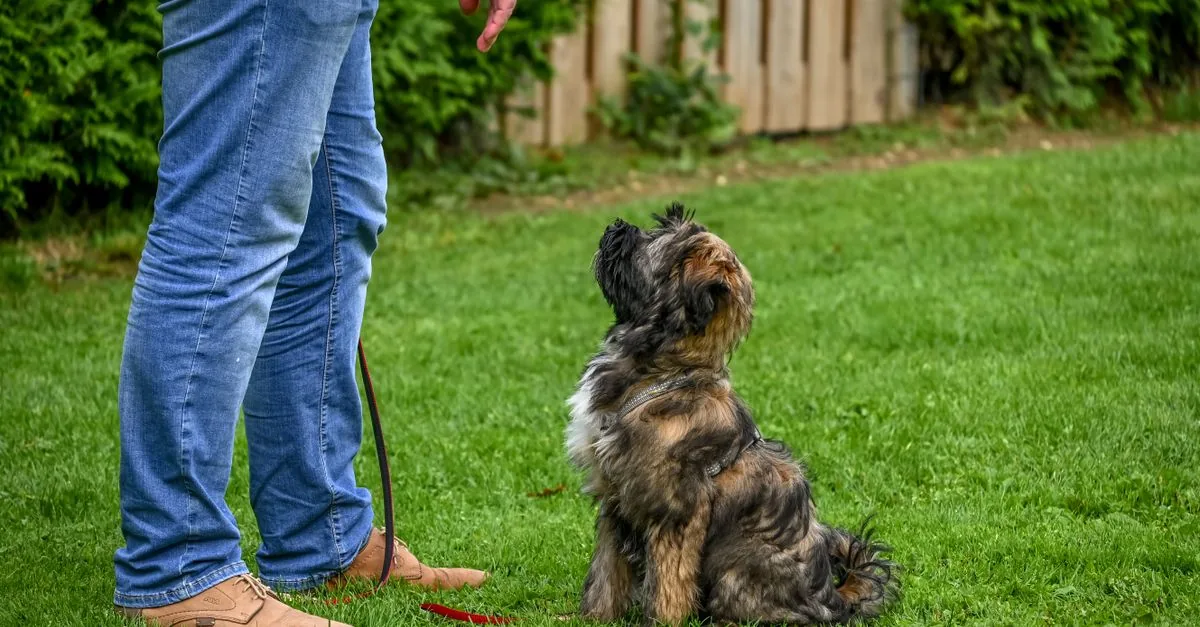
Stand in front of your dog. Hold a treat between your thumb and index finger, bring it to the dog's nose, then slowly move your hand back over their head. As the head follows the treat upward, the bottom naturally lowers. The moment they sit - reward immediately.
Do not raise your hand too high or the dog may jump up onto their back legs instead of sitting. Keep the movement small and smooth.
Step 3. Repeat Without the Verbal Cue
Repeat 8-10 times per session. At this stage, do not say "sit" yet - you are teaching the movement, not the word. Adding the cue before the dog reliably performs the action means they learn the sound without understanding it.
Step 4. Fade the Treat From Your Hand
When the dog responds smoothly to the lure, it is time to separate the treat from the gesture. Do the same hand motion with an empty fist (the reward is in your other hand or pocket). When the dog sits - reward from the hidden hand. Repeat until the dog responds to the gesture alone.
Step 5. Add the Verbal Cue
Now that the dog performs the sit from a gesture alone, you can add the word. Say "sit" calmly just before the gesture (not at the same moment, not after). The dog will start linking the sound to the movement. After several sessions, you can drop the gesture and use just the word.
Step 6. Gradually Raise the Difficulty
Practice sit in different environments: at the park, at a shop entrance, when you meet other people. Note that a command learned indoors does not automatically transfer outdoors - your dog needs to practise it in each new setting.
Common Mistakes When Teaching Sit
| Mistake | Effect | What to Do Instead |
|---|---|---|
| Pushing the hindquarters down | Discomfort and loss of trust | Use the lure - let the dog find the position |
| Repeating the cue multiple times | Dog learns to ignore the first call | Say the cue once, then prompt with a gesture if needed |
| Sessions that are too long | Dog loses focus and interest | Maximum 5 minutes, always end on a success |
| Rewarding after too long a delay | Dog does not know what they are being rewarded for | Mark and reward within one second of the sit |
| Moving to distracting environments too soon | Dog stops responding outside the home | Proof indoors first before taking it outside |
Do You Need a Clicker?
A clicker (marker signal) speeds up learning because it marks the exact moment of correct behaviour with precision. If you do not have a clicker, use a short word like "yes!" in the same way. The key rule: the marker always comes before the treat - it teaches the dog that the sound means something good is coming.
Moving From Sit to Stay
Once sit is solid, a natural next step is building the stay command - your dog learns to hold the position for a few seconds, then longer. It is a simple extension: first duration, then distance, then distractions.
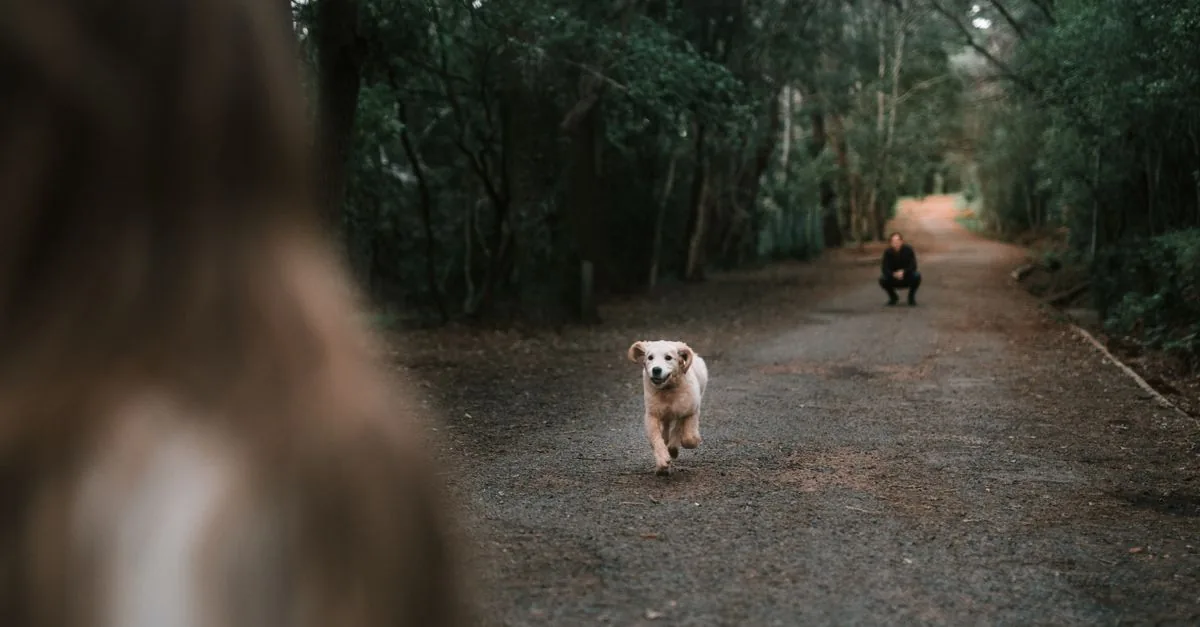
It is also worth pairing sit with recall training - a dog that sprints back on command and finishes with a calm sit is both well-trained and much safer on a walk. And if your dog is picking up things they shouldn't, leave it is the next logical command to add.
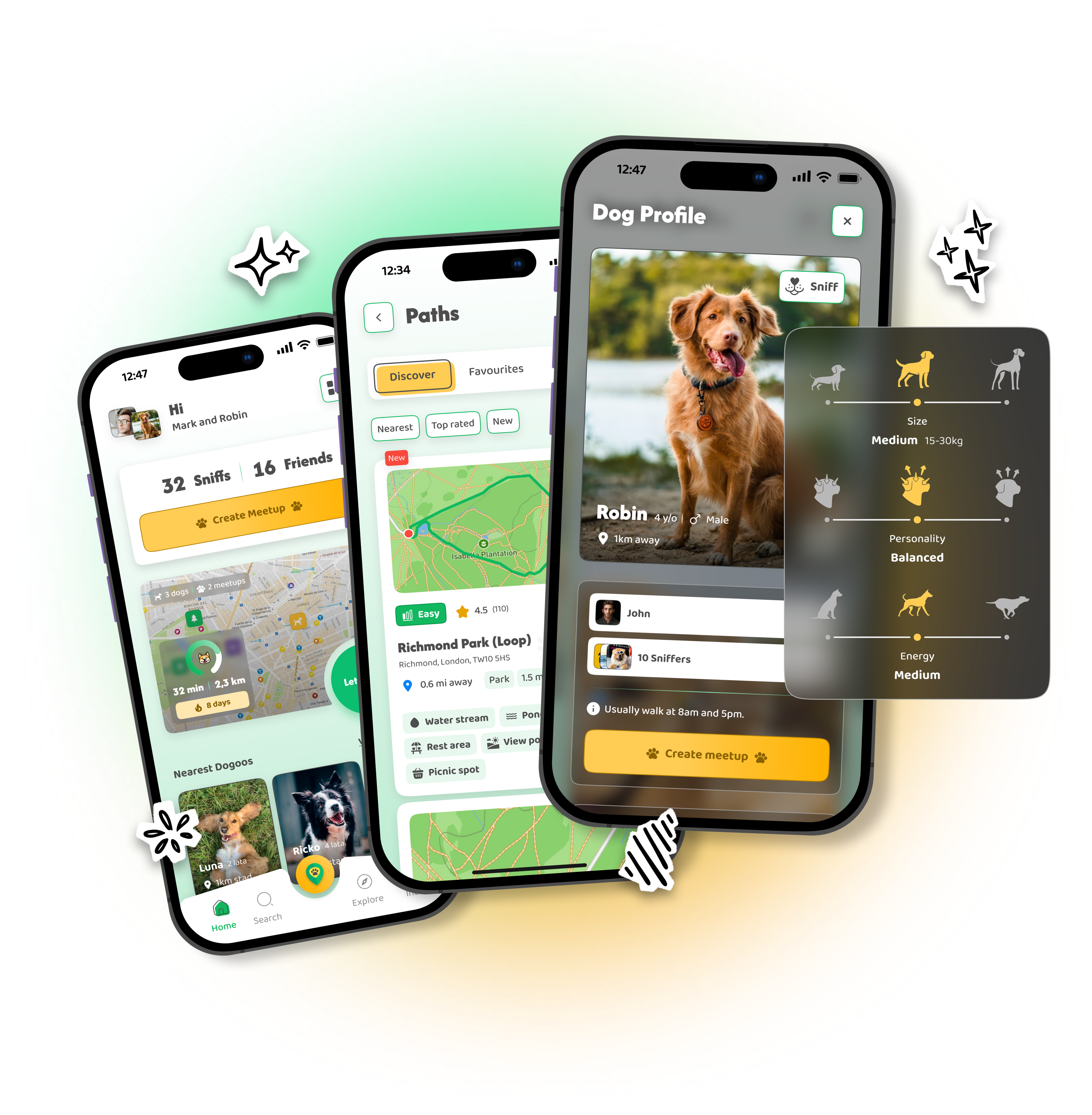
A few days of short, consistent sessions and your dog will be sitting on cue like a pro. While you are in training mode - check the DOGOUT map for quiet spots nearby or find someone else who is also working on the basics. Training with company makes it faster and a lot more fun.
Frequently asked questions
- What age can you start teaching a dog to sit?
- You can start teaching sit from the first weeks at home - from around 8 weeks old. Keep sessions to 2-3 minutes and use rewards only. Older dogs can absolutely learn too - with the lure method you typically see results within a few days.
- Should I push my dog's bottom down to make them sit?
- No. Pushing the hindquarters down is a physical method that can cause discomfort or pain, especially in dogs with orthopaedic issues. The lure method is more effective and builds trust rather than eroding it.
- My dog only sits when I have a treat in my hand - how do I fix this?
- This means you added the verbal cue too early and faded the lure too late. Go back to the lure step without naming the command, then do the same hand motion with an empty fist - reward from your other hand or pocket after the sit. This breaks the dependence on a visible treat.
- How long should a training session last?
- 3-5 minutes is ideal, especially for puppies and young dogs. Three short sessions a day beats one long one. Always end on a success, never a failure.
- Is sit a good foundational command?
- Yes - sit is one of the best starting points for obedience training. It is easy to shape, gives fast results and builds the habit of focusing on you. A solid sit makes it easier to teach stay, down, and other commands.
- What if my dog is not food motivated?
- Try training before meals when your dog is slightly hungrier. Test higher-value rewards like cheese, cooked chicken, or sausage. Some dogs prefer a toy or enthusiastic praise over food. Match the reward to your dog, not to a fixed formula.