How to Teach a Dog to Lie Down - From Lure to a Reliable Cue
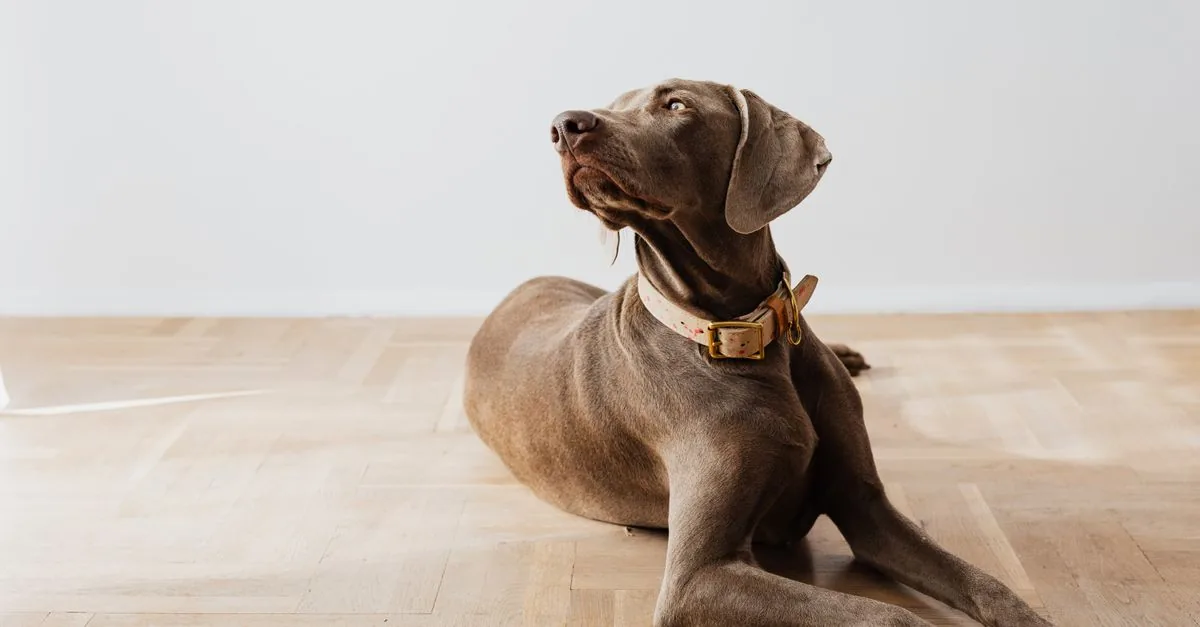
Teach the down with a food lure: put your dog in a sit, hold a treat at its nose, and slowly move it to the floor between the front paws - the dog follows it down and lies flat. Mark and reward the instant the belly hits the floor. Repeat, fade the lure, and only then add the spoken cue. Keep sessions short, 3-5 minutes.
A dog that drops to the floor on one word and waits there isn't magic - it's a handful of short sessions in the right order. The down (some people teach it as a calm settle) is one of the most useful things your dog can learn: quiet in a cafe, still at the vet, a pause when the world gets too loud. You'll teach it with a lure, no force and no shouting.
Before you start - what you need
Three things, that's it:
- High-value treats - small, soft, the kind your dog will work for. Cheese, cooked meat, a piece of sausage all beat dry kibble here.
- A calm, non-slip surface - rug, grass, a mat. On slippery floors a dog hesitates to lie down because its legs slide out.
- A marker - a short word (“yes”) or a clicker that pinpoints the right moment. The marker tells your dog “that was it” in a split second.
The easiest place to start is right after teaching the sit - the path from a sit to a down is short, so the dog makes fewer mistakes. No sit yet? Build that first.
How to teach a dog to lie down - step by step
This is the heart of the whole thing. Follow the order, don't skip stages.
- Put your dog in a sit. Start from a solid sit. That's your launch point.
- Show the lure at the nose. Hold the treat right at your dog's nostrils - close enough that it knows where the treat is, not so close it can snatch it.
- Lead it to the floor. Slowly lower your hand straight down, between the dog's front paws, until the treat touches the ground. The dog follows with its nose and drops its front end.
- Draw it along the floor. If the dog crouches but doesn't go all the way down, slide the treat slightly along the ground toward you. That pulls it into a full lie-down.
- Mark the exact instant. The moment the belly touches the floor, say your marker (“yes”) or click - and deliver the treat right away. One mark, one reward, no lag.
- Repeat 5-10 times. A short set, then a break. The goal is for the dog to connect the downward motion with a reward.
Don't add the word yet. First, the dog has to follow the hand gesture reliably.
When and how do you add the cue?
You add the word only once your dog drops reliably on the gesture alone - roughly after 8 out of 10 clean reps in a row.
Then:
- Say “down” (pick one word and stick to it) just before the lure movement.
- Do the gesture, the dog lies down, mark and reward.
- After a dozen or so reps, the dog starts linking the sound to the action.
The order matters: behaviour first, name second. If you say “down” before the dog knows the movement, the word glues itself to confusion instead of to the action.
How do you fade the lure?
A dog that only lies down with food in your hand doesn't know the cue - it knows a transaction. You have to break the dependence on a visible treat.
| Stage | What you do | Goal |
|---|---|---|
| 1. Lure with food | Treat in fingers leads the motion | Dog learns the shape of the behaviour |
| 2. Empty hand | Same gesture, no food in fingers | Dog follows the gesture, not the smell |
| 3. Cue + small gesture | “Down” plus a minimal hand move | The word takes over as the signal |
| 4. Word only | Just “down”, hand still | Dog responds to your voice |
The reward doesn't disappear - you simply produce it from your pocket after the dog performs, not before. That way the dog stops scanning your hands and starts listening.
Build duration and proof it
A dog that lies down for one second in a quiet living room is only the start. The cue is ready when it works in the real world.
Duration (down for longer)
Gradually stretch the gap between the dog lying down and the reward - first 2 seconds, then 5, then 10. Reward your dog for staying in the down, not for popping up to grab the treat. That's the natural bridge into teaching a solid stay.
Proofing (different places, real distractions)
Proofing means running the same cue in steadily harder conditions:
- First at home, in silence.
- Then in another room, in the garden, on the stairs.
- Finally on a walk, around people, other dogs and noise.
Every time you change the setting, drop the difficulty for a moment - go back to an easier version, because a new place is a new challenge for the dog. A calm down out in the world pairs perfectly with loose leash walking - both teach your dog that staying with you pays off.
The most common mistakes
- Sessions that run too long. After 5 minutes a dog gets bored and sloppy. Short and frequent wins.
- Adding the word too early. A name before the learned movement glues itself to chaos.
- Pushing the dog to the floor. That's a force method - it erodes trust and can hurt, especially with orthopedic issues. The lure works better.
- Slippery flooring. A dog that doesn't trust its footing won't want to lie down. Give it a mat.
- Punishing mistakes. Withholding the reward is enough. Shouting just switches off the dog's desire to learn.
Patience and short, upbeat sessions do more than an hour of tension ever will.
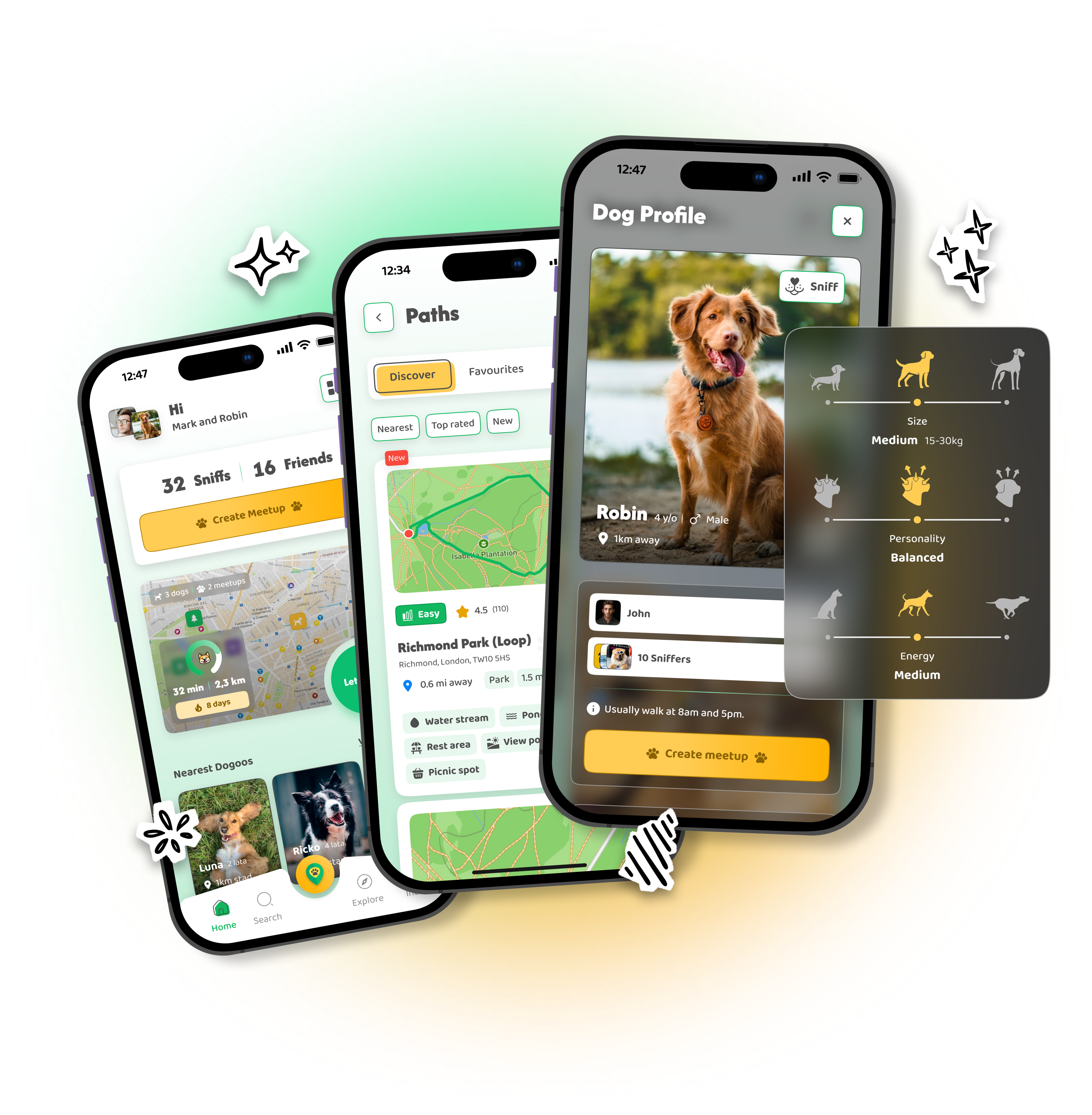
The best training happens in the real world. Once your dog has the down at home, take it somewhere new - a park, a dog-friendly cafe - find the spots on the DOGOUT map, set up a walk with someone nearby, and practise where it actually counts. Get out there and give your dog a reason to listen.
Frequently asked questions
- What age can you start teaching a dog to lie down?
- You can start from puppyhood, around 8 weeks, once your pup is settled at home. Keep sessions very short (2-3 minutes) and built entirely on rewards. Older dogs learn just as well - with the lure method you usually see results within a few days.
- My dog crouches but won't go all the way down - what now?
- Usually the lure is moving too fast or at the wrong angle. Move the treat slowly, straight down to the floor, then gently along the ground toward you - that draws the dog into a full lie-down. Practise on a soft, non-slip surface, because dogs hesitate to drop on slippery floors.
- My dog only lies down when it sees a treat in my hand - how do I fix that?
- That means the cue went on too early and the lure too late. Go back to the same hand gesture with an empty hand (no food in your fingers), and only produce the reward from your pocket after the dog performs. That breaks the dependence on a visible treat.
- Is it easier to teach down from a sit or from standing?
- From a sit is easier to start - the dog has a shorter path to the floor and makes fewer mistakes. Once it's solid, also practise from a standing position so the cue works no matter what the dog is doing.
- How long should a training session last?
- 3-5 minutes is the sweet spot, especially for puppies and young dogs. Three short sessions a day beat one long one. Always finish on a success, not on frustration.
- Why teach a dog the down?
- Down is one of the most practical cues a dog can know - it settles them in a cafe, at the vet, by the table, on a bus. It's also a natural base for teaching stay and for calming an over-aroused dog. A solid down gives you a real-world pause button.