How to Teach a Dog to Roll Over - Step by Step
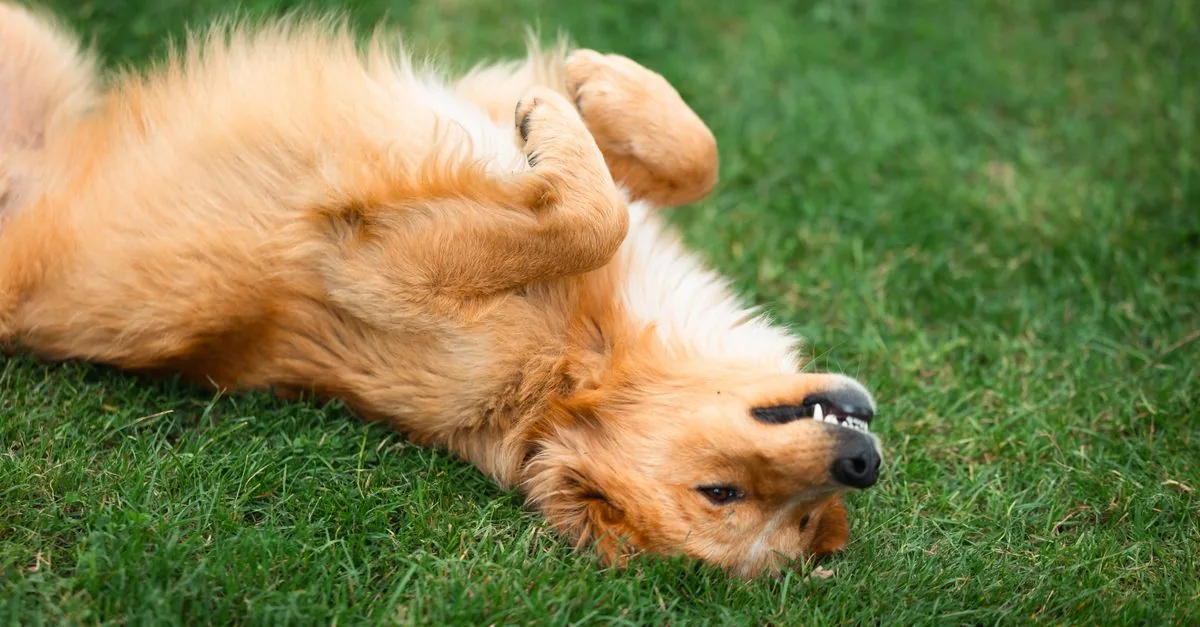
Roll over is a trick where the dog turns a full 360 degrees on its back from a lying position and returns to lying down. The easiest way to teach it is luring: you guide a treat along the dog's side so it follows with its head and rolls over. You start from a solid 'down', break the movement into stages, and reward every bit of progress. Sessions should be short and upbeat. Most dogs pick up roll over within one to two weeks of daily, few-minute practice.
Roll over is one of those tricks that looks impressive but is genuinely simpler than it seems. From a lying position, the dog turns a full 360 degrees and returns to lying down. It's a great exercise for coordination, confidence, and some good shared fun. Here's how to teach your dog to roll over, step by step.
Why teach your dog to roll over
Tricks are sometimes dismissed as fluff, and that's a mistake. Teaching roll over is real work for a dog's brain, and mental tiredness can do more for a calm dog than another kilometre of walking. On top of that:
- Bond building - shared, positive sessions teach the dog that working with you pays off and is enjoyable.
- Confidence - a dog that learns new things and gets rewarded for them becomes braver and more willing to try.
- Handling by stealth - exposing the belly is a natural gesture of trust that comes in handy during a vet check or a skin inspection.
- Something for rainy days - trick training happens indoors, so you have a way to occupy the dog when the weather rules out longer outings.
Before you start - what you'll need
To teach roll over you need a few things:
- A solid "down" - this is the starting position. If your dog doesn't lie down on cue yet, begin by firming up that foundation. Our guide on how to teach a dog to lie down will help.
- A soft surface - a rug, a mat, or grass. On a hard, slippery floor a dog won't want to roll, because it's uncomfortable.
- Small, high-value treats - the kind your dog loves and can eat quickly.
- A calm, upbeat mood - tricks are learned in a relaxed atmosphere, without rushing or tension.
A quick health note: rolling can be uncomfortable for overweight dogs, seniors, and dogs with back or joint problems. If you're unsure, check with your vet before you begin.
Teaching roll over step by step
Break the whole movement into stages and reward each bit of progress separately. Don't expect a full turn straight away.
- Starting position. Ask your dog to lie down. Reward a settled down.
- Head turn. Hold a treat at your dog's nose and slowly guide it towards its shoulder, so the dog follows with its head and looks back. Reward.
- Roll onto the side. Guide the treat further, towards the dog's back. Following the treat, the dog will start to tip onto its side. Mark that moment and reward.
- Full roll. Continue the hand movement in an arc over the dog's back - its body will follow its head and roll to the other side. When the dog returns to lying down, reward generously.
- Repeat and smooth it out. Practise flowing through all the stages until the movement becomes one continuous roll.
Once your dog rolls confidently following the treat, add a verbal cue (such as "roll" or "over") just before the movement begins. After many repetitions, gradually fade the hand lure until the dog rolls on the word alone.
How long it takes - a sample plan
Below is a rough training plan. Treat it as a guide, not a rigid schedule - every dog learns at its own pace.
| Stage | What you focus on | Rough timing |
|---|---|---|
| Day 1-2 | Solid "down" and head turn following a treat | A few short sessions |
| Day 3-5 | Rolling onto the side, building confidence | A few minutes a day |
| Day 6-9 | Full roll with a hand lure | A few minutes a day |
| Day 10-14 | Adding the verbal cue, fading the lure | Short sessions, more reps |
Keep sessions short - 3 to 5 minutes is plenty. It's better to practise twice a day for a moment than once for half an hour. Always finish on a success, while the dog is still keen.
Common mistakes
- Too big a step at once. Expecting a full roll on the first try usually ends in frustration. Break the movement into stages.
- A hard, slippery surface. A dog won't want to roll where it's uncomfortable. Set up a soft spot.
- Sessions too long. A bored or tired dog loses motivation. Short and cheerful works best.
- Adding the cue too early. Only introduce the word once the dog performs the movement smoothly, or it will link the cue to chaos.
- Physical force. Never roll your dog over by hand - it builds unease and reluctance. The whole charm of this method is that the dog does it itself, led by a treat.
If your dog gets stuck lying on its side and won't finish the turn, don't push. Go back to the stage it managed confidently and raise the bar in even smaller steps. Sometimes it's enough to switch the direction the dog rolls in - most dogs have a "comfier" side that's easier to start from.
How to cement and build on the trick
Once your dog has roll over down, practise it in different places - indoors, in the garden, on a walk - so the cue works regardless of the setting. Gradually reduce the treats, moving to praise and the occasional reward, so the dog doesn't only work for food.
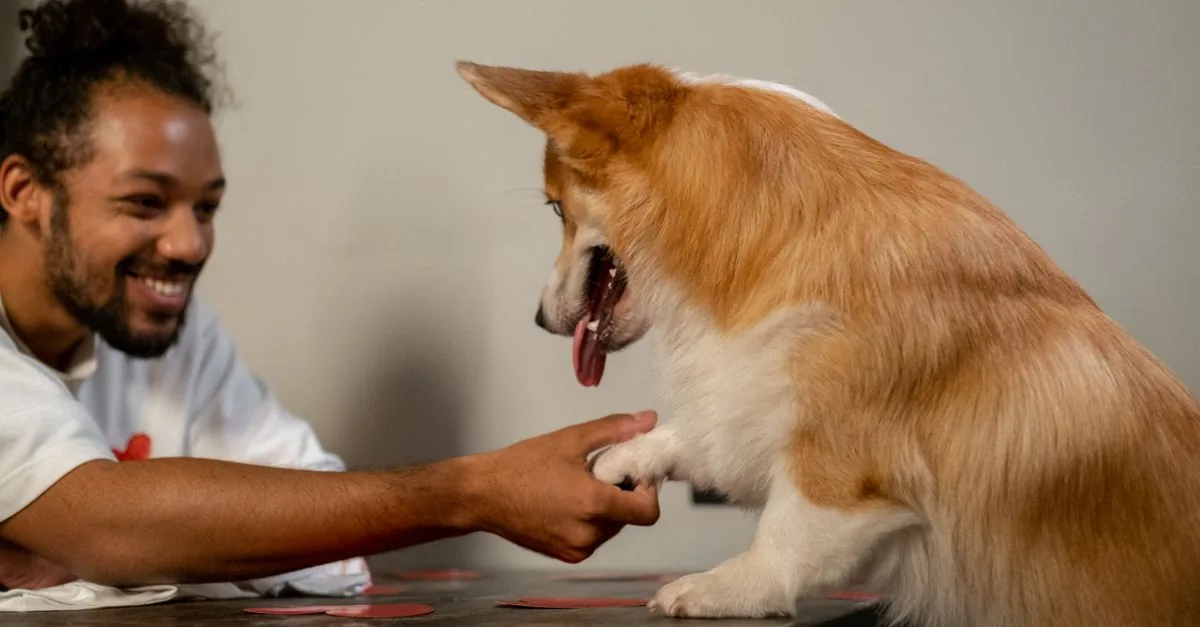
Roll over chains nicely with other tricks, such as shaking a paw. For more ideas to enjoy together, see our guide to easy dog tricks. Trick training isn't only about the result - above all it's shared time that strengthens your bond and gives the dog the mental work it needs.
Frequently asked questions
- How long does it take to teach a dog to roll over?
- Most dogs pick it up within one to two weeks if you practise little but often - a few minutes a day. The pace depends on the dog: those that enjoy working for food and already know 'down' learn faster. There's no point rushing - it's better to add a few days than to put the dog off.
- Where do I start when teaching roll over?
- With a solid 'down'. Roll over begins from a lying position, so if your dog doesn't lie down on cue, firm up that foundation first. A soft surface, such as a rug or grass, helps too, because a dog won't want to roll on a hard, slippery floor.
- My dog won't roll onto its back - what should I do?
- Break the movement into smaller stages and reward each one separately: first the head turn, then rolling onto the side, and only at the end the full roll. Make sure the surface is soft and comfortable. Some dogs feel vulnerable on their backs, so don't force it - build confidence in small steps.
- Can every dog learn to roll over?
- Most can, but not every situation is equal. Overweight dogs, older dogs, and those with back or joint problems may find rolling uncomfortable. If you have any doubt about your dog's fitness, check with your vet before teaching this trick.
- Do I need a clicker to teach roll over?
- It isn't essential, but it can help, because it marks the right moment precisely. You can just as well use a short marker word, such as 'yes', said the instant the dog does the right movement, followed immediately by a treat.
- How do I add a verbal cue to roll over?
- First teach the movement itself using a lure. Once the dog rolls smoothly following the treat, start saying 'roll' or 'over' just before the movement begins. After many repetitions the dog links the word to the action and rolls on the cue alone.