Are acorns and conkers toxic to dogs?
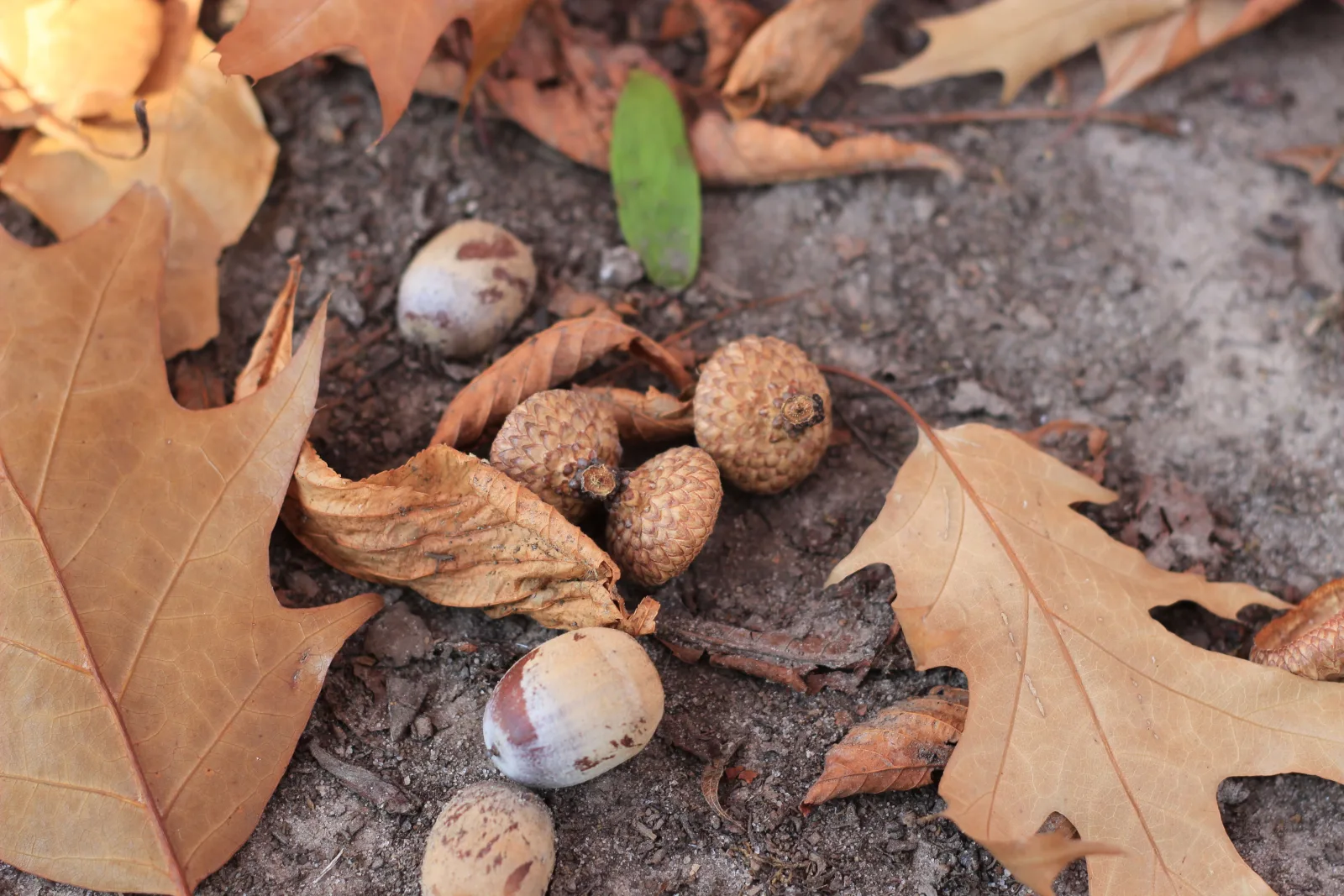
Yes, both are dangerous for dogs. Acorns contain tannins, which irritate the gut and in larger amounts have been linked to liver and kidney damage. Conkers, the seeds of the horse chestnut, contain aesculin, which is also toxic to dogs. In both cases the typical signs are vomiting, diarrhoea, drooling, abdominal pain, loss of appetite and lethargy, appearing anywhere from an hour to two days after eating. A separate and very real risk is intestinal blockage, especially when a small dog swallows a whole conker. Severe poisoning is uncommon, but any suspected ingestion is a reason to call your vet.
September and October are when parks and avenues fill up with acorns and conkers. To children they are treasure. To a dog they are a new, interesting-smelling object to pick up. To an owner they are the source of one of the most common autumn questions asked of a vet.
The short answer: both are harmful to dogs and worth taking seriously, even though severe poisoning is uncommon.
Acorns: tannins
Acorns and young oak leaves contain tannins. In dogs they irritate the digestive tract, and with larger amounts or repeated eating there are reports of liver and kidney damage. There is a mechanical risk too, since acorns are hard and poorly digested.
Conkers: aesculin and obstruction
Horse chestnut contains aesculin, which is toxic to dogs and causes gastrointestinal signs. Here, though, the more common problem is physical rather than chemical: a whole conker is a hard round ball that can lodge in the intestine of a small or medium dog. An obstruction is a surgical situation, not something to wait out at home.
Worth separating two similar-sounding things: the horse chestnut found in parks and avenues is toxic, while the sweet chestnut is a different tree. Your dog will not make that distinction, so the walking rule stays simple: nothing off the ground.
Signs to watch for
Typically you will see:
- vomiting, sometimes persistent,
- diarrhoea,
- drooling,
- abdominal pain, with the belly tense or sore to the touch,
- loss of appetite and lethargy,
- increased thirst and dehydration.
Symptoms can start within an hour, or only after two days. That matters, because a dog behaving normally right after the walk has not yet been cleared. With large amounts of tannins, neurological signs such as seizures are possible, though rare.
When to call the vet
Always, if you suspect your dog ate a conker or several acorns. For a single acorn and a large dog the advice is often to monitor, but that is the vet's call, based on weight, quantity and timing.
Go straight in, without waiting, if you see:
- repeated vomiting, especially unproductive retching,
- a tense, painful abdomen,
- no stools alongside vomiting,
- increasing lethargy or weakness,
- seizures.
Have three facts ready for the vet: what your dog ate, roughly how much, and at what time. Do not induce vomiting yourself without advice.
Reducing the problem before it happens
- Train "leave it" at home, calmly, with a reward clearly better than what is on the ground. A cue introduced for the first time over a conker will not hold.
- Change your autumn route. An avenue of horse chestnuts is the worst possible choice in September if your dog picks everything up.
- Give your dog another job. Scattering treats in the grass occupies the nose and the brain, and a busy dog collects fewer random objects.
- A basket muzzle is a fair tool for dogs that eat everything. It is not a punishment, it is what turns a walk back into a walk instead of constant supervision.
- Do not throw conkers for your dog to chase. That is a direct route to swallowing one.
We cover more autumn hazards in our piece on autumn forest walks, and everyday food safety in our guide to what dogs can and cannot eat.
An autumn walk does not have to be an obstacle course. Check the DOGOUT map for routes near you, and add the ones where your dog gets to use its nose rather than its mouth.
Sources
Frequently asked questions
- My dog ate one acorn, what should I do?
- Call your vet and describe the situation: the size of your dog, how many acorns and when. For a single acorn eaten by a large dog the advice is often to monitor, but that call belongs to a vet rather than the internet. Watch for vomiting, diarrhoea, lethargy and loss of appetite over the next two days.
- Why are conkers dangerous for dogs?
- For two reasons at once. Horse chestnut contains aesculin, which is toxic to dogs and causes gut symptoms. On top of that there is the mechanics: a whole conker is hard and round, so in a smaller dog it can lodge in the intestine and cause a blockage that needs surgery.
- How quickly do symptoms appear?
- Usually between one hour and two days after ingestion. A dog that seems fine straight after the walk has not been given the all-clear, so keep watching for 48 hours.
- Which signs mean an urgent vet visit?
- Repeated vomiting, especially unproductive retching, loss of appetite with lethargy, a painful or tense abdomen, no stools, seizures, or any clear deterioration. These can indicate a blockage or more serious poisoning.
- How do I stop my dog picking up acorns and conkers?
- Train a solid leave it at home, calmly, with a reward better than whatever is on the ground, then take it to the walk. It also helps to change your autumn route to avoid oaks and horse chestnuts and to give your dog another job, such as searching for treats in the grass.