

Is My Dog Cold? Temperature Thresholds and What to Do
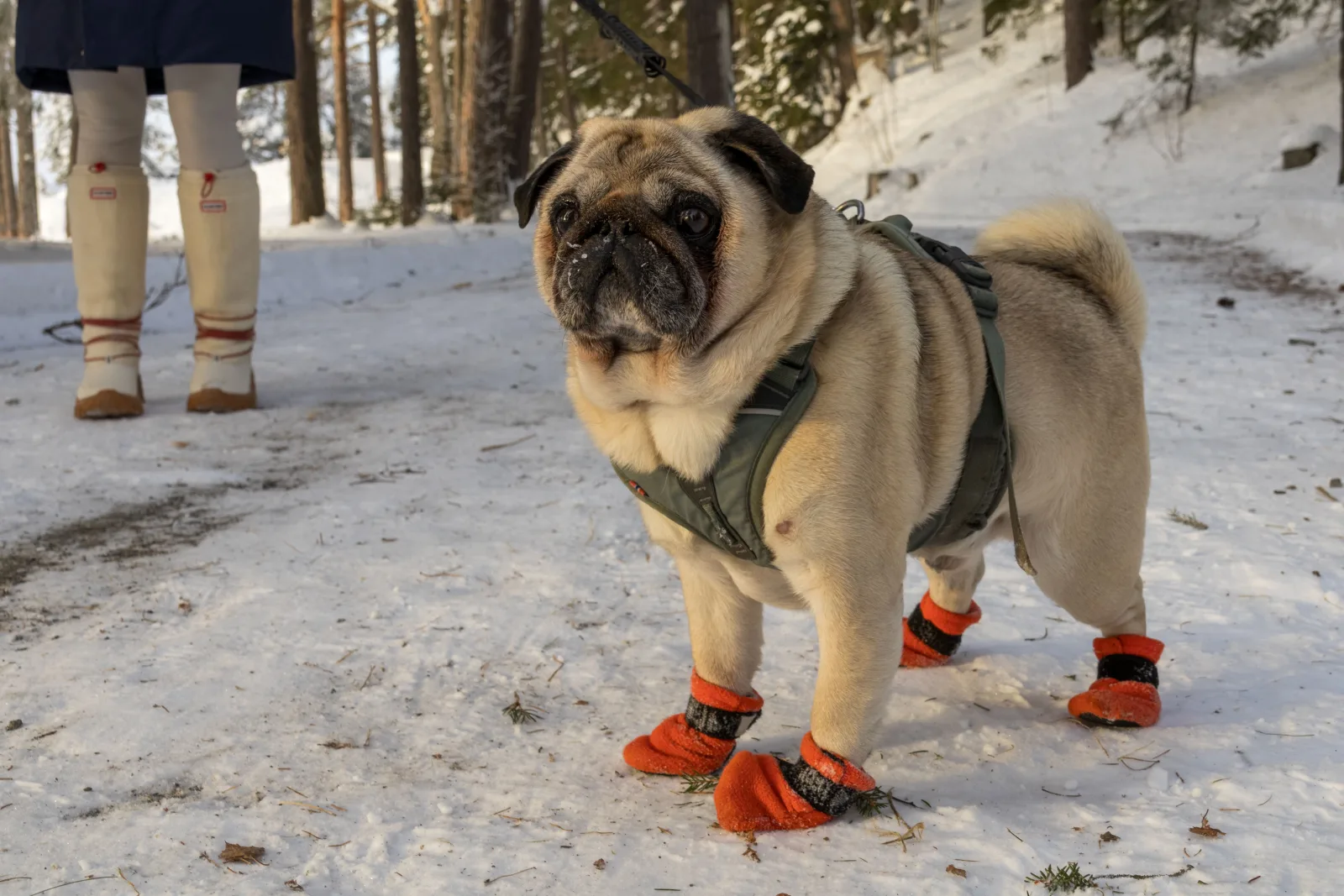
There is no single cut-off for every dog. Below 0 C (32 F) it is time to take precautions, and at around -7 C (20 F) even a short walk can be risky for a small, young, senior or short-coated dog. A cold dog shivers, hunches, tucks its tail, lifts its paws off the ground and refuses to walk on. If you see that, head home and warm the dog up slowly. A dog's normal body temperature is 37.7-39.2 C (100-102.5 F); below 37.2 C (99 F) go to a vet.
Summer comes with an instruction manual: shade, water, avoid the middle of the day. Winter usually gets one sentence, that the dog has a coat. Except coats differ wildly, and a dog that is cold will not tell you in words - only through posture and pace. Learning to read that is what keeps a chilly walk from turning into a health problem.
Why there is no single cut-off temperature
Cold tolerance depends on several things at once, and only their sum decides whether a given day is easy or hard for your dog.
- Size and mass. A small dog has a large body surface relative to its mass, so it loses heat faster. Cornell's Riney Canine Health Center puts it plainly: small dogs have a harder time staying warm than larger breeds.
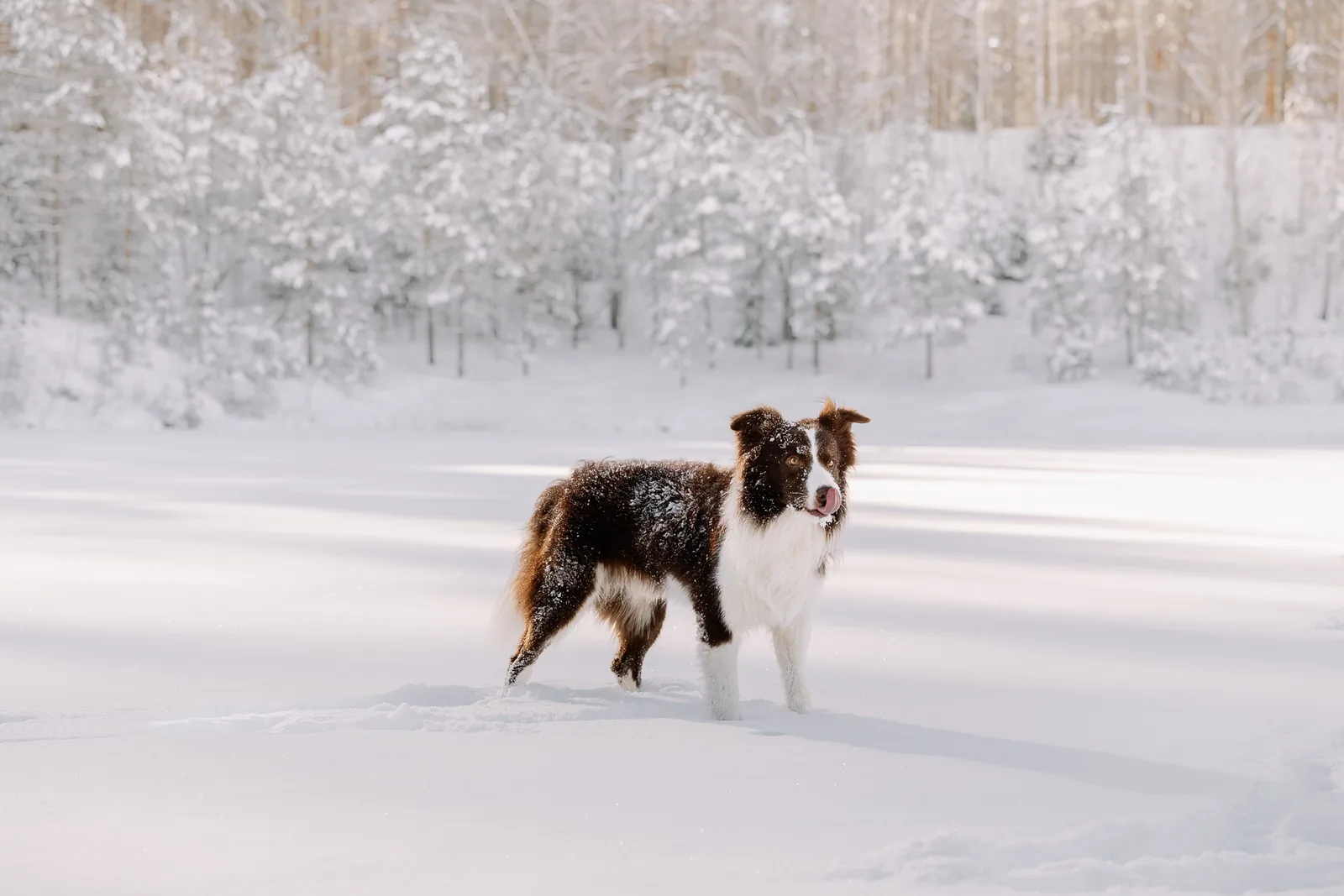
- Coat type. A double coat with dense undercoat works as insulation. Short, single-layer hair gives you almost nothing.
- Age. Puppies cannot regulate their body temperature properly yet and carry little body fat. Senior dogs lose that ability again.
- Body condition and health. A very lean, underweight or chronically ill dog gets cold faster.
- Damp and wind. A wet coat stops insulating, and wind strips heat straight off the body. Zero degrees in windy rain is harder on a dog than -5 C in still sunshine.
- Acclimatisation. A dog that goes out in all weather every day copes better than one that spends the winter in a heated flat and gets out once a week.
The simplest heuristic comes from Cornell: if it is too cold for you, it is likely too cold for your dog. That is not precise, but it heads off the most common mistake, which is assuming a dog is weatherproof because it is a dog.
Temperature thresholds worth knowing
VCA Animal Hospitals gives two concrete thresholds where things get serious, and they are worth memorising.
| Temperature | What it means in practice |
|---|---|
| above 5 C (41 F) | Most healthy dogs are fine. Watch sick, very young and very old dogs. |
| 0 to 5 C (32-41 F) | Observation time. Small, short-coated, young and senior dogs may already need a layer and a shorter outing. |
| below 0 C (32 F) | Precautions start. This is also where the risk of frostbite to paws, ears and tail begins. |
| around -7 C (20 F) and below | Even a short walk can be risky, especially once you factor in windchill. VCA advises limiting walks to 5-10 minutes. |
Two caveats. First, this assumes a dog in motion, not a dog standing still, because standing chills far faster. Second, these are thresholds for dogs in the risk groups. A healthy shepherd or husky is often only just getting started at those temperatures, and that is fine.
How to tell your dog is cold
The signals are fairly unambiguous once you know what to look for. Cornell lists four basic ones, and all four are visible on a walk:
- shivering - the most obvious sign, though not always the first,
- a tucked tail and a hunched, curled posture - the dog is reducing the surface it loses heat from,
- lifting paws off the ground - most often on cold, wet or salted surfaces,
- reluctance to walk on - stopping, turning back, pulling towards home.
Add to that what you know about your own dog: whining, looking for shelter behind your legs or a bus stop, a sudden loss of interest in sniffing. A dog that normally reads every bush and is now walking straight and fast usually just wants to go home.
The rule is simple: these signs mean end the walk, not wait it out. Cold does not "pass" if you push on another three hundred metres.
Cold exposure and hypothermia - where the line is
A dog's normal body temperature is 37.7-39.2 C (100-102.5 F). VCA gives a clear limit in the other direction: below 37.2 C (99 F) a dog needs immediate veterinary attention. That is the point where a blanket and a hot drink for yourself stop being a plan.
If you suspect your dog is dangerously cold:
- Get home or into a warm, dry space and shelter the dog from wind.
- Towel the dog completely dry. A wet coat keeps chilling the dog even in a heated room.
- Rewarm slowly. A dry blanket, a warm (not hot) room, your own body heat. No heat packs straight against the skin, no hair dryer.
- Take the temperature if you have a thermometer and the dog tolerates it.
- Call your vet if the dog is listless, badly weakened, not responding normally, or the temperature is below range.
Frostbite - paws, ears, tail
Frostbite is a separate problem from general cold exposure, and it hits the extremities. According to VCA the risk appears below 0 C (32 F), and the tissues most commonly affected are the paws, ears and tail. The mechanism is counterintuitive: the body constricts blood vessels in the extremities to protect the core, and it is precisely that loss of blood flow that lets the tissue freeze.
What to look for: skin that is pale, grey or bluish, painful, swollen, blistered, and in severe cases blackened and dead. The full picture can take several days to appear, so no symptoms on the first evening is not yet proof that nothing happened.
What to do: move the dog somewhere warm and dry, rewarm the affected areas with warm water at 37-45 C (99-113 F), pat gently dry and contact your vet.
What never to do:
- do not rub or massage the frostbitten area,
- do not apply direct dry heat: hair dryer, heating pad, radiator,
- do not give pain medication unless your vet instructed you to,
- do not start rewarming if you cannot keep the area warm afterwards; refreezing warmed tissue makes the damage worse.
Who is most at risk
| Group | Why it gets cold faster |
|---|---|
| Small and toy dogs | Large body surface relative to mass, rapid heat loss |
| Short-coated and single-coated dogs | No undercoat, so no insulation |
| Puppies | Immature thermoregulation, little body fat |
| Senior dogs | Weaker thermoregulation, more concurrent illness |
| Very lean dogs | Less insulating tissue and a smaller energy reserve |
| Sick dogs and dogs under treatment | Smaller functional reserve, sometimes disrupted thermoregulation |
| Freshly clipped dogs | Insulation removed, often at the worst point in the season |
If your dog falls into any of these, do not wait for shivering. Plan shorter outings from the start and consider a layer, chosen for the coat type and the weather rather than for looks.
A winter walk that actually works
- Split it, do not cut it to zero. Two or three short outings beat one long one, and both beat none.
- Keep moving. Standing in one place, chatting on a corner, waiting around - that is when a dog chills fastest.
- Avoid wet and salted ground, and look after the paws when you get back. We cover how to do that sensibly in cleaning your dog's paws after a muddy walk.
- Consider paw boots for gritted pavements and frozen, sharp ground.
- Remember visibility. Winter is simply dark; we collected the rules for going out safely in walking a dog after dark.
- Do not forget the dog's head. A shorter walk leaves energy unspent, so add scent work, searching games and indoor play.
Winter is not about staying in, it is about going out more cleverly: shorter, more often, and on the move. On the DOGOUT map you will find routes and spots added by other owners, including sheltered ones that come into their own this time of year. Put a coat on the dog if the dog needs one, and get out into the fresh air.
Sources
Frequently asked questions
- How cold is too cold for a dog?
- It depends on the dog, not on the number alone. A healthy large dog with a double coat handles frost comfortably, while a small short-coated dog starts to struggle a few degrees above freezing. As a general rule: below 0 C (32 F) start paying attention and shortening the walk, and at around -7 C (20 F) treat even a short outing as risky for dogs in the risk groups. Wind and damp push that line higher still.
- How do I know my dog is cold?
- The clearest signals are shivering, a hunched posture, a tucked tail, lifting paws off the ground, stopping and refusing to walk on, and sometimes whining. The dog may also look for shelter from the wind or start pulling towards home. Any of these means end the walk rather than push through it.
- Can a dog freeze to death?
- Yes. Prolonged cold exposure leads to hypothermia, which is life-threatening. Puppies, senior dogs, very lean dogs, short-coated dogs and sick dogs are most at risk. A dog's normal body temperature is 37.7-39.2 C (100-102.5 F). If you measure below 37.2 C (99 F), that is a case for immediate veterinary attention, not for a blanket and waiting.
- Can dogs get frostbite?
- Yes. Frostbite most often affects the paws, ear tips and tail, and the risk starts below 0 C (32 F). The skin may look pale, grey or bluish, feel painful and swell, and the full extent can take several days to show. Rewarm with warm (not hot) water at 37-45 C (99-113 F), never rub the area, never use a hair dryer or heating pad, and call your vet.
- Do thick-coated dogs feel the cold at all?
- They do, just much later. The double coat of a husky, samoyed or malamute is real insulation, and those dogs often handle frost better than their humans. The line moves, though, once the dog is wet, standing in wind, ill, very young or very old.
- Should I shorten the walk or skip it entirely?
- Shortening and splitting is almost always enough. Instead of one long outing, do two or three short ones, keep moving and avoid long stops in one spot. Dogs still need stimulation and an outlet in winter, so skipping walks altogether is the wrong answer; burn the rest of the energy with scent work and indoor games.