

Clocks Going Back and Your Dog - The Hour Your Dog Notices
A dog does not read clocks. It runs on its own circadian rhythm and on the sequence of events in your home, so moving the clocks by an hour registers as a sudden change to feeding and walking times. The gentlest approach is shifting meals and walks by 10-15 minutes a day over the three to five days before the change, rather than jumping a full hour overnight. Dogs on very regular feeding schedules, puppies, older dogs and any dog on medication at fixed times feel it most. When the clocks go back there is a second effect: the evening walk suddenly falls in the dark.
Twice a year we move the clocks and consider the matter closed. Your dog does not buy it. Not out of stubbornness, but because it has never used a clock and has no plans to start.
How a dog knows what time it is
A dog tracks the day with two things: its own circadian rhythm and the sequence of events at home. The alarm, the shower, the kettle, the keys, the coat. That is its clock. Add daylight and a hunger level that builds predictably if you feed at fixed times.
When you move the clocks, none of those move with them. Your dog is still hungry when it was hungry yesterday and still waiting by the door at the same moment. You are the one who is suddenly an hour late or an hour early.
How to spread it so it does not hurt
The fix is mundane and it works: do not jump an hour, spread it out.
Over the three to five days before the change, move meals and walks by 10-15 minutes a day in the target direction. An hour spread across five days is effectively invisible to a dog, because no single shift exceeds normal daily variation.
| Day | Shift | Effect |
|---|---|---|
| minus 5 | 12 min | unnoticeable |
| minus 4 | 24 min | unnoticeable |
| minus 3 | 36 min | slight |
| minus 2 | 48 min | slight |
| change day | 60 min | already there |
If you forgot and two days are left, shifting half of it still helps. Thirty minutes to absorb is easier than sixty.
Who feels it most
- Dogs fed very regularly. The tighter the schedule, the sharper the hunger signal at a specific hour.
- Puppies. Less flexibility in reserve and quicker to tell you something is off.
- Older dogs. Routine can be part of their sense of security rather than mere habit.
- Dogs on medication at fixed times. A separate category, see below.
Medication - do not improvise
If your dog takes medication requiring fixed intervals, particularly insulin or anti-epileptic drugs, do not adjust the hours by feel. Agree the shift with your vet before the clocks change, not on Sunday morning when the practice is shut. For some medications an hour is irrelevant; for others it matters a great deal.
Your dog wakes you an hour early
The classic scenario after the autumn change: the dog is beside the bed at six, because for it that is seven.
The key rule: do not reward the early start with an immediate meal. If the bowl arrives five minutes after your dog woke you, it has just learned that this works, and the new hour will stay with you.
What to do instead:
- Get up calmly, without making an event of it.
- Handle the morning minimum, a quick toilet trip rather than a full walk.
- Serve breakfast at the target time, even with your dog waiting at the bowl.
- Move that time gradually over a few days if the gap is large.
Most dogs resettle within three or four days.
The autumn change has a second problem: darkness
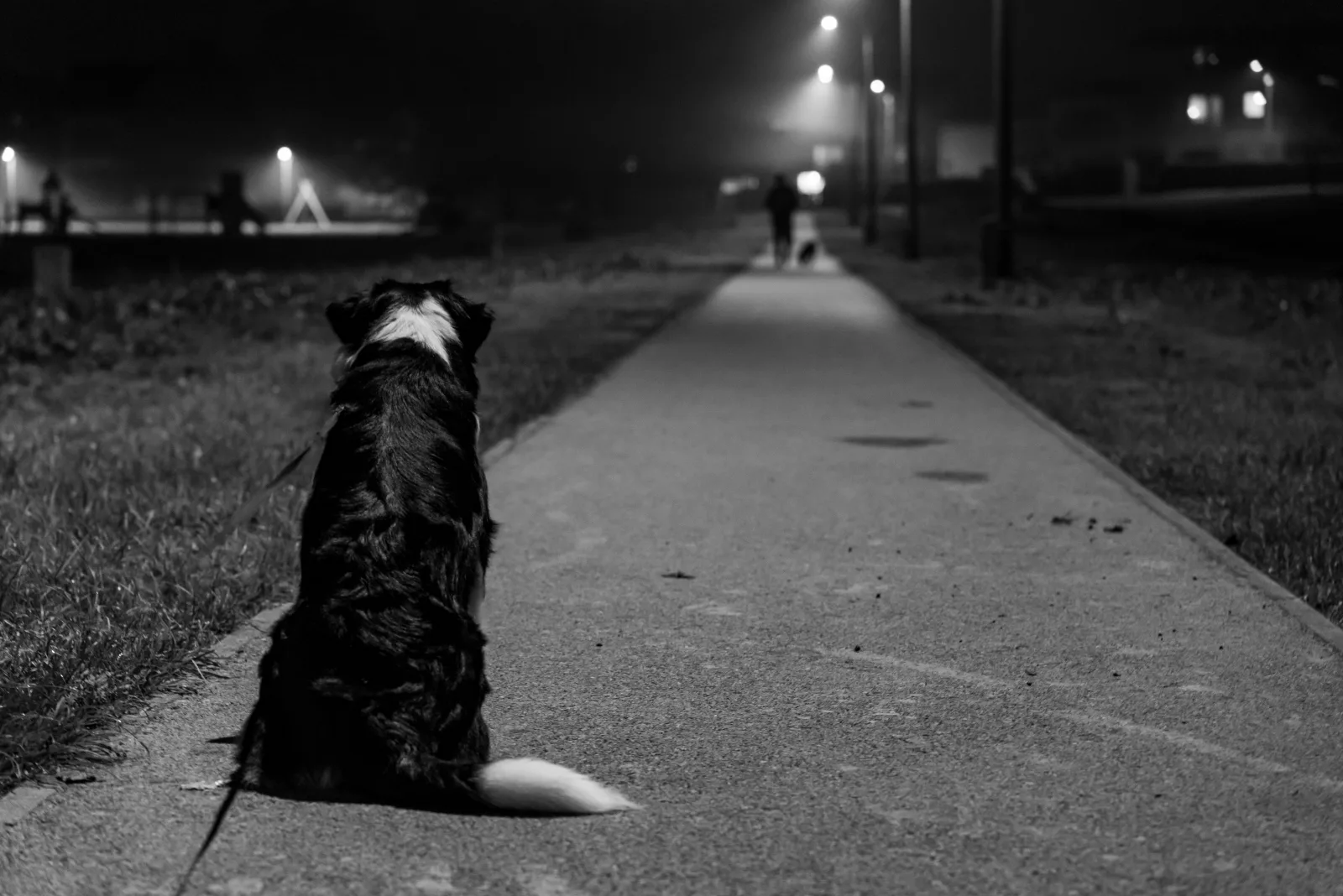
In spring we mostly move hours. In autumn something else changes: the evening walk that used to fall at dusk suddenly falls in full darkness. For a dog that is a different situation from the same route in daylight: different smells, different sounds, less warning of approaching people, and other dogs appearing out of nowhere.
If your dog is reactive, that shift can cause more disruption than the hour itself. We cover it separately in walking a dog after dark.
Short checklist
- Start shifting meals 3-5 days ahead, 10-15 minutes at a time.
- Shift walks too, not just food.
- Clear fixed-time medication with your vet in advance.
- Sort out lighting for evening walks before you need it.
- Do not reward early wake-ups with the bowl.
How many walks there should be in the first place is covered in how many walks does a dog need.
Finally
An hour sounds like nothing, but for a dog that builds its whole day around fixed points it is a noticeable change. Spread over several days it passes without comment; done overnight it costs a week of correcting.
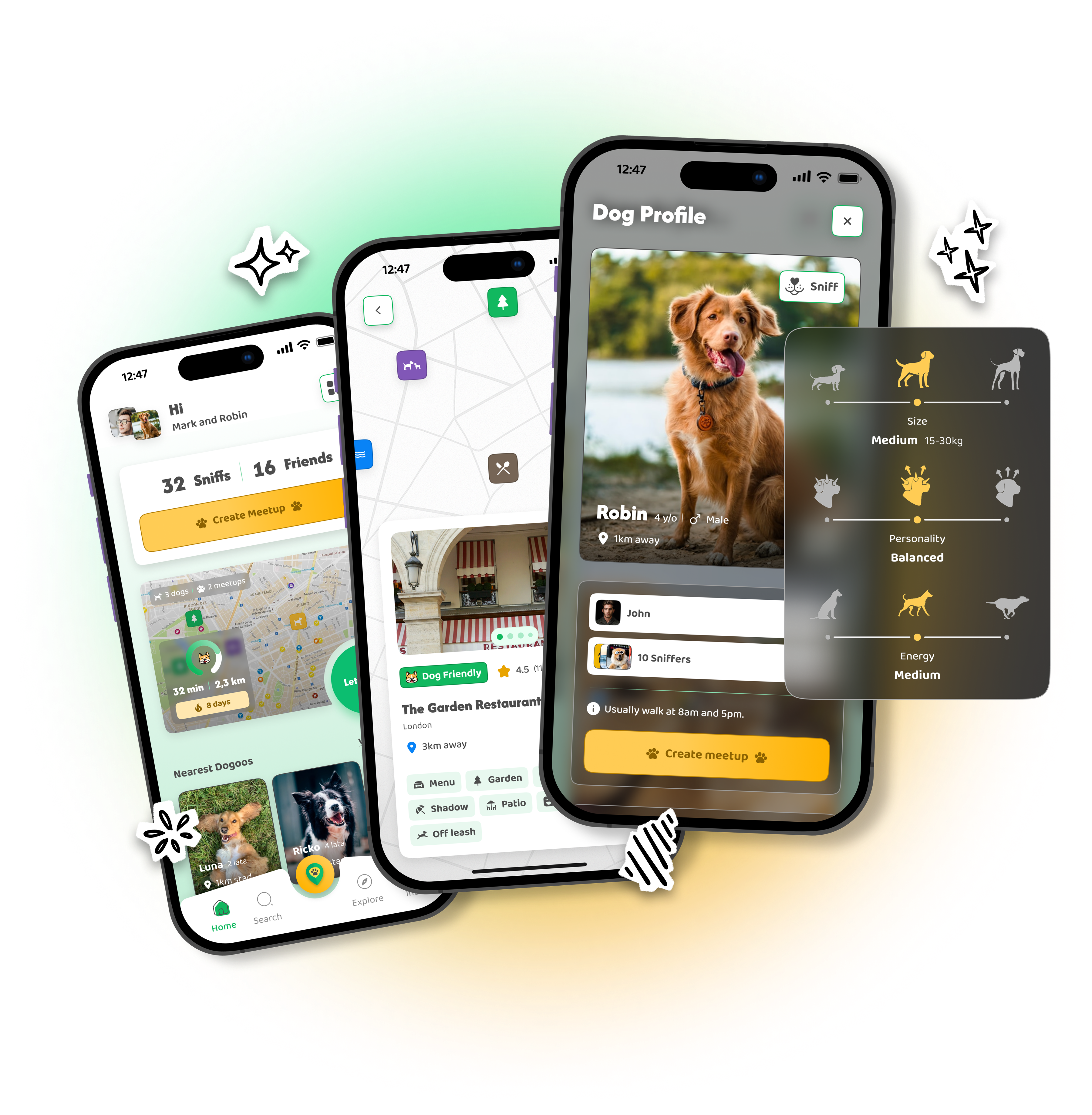
It gets dark earlier now, so the DOGOUT map is more useful than it was in summer: it shows who else is out nearby at this hour and where the lit routes are. Grab the lead, the evenings are just starting.
Frequently asked questions
- Does the clock change really affect a dog?
- Yes, though not through the clock. A dog tracks the day by its own rhythm and the sequence of events at home, so shifting feeding and walking times by an hour is a genuine change for it.
- How do you prepare a dog for the change?
- Move meals and walks by 10-15 minutes a day over the three to five days beforehand. An hour spread across several days passes almost unnoticed.
- Which dogs feel it most?
- Dogs fed on a very regular schedule, puppies, older dogs, dogs on medication at fixed times, and any dog with a rigid daily routine.
- My dog wakes me an hour early, what should I do?
- Do not reward the early start with an immediate meal, which cements the new time. Get up, handle the minimum calmly, and move breakfast gradually towards the target hour.
- What about medication given at fixed times?
- With medication, particularly insulin and anti-epileptic drugs, do not improvise. Agree the shift with your vet before the clocks change.