Dog Doesn't Like Strangers at Home - Causes and a Plan
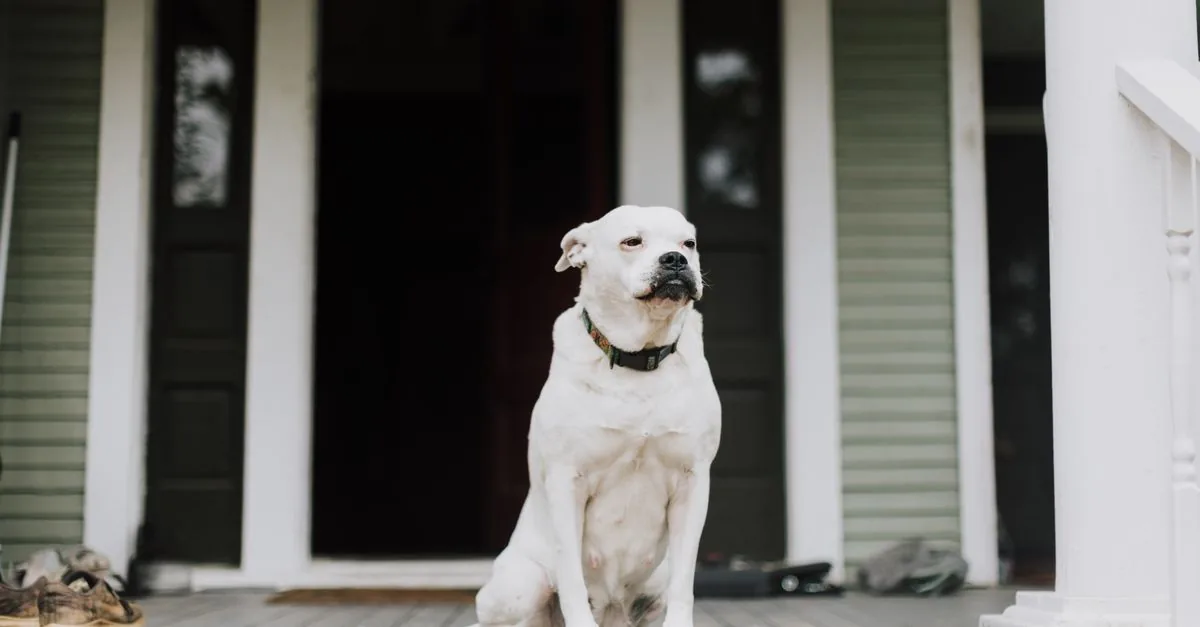
A dog that doesn't like strangers at home usually isn't being spiteful - it's guarding its territory or afraid of an unfamiliar person on its own turf. The key is telling fear apart from territorial behaviour, and never forcing contact. Instead, give the dog a safe spot away from the door, have guests ignore it at first, and build positive associations with visits. If the dog growls, snaps, or tries to bite, that's a cue to work with a certified behaviourist, not to punish the reaction.
The doorbell rings and your dog turns into an alarm - barking, pushing at the entrance, or hiding and growling from behind the sofa. A dog that doesn't like strangers at home is one of the more common problems owners ask about. The good news: in most cases it isn't spite or "dominance", but fear or an instinct to guard the turf - and both can be worked through.
Why a dog doesn't like strangers at home
Before you start training, work out what you're dealing with. The same symptoms (barking, pushing forward) can have very different roots, and each needs a different approach.
- Territoriality - the dog guards its own turf and treats a stranger as an intruder. On a walk it may be calm, because that's neutral ground.
- Fear - an unfamiliar person on home ground frightens a dog that hasn't met many people. Common in poorly socialised dogs.
- Poor socialisation - a dog that didn't meet a variety of people as a puppy reacts with distrust as an adult.
- A learned pattern - the dog once "saw off" a guest by barking, the guest (coincidentally) left, so the strategy worked and stuck.
- Over-arousal - some dogs aren't so much afraid as unable to control their emotions around a new trigger.
Telling fear apart from territoriality is key. A territorial dog moves forward, confident, near the edge of its turf. A frightened dog more often backs off, tucks its tail, growls from a distance and looks for an escape route. We cover reading these signals in more depth in our guide to dog body language.
Fear or territoriality - how to tell
| Signal | More likely fear | More likely territoriality |
|---|---|---|
| Body posture | Lowered, shrinking, tail tucked | Upright, tense, tail held high |
| Direction of movement | Retreats, hides | Pushes forward, towards the door |
| Where it reacts | Everywhere, including away from home | Mainly at the entrance and boundary |
| After the guest is let in | Still tense, avoids | Often settles once it has "checked" the guest |
| What helps | Confidence-building, distance | Managing the entrance, recall from the door |
This is a simplification - many dogs mix both mechanisms. But even a rough read tells you where to start.
What not to do
A few instinctive reactions make things worse, even though they seem sensible:
- Don't punish barking or growling. You suppress the warning, not the emotion underneath. A dog that stops warning more often bites without notice.
- Don't force contact. "Let the guest stroke him, he'll come round" is a recipe for a fear bite. The dog chooses the moment to approach.
- Don't have guests offer a hand to sniff over the dog's head. A hand reaching down from above is a threatening gesture to a frightened dog.
- Don't over-soothe. Excessive stroking and "it's okay, it's okay" can be read as confirmation that there really is something to fear.
A step-by-step plan
Working on a dislike of strangers rests on two pillars: managing the situation here and now, and gradually building positive associations.
- A safe base. Set up a spot away from the door - a bed, a crate or a separate room with a chew. A dog that doesn't have to guard the entrance isn't rehearsing barking.
- Manage the entrance. Before the dog is ready, let guests in while the dog is in its spot or behind a gate. That's not avoidance, it's buying calm for training.
- Guests ignore the dog. No eye contact, no leaning over, no stroking on arrival. The dog gets space and decides for itself whether to approach.
- Positive association. As a guest enters, toss the dog high-value treats from a safe distance. A stranger at home means something good happens.
- Build distance, don't force it shorter. Work where the dog is still calm, and close the gap only when you see it relax.
- Consistency across the whole household. Everyone at home and every guest follows the same rules, or the dog gets mixed signals.
This routine is a close cousin of the desensitisation and counter-conditioning we describe in our guide to aggression in dogs - it works because it changes the emotion under the behaviour, not just muffles the symptom.
The role of socialisation
Many cases of disliking strangers are a delayed bill for gaps in socialisation. A dog that calmly met dozens of different people as a puppy - in hats, with an umbrella, with a walking stick, children and adults - treats a guest as something normal in adulthood. Making up for it in an adult dog is possible, just slower and demanding patience. Controlled exposure to people at a gentle pace, covered more fully in our piece on dog socialization, is your main tool here.
When you need a behaviourist
Reach for a certified behaviourist when the dog growls and snaps regularly, has already tried to bite someone, when the problem worsens despite your work, or when children visit and the stakes are too high for experiments. It's not a failure but a responsibility - a specialist sees context that's hard to spot from inside the situation, and builds a plan tailored to the individual dog rather than generic internet advice.
A dog that doesn't like strangers at home isn't "broken" - it's simply reacting according to its temperament and experience. Your job is to take the responsibility for guarding the door off its shoulders and show that visits are safe, even worthwhile. It's worth remembering, too, that a well-socialised dog needs regular, calm contact with people beyond the home - in the DOGOUT app you can find spots and times with fewer triggers, where your training will go more smoothly. Patience and consistency make more difference here than any one-off trick.
Frequently asked questions
- Why does my dog dislike strangers at home but stay calm on walks?
- Because home brings territory into play. Many dogs are indifferent on neutral ground (a walk) but feel responsible for guarding their own turf, so an unfamiliar person feels like an intrusion. It's a normal if inconvenient mechanism, and you work on it differently from walk-based fear.
- Is a dog that barks at guests aggressive?
- Not necessarily. Barking is most often a warning and an attempt to increase distance, not a prelude to an attack. It's growling, stiffening, snapping and attempts to bite that signal real risk. Watch the whole body language, because the sound alone tells you little about intent.
- How do I get my dog used to guests?
- Start by having guests ignore the dog - no stroking, no eye contact, no leaning over it. Give the dog a safe spot away from the door and reward calm behaviour. Over repeated, positive visits many dogs start to approach on their own - but the dog decides when, not the person.
- Should I shut the dog in another room when guests come?
- At first, yes - that's not failure, it's managing the situation. A dog behind a closed door with a chew isn't rehearsing barking or escalating stress, and you avoid a risky scene at the entrance. It's a temporary fix that buys time for calm training.
- My dog growls at guests - is that serious?
- Take growling seriously, but don't punish it - it's a valuable warning. A dog punished for growling may stop warning and go straight to biting. If the growling repeats or escalates, book a certified behaviourist, especially if children visit the home.
- Will a dog grow out of disliking strangers at home?
- On its own, usually not. Without work the problem more often sets in, because every successful 'seeing off' of a guest rewards the dog and reinforces the pattern. The good news is that with consistent training and positive associations, most dogs improve noticeably.