A First Meeting Between Dogs - A Script That Works
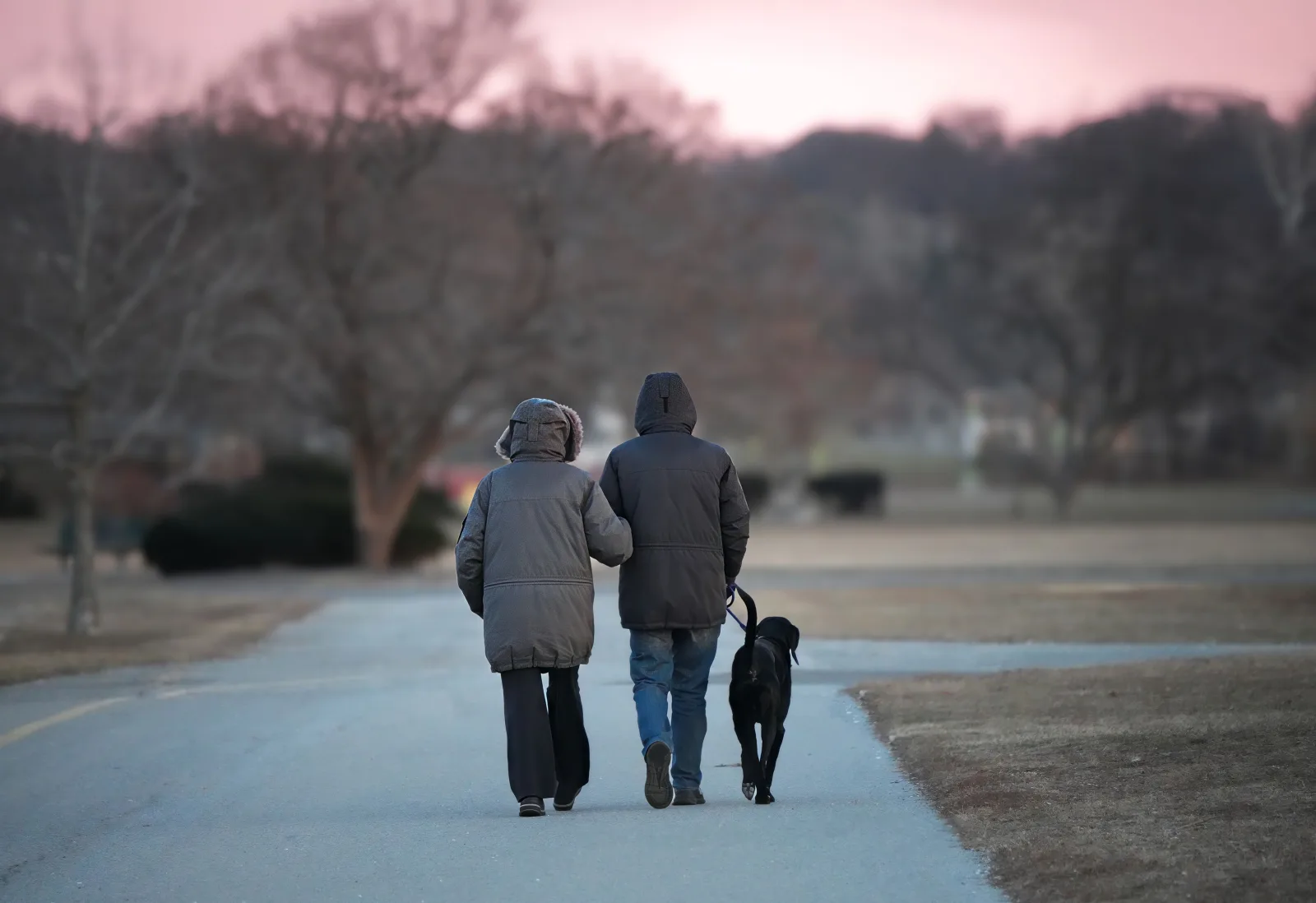
A first meeting between two dogs who do not know each other is won before you leave the house: by establishing what each dog is like, choosing neutral ground and agreeing a short time window. On the spot, do not start with a nose-to-nose greeting on tight leads. Start with a parallel walk several metres apart, moving in the same direction, and close the distance only once both dogs are relaxed. Twenty minutes of calm walking alongside each other achieves more than an hour of forced contact.
Finding someone to walk with is easier than running the first meeting in a way that leads to a second one. The search itself is covered in a separate piece on how to find a dog walking buddy. This one starts at the moment you have a time agreed and are about to leave the house.
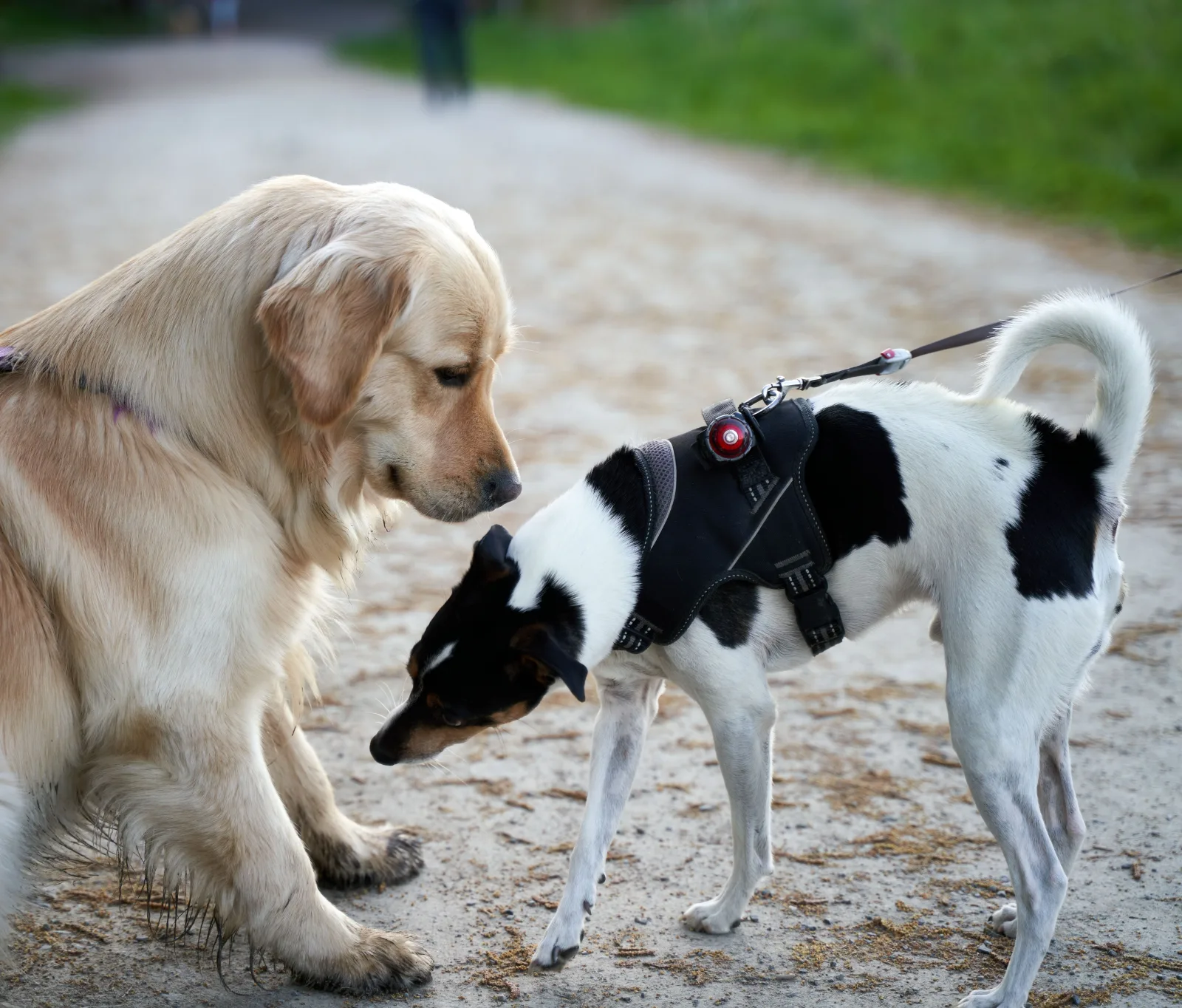
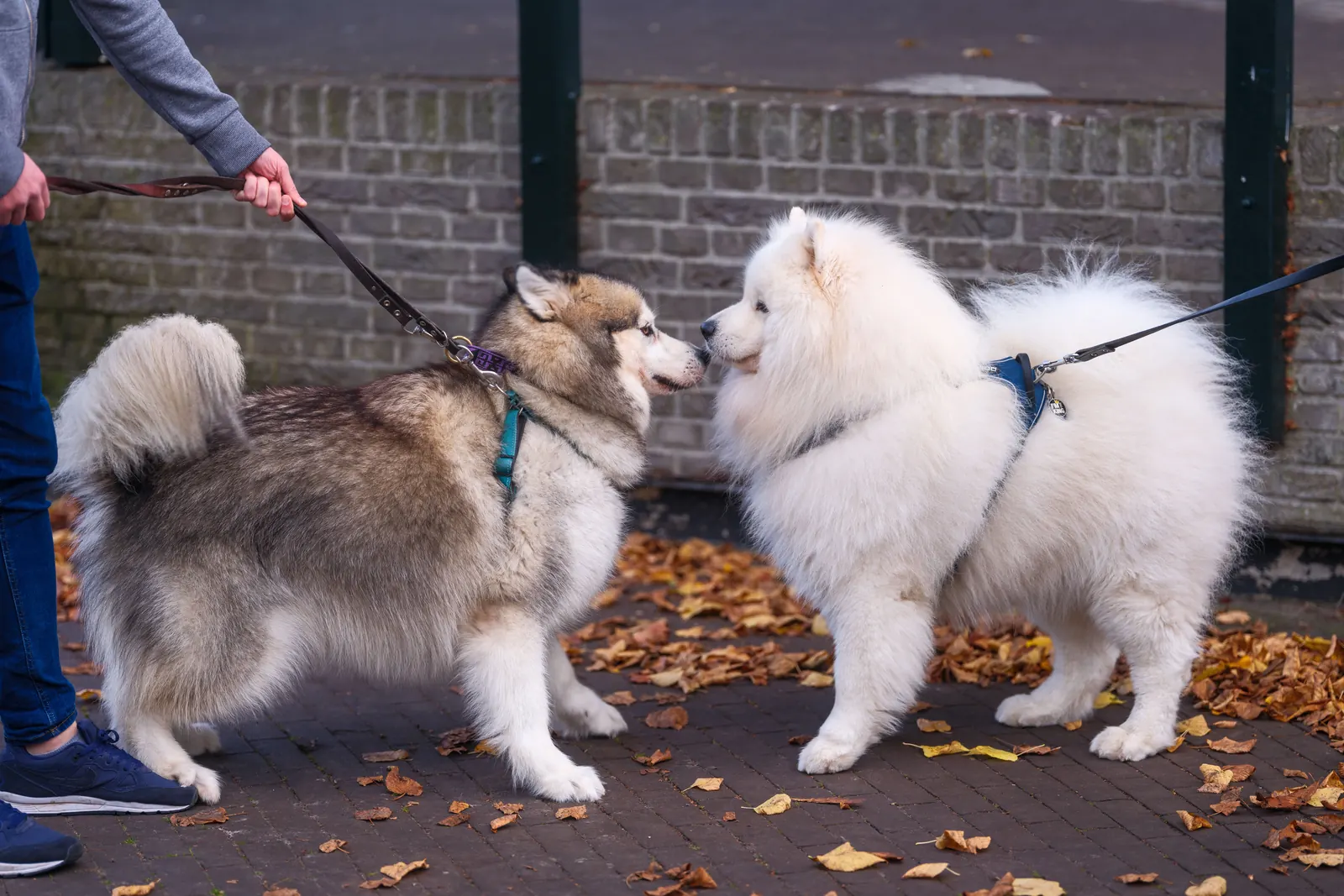
Most unsuccessful first meetings go the same way: two people approach each other on a pavement, the leads get short, the dogs touch noses under tension, someone instinctively pulls up on the lead, one dog growls, both guardians apologise and walk away thinking it was a bad idea. It was not. Only the sequence was.
Before you leave: three questions and one decision
Ask what the other dog is actually like. Not the breed, and not whether it is friendly. Specifically:
- How does it react to other dogs on a lead? That is a completely different situation from off-lead contact, and many dogs behave differently in it.
- Does it guard resources? A dog that will not give up a ball, growls over a bowl or defends a water bottle is not a problem, but you need to know in advance and simply not produce any toys.
- Is a female in season, and is the male neutered? Two intact males around a female in season is a situation no amount of training fixes.
Say the same about your own dog, honestly. "He is wary at first and needs some distance" is far more useful than "he is great, they will be fine".
Agree one thing up front: who gets to call a break. The simplest version is that either of you can say "we are stepping away for a minute" at any point and the other does not ask why. That removes the pressure on both of you to prove everything is fine at exactly the moment it stops being fine.
Choosing the place: neutral and wide
Neutral means: not either dog's own yard, not the street it lives on, not the park it visits daily. A dog on home ground behaves differently from the same dog two streets away.
Wide means: somewhere you can walk in parallel several metres apart, and where either of you can step aside without brushing past the other dog. A park, a riverside path, a broad forest track, a recreation ground.
What to avoid for a first attempt:
- Narrow alleys, pavements and stairwells. No escape route raises tension in any dog.
- Fenced dog runs. Counter-intuitively, one of the worst places for a first meeting: the dogs are shut in together, often with a group of others, with no control over distance and no way out of the situation.
- Gates and entrances, where dogs pass each other in a tight space.
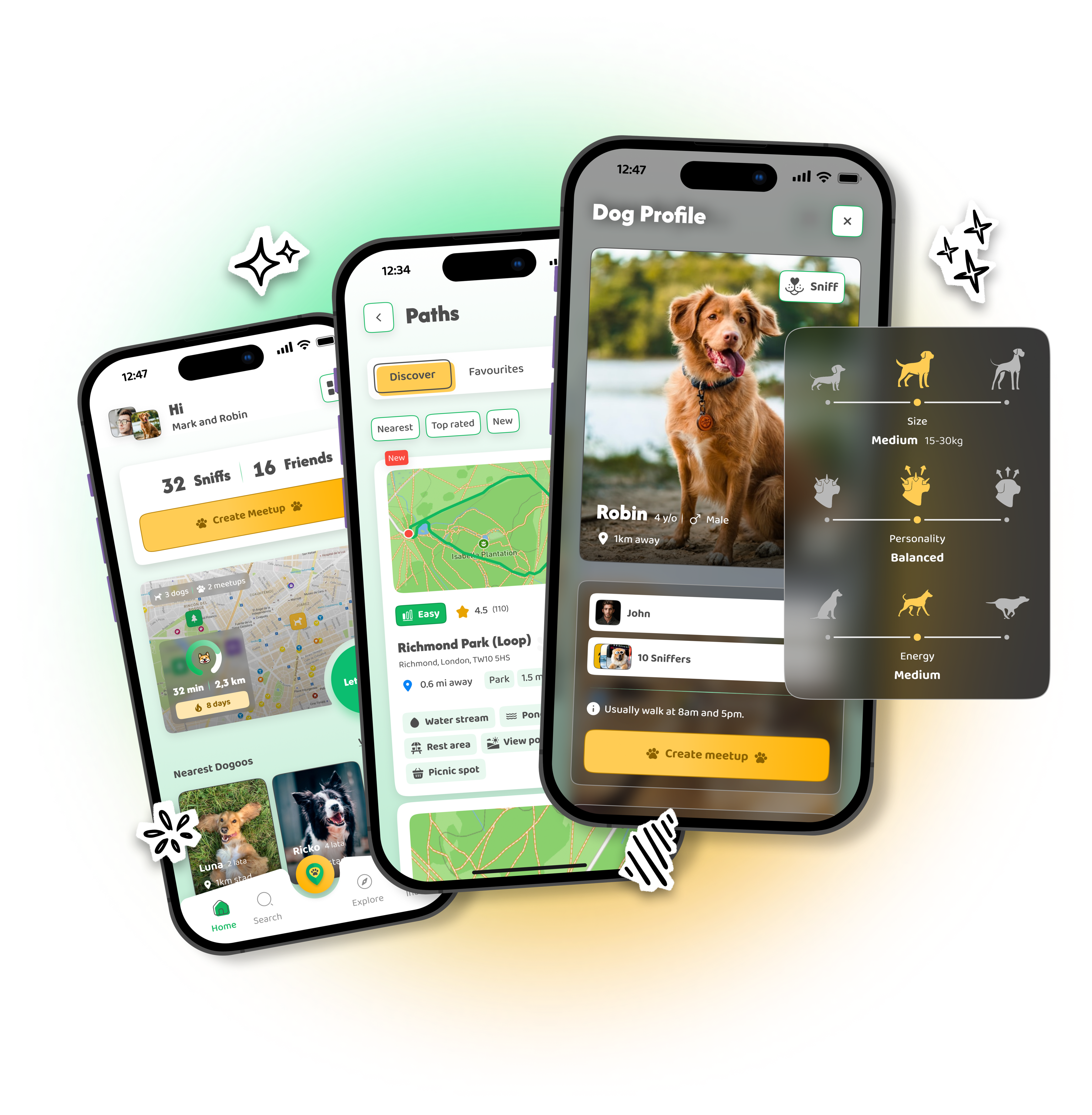
If you do not know somewhere nearby that fits, it is worth looking on the DOGOUT map, where places are added by guardians themselves, so the less obvious parks and paths outside the centre show up too. When you arrange a meetup in the app you drop a pin on a specific point, so both sides know exactly where you are meeting, rather than "by the park, near the shop".
Time of day matters more than you would think
The same park at seven in the morning and at five in the afternoon is two different places. In the afternoon there are more dogs, more children, more bikes and more going on that both dogs have to handle alongside getting to know each other.
For a first meeting, pick a quieter slot: early morning or later afternoon on a weekday. The aim is to give the dogs one new thing to process rather than five at once.
In practice this is also the commonest reason first meetings never happen. Not because someone changed their mind, but because agreeing a time fell apart. Arranging by message can take three days. Posting a meetup with a fixed time and place that the other person simply joins takes one tap.
On the spot: a parallel walk, not a greeting
This is the core of the whole piece and the one thing worth remembering if everything else falls out of your head.
Do not start with contact. Start by walking together.
- Meet about fifteen metres apart and set off in the same direction straight away, in parallel, each on your own side of the path. Do not stand facing each other and talk on the spot; dogs standing and staring at each other tense up faster than dogs in motion.
- Each dog on the outside. The people walk nearer each other, the dogs further apart. That way neither is forced into contact and you both keep control of the situation.
- Walk like that for a few minutes. Talk to each other normally. The dogs know perfectly well the other one is there: they are watching, scenting, acclimatising. That is the introduction, even though it looks as though nothing is happening.
- Close the distance gradually, a metre at a time, and only while both dogs are walking relaxed: loose lead, normal breathing, sniffing as they go.
- Let contact happen by itself. At some point the dogs will drift together, sniff each other in passing and move on. It lasts a few seconds and that is exactly how it should look. A brief, calm greeting after which both carry on walking is far better than a long nose-to-nose standoff.
For more on working at distance, particularly with dogs that have had bad experiences, see the piece on socialising an adult dog.
The lead: loose, long and unjerked
A tight lead does three things at once, all of them bad. It shifts the dog into a more upright, confrontational posture, removes its option to move away, and transmits your tension in the most direct way available.
Rules for a first meeting:
- Loose lead, even when it costs you nerves. If you cannot loosen it because the dog is pulling, increase the distance instead of shortening the lead.
- No retractable lead during the approach. It is always under slight tension and cannot be shortened quickly if you need to.
- Do not pull the dog away reflexively while they are sniffing. If you need to interrupt, call your dog and walk a few steps away rather than yanking.
- Do not let the dogs off lead at a first meeting, even if they appear to be getting on brilliantly. That is for the third and fourth meeting.
Signals that say "slow down" and ones that say "we are done"
Dogs communicate discomfort long before a growl. Calming signals are not esoteric, they are observable behaviours.
Slow down and increase distance when you see: lip licking, yawning without tiredness, turning the head away, stopping, sudden intense sniffing of the ground for no reason, scratching, shaking off as though wet on dry fur, walking in an arc rather than straight.
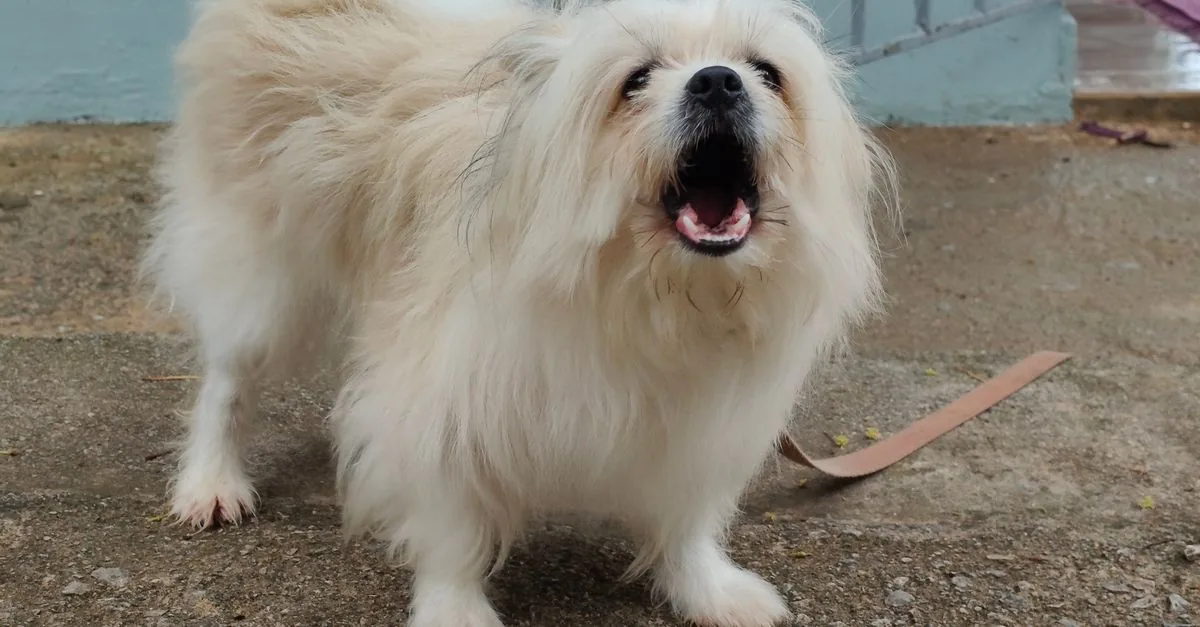
End the meeting when you see: a stiff, frozen posture, hard staring at the other dog without breaking off, raised hackles, a high and stiffly wagging tail, growling, attempts to stand over the other dog, hiding behind you while still tense.
And when it is going well you will see: a loose body, wagging from the whole rear end, a play bow, chasing in turns with pauses, moving away and coming back voluntarily.
Stop sooner than you want to
The commonest mistake in a successful first meeting is letting it run on. The dogs are enjoying themselves, the people are enjoying the conversation, and twenty minutes becomes an hour and a half. A tired dog has less tolerance and a greater chance that the first unpleasant moment happens right at the end.
Twenty to thirty minutes, then part while it is still going well. Both dogs will remember that meeting this other dog was pleasant and ended without incident. That is precisely the association the next meeting is built on.
Later meetings: what to change and what not to
| Meeting | What you do | What you still do not do |
|---|---|---|
| First | Parallel walk, brief contact in motion, 20-30 minutes | No off-lead, no toys, no fenced dog run |
| Second and third | Same or similar place, longer walk, more free contact | Still no toys or food between the dogs |
| Fourth onwards | New routes, longer sessions, possibly off-lead in a safe enclosed space | Do not leave the dogs alone together unsupervised |
Repetition works better than novelty. The same two dogs, in the same place, at the same time, three weeks running will build a relationship faster than six different meetings with six different dogs.
When a first meeting is not the first step
If your dog barks, lunges or backs away in panic at the sight of another dog on a lead, a joint walk with an unfamiliar dog is not the right starting point. It is not a question of goodwill or of finding the right companion: that reaction calls for work with a behaviourist, spread over time and carried out at a distance your dog can tolerate.
Behaviourists and training schools are incidentally one of the most underrated sources of contacts: they run group classes, socialisation walks and groups in which everyone present knows how to read a dog and what to expect. For a dog that needs calm, controlled company, that is usually a better starting point than a spontaneous meeting with a stranger. More on the reactions themselves in the piece on leash reactivity.
Arrange the first meeting for a specific time and a specific point
Most first walks fail to happen not because something went wrong, but because nobody proposed anything concrete. "Sometime soon" has no date.
In DOGOUT you arrange a meetup by dropping a pin on the spot you have chosen and picking a time, then deciding whether to invite specific dogs or open it up to everyone nearby. If spontaneous meetups are not your thing, the other route works just as well: in search, narrow the results with the advanced filters by character and temperament, send a private message, get to know each other in conversation, and arrange a walk only once you are both ready.
A first meeting does not have to be perfect. It only has to be good enough that both sides want a second one.
Frequently asked questions
- How should I introduce my dog to another dog?
- Not head-on and not straight away. Start with a parallel walk: both of you move in the same direction, several metres apart, each with your dog on the outside. The dogs can see and smell each other and get used to the other's presence without being forced into a confrontation. Close the gap gradually, only once both dogs are walking loosely. A direct nose-to-nose greeting on a short, tight lead is the worst possible opening.
- Where should a first meeting between dogs take place?
- On ground that is neutral for both: a park, a wide path, green space away from either dog's own territory. What matters is room to keep distance and the option to step aside without squeezing past. Avoid narrow alleys, stairwells, tight entrances and fenced dog runs, where dogs have no way to move away from each other.
- How long should a first meeting last?
- Twenty to thirty minutes is plenty. A short meeting ended while it is still going well leaves both dogs with a positive association and opens the door to a second one. A drawn-out meeting usually ends in tiredness, falling tolerance and a first growl that both dogs will remember.
- What should I ask the other guardian beforehand?
- Three things: how their dog reacts to other dogs while on a lead, whether it guards resources such as toys, food or water, and whether it is neutered or, for a female, in season. It is also worth agreeing any health or age limits that affect the pace and length of the walk.
- What if the dogs do not get along?
- Walk away without making a drama of it. Not every two dogs will get on, exactly as not every two people do. End the walk calmly, each going your own way, and do not try to force a reconciliation. One unsuccessful meeting tells you nothing about how your dog will get on with the next one.
- Is it worth meeting first without the dogs?
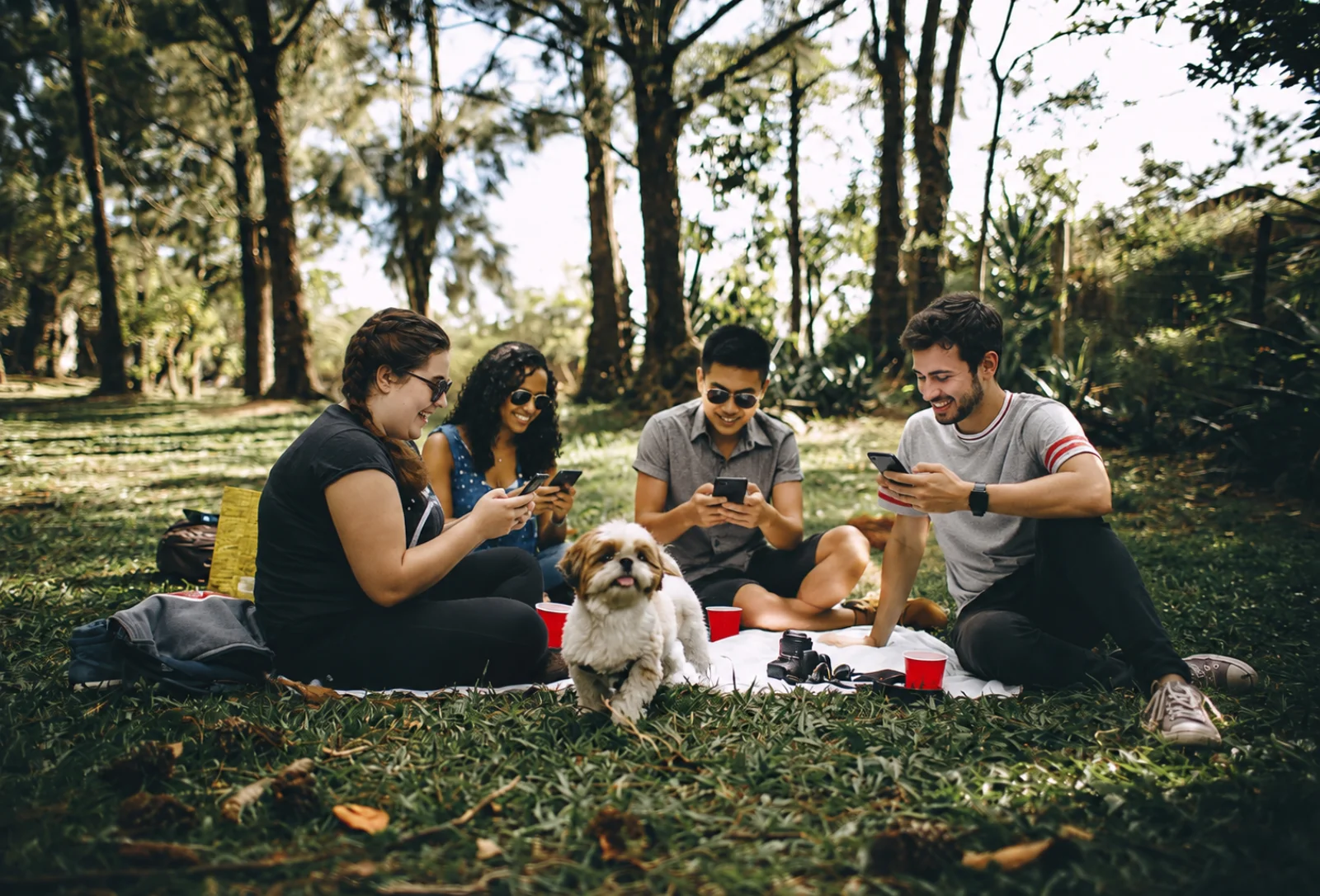
- It is a sensible option if you are meeting someone you found online. A short conversation or a coffee without the dogs lets you set expectations, check whether you actually get on, and avoid a situation where two dogs have to manage a meeting between two uncertain people. Plenty of guardians take this route and there is nothing odd about it.