How Many Words Can a Dog Understand? More Than You Think

The average dog understands around 89 words, though research shows a range from 15 to over 200 depending on the dog, the breed, and how much time an owner spends teaching new words. The record holder, a border collie named Chaser, learned over 1,000 object names after three years of systematic training and could apply them to brand-new combinations. Any dog, regardless of breed, can expand their vocabulary with a bit of patience.
Your dog reacts to "walk," "treat" and their own name - no question there. But do they know what "fetch the ball" means as opposed to "fetch the lead"? Research into dog vocabulary shows that many dogs understand a surprising amount, and that the upper limit is far higher than most owners would guess.
The average dog knows nearly 90 words
Owner-reported research suggests the average dog recognizes around 89 words - names, places, commands and toy names among them. The spread is wide, though: from 15 words in dogs with minimal word-specific training, to over 200 in dogs whose owners systematically teach new names. The difference is not mainly about intelligence - it comes down to how much time and consistency goes into teaching.
Chaser - the dog who broke what we thought we knew about dogs
The most famous case in dog vocabulary research is Chaser, a border collie belonging to retired psychology professor Dr. John Pilley. Over three years of intensive, daily training, Chaser learned the names of more than 1,000 different objects, mostly toys, and could retrieve the exact one requested from hundreds scattered on the floor.
What makes this case scientifically significant is not the raw number. Research on Chaser showed she could understand general categories (like "ball" as a class of objects, not just one specific ball) and use a process-of-elimination strategy - when a single new object appeared among her known toys and an unfamiliar name was spoken, Chaser could correctly match the new name to the new object, despite never having heard that word before.
Why herding breeds tend to come out on top
Breeds like border collies, bred over generations for close cooperation with humans in herding work, statistically achieve the best results in word-learning tests. This is likely a combination of high motivation to cooperate, a strong work drive, and the intensive training these dogs are typically given. That does not mean other breeds cannot learn - it means they may need more repetition and patience.
Is it the word or the tone that a dog actually understands
An interesting research question is whether a dog reacts to the word itself or mainly to the tone you say it in. A study led by Professor Attila Andics at Eötvös Loránd University in Budapest, using fMRI scans on fully conscious, motionless dogs, found that a dog's brain processes both pieces of information - the word and the intonation - much like a human brain does. The left hemisphere of a dog's brain activates when processing words themselves, the right hemisphere when processing intonation, and the dog's reward centre lights up most strongly only when the word and the tone match - in other words, when you praise your dog with a warm voice saying something positive, not a neutral tone.
That finding suggests something important: the neural mechanisms for processing speech are not unique to humans. If the environment is rich in speech - and a home with a dog usually is - real representations of word meaning can form in a dog's brain, even though they cannot speak themselves, not just simple sound-to-reward associations.
How to expand your dog's vocabulary
Learning new words is not that different from learning basic commands:
- Pick one word for one specific object or action and stick with it consistently.
- Say the word every time your dog interacts with that object, ideally at the moment of contact, not before or after.
- Reward the correct response - a treat, praise, play.
- Run short sessions, a few minutes a few times a day, instead of one long lesson.
- Only introduce a new word once the previous one is solid.
If you are still working on the basics, check our guide on teaching your dog its name - a natural first step before building a bigger vocabulary.
How many words is enough?
You do not need to chase Chaser's record to have a dog who genuinely understands you. A few dozen well-established words are enough to make everyday communication noticeably easier - and to understand that a dog who "isn't listening" is sometimes simply unfamiliar with that particular word yet, not ignoring you on purpose.
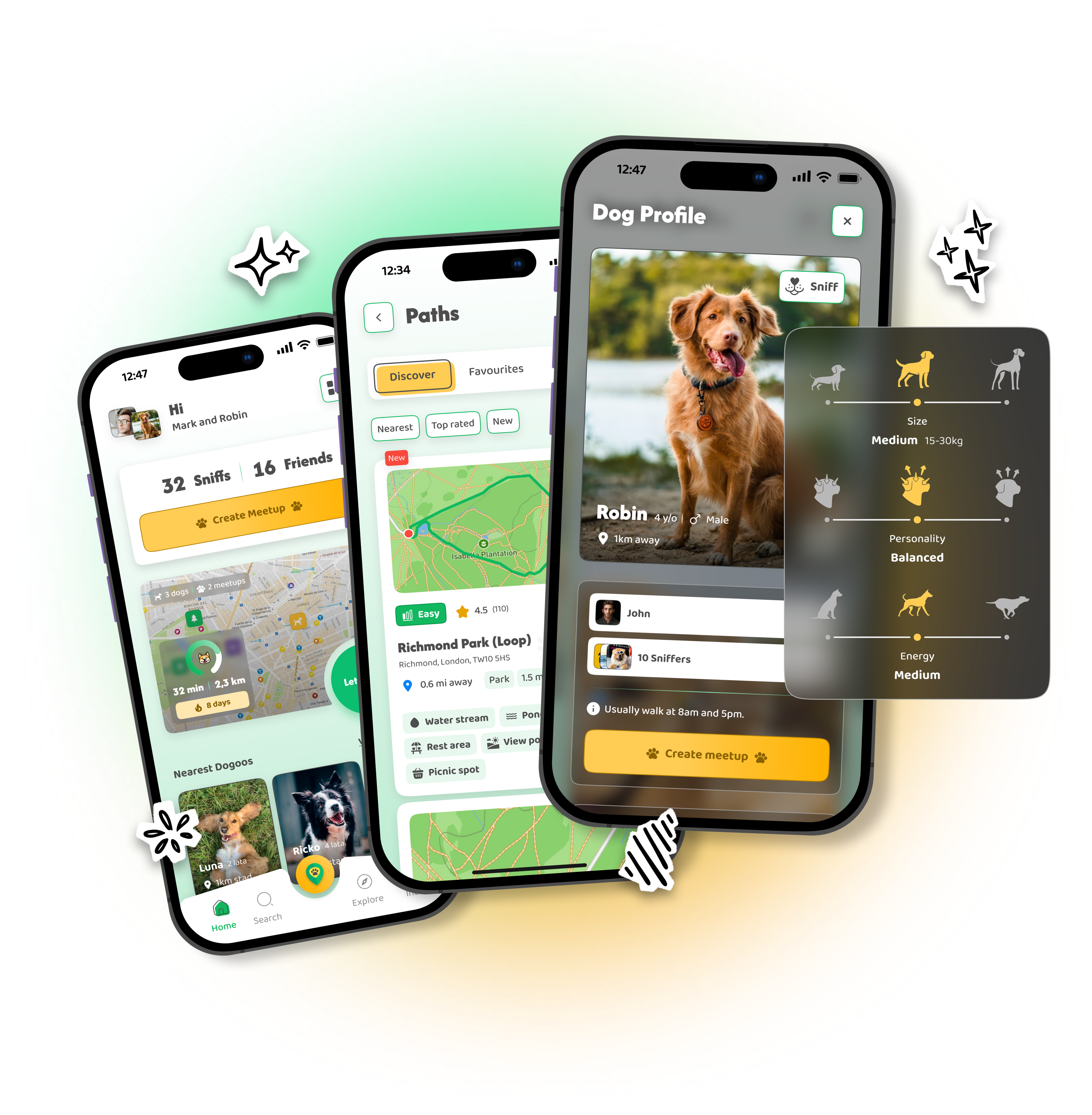
Now that you know your dog understands more than you thought, it is time to give them a chance to show it. Open DOGOUT, find a new spot nearby, and see how much of your shared vocabulary comes in handy on a new route.
Frequently asked questions
- How many words does the average dog understand?
- Based on owner-reported research, the average dog recognizes around 89 words, with a range from 15 to over 200, depending on the individual dog, their age, breed, and how much time the owner spends teaching new words.
- Who is Chaser, and why does she keep coming up in this context?
- Chaser is a border collie who, working with researcher Dr. John Pilley, learned the names of over 1,000 objects across three years of intensive training. More importantly, she could also apply general categories (like 'toy') and infer the name of a new object by process of elimination when a single unfamiliar item appeared among her known toys.
- Do dogs actually understand what words mean, or just associate a sound with a reaction?
- It depends on the level of training. Basic commands are often a simple sound-to-reaction association. But the research on Chaser showed that dogs, with the right training, can understand that a word refers to a specific object - not just trigger an automatic behaviour.
- Do some breeds learn words faster?
- Herding breeds like border collies statistically perform best in word-learning tests, likely thanks to high motivation to work with humans and a strong drive to cooperate. But any breed can learn new words with consistent training.
- How do I teach my dog a new word?
- Repeat the same word every time your dog interacts with a given object or activity, and reward the correct reaction. Short, few-minute sessions several times a day work better than one long lesson - the same as with any other kind of training.