The Most Popular Dog Breeds in DOGOUT, From Real Data
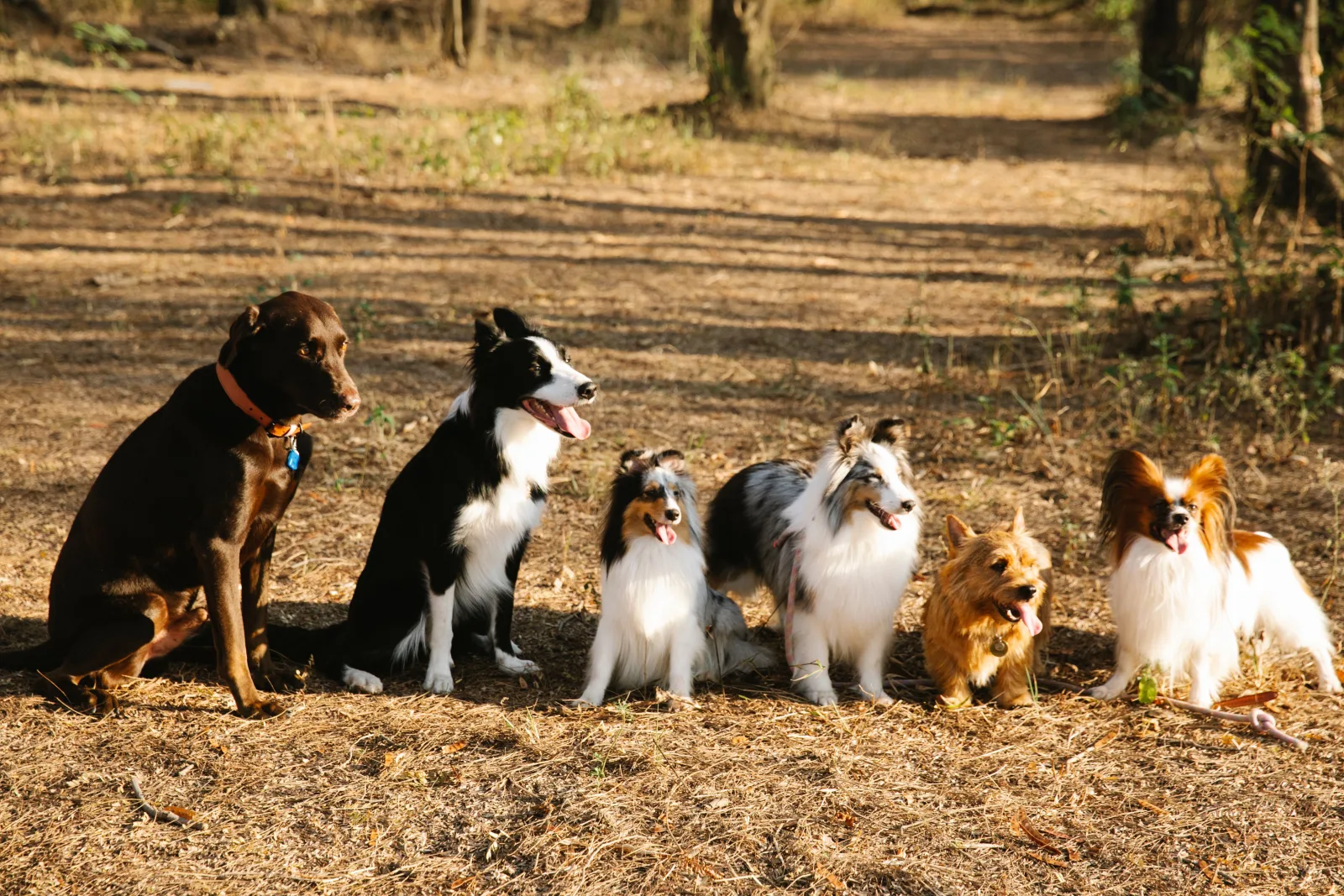
Based on 617 dog profiles in DOGOUT, the largest single group is mixed breeds - 249 dogs, about 40 percent of the whole sample, well ahead of any single purebred. Among purebreds, the Golden Retriever leads (29), ahead of the Border Collie (19) and the Dachshund (17). This is a snapshot of the DOGOUT community as of August 1, 2026, not a national census of dogs in Poland - but it's a genuine, live picture of what dogs are actually out walking with their owners.
Ask a random person what the most popular dog breed in Poland is today, and they'll probably name a specific breed - Labrador, German Shepherd, maybe Golden Retriever. Our data from 617 dog profiles in DOGOUT shows something different. No single breed wins. The absence of a breed wins.
Methodology - what this actually shows
The data comes from the DOGOUT app database, a snapshot from August 1, 2026, covering 617 dog profiles with a listed breed, size, energy level, and sex. This is not a study representative of all of Poland - it's a photograph of our community at one point in time, not a census. Treat it as a live but local picture, not the final word on every dog in the country.
Mixed breeds win, by a wide margin
The headline number here: 249 of 617 dogs, roughly 40 percent, are mixed breeds. That's more than the entire rest of the top 5 combined. No single purebred comes close - the runner-up, Golden Retriever, has 29 dogs, over eight times fewer.
Ranking - top 20 dog breeds in DOGOUT
| Rank | Breed | Number of dogs |
|---|---|---|
| 1 | Mixed breed | 249 |
| 2 | Golden Retriever | 29 |
| 3 | Border Collie | 19 |
| 4 | Dachshund | 17 |
| 5 | German Shepherd | 15 |
| 6 | Labrador Retriever | 13 |
| 7-8 | Maltese | 12 |
| 7-8 | English Cocker Spaniel | 12 |
| 9-12 | Whippet | 11 |
| 9-12 | American Staffordshire Terrier | 11 |
| 9-12 | Cavalier King Charles Spaniel | 11 |
| 9-12 | Australian Shepherd | 11 |
| 13-14 | Poodle | 10 |
| 13-14 | White Swiss Shepherd | 10 |
| 15-16 | Belgian Shepherd | 8 |
| 15-16 | Welsh Corgi Pembroke | 8 |
| 17-20 | Jack Russell Terrier | 7 |
| 17-20 | Schnauzer | 7 |
| 17-20 | Shih Tzu | 7 |
| 17-20 | Dalmatian | 7 |
Beyond breed - what our dogs look like
Beyond breed alone, the database gives three other cuts that add up to a more interesting picture than a breed list on its own.
Energy level: high - 289 dogs (47%), medium - 283 dogs (46%), low - 45 dogs (7%). Nearly half the dogs in our community are high-energy, which fits a community of owners actively seeking places and company for longer walks, not just an obligatory ten minutes around the block.
Sex: male - 352 (57%), female - 265 (43%). A clear, though not extreme, skew toward male dogs.
Size: small - 268 (43%), medium - 252 (41%), large - 97 (16%). Small and medium dogs together make up a clear majority - large breeds are noticeably rarer in our community, which tracks with rising apartment living in cities.
Why mixed breeds are so dominant here
A few things likely feed into this. First, shelter adoption is gaining ground in Poland, and dogs that end up in shelters rarely come with documented pedigree - more on that in adopting a shelter dog. Second, Poland doesn't carry as deeply rooted a purebred-registry culture as some other markets - there's no real equivalent here of the AKC or a similarly dominant kennel-club tradition shaping how people decide on a dog. The decision to get a dog more often starts from "we want a dog" than from picking a specific breed first, which naturally leads toward adoption or casual litters. Third, and this one's simply pleasant: mixed breeds often combine traits from several breeds in a way plenty of owners genuinely prefer - a less predictable look, but often solid health from a wider gene pool.
For an international reader used to a market with a strong purebred culture, this is the single most useful thing to take from the data: Poland's dog population skews mixed-breed more heavily than some other countries precisely because there's no equivalent institutional weight behind pedigree here. This result also fits DOGOUT's broader stance: what matters is the dog you have and the community you're part of, not what's written on a pedigree certificate. Breed, or the lack of one, doesn't decide whether a dog deserves a good place to walk, company, and care.
How this compares against the top purebreds
The top of the purebred list shows real variety - large herding breeds (Border Collie, German Shepherd, Australian Shepherd, White Swiss Shepherd, Belgian Shepherd), classic family breeds (Golden Retriever, Labrador, Cavalier King Charles Spaniel), and smaller, city-friendly dogs (Dachshund, Maltese, Cocker Spaniel, Welsh Corgi Pembroke, Shih Tzu). This isn't a ranking dominated by one category - DOGOUT owners keep herding, family, sporting, and companion breeds in roughly similar proportions, with no single obvious trend taking over.
The long tail says as much as the top spot
Beyond the mixed-breed majority and the top ten, what stands out is how flat the rest of the ranking is - from rank 9 to rank 20, the gaps are just a handful of dogs (11 versus 7). That's a different shape than markets with a strong purebred-registry tradition, where a few top breeds tend to dominate the statistics far more sharply. In our data, even the 20th spot - Dalmatian, at 7 dogs - is a real, visible presence, not a rounding error. In other words: breed diversity in the DOGOUT community is genuinely high, and the popularity curve looks more like a long, flat tail than a steep hill with one clear winner.
What this means if you're choosing a breed
If you're browsing this ranking for a hint on what breed to get, the right takeaway isn't "pick whatever's popular." It's that our community shows real diversity - herding dogs next to tiny city dogs, mixed breeds next to pedigreed ones - and none of those paths is more "normal" than another. For concrete criteria matched to your lifestyle and living situation, see how to choose a dog breed - a far better starting point than chasing a popularity ranking.
See what dogs are walking near you
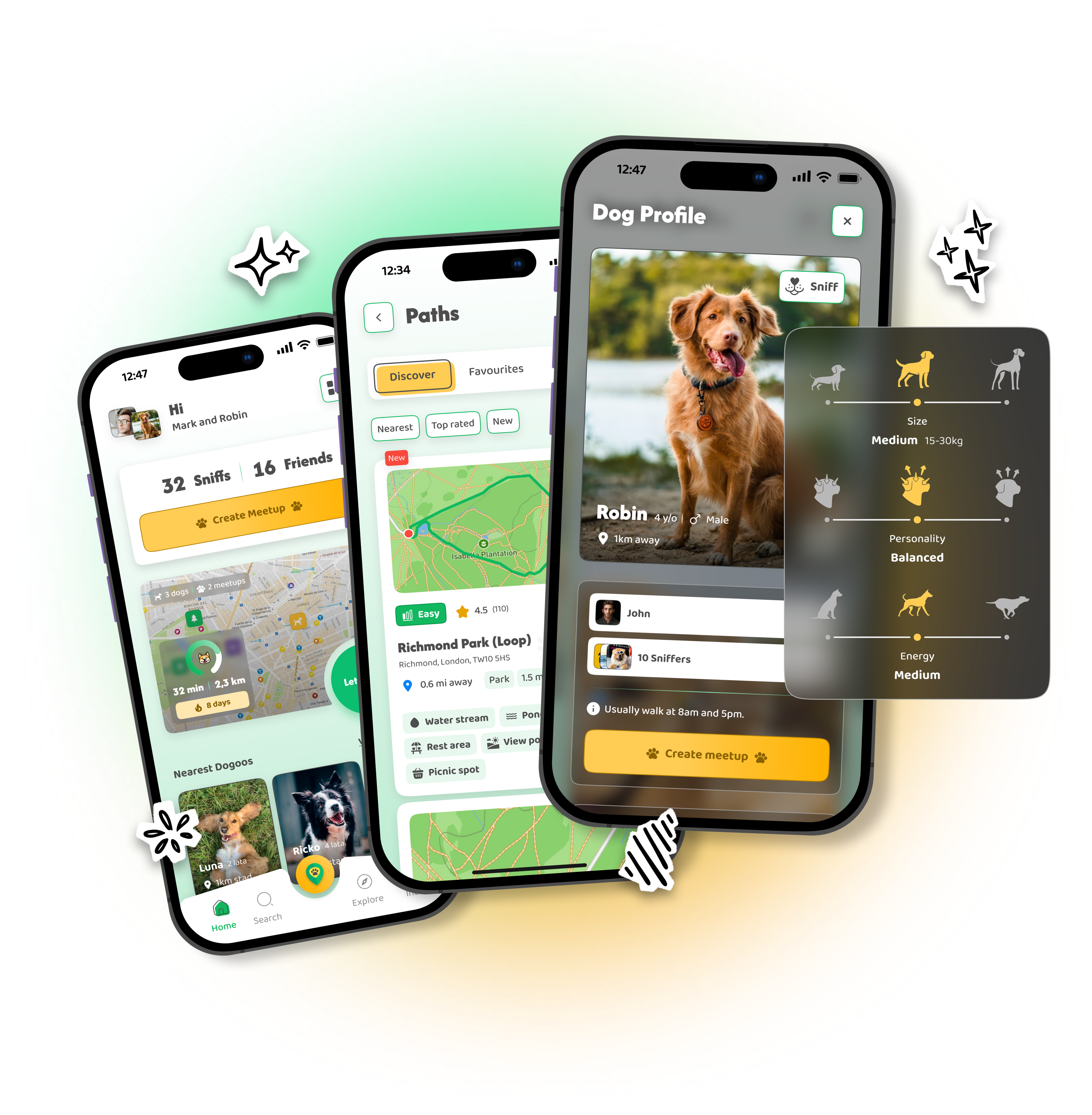
A national ranking is one thing, but it gets more interesting locally. Add your dog's profile in DOGOUT and check the map for what breeds and sizes are most common closest to you - maybe your neighbourhood turns out to be a Whippet or Dachshund hotspot, something no national ranking could ever show you.
Frequently asked questions
- What's the most popular dog breed in DOGOUT?
- It isn't a breed at all - mixed breeds make up 249 of 617 dogs in our database, about 40 percent. Among purebreds, the Golden Retriever leads with 29 dogs.
- Does this data represent all dogs in Poland?
- No - this is a sample from the DOGOUT community (617 dog profiles as of August 1, 2026), not a nationwide study. It reflects our users' actual dogs, but we don't extrapolate it to the whole country.
- Why are mixed breeds so much more common than purebreds here?
- A few things likely combine: rising popularity of shelter adoption, less cultural emphasis on pedigree than in countries with a strong purebred-registry tradition, and simple natural variety in Polish households. More on adoption in our shelter-dog article.
- What's the size and energy-level breakdown of dogs in DOGOUT?
- Across 617 dogs, 43 percent are small, 41 percent medium, and 16 percent large. By energy level, 47 percent are high-energy, 46 percent medium, and 7 percent low.
- Where does this data come from?
- From the DOGOUT app database - real breeds and traits entered by owners in their dogs' profiles, anonymised and aggregated. A snapshot from August 1, 2026, covering 617 dog profiles.