

The Science Behind Puppy Dog Eyes
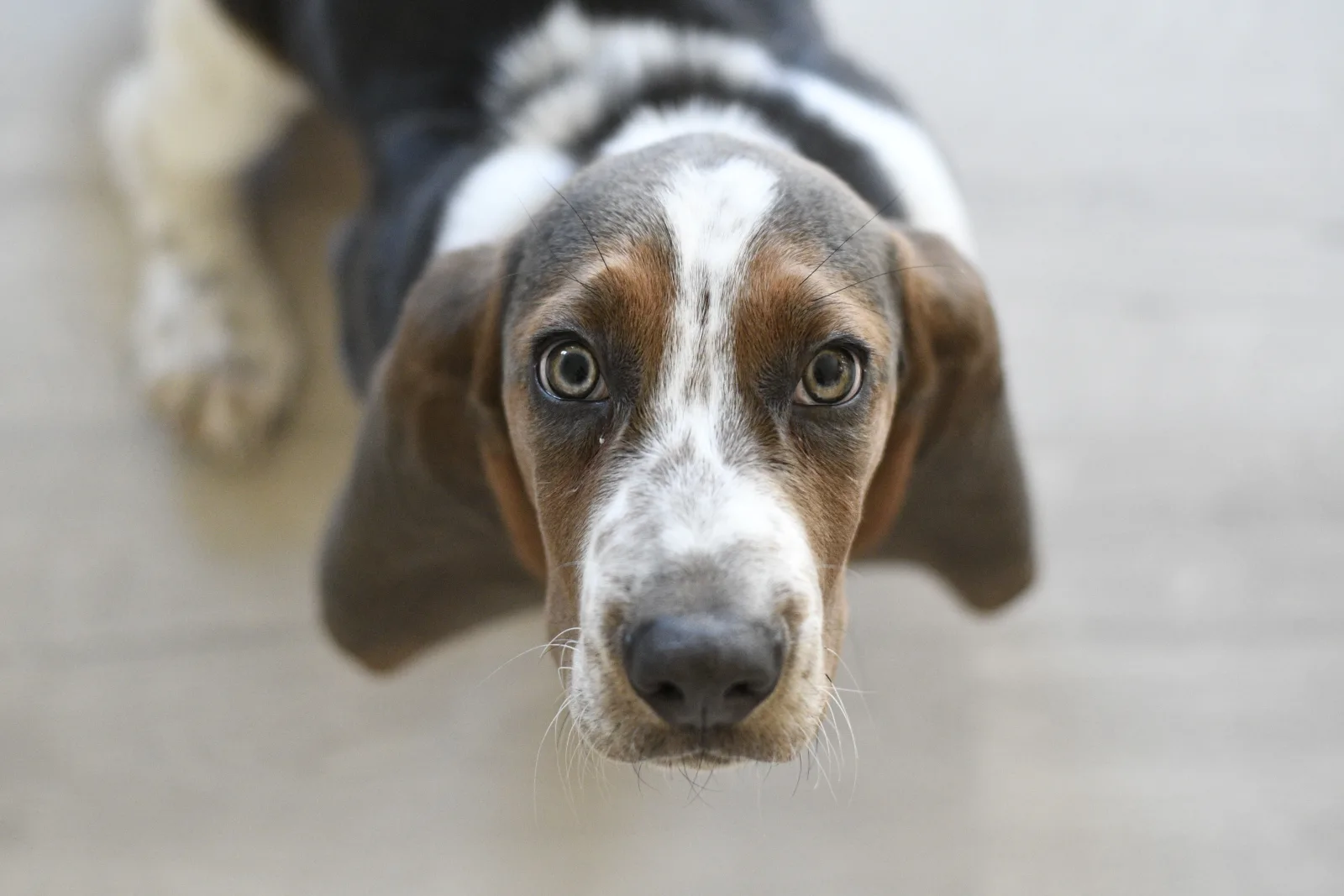
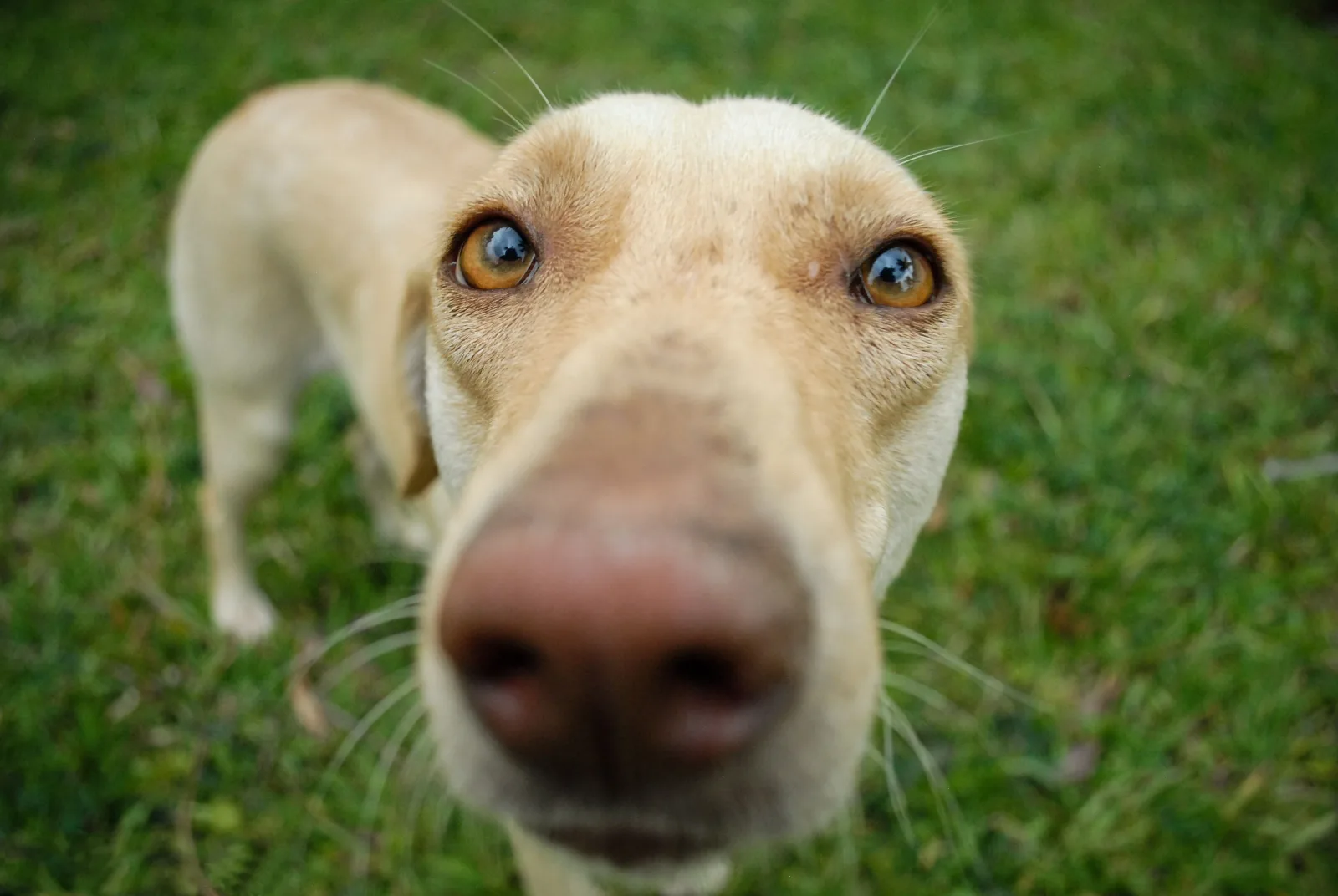
Dogs have a facial muscle around the eyes - the levator anguli oculi medialis (LAOM) - that raises the inner eyebrow and creates the classic, sorrowful 'puppy dog eyes' expression. A 2019 study found this muscle is fully developed in dogs but mostly vestigial or absent in wolves - and that dogs use it far more often and more intensely than wolves do, especially around humans. A newer 2024 study found that coyotes have the muscle too, though, which complicates the simple 'domestication created this muscle' story.
One look - raised brows, sad, pleading eyes - and the firmest resolution of "not giving in this time" collapses in seconds. That is not coincidence, and it is not a weakness of your character. It is a specific muscle in your dog's face, which researchers argue evolved specifically to do exactly that to you.
The muscle wolves largely do not have
In 2019, a team of researchers from the University of Portsmouth published an anatomical analysis of dog and wolf heads in the prestigious journal PNAS. They identified a specific facial muscle - the levator anguli oculi medialis (LAOM) - responsible for raising the inner corner of the eyebrow. That movement is exactly what creates the characteristic, "sad" facial expression we know as puppy dog eyes.
The key finding: LAOM is present in dogs almost universally and is fully developed, while in wolves - the domestic dog's closest relative - the muscle is mostly vestigial or absent entirely. What is more, behavioural research showed that dogs perform this facial movement far more often, and with greater intensity, than wolves do in comparable situations.
Why this works on humans
The movement that raises the inner eyebrow closely resembles the expression humans make reflexively when sad. That resemblance is probably not accidental from an evolutionary standpoint - a face that resembles sadness in a child or another person triggers a strong, largely automatic nurturing response in us. Researchers suggest that dogs who, by chance or through selection, developed the ability to make this movement may have gained an advantage - they bonded with humans more easily, which in a domestication context translated into real benefits: more food, more care, better odds of survival and reproduction.
That also explains why dogs most often perform this facial movement specifically when a human is looking at them, and less often when they are alone or in the company of other animals only. That points to puppy dog eyes serving a communicative function aimed specifically at people, rather than being a purely emotional reflex.
The story gets more complicated - coyotes can do it too
The simple version of this story - "domestication created this muscle specifically for humans" - was partly challenged in 2024. A newer study published in Royal Society Open Science found that coyotes, an undomesticated species, also have a well-developed LAOM muscle, unlike the modified or absent muscle found in grey wolves.
That finding shifts the interpretation - instead of the simple story of "humans bred this muscle into dogs," the more likely scenario is that LAOM existed earlier in the canid family and was specifically lost in wolves, rather than evolving exclusively in dogs through domestication. Science is still refining the full picture here - but the fact that dogs use this muscle more often, more intensely and more purposefully than their wild relatives remains well supported.
A habit that reinforces itself
The existence of the LAOM muscle is one part of the story - the other is how training and experience reinforce its use. If a sad-eyed look has ever worked for a dog - earning attention, food, or a softened telling-off - the dog learns that the behaviour pays off, the same way they learn any other command. It is a classic example of biological predisposition and learned experience working together: the muscle itself is innate, but how often and how intensely a dog uses it in specific situations is shaped by trial-and-error learning, just like any other behaviour that gets rewarded by its surroundings.
That does not mean a dog is "manipulating" you in the cynical, human sense of the word. It simply means that a behaviour which produces results tends to repeat - a basic learning principle that holds across the animal world, not just in dogs.
What this means in practice
Knowing about LAOM does not change the fact that puppy dog eyes still work - and probably always will, because the mechanism driving our reaction is deeply rooted in our own biology, not just the dog's. But it is worth remembering: puppy eyes are a message, not always a request for food. Sometimes it is a sign of uncertainty, sometimes curiosity, and sometimes simply the natural expression of a dog looking at someone they like.
If you want to learn to read more than just this one, most recognisable signal, check our guide to dog body language - a full set of signals your dog sends with their whole body, not just their eyes.
Look at it differently next time
Next time your dog gives you that same, familiar look, you will know you are looking at something more than a cute coincidence - you are looking at thousands of years of shared history between humans and dogs, written into one specific facial muscle. And if you want to give that look more chances to work outdoors, not just at the dinner table, open DOGOUT and find a new spot for a walk together near you.
Frequently asked questions
- What is the muscle behind puppy dog eyes called?
- The levator anguli oculi medialis, or LAOM for short. It is a facial muscle that raises the inner corner of the eyebrow, creating the sad or pleading expression known as puppy dog eyes.
- Can wolves make puppy dog eyes too?
- A 2019 study published in PNAS found that the LAOM muscle is mostly vestigial or absent in wolves, while it is fully developed and near-universally present in dogs. Dogs perform this facial movement far more often and with greater intensity than wolves do.
- Does this mean the muscle evolved because of domestication?
- That was the original hypothesis from the 2019 study. A newer 2024 study, though, found that coyotes - an undomesticated species - also have a well-developed LAOM, suggesting the muscle may have existed earlier and simply been lost in wolves, rather than evolving specifically in dogs.
- Why does this expression work on humans?
- The LAOM movement resembles the expression humans make instinctively when sad, raising the inner eyebrows. That resemblance to human sadness likely triggers an instinctive nurturing response in us, even if the dog is not feeling sadness in the human sense of the word.
- Do dogs make puppy eyes on purpose to get something?
- Research suggests dogs perform this movement more often when a human is looking at them than when they are alone or being watched only by another animal - which points to a communicative function rather than a purely emotional reflex.