

Do Dogs Need Coats? Who It Helps and Who It Hinders
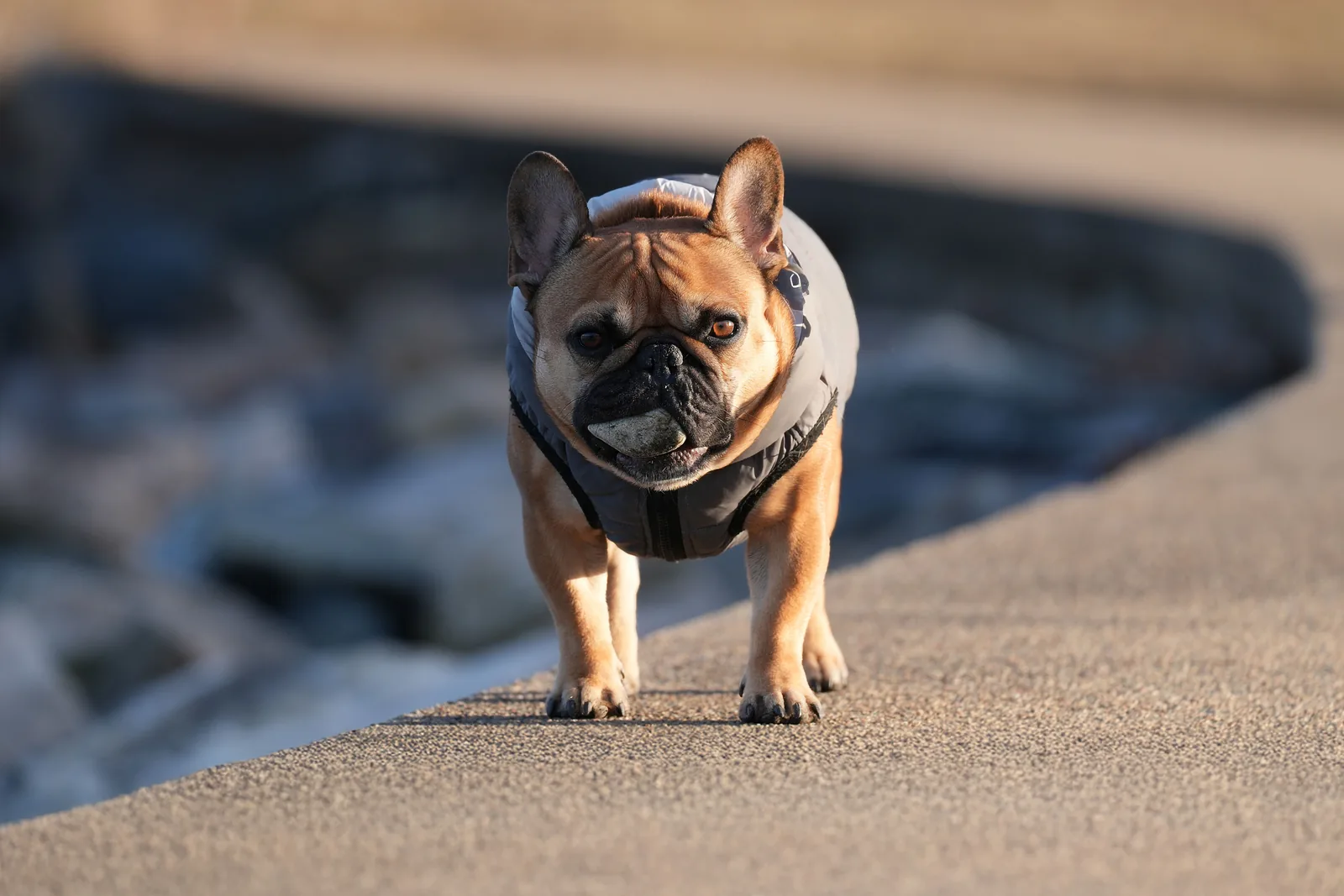
Most healthy dogs with a dense double coat do not need one. A coat genuinely helps short-coated and single-coated dogs, small dogs, very lean dogs, puppies, seniors, dogs that are ill or recovering from surgery, and freshly clipped dogs. Match the layer to the weather: waterproof for rain, windproof for wind, insulated for frost. Size it from three measurements: back length, chest girth and neck girth.
Dog coats attract more argument than they deserve. One camp treats them as a silly accessory, the other buys a parka for a German shepherd in October drizzle. The truth is boring and specific: for some dogs a layer is real help, for most it is a pointless garment, and what decides it is coat type, build and health - not aesthetics.
Which dogs a coat genuinely helps
Cornell's Riney Canine Health Center names three groups a jacket or sweater helps stay warm: smaller breeds, older dogs and dogs with a thin coat. In practice the list runs a little longer.
| Type of dog | Does it help | Why |
|---|---|---|
| Short-coated, single-coated dogs (greyhound, boxer, dalmatian types) | Yes | No undercoat, so effectively no insulation |
| Small and toy dogs | Yes | Large body surface relative to mass, rapid heat loss |
| Very lean, slender-built dogs | Yes | Little insulating tissue and a small energy reserve |
| Puppies | Yes | Immature thermoregulation |
| Senior dogs | Yes | Weaker thermoregulation, more joint problems |
| Ill dogs, post-surgery, under treatment | Yes, after asking your vet | Smaller reserve, sometimes disrupted thermoregulation |
| Freshly clipped dogs | Yes, temporarily | The insulation has been removed |
| Dogs with a dense double coat | No | They carry their own insulation and will tend to overheat |
If your dog sits in the "yes" column, a coat is not a whim. For the temperatures where things actually get risky and how to spot a dog that is cold, see our piece on whether your dog is cold.
Three kinds of weather, three kinds of layer
The most common buying mistake is one coat "for the cold", used from September to March. Rain, wind and frost are three separate problems.
| Weather | What you need | What to watch for |
|---|---|---|
| Rain, a few degrees above freezing | Waterproof, breathable shell, no heavy insulation | A layer that traps vapour soaks the dog from the inside instead |
| Wind, 0 to 5 C (32-41 F) | Windproof layer, well fitted at the sides | Loose flaps flap about and stop protecting anything |
| Frost, below 0 C (32 F) | Insulated layer covering chest and belly | An insulated jacket in rain waterlogs and stops insulating |
| Wet snow | Waterproof shell plus insulation | The hardest case, because it combines damp with cold |
For a dog in the risk groups, a sensible minimum is two garments: a thin waterproof shell for autumn rain and an insulated layer for frost.
How to size it
Your dog's weight is the worst possible criterion, because two 12 kg dogs can be built nothing alike. Measure three things with a tailor's tape, on a standing dog:
- Back length - from the base of the neck (where the collar normally sits) to the base of the tail. This is the primary dimension in manufacturers' charts.
- Chest girth - at the widest point, usually just behind the elbows.
- Neck girth - where the collar sits, without pulling tight.
Then check that specific manufacturer's chart, because sizing is not standardised. If your dog falls between sizes, go up and rely on the adjustment.
What to check once it is on
- Shoulders and elbows move freely. The coat must not restrict the forelimb reach.
- Nothing rubs in the armpits. That is where chafing shows up first.
- The belly and genital area are clear - on male dogs the coat must not extend too far back underneath.
- The harness is accessible. Either the coat has a slot for the harness attachment, or you put the harness on over the coat; walking a dog by something that can slide off is a bad idea.
- The dog walks normally. Freezing in place, hunching or moving stiffly means the coat is too tight, too heavy, or just too new.
What to avoid
- Coats that are too tight - chafing appears after one long walk, not after a month.
- Leaving the coat on indoors. A coat is for going out. In a heated room it makes shedding heat harder.
- Walking in a soaked coat. A waterlogged layer insulates worse than none and actively chills the dog.
- Cords, drawstrings and dangling parts - they snag on undergrowth and on the lead.
- Hoods that cover the eyes and ears. A dog needs to see and hear; a hood that limits either produces stress, not comfort.
- Forcing it on the first time. One unpleasant session can poison the subject for months.
- Treating a coat as a permit for a longer walk. It protects the torso, not the paws, ears or tail.
Getting your dog used to a coat
Break it into short sessions of two or three minutes, over several days:
- Put the coat on the floor. The dog sniffs it, gets a treat, done.
- Rest it on the dog's back for a second, treat, take it off.
- Put the head through the opening, treat, remove immediately.
- Fasten it for a few seconds indoors, reward, take it off before the dog starts fidgeting.
- Build up the indoor time, then a first outing - short, in a familiar place.
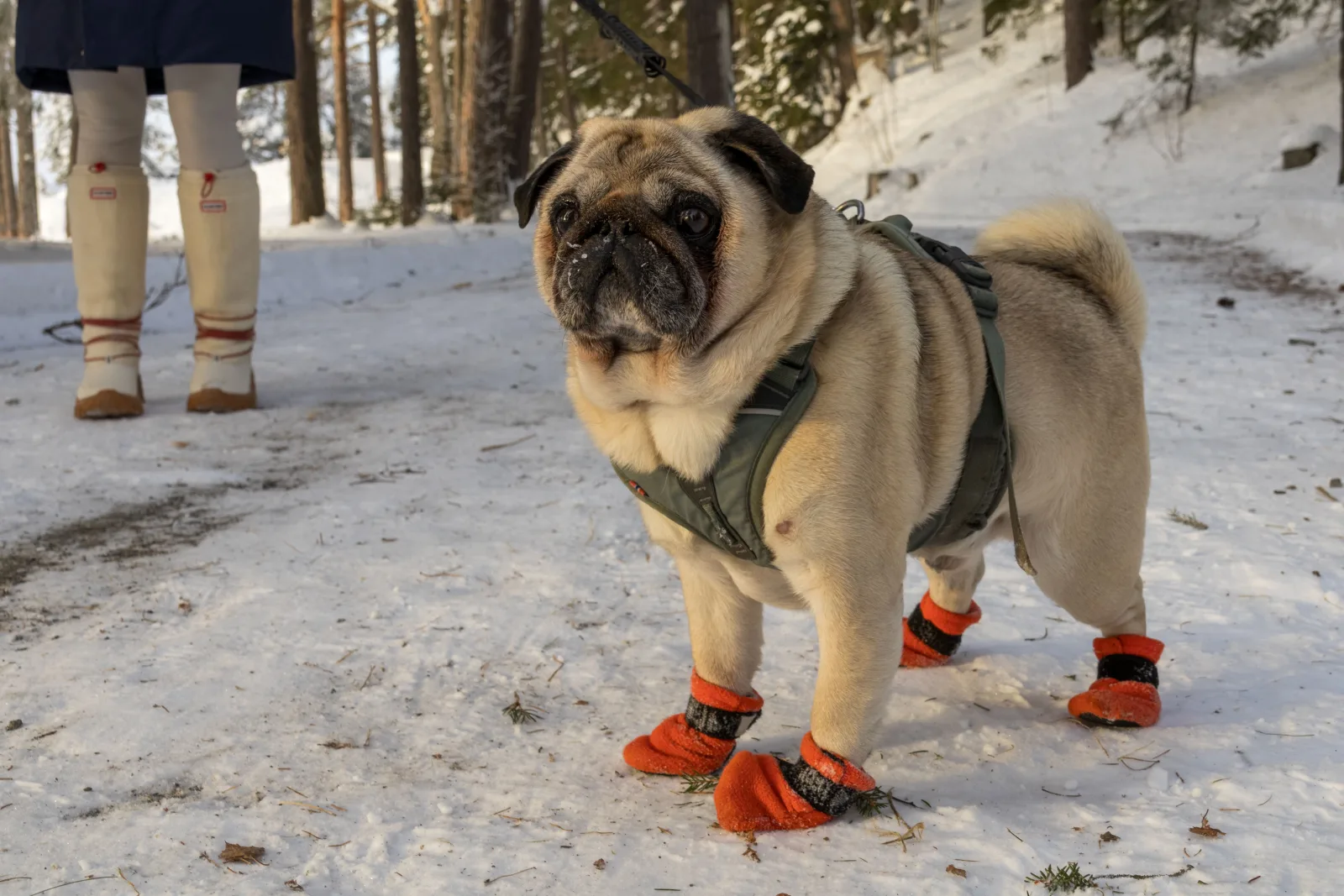
A dog that gets food and freedom at every stage usually starts offering its own head within a week. The same approach works for paw boots, which are often harder to accept than a coat.
Coats and visibility
Autumn and winter are above all dark, not cold. If you are buying a new coat, pick one with reflective detailing or accept that you will be walking a dog dressed in black. Reflective trim on a jacket is not a substitute for a dedicated reflective vest, which is visible from every side.
It is also worth remembering that in autumn your dog goes through its autumn shed and builds a thicker undercoat. A coat put on over unbrushed, matted hair encourages tangles, so brushing and a jacket go together.
A coat is a tool, not a statement. Chosen for the weather and for the dog in front of you, it lets you get out calmly on days that would otherwise be miserable. Check the DOGOUT map for sheltered routes near you, put on whatever your dog actually needs, and go let them sniff.
Sources
Frequently asked questions
- Does a dog really need a coat?
- It depends on the dog. Cornell's Riney Canine Health Center recommends a jacket or sweater for smaller breeds, older dogs and dogs with a thin coat. A healthy large dog with a dense undercoat needs nothing and may simply overheat in a layer. This is a decision about coat type and condition, not about fashion.
- How do I size a coat for my dog?
- Measure three things: back length from the base of the neck to the base of the tail, chest girth at the widest point, and neck girth. Use the manufacturer's chart rather than your dog's weight, because two dogs of the same weight can be built completely differently. If your dog falls between sizes, take the larger one and check the adjustment straps.
- Can a dog overheat in a coat?
- Yes, and it is a common mistake. Dogs shed heat mainly by panting, and a layer on a double-coated dog, or a coat left on indoors in a heated room, makes losing that heat harder. Put the coat on to go out and take it off when you get back.
- Does a husky or samoyed need a jacket?
- Under normal conditions, no. The double coat of those breeds is real insulation and they often handle frost better than their humans. The exceptions are specific: a dog that is ill, very old, post-surgery, or clipped for medical reasons.
- Can a coat replace shortening the walk in frost?
- No. A layer protects the torso but not the paws, ear tips or tail tip, which are exactly the areas most exposed to frostbite. A coat lets you go out more comfortably, not for longer.
- My dog refuses to wear a coat. What now?
- Do not force it on, or you will turn the coat into something the dog avoids. Spread it over a few days: show it, treat for approaching, treat for putting the head through, then a few seconds fastened indoors, and only then a walk. A week of short sessions is usually enough.